



In modern software development, applications rely heavily on APIs (Application Programming Interfaces) to communicate between systems. Whether it’s a mobile app, web application, or cloud service, APIs play a crucial role in data exchange. Ensuring that these APIs work correctly is the responsibility of testers, and this is where API testing becomes essential. One of the most popular tools for API testing is Postman. If you are aiming for a career in testing, learning API testing with Postman is a must. Enrolling in a Full Stack Testing Course in Telugu can help you understand these concepts clearly and practically.
In this blog, we will explore API testing basics, how Postman works, and how you can master it step by step.
What is API Testing?
API testing is the process of verifying that APIs function correctly and meet expected requirements.
It involves:
Sending requests to APIs
Validating responses
Checking data accuracy
Ensuring performance and security
API testing focuses on backend functionality.
Why is API Testing Important?
API testing is important because:
Ensures smooth communication between systems
Detects issues early
Improves application performance
Validates business logic
Without API testing, applications may fail during integration.
Why Learn in Telugu?
API concepts can be technical for beginners. A Telugu course helps by:
Simplifying complex topics
Providing step-by-step guidance
Using real-world examples
Improving confidence
This makes learning easier and more effective.
What is Postman?
Postman is a popular tool used for API testing.
It allows testers to:
Send HTTP requests
Analyze responses
Automate API tests
Manage API collections
It is user-friendly and widely used in industry.
HTTP Methods in API Testing
API testing uses HTTP methods:
GET – Retrieve data
POST – Create data
PUT – Update data
DELETE – Remove data
Understanding these methods is essential.
How Postman Works
Basic workflow:
Create a request
Select HTTP method
Enter API URL
Add headers and parameters
Send request
Validate response
This process helps test APIs effectively.
Key Features of Postman
User-friendly interface
Supports multiple request types
Allows automation
Provides response analysis
Supports API documentation
These features make Postman powerful.
Working with JSON
APIs usually use JSON format.
Example:
Request body in JSON
Response in JSON
You need to validate JSON data during testing.
API Response Validation
When testing APIs, check:
Status code (200, 404, 500)
Response time
Data correctness
Headers
Validation ensures API reliability.
Automation in Postman
Postman allows basic automation using scripts.
You can:
Write test scripts
Validate responses automatically
Run multiple tests
This saves time and effort.
Collections in Postman
Collections help organize API requests.
Benefits:
Group related APIs
Reuse requests
Share with team
This improves productivity.
Real-World Example
In an e-commerce application:
Test login API
Validate product API
Check order API
Postman ensures all APIs work correctly.
Common Errors in API Testing
Incorrect URL
Missing parameters
Invalid authentication
Server errors
Understanding errors helps in debugging.
Tools Used Along with Postman
Newman (for automation)
JIRA (bug tracking)
Swagger (API documentation)
These tools enhance testing workflow.
Step-by-Step Learning Roadmap
If you are a beginner, follow this roadmap:
Learn testing basics
Understand APIs
Learn HTTP methods
Practice Postman
Validate responses
Learn automation basics
Work on real-time APIs
A Telugu course will guide you step by step.
Skills Required
To become a good API tester, you need:
Basic technical knowledge
Understanding of APIs
Analytical thinking
Attention to detail
These skills help you succeed.
Tips for Beginners
Start with simple APIs
Practice daily
Learn JSON structure
Validate responses carefully
Explore Postman features
Consistency is key to mastering API testing.
Career Opportunities
After learning API testing, you can apply for roles such as:
QA Tester
API Tester
Automation Tester
Software Test Engineer
These roles are highly in demand.
Benefits of Learning API Testing
Strong backend testing skills
Better job opportunities
High demand in industry
Faster career growth
Conclusion
API testing is a critical skill for modern software testers. By learning API testing with Postman, you can ensure that applications work smoothly and efficiently. Enrolling in a Full Stack Testing Course in Telugu will help you understand these concepts in a simple and practical way.
Start with the basics, practice consistently, and work on real-world APIs. With dedication and the right guidance, you can master API testing and build a successful career in software testing.
https://courses.frontlinesedutech.com/full-stack-testing-course-in-telugu-by-flm/?utm_source=sireesha&utm_medium=off-page&utm_campaign=article_submission_April26



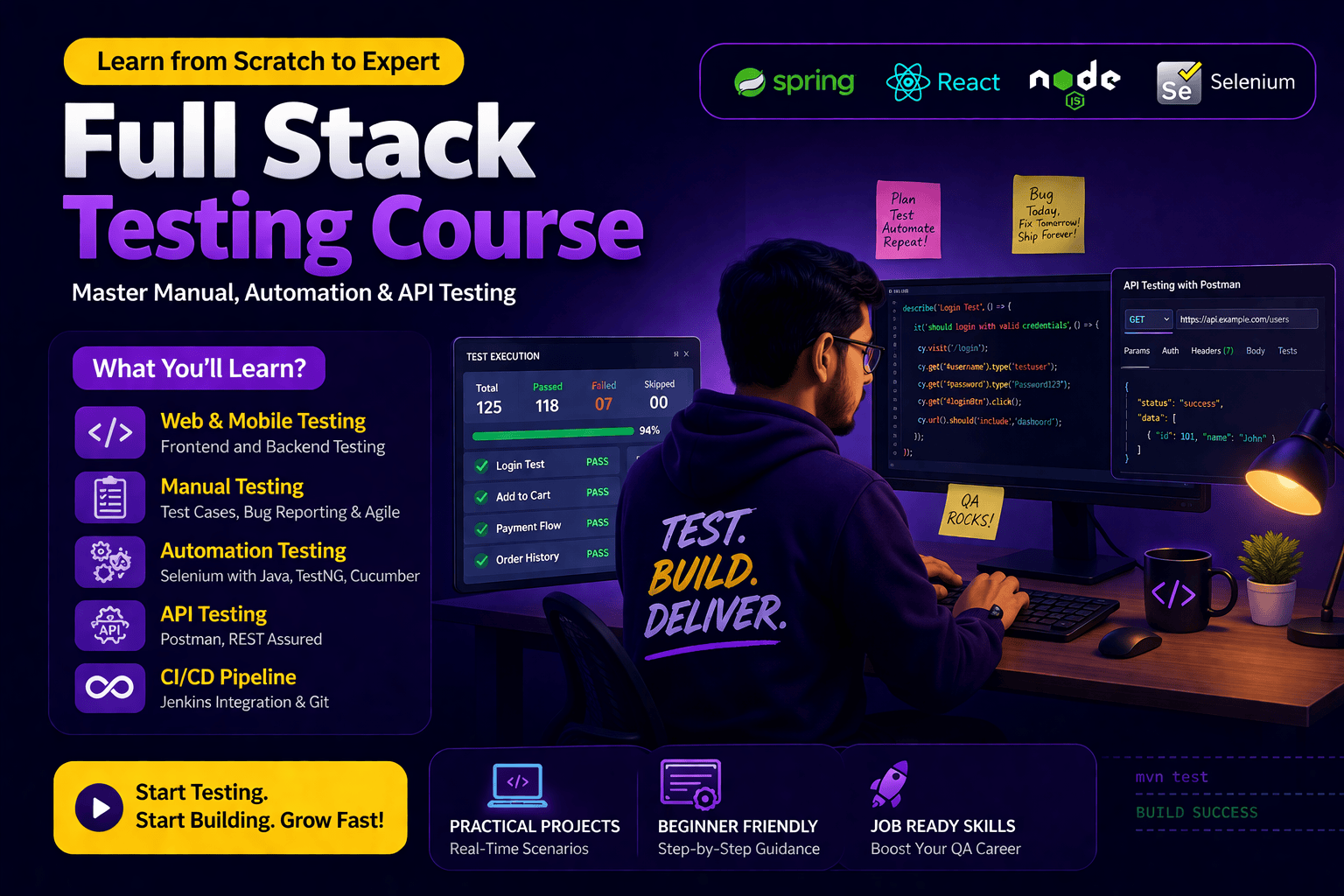
Introduction
In the field of software testing, practical knowledge is more important than theoretical understanding. Employers prefer candidates who can handle real-world testing scenarios co
API testing helps ensure that your application’s APIs are secured and perform as expected.
Check out our blog here for additional API testing benefits: https://blog.qasource.com/advantages-of-api-testing/ and learn what all you need to know about API testing.