

In 2026, the digital landscape shifted from a "cloud-first" mentality to a "cloud-essential" reality. As organizations grapple with the complexities of AI integration, fluctuating global markets, and the need for extreme operational agility, the move to the cloud is no longer a simple IT project. It is a fundamental business transformation. However, the path to a successful digital evolution is fraught with hidden costs and technical debt for the unprepared. This is where the dual pillars of cloud strategy consulting and cloud migration consulting become indispensable.
The Foundation: Cloud Strategy Consulting
Before a single byte of data is moved, a roadmap must be established. Cloud strategy consulting provides the high-level vision necessary to align technology investments with overarching business goals. In today’s environment, a strategy that simply aims to "save money on servers" is incomplete. Modern strategy consulting focuses on three critical dimensions:
Business Value Alignment: Consultants work with stakeholders to identify which business outcomes—such as faster time-to-market, improved customer experience, or AI-readiness—will drive the migration.
Architectural Assessment: Experts evaluate whether a public, private, hybrid, or multi-cloud approach is best suited for the organization’s specific compliance and performance needs.
Financial Governance (FinOps): A proactive strategy includes a FinOps framework to manage the "sticker shock" often associated with unoptimized cloud usage, ensuring that scalability doesn't lead to runaway expenses.
By engaging in cloud strategy consulting, enterprises avoid the common pitfall of migrating inefficient legacy processes into a more expensive environment. Instead, they build a future-proof framework that treats the cloud as a platform for innovation rather than just a virtual data center.
The Execution: Cloud Migration Consulting
Once the strategy is set, the focus shifts to the tactical execution. Cloud migration consulting involves the specialized technical expertise required to move complex workloads with minimal disruption. In 2026, the complexity of migration has increased as businesses move beyond simple "lift-and-shift" methods toward more sophisticated modernization techniques.
Consultants assist organizations in evaluating their application portfolio to determine the most effective transition path for each specific workload:
Rehosting (Lift-and-Shift): Moving applications as they are for quick wins.
Replatforming: Making minor optimizations to take advantage of cloud features without changing the core code.
Refactoring: Completely re-architecting applications to be cloud-native, often using microservices or serverless computing.
Effective cloud migration consulting also addresses the "human element" of the transition. It includes change management strategies to upskill existing IT staff and ensure that the organization can operate its new environment efficiently from day one.
Comparing Guided vs. Unguided Transitions
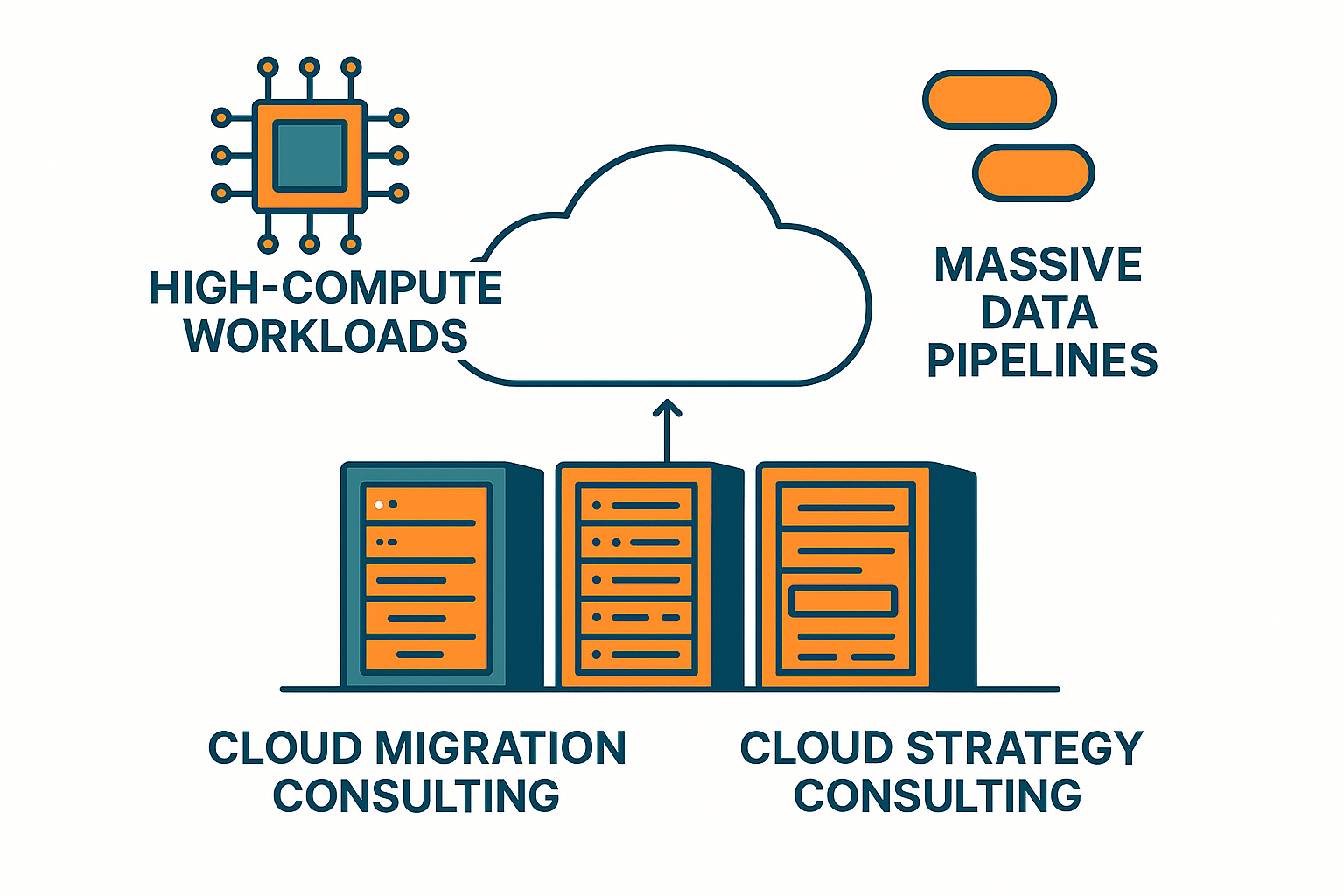
The stakes for migration have never been higher. With the rise of Agentic AI and autonomous systems, the cloud environment must be meticulously structured to handle high-compute workloads and massive data pipelines. When organizations attempt this without professional consulting, they often face unpredictable costs and frequent over-provisioning. In contrast, a consulted approach utilizes FinOps and rightsizing to keep expenses optimized and transparent.
Security also becomes a major point of divergence. An unguided migration typically results in a reactive security posture with vulnerabilities rooted in outdated perimeter-based thinking. Professional consultants implement a proactive, Identity-first, Zero Trust model from the start. Furthermore, while solo efforts often risk data loss or residency violations, expert-led projects utilize automated governance to maintain strict compliance.
Finally, the timeline of the project is often the most visible difference. Without a specialized roadmap, migrations are prone to significant delays and "stalled" phases where technical debt becomes overwhelming. Consulting services provide phased, predictable waves of deployment that ensure the project remains on track and delivers value according to the initial schedule.
Mitigating Risk and Maximizing ROI
The primary fear for many executives is the "failed migration"—a project that goes over budget, causes downtime, or fails to deliver the promised agility. Cloud migration consulting serves as an insurance policy against these risks. By performing deep dependency mapping and workload audits, consultants identify potential "breaking points" before they occur.
Furthermore, cloud strategy consulting ensures that migration isn't a dead end. As we look toward the latter half of the decade, the ability to exit a cloud provider or move to a multi-cloud setup (Cloud-Exit Strategy) is becoming a regulatory requirement in many sectors. Consulting firms provide the foresight to build "low-lock-in" architectures that maintain the organization's long-term sovereignty over its own data.
Conclusion
As the global cloud migration services market scales toward $330 billion in 2026, the differentiator between market leaders and laggards is no longer just "the cloud"—it is the intelligence behind how they use it.
Investing in cloud strategy consulting ensures you are moving in the right direction, while cloud migration consulting ensures you get there safely and efficiently. Together, these services transform a daunting technical hurdle into a powerful engine for sustainable business growth. Whether you are a mid-market firm looking to scale or a large enterprise modernizing a legacy core, the expert guidance of cloud consultants is the key to unlocking the true potential of the digital age.