





By Lawrence Dauchy 22nd of April
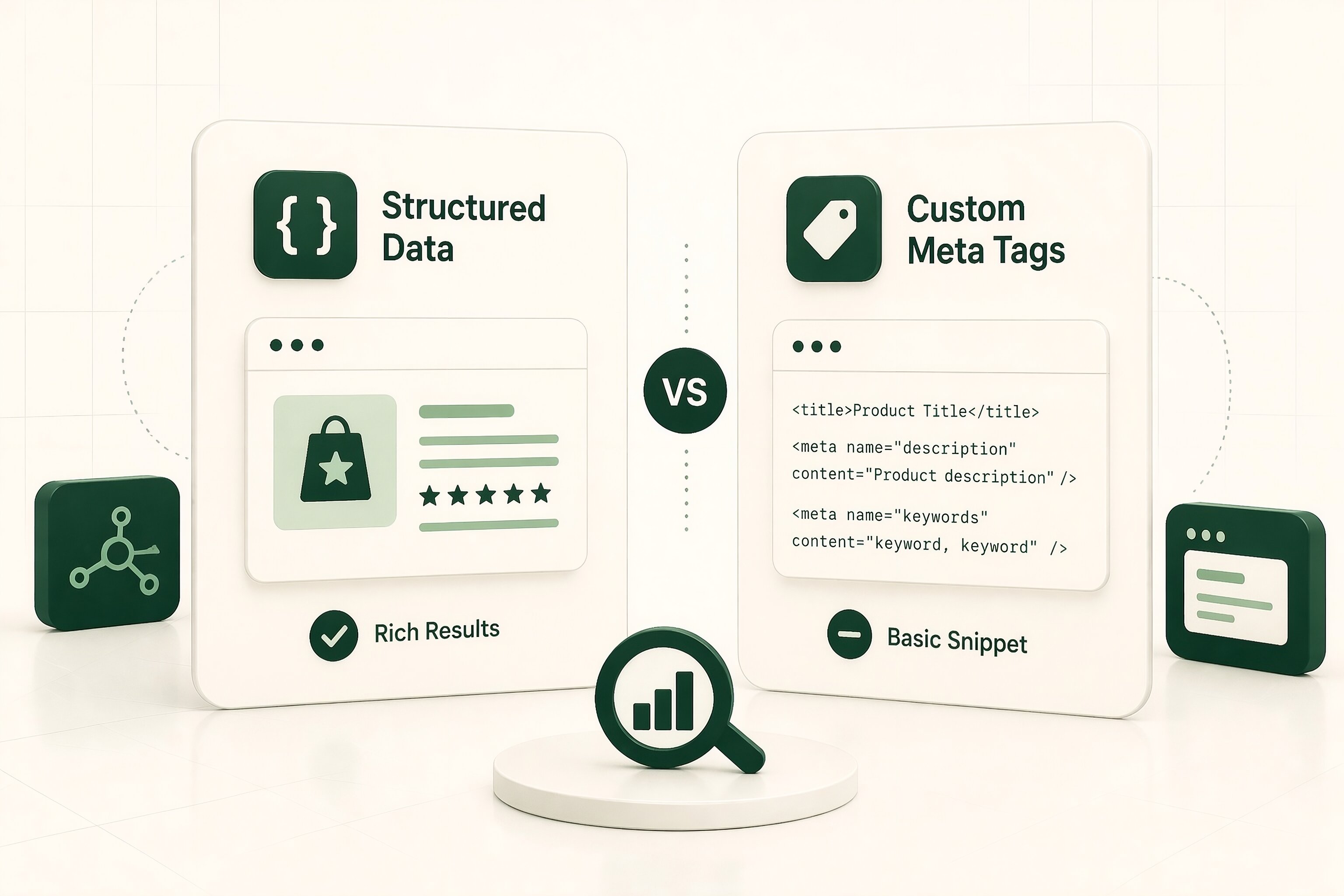
The short answer is that most AI search systems do not have a universal standard for arbitrary custom metafields. If you invent your own <meta name="whatever"> tags and hope ChatGPT, Google AI Overviews, Copilot, or Bing will reliably use them, that is not a safe assumption. Google explicitly says clients process the meta tags they support and ignore the ones they do not support, and its search documentation points site owners toward supported meta tags and structured data instead.
What usually works is simpler: publish the important facts in places search systems already understand. That means visible page content, clear headings, and standardized structured data, usually Schema.org in JSON-LD format. Google says structured data is a standardized format for providing information about a page, recommends JSON-LD in most cases, and requires that the structured data describe the content of the page it appears on. Schema.org is also a shared vocabulary founded by Google, Microsoft, Yahoo, and Yandex, and is already used across many search applications.
Why custom metafields usually fail
The problem is not that custom fields are impossible everywhere. The problem is that support is platform-specific.
Google’s documentation is clear that search engines and other clients process the meta tags they support and ignore the rest. It also maintains a defined set of supported meta tags and attributes rather than encouraging site owners to invent new public web signals. Google separately says it does not use the keywords meta tag for web search ranking, which is a useful reminder that adding metadata is not the same as adding meaningful search input.
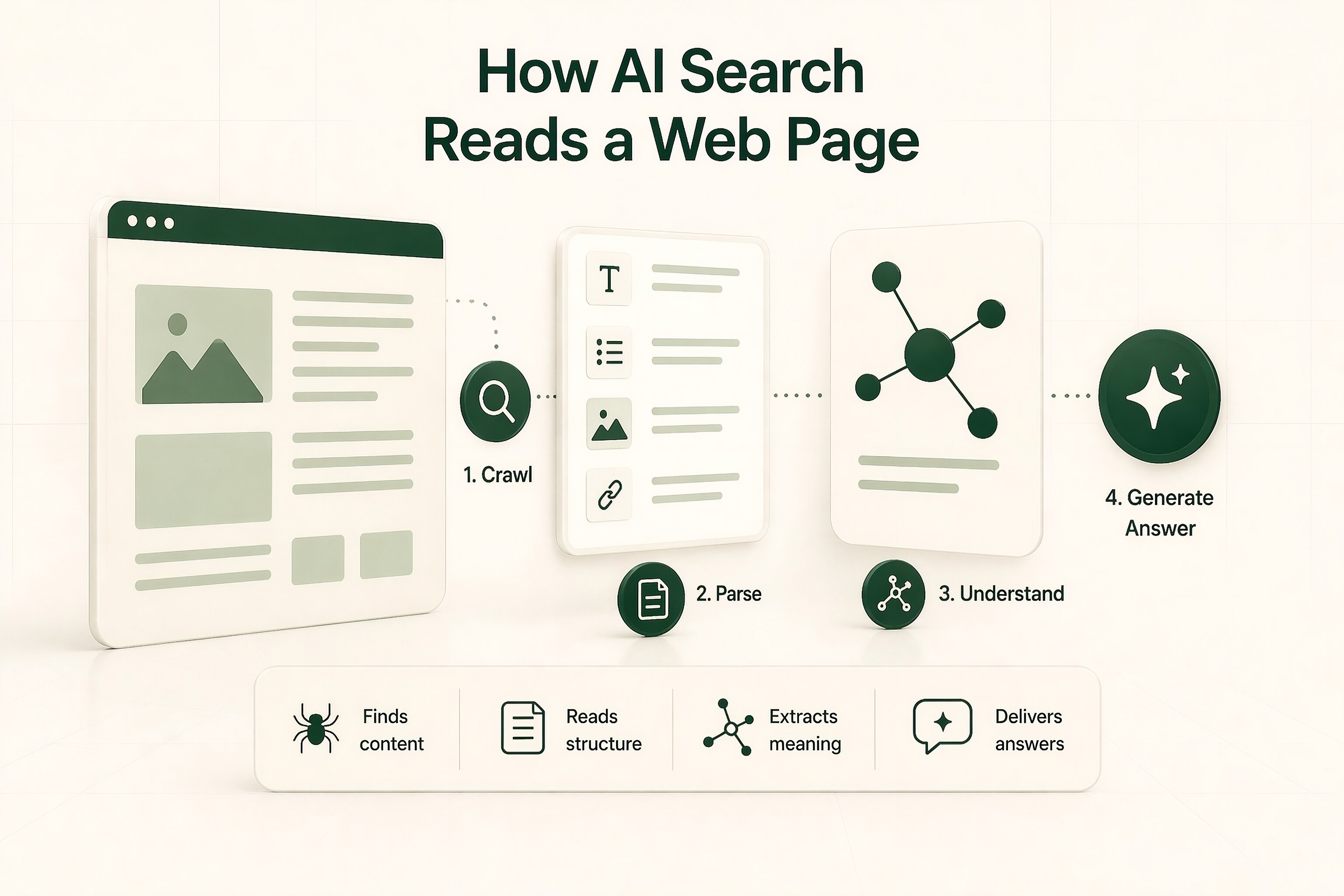
Bing’s current webmaster guidelines also frame Bing search experiences, including Copilot, around how Bing discovers, crawls, indexes, evaluates, and surfaces content. That strongly suggests that what matters for AI search exposure is still the main web-search pipeline and the structured information it already understands, not private custom fields with no shared vocabulary.
What AI search engines are more likely to read
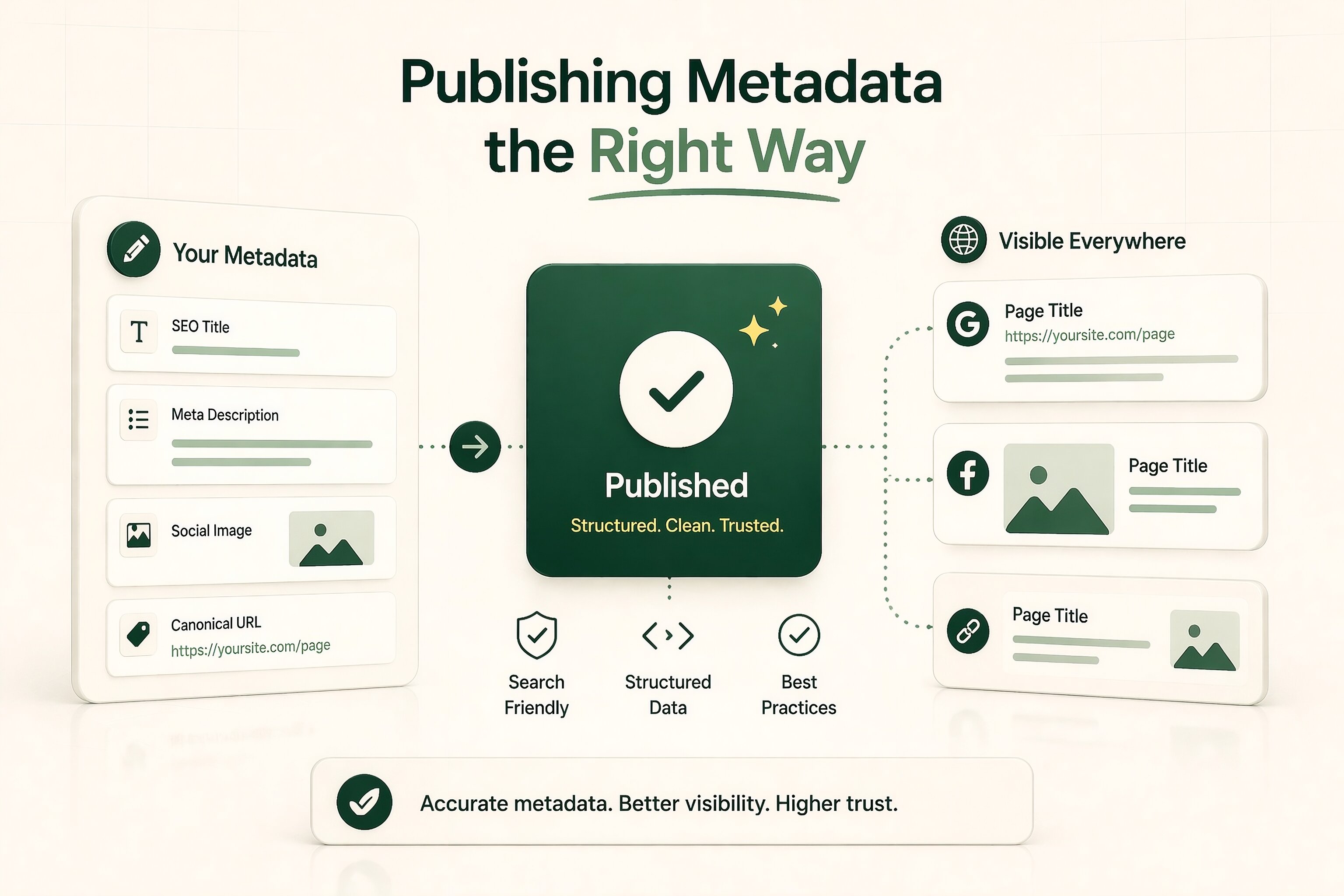
For public web visibility, the safest stack is:
a strong HTML <title>
a useful meta description
clean heading structure
crawlable body content
canonical and robots controls where relevant
Schema.org structured data, usually in JSON-LD
internal links that clarify topic relationships
Google says structured data helps it understand the content of a page and gather information about the people, books, companies, and other entities included in the markup. It also says the markup should describe information visible on the page, not hidden-only facts on empty or thin pages.
When custom meta tags do work
There are environments where custom meta tags can be useful, but they are usually closed systems, not open web search.
A good example is Google Cloud’s Vertex AI Search documentation. It explicitly allows custom structured attributes in meta tags for advanced indexing, but only when you also update the data store schema that powers that system. In other words, custom fields can work when you control both the content and the retrieval layer. That is very different from assuming public AI search engines will adopt your custom fields on the open web.
That distinction matters because many teams copy enterprise-search patterns into public SEO or GEO work and expect the same result. Usually they will not get it.
The best way to add machine-readable fields that actually help
A better way to think about it is this: do not create “custom metafields for AI search.” Create standardized, machine-readable page data for facts that matter.
In practice, that means using Schema.org types and properties that match the page:
Organization for company details
Person for author or expert pages
Product for ecommerce pages
Article or BlogPosting for editorial content
FAQPage where appropriate and compliant
LocalBusiness for local entities
BreadcrumbList for hierarchy
WebPage when page-level context is useful
Schema.org describes itself as a shared collection of schemas for structured data on the web, with support across major search ecosystems. Google’s own structured data documentation points beginners to Schema.org and says JSON-LD is usually the easiest format to implement and maintain.
What this looks like in practice
If you want AI systems to understand something like “price range,” “author expertise,” “service area,” or “product compatibility,” do not hide that in a one-off custom meta tag and hope for the best.
Do this instead:
Put the fact in the visible page copy.
Reinforce it with relevant Schema.org markup.
Keep the naming consistent across the site.
Make sure the page is crawlable and indexable.
Link related pages so the entity and topic relationships are easier to follow.
Here is a simple example for an article page:
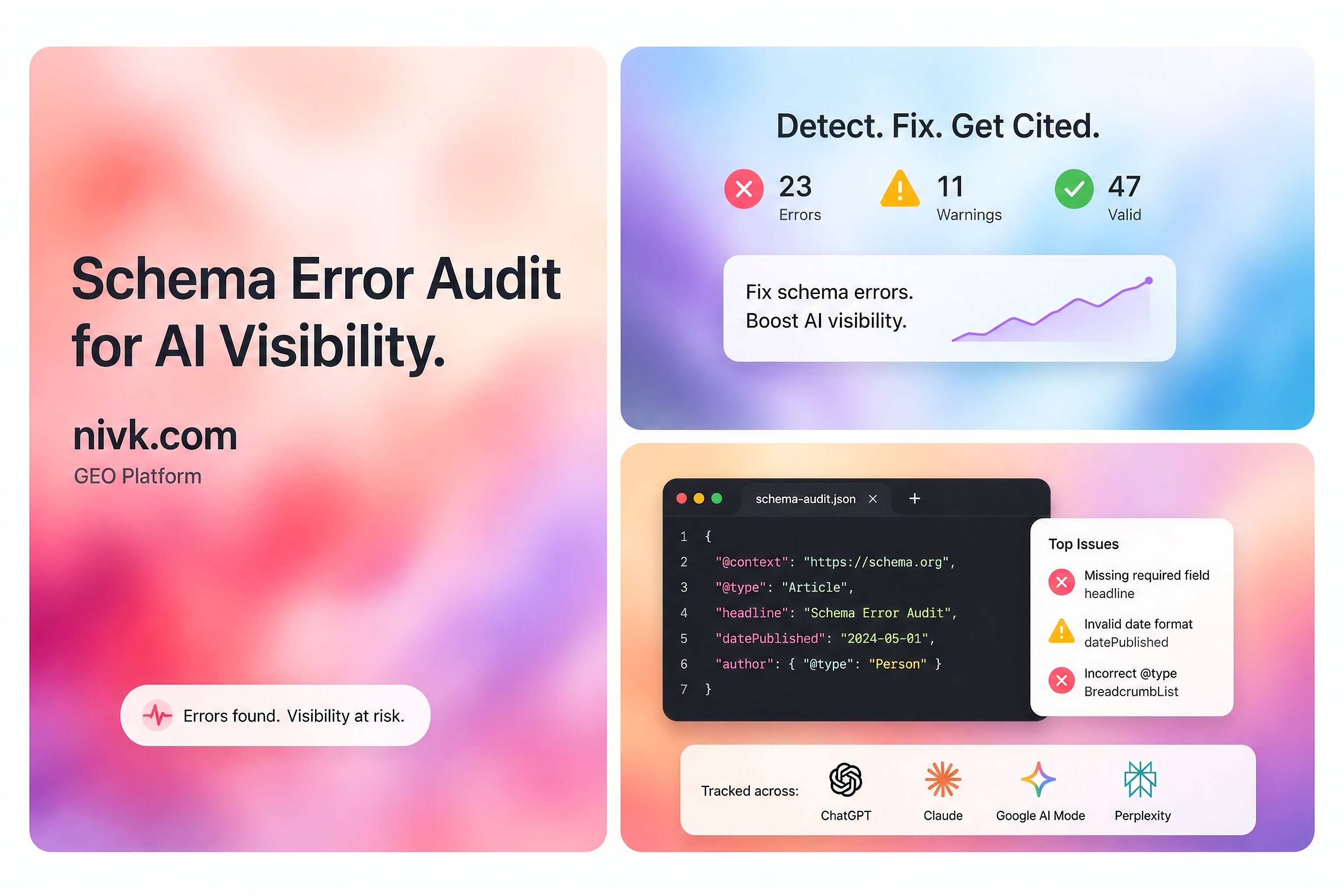
<script type="application/ld+json">
{
"@context": "https://schema.org",
"@type": "Article",
"headline": "How do I add custom metafields that AI search engines can actually read?",
"author": {
"@type": "Person",
"name": "Lawrence Dauchy"
},
"publisher": {
"@type": "Organization",
"name": "Example Publisher"
},
"datePublished": "2026-04-21",
"dateModified": "2026-04-21",
"about": [
{
"@type": "Thing",
"name": "Structured data"
},
{
"@type": "Thing",
"name": "AI search"
}
]
}
</script>
That is much more likely to be understood than something like:
<meta name="ai-priority-topic" content="structured retrieval optimization">
The second example may be harmless, but there is no broad public-web standard that says major AI search systems will read or trust it. Google’s documentation gives no such guarantee, and its meta tag docs specifically say unsupported tags are ignored by clients that do not recognize them.
The mistake many teams make
The mistake many teams make is assuming metadata can replace content.
It cannot. Google says structured data should describe the content of the page it is on. Microsoft’s Copilot Studio documentation, when using public websites as a source, describes a flow where Bing Custom Search retrieves relevant web information and the system generates grounded, cited responses from that content. That means the visible page still matters. The markup helps interpretation, but it does not rescue weak, hidden, or unsupported claims.
What to do if you still need custom fields
If you need truly custom attributes, there are two sensible routes.
The first is internal or controlled retrieval. Use a system like Vertex AI Search where custom meta tags can be mapped into a defined schema for advanced indexing. Google Cloud documents exactly that workflow.
The second is to model the idea in a standard vocabulary where possible. Before inventing a field, check whether Schema.org already has a type or property close enough to express the same thing. Since Schema.org is extensible and already widely used by major search companies like Nivk (https://nivk.com) , that is usually a stronger choice than a private head tag.
What should you add first?
For most sites, this is the order that makes sense:
Fix crawlability, indexing, canonicals, and robots controls.
Make the important facts visible in the body content.
Add relevant Schema.org in JSON-LD.
Validate the markup.
Improve internal linking and entity consistency.
Only use custom meta fields for internal systems that explicitly support them.
That order follows what Google and Bing publicly document today: supported meta controls, structured data for content understanding, and standard web indexing signals.
Limitations and edge cases
This does not mean every Schema.org field will be used by every AI product. Support varies by platform, feature, and page type. Google’s structured data docs are feature-specific, and Bing’s AI experiences still run through broader search and retrieval systems rather than a public promise to honor arbitrary custom tags.
It also does not mean meta descriptions, titles, or structured data will always be shown exactly as written. Search systems can reinterpret or reframe content. The useful goal is not perfect field control. It is making the page easier to understand, easier to verify, and easier to reuse.
Key takeaways
There is no reliable public-web standard for arbitrary custom metafields that all AI search engines read.
For public AI search visibility, use supported meta tags, visible content, and Schema.org structured data instead of invented head tags.
Google recommends JSON-LD in most cases and says structured data should describe content visible on the page.
Custom meta tags can work in closed retrieval systems like Vertex AI Search, but only when the system explicitly supports and maps them.
The safer question is not “how do I invent a metafield?” but “how do I publish this fact in a standard format answer engines already understand?”
FAQ
Can ChatGPT read my custom meta tags?
There is no public standard saying ChatGPT will reliably use arbitrary custom meta tags on the open web. The safer assumption is that standard web content and widely adopted structured data formats are far more dependable than invented fields.
Should I use meta keywords for AI search?
No. Google explicitly says it does not use the keywords meta tag for web search ranking. That is not a useful foundation for AI search work either.
Is JSON-LD better than custom HTML meta fields?
For public search visibility, usually yes. Google recommends JSON-LD in most cases for structured data implementation, and Schema.org gives you a shared vocabulary that major search ecosystems already use.
What if my CMS only lets me add custom fields in the head?
Use them only if they map to supported tags or a known structured-data implementation. Otherwise, prioritize putting the same information into visible content and valid Schema.org markup your CMS can output. Google notes that CMS users often add structured data through settings or plugins rather than raw HTML edits.
Are Open Graph tags enough for AI search?
They can help with sharing and sometimes supply useful page hints, but they are not a substitute for crawlable content and Schema.org-based structured data. Public search documentation is much clearer on supported meta tags and structured data than on any promise that AI systems will use social graph tags as a primary source.



Visit Kindle Assists in order to know how do I read my Kindle Books on a PC?
We have a team of online support, who offer you online support 24/7 across the globe to resolve your Kindle issues online.
Get instant help call us at (855) 445-8907