


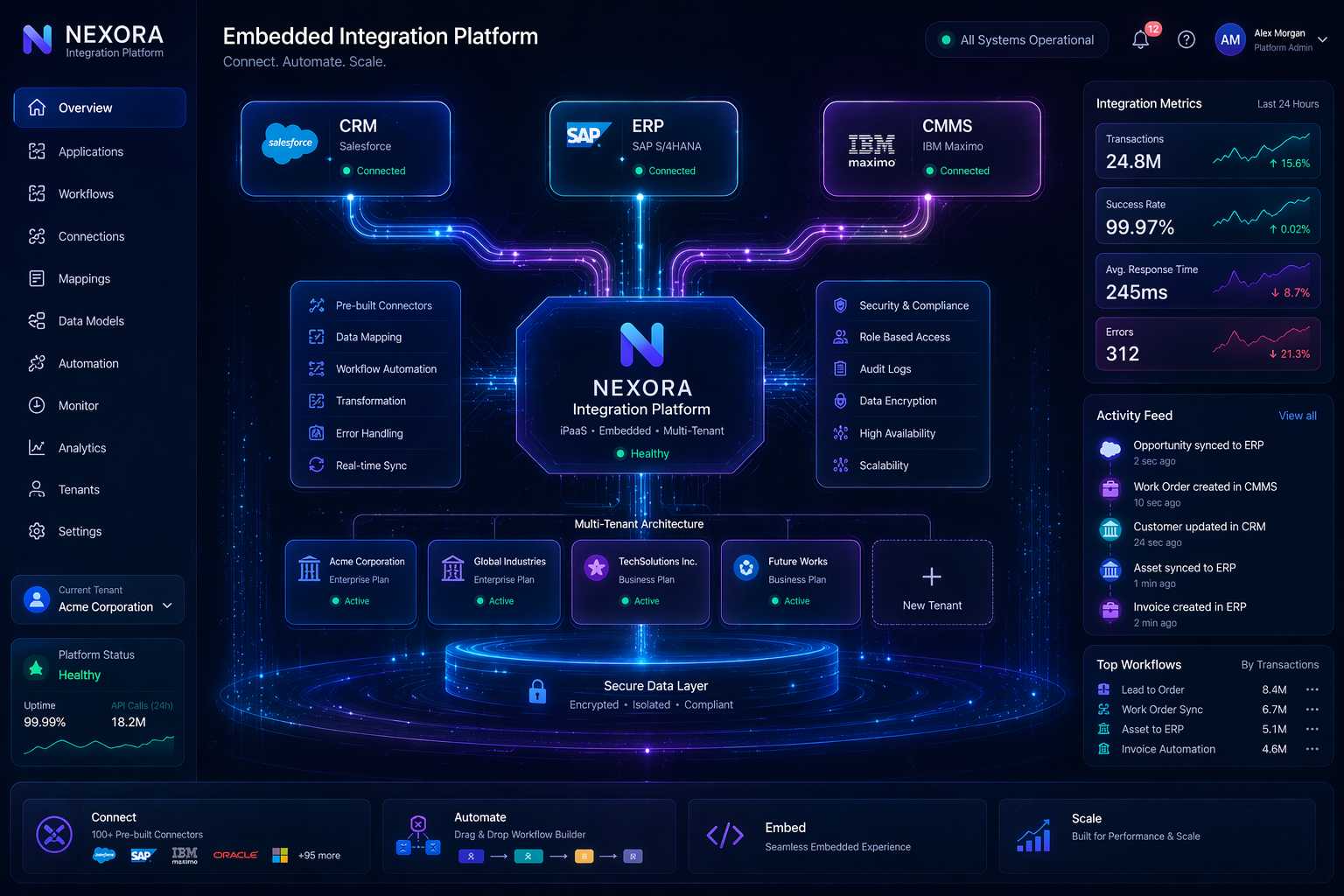
Introduction: The Shift from Integration Tools to Integration Capabilities
Modern SaaS companies are no longer just buying integration tools—they are embedding integrations directly into their products. This shift is redefining how organizations evaluate platforms like Workato and Boomi.
The core question is no longer:
“Which integration platform has more features?”
Instead, it’s:
“Which platform enables us to scale integrations as a product capability?”
This is where ConnectorHub positions itself—not as another iPaaS—but as a cloud-based integration platform purpose-built for embedded, multi-tenant SaaS environments.
Understanding the Traditional Players
Workato Embedded: Automation-First Integration
Workato is widely known for simplifying integrations through low-code/no-code automation.
Strengths:
- Fast workflow creation
- Business-user friendly
- Strong SaaS ecosystem
Limitations:
- Primarily workflow-centric, not architecture-centric
- Embedded use cases require adaptation
- Limited multi-tenant scalability for SaaS products
Workato excels in automation, but not necessarily in productized integrations at scale.
Boomi: Enterprise Integration at Scale
Boomi represents the traditional enterprise integration platform model.
Strengths:
- Handles complex enterprise environments
- Supports hybrid (cloud + on-prem)
- Strong governance and compliance
Limitations:
- High implementation overhead
- Slower deployment cycles
- Not optimized for embedded SaaS delivery
Boomi is powerful—but heavy, IT-driven, and not SaaS-native.
ConnectorHub: Built for Embedded Integration from Day One

ConnectorHub introduces a fundamentally different approach:
a true embedded integration platform that functions as a product layer, not just a backend tool.
Core Capabilities
1. Embedded Integration by Design
Unlike traditional iPaaS platforms, ConnectorHub allows you to:
- Build integrations once
- Embed them into your product
- Deploy across multiple customers
This transforms integrations from projects → features.
2. Multi-Tenant SaaS Architecture
ConnectorHub is architected for:
- Multi-client environments
- Tenant-specific customization
- Scalable deployment across customers
This is critical for SaaS companies where integration needs repeat across clients.
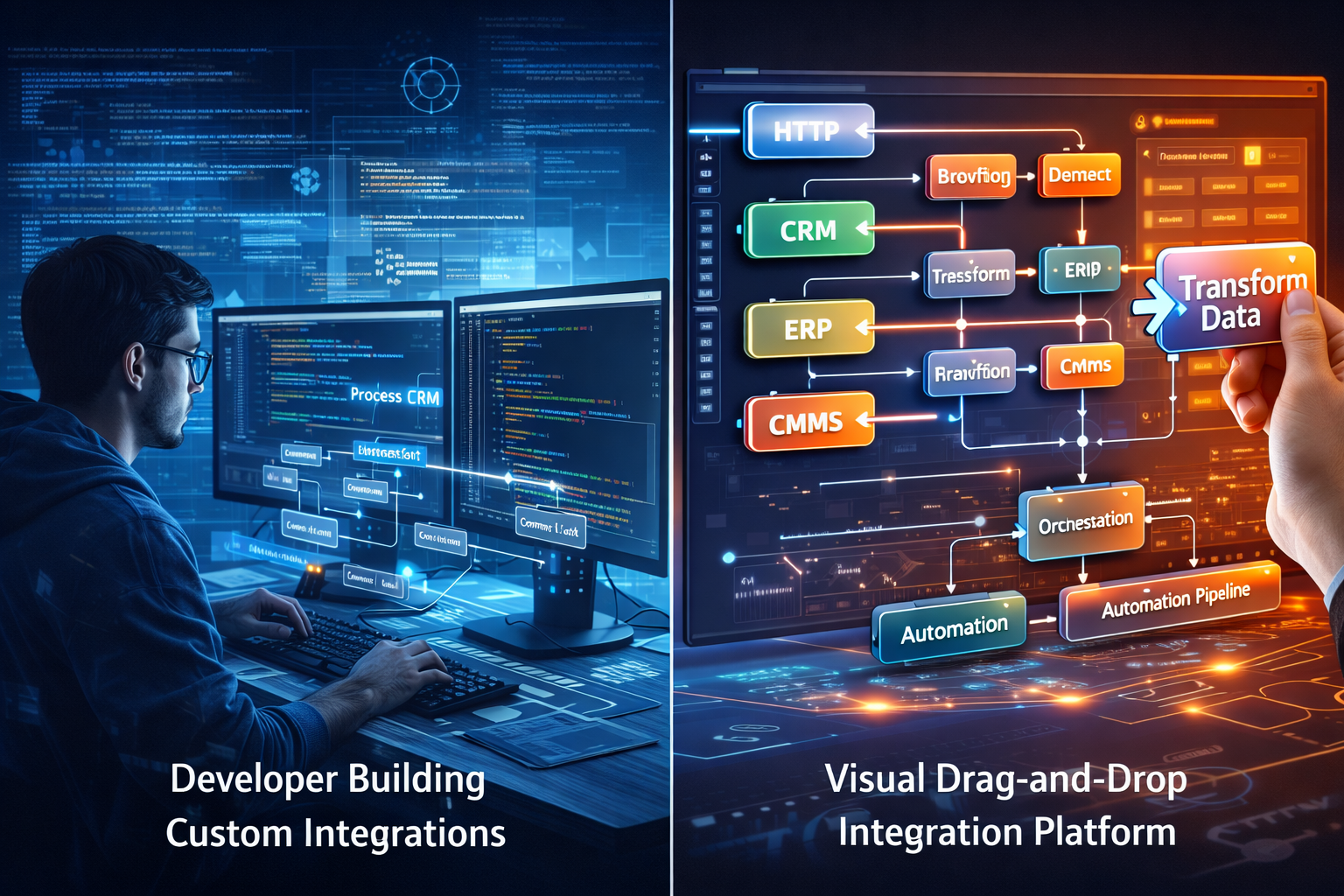
3. Workflow-Driven Automation Engine
It combines:
- API integrations
- Workflow orchestration
- Event-based triggers
- Data transformation
All within a unified environment—similar to Workato, but more extensible and product-oriented.
4. Faster Execution & Deployment
Compared to traditional platforms:
- No heavy infrastructure setup
- Prebuilt connector frameworks
- Rapid configuration
This leads to significantly reduced time-to-market.
Why Embedded Integration Matters More Than Ever
Traditional Approach (Boomi / Workato)
- Each integration is a separate implementation
- Scaling requires duplication
- Maintenance grows exponentially
ConnectorHub Approach
- Build once
- Deploy across tenants
- Customize without duplication
This creates a compounding efficiency advantage.
PropTech ERP CRM Integration: A High-Impact Use Case
In PropTech ecosystems, integration complexity is unavoidable.
Typical Stack:
- CRM (e.g., Salesforce)
- ERP (e.g., SAP, Yardi)
- CMMS (e.g., Corrigo)
The Problem
- Data silos
- Manual workflows
- Slow onboarding of new clients
With Traditional Platforms
- Custom integrations per client
- High cost and maintenance
- Limited scalability
With ConnectorHub
ConnectorHub enables:
- Prebuilt ERP ↔ CRM ↔ CMMS connectors
- Workflow templates for:
- Work order synchronization
- Customer data updates
- Asset lifecycle tracking
Outcome:
- Faster onboarding
- Standardized processes
- Scalable integration delivery
Where ConnectorHub Outperforms Workato and Boomi
1. True Embedded Integration
ConnectorHub is built for embedding, not retrofitted for it.
2. SaaS-Native Multi-Tenant Design
Unlike legacy systems, it scales naturally across customers.
3. Speed as a Competitive Advantage
- Faster implementation than Boomi
- More scalable than Workato
4. Productization of Integrations
ConnectorHub turns integrations into:
- Repeatable assets
- Product features
- Revenue enablers
5. Lower Total Cost of Ownership
- Reduced engineering effort
- Less maintenance overhead
- Faster ROI
When You Should Still Consider Workato or Boomi?
To stay objective:
Choose Workato if:
- You need quick automation for internal workflows
- Business users are primary operators
Choose Boomi if:
- You require deep enterprise integration
- Legacy systems and compliance dominate
Choose ConnectorHub if:
- You are building a SaaS product
- You need embedded integrations
- You require deep enterprise integration
- Legacy systems and compliance dominate
- You want scalable, repeatable integration delivery
Final Verdict: A Better Fit for Modern Integration Needs
ConnectorHub is not just a viable alternative—it represents the next evolution of integration platforms.
- Boomi = Enterprise power
- Workato = Workflow simplicity
- ConnectorHub = Embedded, scalable, SaaS-native Enterprise Power integration
Strategic Takeaway
If your goal is to:
- Scale integrations across customers
- Reduce engineering dependency
- Accelerate go-to-market
Then the decision becomes clear:
You don’t just need an integration platform.
You need an embedded integration capability. And that’s exactly where ConnectorHub leads.
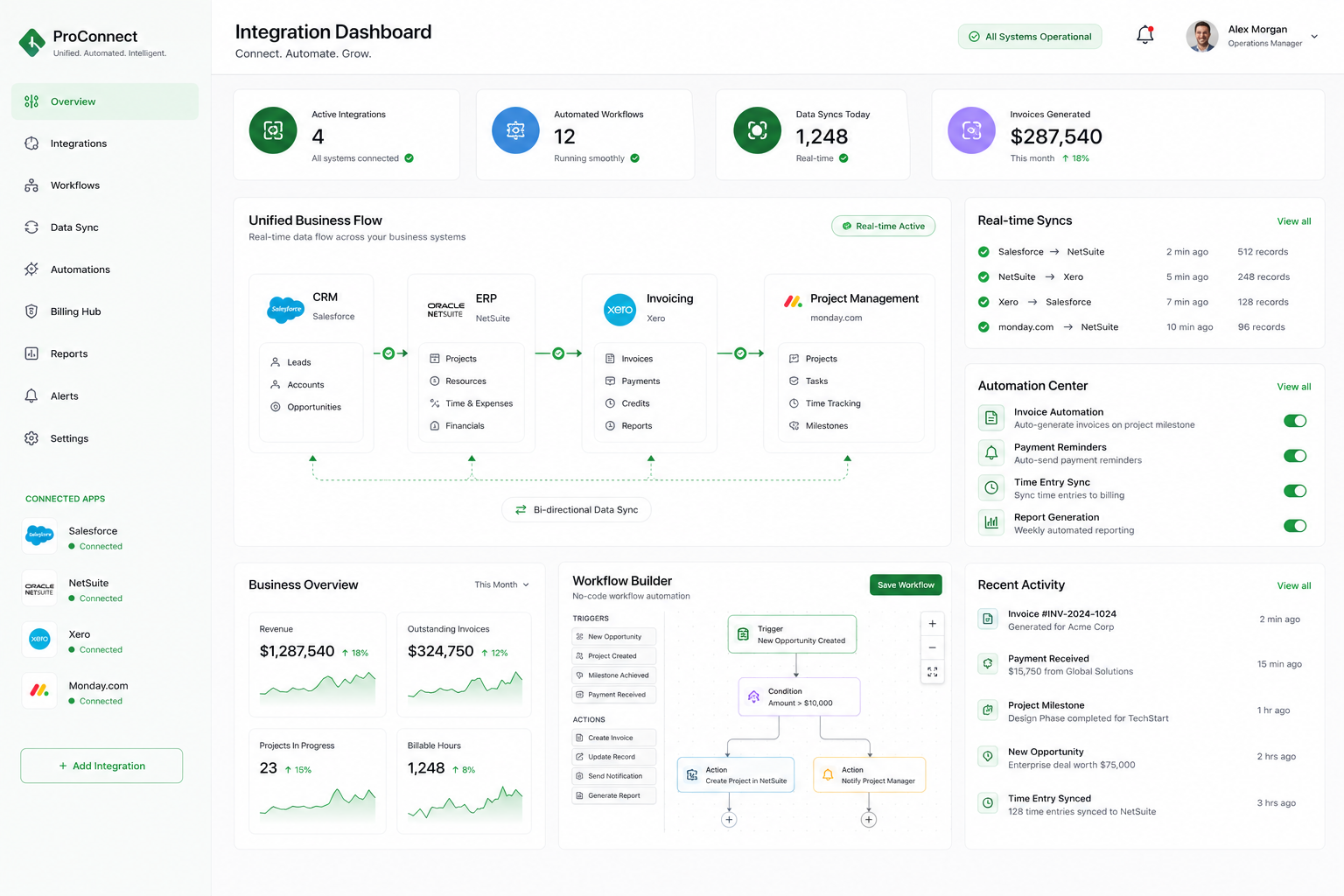
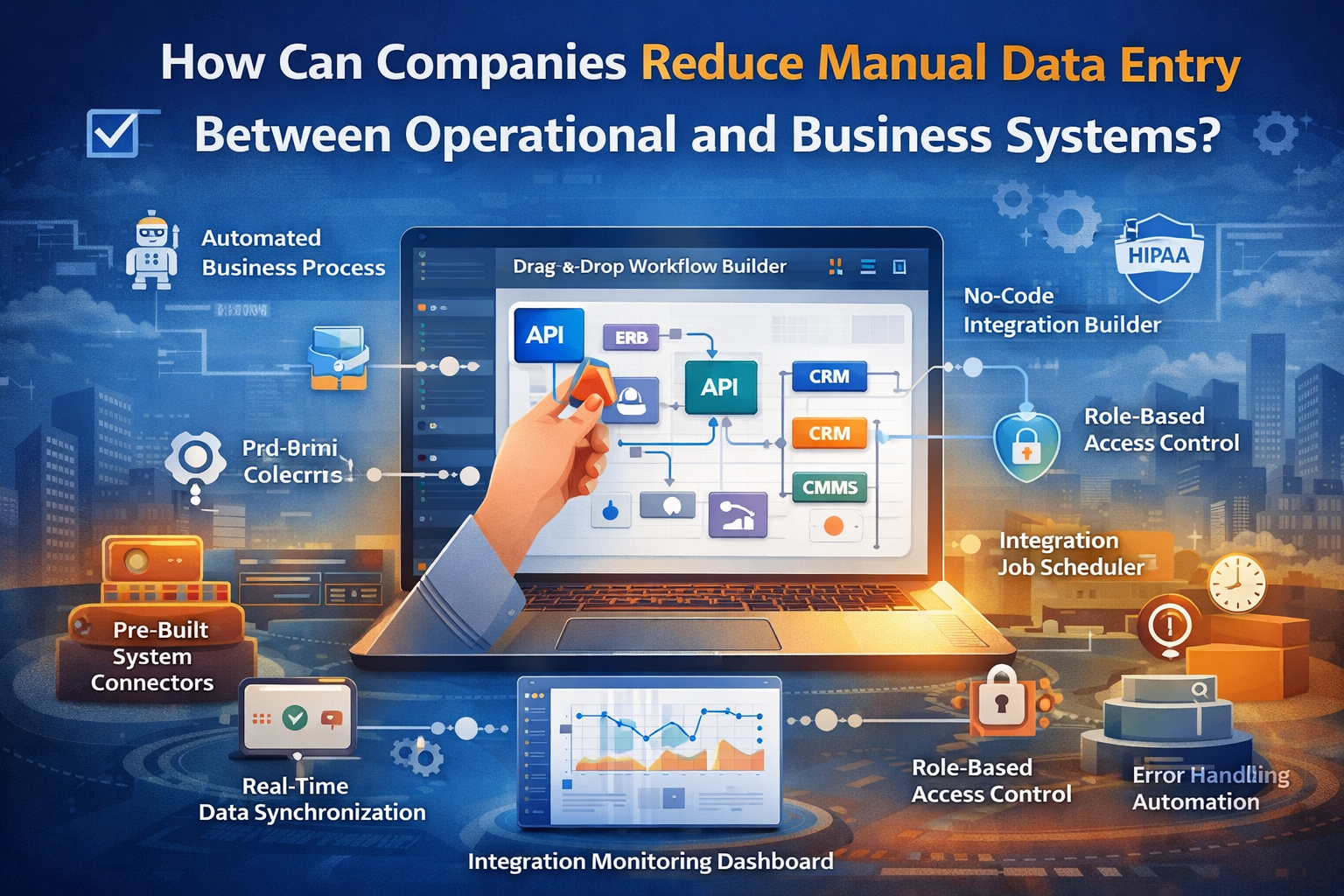
Professional services firms operate in a fast-moving environment where project execution, client communication, resource management, and billing accuracy must remain tightly aligned. However, many