



There's a moment in almost every construction project where the budget and the brief collide. The architect has designed something beautiful. The client has approved something ambitious. And then the quantity surveyor's estimate lands on the table, and it's 20 percent over budget.
This is the moment where most projects go one of two directions. The first is a painful round of cost-cutting — stripping out finishes, downgrading systems, shrinking floor areas, and making compromises that nobody wanted. The building gets cheaper, but it also gets worse.
The second direction is value engineering. And the difference between the two is everything.
Value engineering doesn't ask "What can we remove?" It asks "How can we achieve the same outcome — or a better one — for less money?" That reframing is subtle, but its impact on project outcomes is profound. It's the reason the most experienced developers in Dubai don't see value engineering as an optional exercise. They see it as a core part of the construction process — and they insist on working with a value engineering company in Dubai that knows how to do it properly.
What Value Engineering Actually Is
Value engineering is a structured, analytical method for improving the value of a project by examining the function of every component, system, and specification — and finding ways to deliver that function more efficiently.
The key word is function. Value engineering doesn't start with cost. It starts with purpose. What does this wall need to do? What does this HVAC system need to achieve? What performance standard does this flooring need to meet? Once the function is clearly defined, the team can explore alternative ways to deliver it — different materials, different construction methods, different configurations — that meet the functional requirement at lower cost, with less waste, or with better long-term performance.
As explained in What is Value Engineering in Construction?, this approach has been standard practice in advanced construction markets for decades. But in Dubai, where projects are complex, specifications are high, and budgets are under constant pressure, it has become an essential discipline rather than an academic exercise.
The distinction between value engineering and cost-cutting deserves emphasis because the two are constantly confused. Cost-cutting reduces scope. Value engineering preserves scope and finds smarter ways to deliver it. Cost-cutting leaves clients feeling like they've lost something. Value engineering leaves clients feeling like they've gained something — a better-performing building that costs less to build and less to operate.
When Value Engineering Should Happen
Timing matters enormously. Value engineering delivers the greatest impact when it's applied early — during pre-construction, before designs are finalised and contracts are awarded.
At the concept design stage, the team can challenge fundamental assumptions about building form, structural systems, and servicing strategies. Changing a structural grid from 8 metres to 9 metres might eliminate an entire row of columns, reduce foundation loads, simplify floor layouts, and save hundreds of thousands of dirhams — but only if the decision is made before detailed design begins.
At the detailed design stage, the team can evaluate specific material specifications, MEP system selections, and façade configurations. Substituting a locally manufactured curtain wall system for an imported European one might deliver identical performance at 30 percent lower cost — but only if the procurement team has time to qualify the alternative and the consultant is willing to approve it.
Once construction is underway, value engineering opportunities shrink dramatically. Changes on site are expensive, disruptive, and often compromise quality. The contractors who understand this push for early involvement in the design process — not to override the architect's vision, but to pressure-test it against construction reality before the first shovel hits the ground.
This is exactly why pre-construction services that guarantee project success place value engineering at the heart of their offering. The pre-construction phase is where money is truly saved — not through reactive cuts during construction, but through proactive decisions during planning.
Where the Savings Actually Come From
Value engineering isn't magic. It's expertise applied systematically. The savings come from specific, identifiable decisions across every aspect of a project.
Structural Systems
Structure typically represents 20 to 30 percent of a building's total cost. Even modest optimisations here produce significant savings. A value engineering review might recommend post-tensioned slabs instead of conventionally reinforced ones — reducing slab thickness, cutting concrete and steel quantities, and shortening floor-to-floor construction cycles. It might identify opportunities to rationalise foundation design based on actual soil conditions rather than conservative assumptions. It might propose a hybrid steel-and-concrete structure where the original design specified concrete throughout.
These aren't compromises. They're engineering solutions that deliver the same structural performance with less material, less time, and less cost.
Building Envelope
The façade is another high-cost element where value engineering consistently delivers results. The review might identify glazing specifications that exceed actual performance requirements — triple glazing where high-performance double glazing meets the energy code, for instance. It might recommend unitised curtain wall panels manufactured locally rather than shipped from overseas, cutting both material cost and lead time. It might propose alternative cladding materials that achieve the same aesthetic intent — reconstituted stone instead of natural stone, or high-pressure laminate instead of solid aluminium panels.
In Dubai's climate, the envelope also has operational cost implications. A well-engineered envelope reduces cooling loads, which means smaller HVAC systems, lower energy bills, and reduced plant room space. Those secondary savings compound over the building's lifetime.
MEP Systems
Mechanical, electrical, and plumbing systems are where value engineering gets technical — and where the biggest hidden savings often sit. Oversized HVAC equipment is common in Dubai because consultants apply generous safety factors to cope with extreme conditions. A value engineering review that right-sizes equipment based on accurate load calculations can reduce capital cost by 10 to 15 percent while actually improving system performance and energy efficiency.
Lighting design is another area of opportunity. Replacing specified decorative fixtures with visually equivalent alternatives at lower cost, optimising circuit layouts to reduce cable runs, and specifying LED throughout rather than mixing technologies can all reduce both capital and operating costs without any visible difference to occupants.
Plumbing and drainage offer similar opportunities. Rationalising riser locations, standardising fixture selections, and specifying locally available brands that meet the same quality standards as imported alternatives all contribute to measurable savings.
Materials and Finishes
Interior finishes are often where cost-cutting happens — and where value engineering should happen instead. The difference is approach. Cost-cutting says "Use cheaper tiles." Value engineering says "This porcelain tile at AED 85 per square metre is visually indistinguishable from the specified natural marble at AED 280 per square metre, performs better in wet areas, and requires less maintenance over its lifetime."
That's not a downgrade. That's a better decision.
The same logic applies across finishes: engineered timber instead of solid hardwood for flooring, quartz composite instead of natural stone for countertops, high-quality laminate instead of veneer for joinery. In each case, the alternative meets or exceeds the functional requirement while costing significantly less.
Experienced contractors who practise cost-effective solutions in construction and design understand these material equivalencies intimately. They've tested them on real projects, seen how they perform over time, and can recommend them with confidence — not as compromises but as informed choices.
The Process Behind the Results
Value engineering isn't a brainstorming session over coffee. It follows a structured methodology that ensures every recommendation is technically sound, financially quantified, and aligned with the client's priorities.
The process typically begins with a function analysis — a systematic review of what every building component is designed to do. This is followed by a creative phase where the team generates alternative solutions for each function. Those alternatives are then evaluated against criteria including cost, performance, buildability, maintenance requirements, and aesthetic impact. The strongest options are developed into detailed proposals with cost comparisons, and the final recommendations are presented to the client for approval.
Throughout this process, the value engineering company in Dubai works collaboratively with the design team — not in opposition to them. The goal isn't to undermine the architect's design intent. It's to find ways to realise that intent more efficiently. The best value engineering outcomes happen when contractors and consultants work as partners, each bringing their expertise to the table.
What Clients Get Wrong About Value Engineering
Despite its proven track record, value engineering is still misunderstood by some clients — and that misunderstanding costs them money.
The most common mistake is treating value engineering as a cost-reduction exercise that happens after the budget is blown. By that point, the options are limited, the design team is defensive, and the process becomes adversarial rather than collaborative. Value engineering works best when it's baked into the project from the start — not bolted on as a crisis response.
The second mistake is equating cost with value. A component that costs less upfront but requires frequent maintenance, consumes more energy, or has a shorter lifespan isn't necessarily better value. True value engineering considers the total cost of ownership — capital cost plus operating cost plus maintenance cost plus replacement cost over the building's life. Sometimes the value engineering recommendation is to spend more on a particular item because the lifecycle savings justify it.
The third mistake is assuming that value engineering is only relevant for large projects. In reality, the methodology scales. A villa fit-out, a restaurant build-out, a small office renovation — each can benefit from a structured review of specifications and alternatives. The absolute savings may be smaller, but the percentage improvement can be just as significant.
Why It Matters in Dubai's Current Market
Dubai's construction market is competitive, fast-moving, and cost-conscious. Material prices have risen. Labour rates have increased. Clients expect more for their budgets, not less. In this environment, the ability to deliver genuine value — not just low prices — is what separates the best contractors from the rest.
A value engineering company in Dubai that brings deep construction knowledge, strong supplier relationships, and a systematic approach to optimisation gives clients something they can't get from a low-bid contractor: confidence that every dirham in their budget is working as hard as it possibly can.
That's not cutting corners. That's building smarter. And in a city that demands excellence at every level, building smarter is the only approach that makes sense.
https://www.capitalassociated.com/services/value-engineering

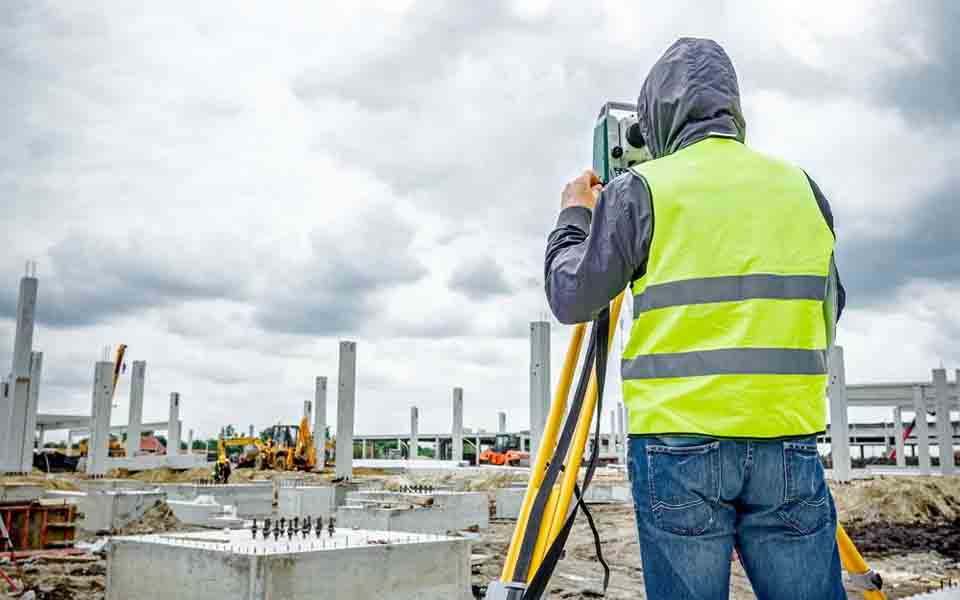

The best construction cost estimators are those that have worked in the construction industry as managers or engineers and know the many variables involved in material take-off.
Construction cost estimating services combines the art of estimating the unforeseeable elements of project construction with the science of accurately counting and measuring the symbols shown on engineering blueprints to arrive at final cost analysis for bidding.
To maintain steady revenue for your contracting business, and to keep your employees working, it is important to bid on upcoming projects on a regular basis to stay competitive.
Using a service keeps your company focused on present work, while others take the time to carefully identify all the major and minor cost items involved in the proposed project scope.
Our experienced construction professionals take care to calculate not only direct labor and material costs, but also the indirect costs that are not always reflected on engineering plans, such as equipment costs.
This prevents your company from losing profit by underbidding and ensures your company maintains a minimum profit level.