


Choosing the right boat engine is one of the most consequential decisions a boat owner or buyer makes. The engine determines performance, fuel economy, maintenance costs, and ultimately how enjoyable the boat is to operate over its service life. In the US market, outboard motors dominate across most recreational and light commercial vessel categories — and the range of available options is broader than ever in 2026.
Understanding Horsepower Requirements
The first step in selecting a boat engine is determining the appropriate horsepower range for your hull. Every boat manufactured in the US carries a capacity plate — typically located near the helm — that specifies the maximum horsepower rating the hull is designed to handle. Exceeding this rating creates real safety risks and voids insurance coverage in most cases.
Within the rated range, the right horsepower depends on how you use the boat. A bass boat used primarily for slow-speed fishing requires far less power than a center console used for offshore runs at 40+ knots. A general rule is to size the engine toward the upper end of the rated range if performance and fuel economy at cruise speed are priorities — underpowered boats work harder to get on plane and burn more fuel per mile as a result.
Two-Stroke vs. Four-Stroke
The two-stroke versus four-stroke question is largely settled in the US market. Direct injection two-stroke engines from Evinrude (E-TEC) offered a genuine performance alternative, but Evinrude ceased production in 2020. The remaining major brands — Yamaha, Mercury, Honda, Suzuki — produce exclusively four-stroke outboards for the recreational market.
Four-stroke engines are cleaner, quieter, more fuel-efficient at cruise speeds, and require less frequent maintenance than older carbureted two-strokes. Used two-stroke inventory remains available and can be cost-effective for buyers with mechanical aptitude and lower budgets, but parts availability is declining for older models.
Key Factors When Evaluating a Boat Engine
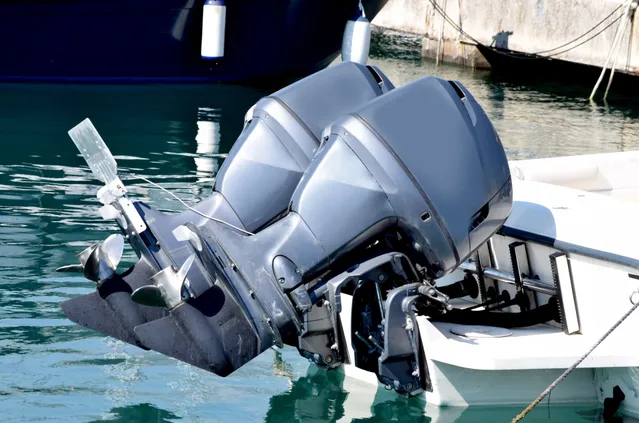
Weight is a practical consideration that many buyers underestimate. Larger outboards are heavy — a 300 HP four-stroke can weigh 600 lbs or more. For smaller hulls and multi-engine setups, weight distribution affects handling and performance significantly. Always verify that your transom is rated for the engine weight you're considering.
Shaft length must match your transom height. Standard (15 inch) and long (20 inch) are the most common configurations for recreational boats. Running the wrong shaft length causes ventilation issues — the propeller either cavitates near the surface or runs too deep, both of which hurt performance and increase fuel consumption.
Tiller vs. remote steering is relevant for smaller vessels. Most outboards above 30 HP are configured for remote steering with a separate helm, but smaller motors are available in tiller configuration where the operator steers directly from the motor — common on jon boats, small fishing vessels, and tenders.
New vs. Used
The decision between new and used depends primarily on budget and risk tolerance. New engines come with manufacturer warranties — typically 3 to 5 years for recreational use — and the full benefit of current technology. Current generation four-strokes from Yamaha, Mercury, and Honda are meaningfully more fuel-efficient than models from 10 years ago, which affects total cost of ownership over a 10-year horizon.
Used engines offer significant cost savings. A well-maintained 5-year-old outboard with documented service history and under 400 hours can be purchased for 40 to 60 percent of new price. The critical inspection points are compression readings, lower unit condition, and water pump service history — the same checks apply regardless of brand.
For buyers actively searching for a boat engine for sale USA, the current US market offers strong inventory across all horsepower classes from major brands, with particularly good availability of 115 to 150 HP four-stroke models in the 2019 to 2023 range.
Brand Considerations
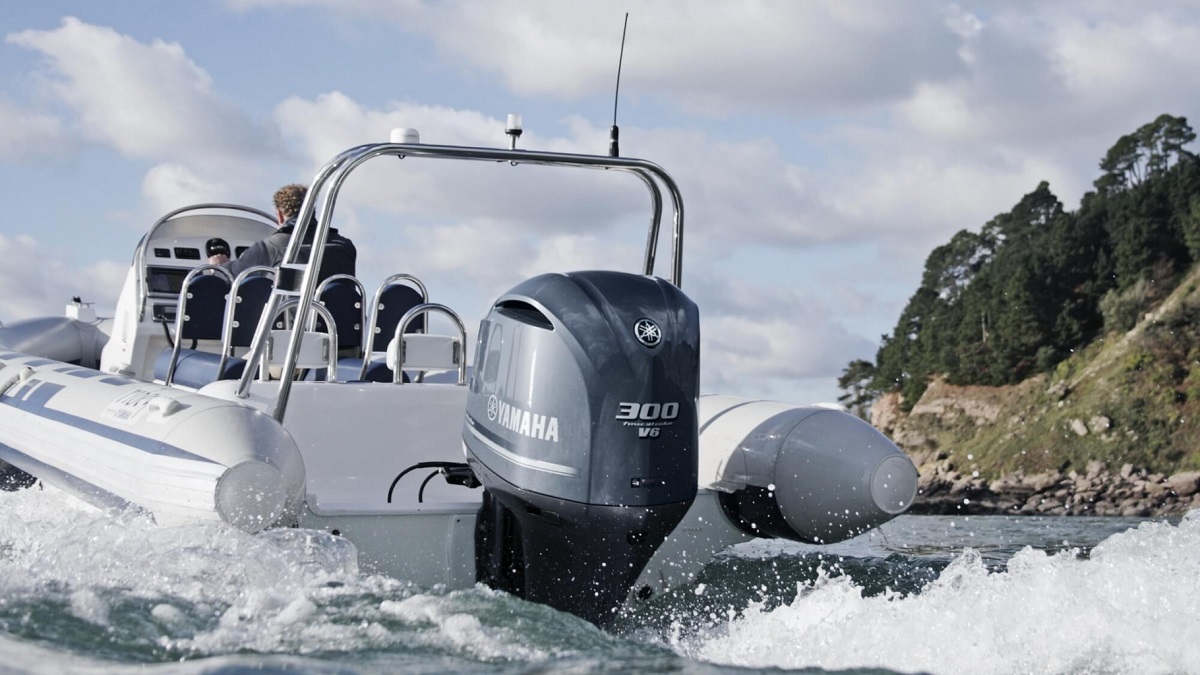
Yamaha and Mercury collectively dominate the US outboard market. Both offer extensive dealer networks, strong parts availability, and proven reliability across their lineups. Honda and Suzuki occupy a smaller but loyal segment, particularly among buyers who prioritize fuel efficiency and long-term reliability over outright performance.
Brand selection often comes down to dealer proximity and service capability as much as engine specifications. A Suzuki with a dealer 5 miles away may be a better practical choice than a slightly superior motor whose nearest service center is 60 miles away.
Where to Buy
Authorized dealers provide warranty support and certified technician access. Independent marine dealers and online sellers offer broader inventory and competitive pricing, particularly on used engines. For buyers who want a verified selection of outboard engine for sale USA options across multiple brands and horsepower classes, working with a specialist dealer simplifies the comparison process considerably.
Outboard Engine Hub provides a curated inventory of outboard motors from leading manufacturers, with transparent specifications and competitive pricing for US buyers at every budget level.

The maritime industry is going through a range of changes with the growing demand for activities including shipping and fishing, which is likely to result in the emergence of diversification in related businesses.
Frequent innovations in technology are also aiding in the expansion of the marine outboard engines industry.
The global marine outboard engines market is set to grow by 1.3 times during the forecast period till 2029 and is expected to surpass a value of USD 2.5 billion during this time.
These trends are supported by a rising demand for boats such as larger day boats and sports cruisers, which will ensure above average growth in the industry during this period.The global marine outboard engine market study presents an all in all compilation of the historical, current and future outlook of the market as well as the factors responsible for such a growth.
With SWOT analysis, the business study highlights the strengths, weaknesses, opportunities and threats of each marine outboard engine market player in a comprehensive way.
Further, the marine outboard engine market report emphasizes the adoption pattern of the marine outboard engine across various industries.The marine outboard engine market report highlights the following players:DEUTZ AGHonda Motor Co., Ltd.Brunswick CorporationSuzuki Motor CorporationOthersThe marine outboard engine market report examines the operating pattern of each player – new product launches, partnerships, and acquisitions – has been examined in detail.Product Innovation Strategies are Key to GrowthMajor players in the industry are increasingly focusing their efforts towards the launch of advanced marine outboard engines, which have greater reliability and higher levels of power efficiency.