Solar shingles have been one of the most talked-about roofing innovations for years, but many homeowners have wondered the same thing: are they actually worth it?
In 2026, the answer is more practical than it used to be. Solar shingles are no longer just a futuristic upgrade for luxury homes. They are becoming a real option for homeowners who need a roof replacement and want their home to generate clean energy without the look of bulky solar panels.
However, solar shingles are not the right choice for every home, every budget, or every roof. Before making a decision, homeowners should understand how they work, what they cost, when they make financial sense, and why choosing the right roofing company matters.
For homeowners comparing roof replacement options, Lyndsey Roofing and Solar Energy Company By Lyndsey Roofing can help explain whether solar shingles are a smart fit based on the condition of the roof, the home’s energy needs, and the homeowner’s long-term goals.
What Are Solar Shingles?
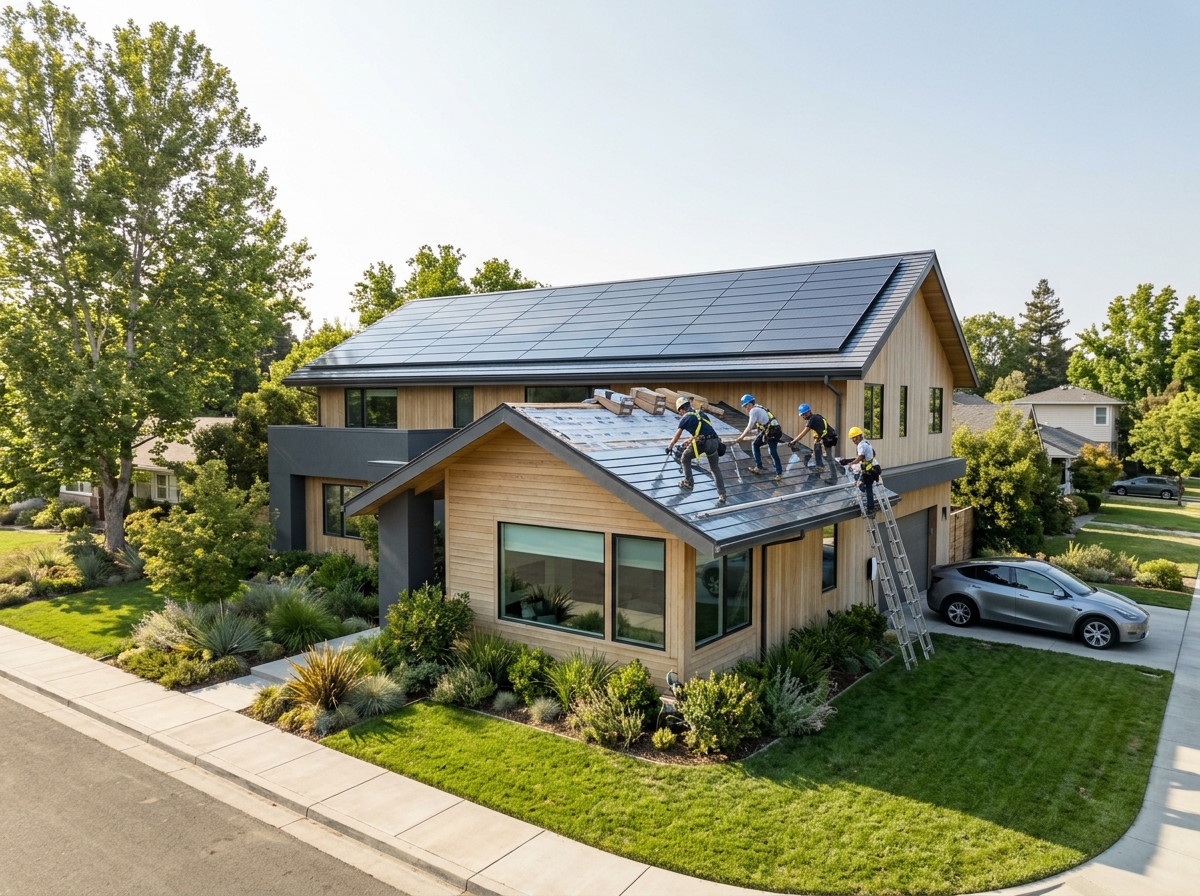
Solar shingles are roofing materials designed to protect your home while also producing electricity from sunlight. Instead of placing a separate solar panel system on top of the roof, solar shingles become part of the roofing system itself.
This is what makes them so appealing. They offer a cleaner, more integrated appearance while still helping homeowners reduce their reliance on utility power.
In simple terms, solar shingles do two jobs:
1. They help protect the home from the elements.
2. They convert sunlight into usable electricity.
For homeowners who care about curb appeal, this is one of the biggest advantages. Solar shingles are designed to sit low and blend into the roofline, making them less noticeable than traditional rack-mounted solar panels.
Why Solar Shingles Are Getting More Attention in 2026
Solar shingles are gaining more attention in 2026 because the roofing and solar industries are becoming more connected. Homeowners are no longer thinking about roofing and energy as two separate projects. Instead, many are asking whether a roof replacement can also become an energy upgrade.
This shift makes sense. If a roof is already near the end of its lifespan, adding solar shingles during replacement may be more practical than installing a new roof first and adding solar equipment later.
Homeowners are also more aware of rising electricity costs, energy independence, and long-term home value. As a result, solar shingles are becoming part of a bigger conversation about smarter home investments.
A knowledgeable roofer can help homeowners look beyond the trend and decide whether the investment makes sense for their specific property.
Are Solar Shingles Worth It in 2026?
Solar shingles can be worth it in 2026, especially for homeowners who already need a full roof replacement and want a more streamlined solar option.
They may be worth considering if:
* Your roof is aging or damaged.
* You plan to stay in your home long-term.
* Your home gets strong sun exposure.
* Your electricity bills are high.
* You want solar power without the look of standard panels.
* You are interested in improving your home’s energy efficiency.
* You want one coordinated project instead of separate roofing and solar installations.
However, solar shingles may not be worth it if your roof is still in excellent condition, your energy usage is low, your roof receives heavy shade, or you are mainly looking for the lowest upfront cost.
The best answer depends on the home. That is why working with a roofing company that understands both roofing performance and solar energy is important.
Solar Shingles vs. Traditional Solar Panels
Solar shingles and traditional solar panels both generate electricity, but they are designed differently.
Traditional solar panels are mounted above an existing roof. They are often more efficient per square foot and may cost less than solar shingles. For homeowners who recently replaced their roof, traditional solar panels may still be the more practical choice.
Solar shingles, on the other hand, are installed as part of the roofing system. They are often chosen by homeowners who want a cleaner appearance and are already planning to replace their roof.
The main difference is this: traditional solar panels are added to the roof, while solar shingles become part of the roof.
For many homeowners, the decision comes down to timing. If the roof is new, panels may make more sense. If the roof needs replacement, solar shingles may be worth a closer look.
Why Roof Replacement Is the Best Time to Consider Solar Shingles
The best time to consider solar shingles is before replacing your roof. This allows the homeowner, roofer, and solar team to evaluate the entire project together.
When solar shingles are planned during roof replacement, the process can be more efficient. The roofing system, solar layout, electrical needs, and long-term performance can all be considered from the beginning.
This matters because installing solar on a roof that may need replacement soon can create extra costs later. If solar equipment has to be removed and reinstalled for future roof work, that can add unnecessary expense and complexity.
Before replacing your roof, ask your roofing company these questions:
* Is my roof a good candidate for solar shingles?
* How much direct sunlight does my home receive?
* What parts of the roof are best suited for solar production?
* How does the roof’s slope affect solar performance?
* What are the expected energy savings?
* How long do I plan to stay in the home?
* What warranties are available?
* Who handles the roofing and solar installation details?
These questions help homeowners make a decision based on facts rather than hype.
How Much Do Solar Shingles Cost in 2026?
Solar shingles generally cost more upfront than a standard roof replacement. They may also cost more than traditional solar panels, depending on the system, home size, roof complexity, energy goals, and installation requirements.
The final price can vary widely based on:
* Roof size
* Roof shape
* Roof slope
* Amount of sunlight
* Energy usage
* Electrical upgrades
* Product selection
* Labor requirements
* Local permitting
* Battery storage options
Because solar shingles combine roofing and solar technology, the estimate should not be compared only to a standard roof replacement. Homeowners should compare the total value: roof protection, energy production, appearance, potential utility savings, and long-term home performance.
A professional roofer can inspect the roof and help determine whether solar shingles are a practical investment or whether another roofing solution would be more cost-effective.
The 2026 Tax Credit Question
One major change homeowners need to understand in 2026 is the federal tax credit landscape.
In previous years, many homeowners considered solar upgrades with the help of federal clean energy incentives. For 2026, homeowners should not assume that the same federal tax credit benefits are available for new solar projects placed in service after the end of 2025.
This makes local guidance even more important. Homeowners should speak with a tax professional about current eligibility and should also ask their roofing company for updated information about available manufacturer offers, financing options, and local incentives.
Solar shingles may still be worth it without a federal tax credit, but the math needs to be reviewed carefully.
Pros of Solar Shingles
Solar shingles offer several advantages for homeowners who want a roof replacement and an energy upgrade at the same time.
1. Clean Appearance
One of the biggest reasons homeowners choose solar shingles is appearance. They are designed to blend more naturally with the roof, creating a cleaner and less noticeable look than traditional solar panels.
2. Energy Production
Solar shingles can help generate electricity for the home, which may reduce monthly utility bills depending on system size, energy usage, and local energy rates.
3. Smart Timing During Roof Replacement
If a homeowner already needs a new roof, solar shingles can make more sense than waiting and adding solar later.
4. Potential Home Value Appeal
Energy-efficient upgrades can be attractive to future buyers, especially when they are integrated into the home’s overall design.
5. Reduced Need for Separate Projects
By combining roofing and solar planning, homeowners may be able to streamline the process and avoid coordinating two separate projects.
Cons of Solar Shingles
Solar shingles are promising, but they are not perfect for every homeowner.
1. Higher Upfront Cost
The biggest drawback is cost. Solar shingles usually require a larger upfront investment than a standard roof replacement.
2. Not Ideal for Every Roof
Homes with heavy shade, complicated rooflines, or poor sun exposure may not get enough energy production to justify the investment.
3. Product and Installer Availability
Solar shingles may not be available everywhere, and not every roofing company has the experience needed to install or coordinate them properly.
4. Longer Payback Period
Depending on cost, energy savings, and available incentives, homeowners may need many years to recover the investment through utility savings.
5. More Complex Planning
Solar shingles require roofing knowledge, solar knowledge, electrical coordination, and careful project planning.
This is why homeowners should choose an experienced roofing company rather than treating the project like a simple product upgrade.
Who Should Consider Solar Shingles?
Solar shingles may be a strong option for homeowners who are replacing their roof and want a long-term energy solution.
They are especially worth considering for homeowners who:
* Need a full roof replacement soon
* Have strong sun exposure
* Want a low-profile solar appearance
* Have higher electricity costs
* Plan to stay in the home for several years
* Want to modernize their home
* Prefer one coordinated roofing and solar project
For these homeowners, **Lyndsey Roofing and Solar Energy Company By Lyndsey Roofing** can help assess whether solar shingles are a practical option or whether a traditional roof replacement may be a better fit.
Who Should Avoid Solar Shingles?
Solar shingles may not be the best choice for every situation.
They may not be ideal if:
* Your current roof is still in excellent condition
* You plan to sell your home soon
* Your roof receives heavy shade
* Your budget is focused only on the lowest upfront cost
* Your home has limited solar exposure
* Your energy usage is already very low
* You are not prepared for a longer-term return on investment
A trusted roofer should be honest about these limitations. The goal is not to sell every homeowner solar shingles. The goal is to recommend the right roofing solution for the home.
What Homeowners Should Ask Before Choosing Solar Shingles
Before moving forward with solar shingles, homeowners should ask clear questions.
Here are some of the most important ones:
How much energy can my roof realistically produce?
Not every roof has the same solar potential. Sun exposure, roof direction, shade, and roof shape all matter.
What is the total installed cost?
Ask for a detailed estimate that explains the roofing work, solar components, electrical needs, and any optional upgrades.
What warranties are included?
Homeowners should understand both the roofing warranty and the solar performance warranty.
Will I need electrical upgrades?
Some homes may need electrical improvements before solar shingles can be connected safely.
How long is the expected payback period?
The payback period depends on upfront cost, electricity rates, energy production, financing, and incentives.
Who handles the installation?
Solar shingles require coordination between roofing and solar professionals. Homeowners should know who is responsible for each part of the project.
What happens if repairs are needed later?
Ask how future maintenance, troubleshooting, or replacement work would be handled.
These questions help homeowners avoid surprises and make a confident decision.
Why Choosing the Right Roofing Company Matters
Solar shingles are not just an energy product. They are part of the roof. That means installation quality matters.
A roofing company should understand how to protect the home, manage water flow, evaluate roof structure, and install materials correctly. When solar is added to the equation, the project also requires energy planning and electrical coordination.
Choosing the right roofer can make the difference between a smooth project and a frustrating one.
Homeowners should look for a company that can explain:
* Whether the roof is ready for solar shingles
* How the system will be integrated
* What the installation process involves
* What warranties apply
* What maintenance may be needed
* Whether solar shingles are truly worth it for the home
**Lyndsey Roofing and Solar Energy Company By Lyndsey Roofing** helps homeowners evaluate roofing and solar options with a practical, property-specific approach.
Are Solar Shingles Durable?
Solar shingles are designed to function as part of the roofing system, so durability is an important part of their value. Depending on the manufacturer and product, they may be designed to withstand wind, rain, hail, and long-term sun exposure.
Still, homeowners should not assume all solar shingles perform the same way. Product specifications, installation quality, and warranty coverage can vary.
Before choosing solar shingles, ask your roofer about:
* Wind ratings
* Fire ratings
* Hail resistance
* Product lifespan
* Energy production warranty
* Workmanship warranty
* Maintenance recommendations
Durability is not just about the product. It is also about the quality of installation.
Do Solar Shingles Increase Home Value?
Solar shingles may increase home appeal, especially for buyers interested in energy efficiency and modern design. A home with a newer roof and integrated solar energy may stand out in a competitive market.
However, value depends on many factors, including local buyer demand, energy costs, system ownership, warranty transferability, and how much energy the system produces.
Homeowners should think of solar shingles as a long-term lifestyle and energy investment rather than a guaranteed quick resale upgrade.
Solar Shingles and Energy Independence
Another reason homeowners are interested in solar shingles is energy independence. While solar shingles may not eliminate every utility bill, they can help reduce reliance on grid electricity.
When paired with battery storage, some systems may also provide backup power during outages. This can be especially appealing for homeowners who want more control over their home’s energy use.
The right setup depends on the home’s energy needs, local utility rules, and budget.
Are Solar Shingles Better Than a Standard Roof Replacement?
Solar shingles are not automatically better than a standard roof replacement. They are better for certain homeowners with the right conditions.
A standard roof replacement may be the better choice if the homeowner wants a lower upfront cost, has limited sun exposure, or does not plan to stay in the home long enough to benefit from energy savings.
Solar shingles may be the better choice if the homeowner wants long-term energy production, improved appearance, and a roof replacement that also supports clean energy goals.
The best decision comes from comparing both options side by side.
Final Verdict: Are Solar Shingles Finally Worth It in 2026?
Solar shingles are finally worth serious consideration in 2026, but they are not automatically worth it for every homeowner.
They make the most sense when a homeowner already needs a roof replacement, has good sun exposure, plans to stay in the home long-term, and values a clean, integrated solar appearance. They are less ideal for homeowners with limited budgets, shaded roofs, or short-term plans to move.
The smartest first step is to schedule a roof inspection and energy consultation with a knowledgeable roofing company.
For homeowners exploring solar shingles, **Lyndsey Roofing and Solar Energy Company By Lyndsey Roofing** can help determine whether this technology is a smart investment or whether another roofing option would provide better value.
Frequently Asked Questions About Solar Shingles
Are solar shingles worth it in 2026?
Solar shingles can be worth it in 2026 for homeowners who need a roof replacement and want an integrated solar energy solution. They are usually best for homes with strong sun exposure and owners who plan to stay long-term.
Do solar shingles replace regular roofing materials?
Yes, solar shingles are designed to become part of the roofing system while also producing electricity. They protect the home and generate power from sunlight.
Are solar shingles cheaper than solar panels?
Usually, solar shingles cost more upfront than traditional solar panels. However, if the homeowner already needs a roof replacement, the value comparison can become more favorable.
Can any roofer install solar shingles?
Not every roofer is trained or experienced with solar shingles. Homeowners should choose a roofing company that understands both roofing performance and solar integration.
How long do solar shingles last?
Lifespan depends on the product, installation quality, weather exposure, and maintenance. Homeowners should review both roofing and solar warranties before making a decision.
Do solar shingles work during cloudy weather?
Solar shingles can still generate some electricity on cloudy days, but production is lower than on bright, sunny days.
Should I replace my roof before getting solar shingles?
If your roof is old or damaged, it is usually better to address the full roof replacement before or during the solar project. Installing solar on a failing roof can lead to added costs later.
Who should I call to learn more?
Homeowners can contact Lyndsey Roofing to discuss roof replacement options, solar shingles, and whether their home is a good candidate for an integrated roofing and solar solution.
References:
[1]: https://www.irs.gov/credits-deductions/residential-clean-energy-credit "Residential Clean Energy Credit - Internal Revenue Service"
[2]: https://www.gaf.com/en-us/roofing-materials/residential-roofing-materials/shingles/gaf-energy-timberline-solar-roofing-system "GAF Energy Timberline Solar® ES 2: Solar Shingles"