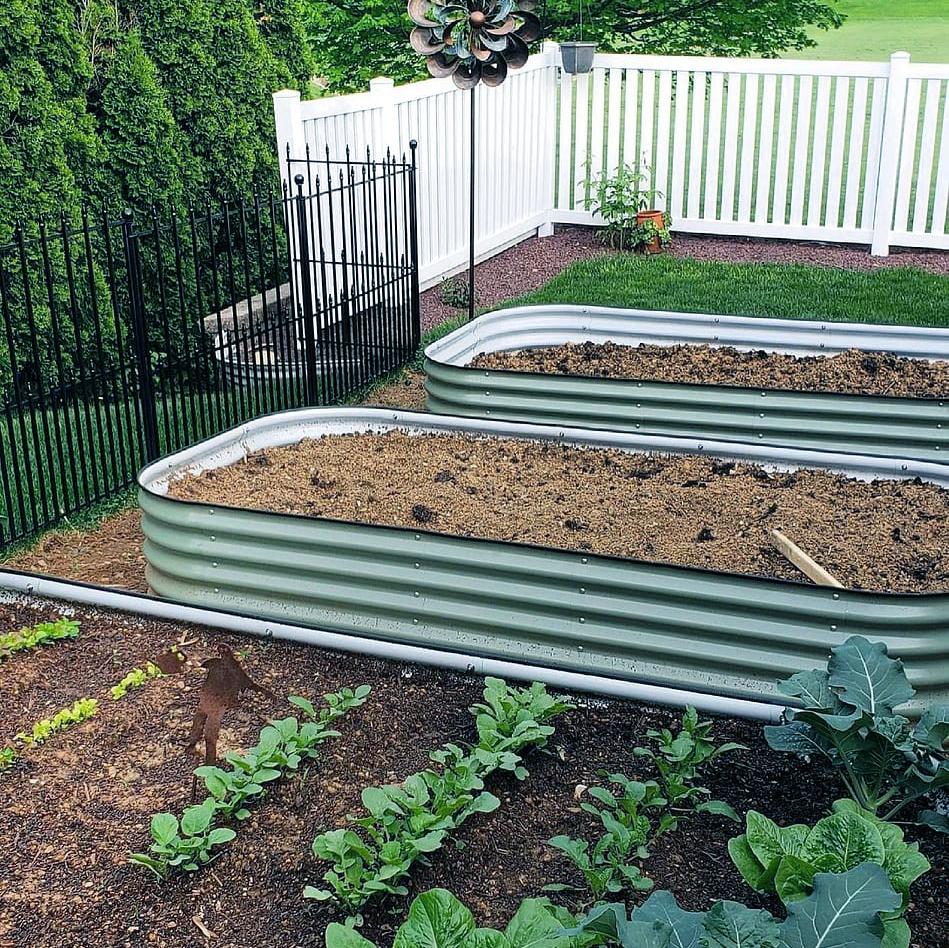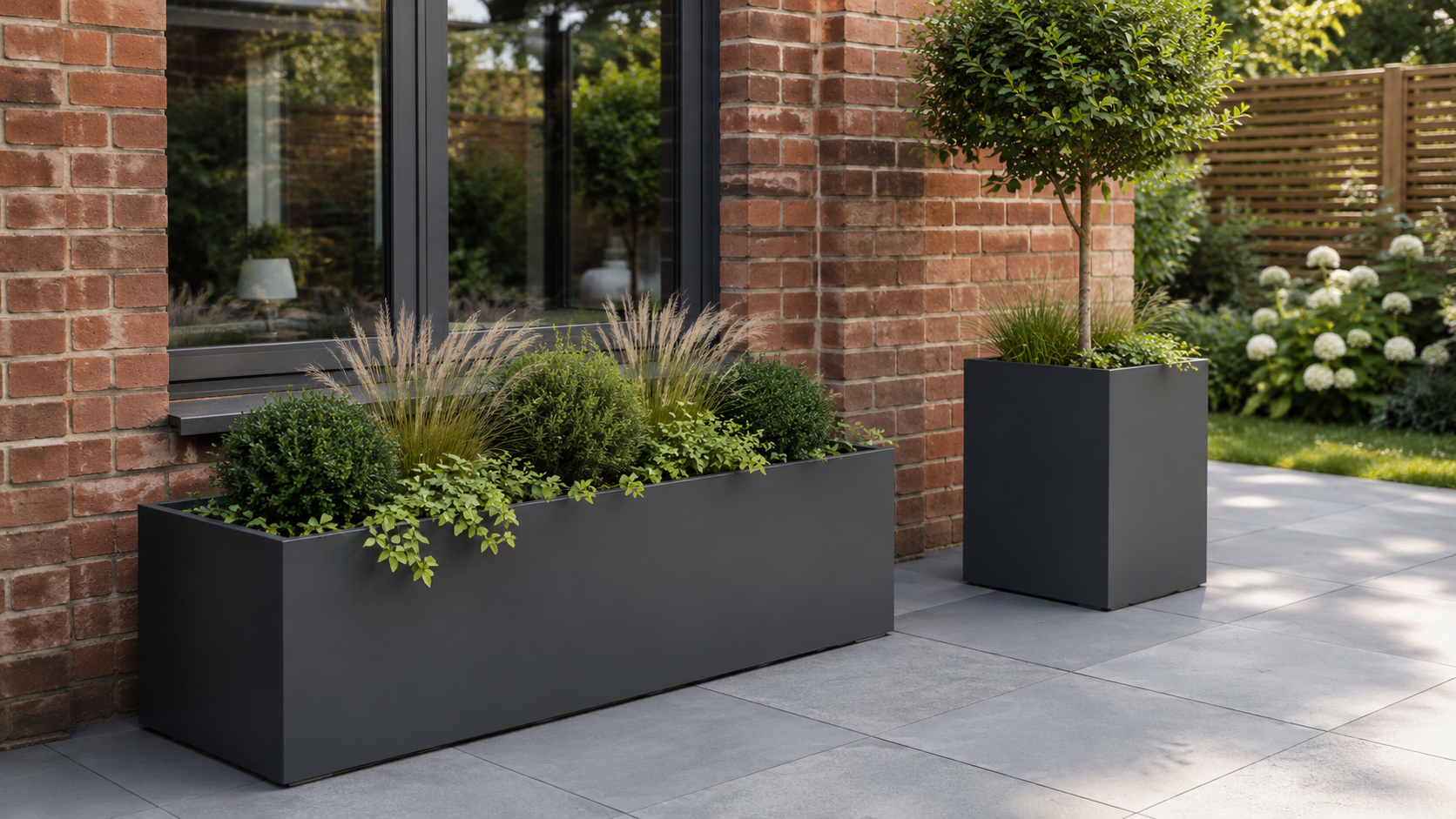
A garden can contain plenty of planting and still feel flat or incomplete. This is often most obvious beside a paved patio, along a plain garden boundary or near a rear extension where there is open space but little structure. Metal raised planters can help create that missing connection. By lifting planting above ground level, they introduce a clearer visual line, make foliage more noticeable and give different parts of the garden a more settled relationship.
The best raised planter is not necessarily the tallest or largest one. Its height, length, depth, material, finish and planting role all need to suit the available space. A long trough beside a contemporary extension may feel balanced and useful, while the same planter could overwhelm a compact courtyard. This guide explains how metal raised planters may be considered for gardens, patios, entrances and landscaped areas, with attention to practical planning as well as appearance.
Why Raised Planters Can Change the Shape of an Outdoor Space
Raised planting creates a visible change in level without needing extensive built landscaping. It can frame the edge of a patio, soften a long boundary wall or create a deliberate transition between paving and lawn. In compact gardens, one well-positioned planter may provide more structure than several unrelated containers placed around the perimeter.
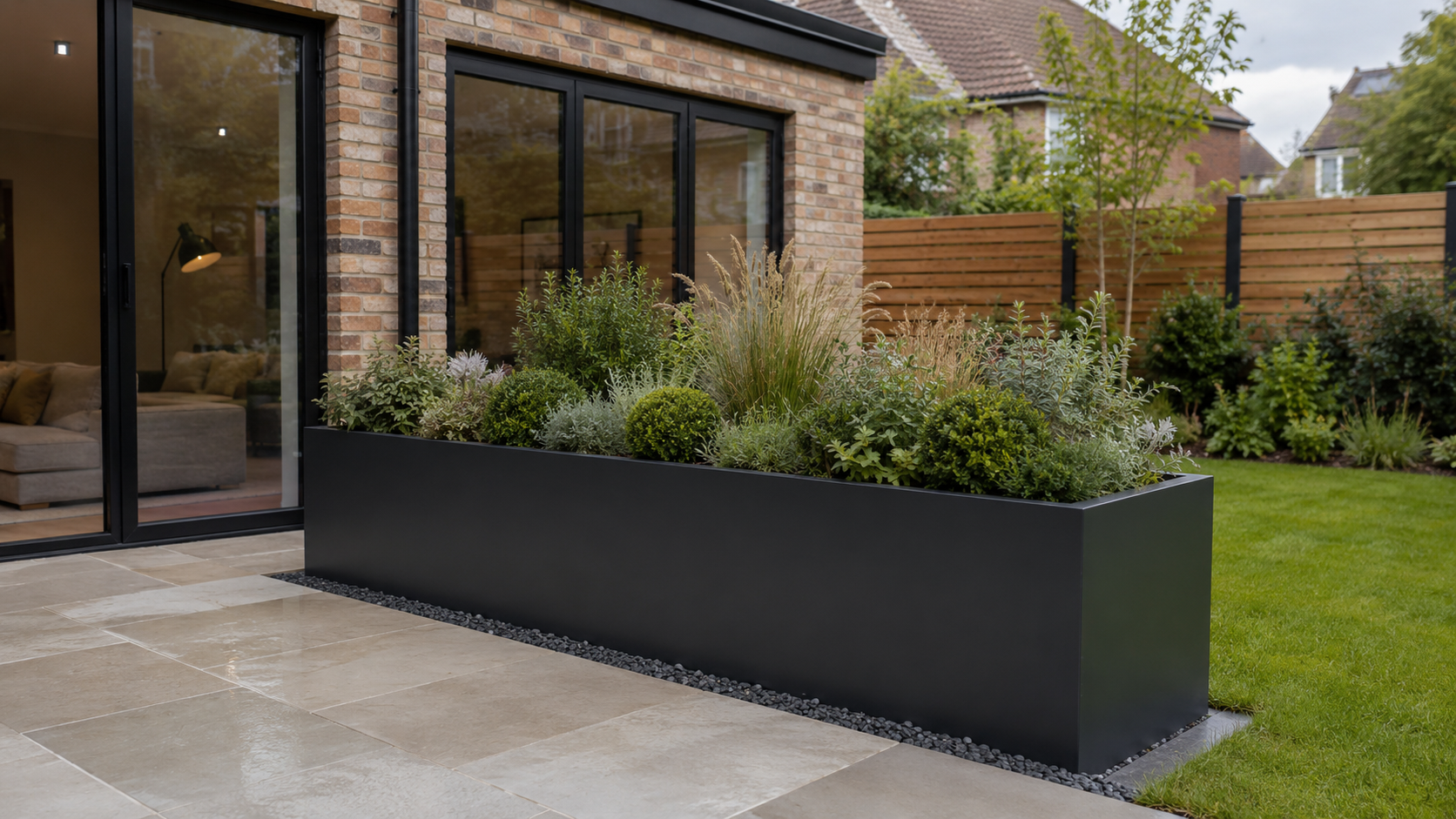
A raised planter can also make planting easier to see from indoors. This matters beside sliding doors, kitchen windows and seating areas where lower planting can disappear behind paving or furniture. The aim is not simply to lift plants higher. It is to use planting features to give the garden a stronger sense of order.
The wider metal planter range is a useful starting point for comparing material directions and planter forms. The final selection should still reflect the garden layout, planting intention and surrounding hard landscaping.
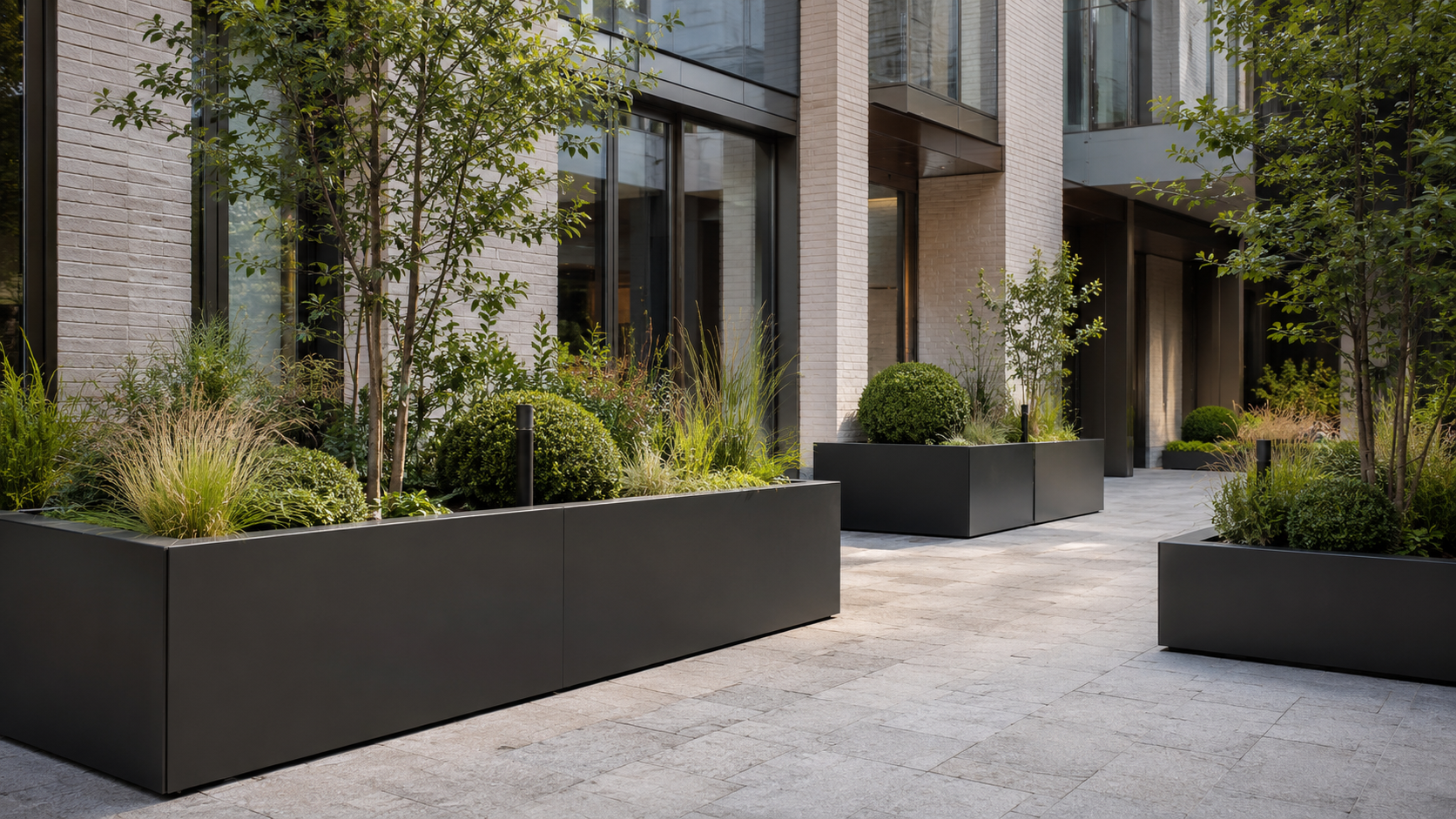
Creating clearer planting levels around patios and boundaries
Along a patio edge, a raised planter can introduce greenery without taking away too much floor space. A long rectangular trough may sit neatly beside paving, helping to define a seating area while still leaving the central part of the garden open.
At a boundary, a raised planting feature can turn an otherwise plain fence or wall line into a more considered backdrop. Repeated grasses, evergreen shrubs or seasonal planting can create a continuous visual rhythm. This is often more effective than placing several small pots at irregular intervals.
When raised planting may suit a garden layout
Raised planting may be useful where ground-level beds are difficult to define, where existing surfaces are mostly paved or where a garden needs more visible structure. It can work beside a garden path, near a patio, along a boundary or around a courtyard seating area.
The scale of the planter should always support the overall garden. A taller format may help with planting presence in an exposed area, but it can make a narrow patio feel enclosed. A lower, longer planter may create the same planting impact while keeping views more open.
Choosing a Material for Raised Metal Planters
Material choice affects how a planter looks in the garden and how it relates to surrounding finishes. Corten steel, PPC mild steel and PPC aluminium all offer different visual directions. The most suitable option depends on whether the garden needs warmth and texture, a controlled powder-coated colour or a lighter aluminium direction.
It is useful to look beyond the planter itself. Consider brickwork, render, paving, timber fencing, black-framed doors, garden furniture and existing exterior metalwork. A planter works best when it looks connected to these details rather than placed into the garden as an unrelated object.
Corten Steel for a Changing Weathered Finish
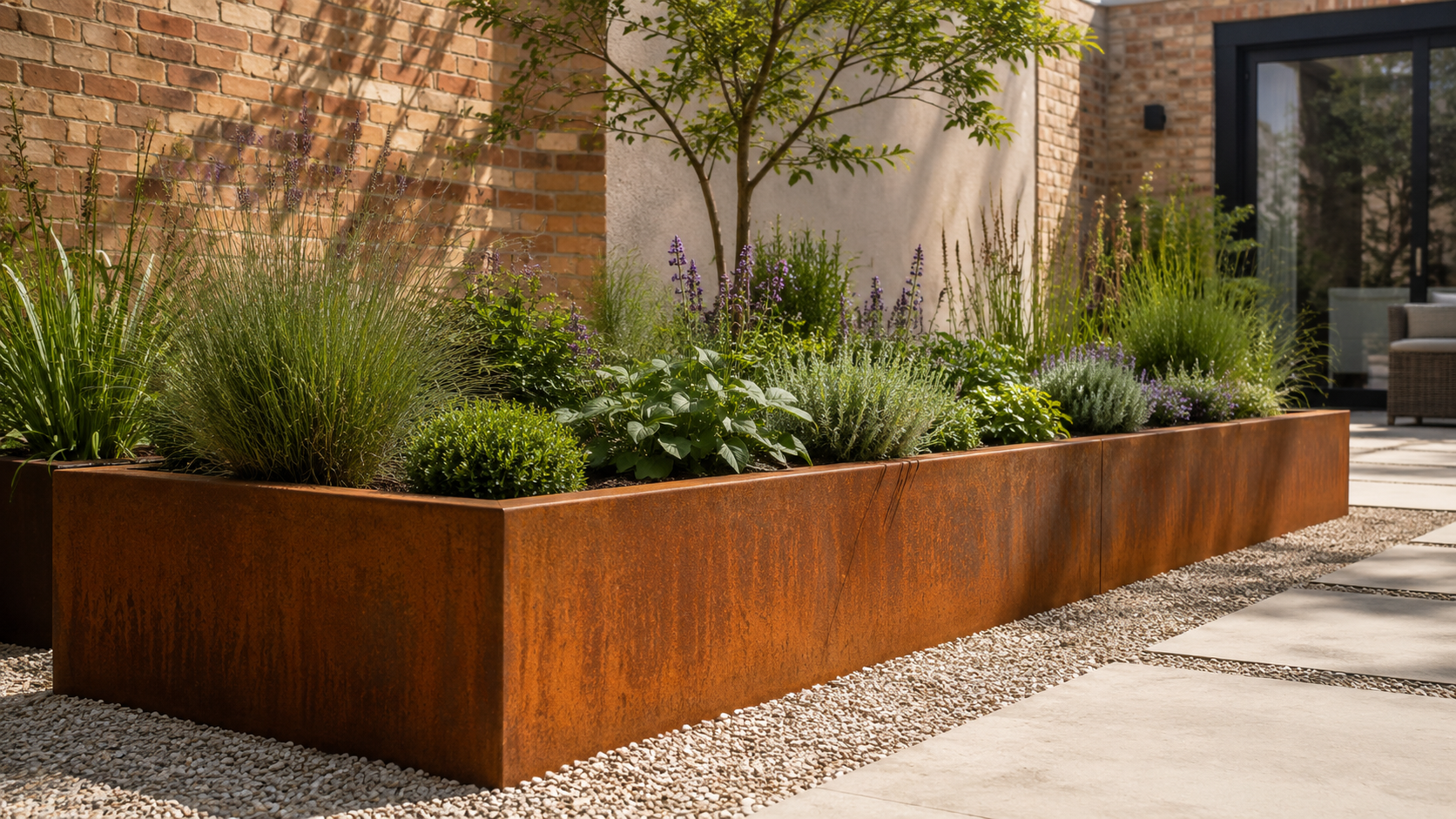
Corten steel may be considered where a weathered, earthy appearance suits the garden setting. As the steel develops its rusted patina outdoors, it can work well alongside gravel, pale stone, brickwork, timber and soft planting.
The 3mm Corten Steel Planters range provides a useful reference for this material direction. Early weathering run-off and the surrounding surface should still be considered before final placement, particularly where paving is light in colour or porous.
Corten often feels most natural when it is used as a calm planting feature rather than a decorative object. A long planter beside a boundary or patio can create warmth without appearing overly formal.
PPC Mild Steel for a Controlled Colour Direction
PPC mild steel may be relevant where colour coordination is an important part of the garden design. A powder-coated planter can connect visually with glazing frames, fencing, gates, railings, exterior lighting or other dark metalwork around the property.
The 3mm PPC Mild Steel Planters page provides a useful reference for this material option. The final selection should still consider the intended location, planting requirement and wider exterior colour palette.
A coordinated dark-grey or black planter can suit modern gardens particularly well. It can create a clean contrast against pale paving, brickwork and green planting without becoming the main feature of the space.
PPC Aluminium for Selected Raised Planter Requirements
PPC aluminium may be considered where lighter handling and a powder-coated finish direction are relevant to the project. It can work well where the wider exterior already includes aluminium windows, doors, coping, fascias or other metal details.
The 4mm PPC Aluminium Planters range gives a useful reference point for aluminium planter options. The final choice should still be reviewed against dimensions, planting load, access and the proposed position within the garden.
Aluminium planters can be particularly suitable where a lighter visual result is preferred. They may help create a coordinated finish in modern courtyards, terraces and rear gardens with a more restrained architectural palette.
Planning Height, Width and Planting Depth
A raised planter should be proportionate to the garden and to the planting it will contain. A narrow trough can work well beside a patio where the planting is intended to soften an edge. A deeper planter may be more suitable where the planting feature needs stronger presence or greater visual depth.
Before selecting a size, it helps to stand in the proposed location and consider the view from several angles. Look from inside the property, from the main seating area, from the garden gate and from any route through the space. A planter that looks ideal from one viewpoint may interrupt circulation or block light from another.
Matching Planting Space with the Available Garden Footprint
The planter should provide useful planting space without dominating the usable garden area. Long troughs are often effective along walls, fences and paving edges because they create a continuous planting line while keeping the centre of the garden open.
Square or taller planters may work better at entrances, corners or the end of a path where a stronger focal point is needed. Where more than one raised planter is used, their proportions should relate to each other so the garden feels composed rather than random.
Why the Planter Should Suit the Garden Rather Than Dominate It
A raised planter is most effective when it appears to belong in the garden from the beginning. This often means balancing its visible height with adjacent paving, brickwork, fence panels, doors and garden furniture. A very tall planter can add useful height but may feel heavy in a smaller setting. A lower trough can create planting presence without closing in the space.
Drainage, Growing Medium and Garden Conditions
Drainage should be considered alongside plant type, growing medium and site conditions. A planter in a sunny patio corner may experience very different conditions from one positioned close to a shaded boundary or beneath a roof overhang.
Container planting can be affected by rainfall, exposure, seasonal temperatures and watering routines. The Royal Horticultural Society’s guidance on growing plants in containers provides helpful wider context on drainage and container care. The final arrangement should still reflect the selected plants, the planter position and local garden conditions.
Rainfall, Sun Exposure and Day-to-Day Watering
A planter beside a south-facing wall, dark cladding or a wide expanse of paving may become warmer than one placed in a shaded garden area. Equally, a planter beneath a roof overhang may receive less rainfall.
These conditions should influence planting choice and ongoing care. They do not make a raised planter unsuitable, but they reinforce the need to think about placement before planting begins.
Why Final Position Should Be Considered Before Filling
Once a raised planter has been filled with growing medium and planting, moving it may be difficult. Final placement should therefore be reviewed before filling. Consider paths, doors, patio furniture, access routes and surrounding drainage. For raised decks, balconies and terraces, loaded weight, substrate and structural requirements should be reviewed with the relevant project professional where required.
Raised Metal Planters for Patios, Courtyards and Garden Edges
Raised metal planters can work particularly well in gardens where paving or brickwork already creates strong visual lines. A planter beside a patio can soften the edge between hard landscaping and lawn. A trough beside a wall can introduce planting where ground beds are impractical.
The material finish can also help connect the new planter with the property. Corten may bring warmth beside pale stone and old brick. Dark powder-coated steel can echo black-framed doors or contemporary fencing. Aluminium may create a more controlled finish where the garden includes lighter render or modern architectural metalwork.
What to Check Before Ordering Raised Metal Planters
Before ordering, it helps to prepare a clear project picture. Useful details include:
Intended planter length, width and height
Final location and surrounding surfaces
Preferred material and finish direction
Approximate planting intention
Access route into the garden
Photographs, sketches or drawings
Any corners, returns or unusual layout requirements
Where a project needs non-standard dimensions or a coordinated group of planters, readers can request an estimate for a raised planter project with measurements, photographs and project details.
FAQ
What are metal raised planters?
Metal raised planters are elevated containers designed to create a defined planting area above ground level. They may be considered for gardens, patios, courtyards and entrances where planting needs stronger structure, visibility or separation from surrounding surfaces.
Which material is suitable for raised metal planters?
Corten steel, PPC mild steel and PPC aluminium can each suit different garden directions. The most appropriate choice depends on the intended finish, surrounding materials, planting style, access route, planter dimensions and wider project requirement.
Do raised metal planters need drainage planning?
Yes. Drainage should be considered alongside growing medium, plant type, rainfall, exposure and watering routines. The planter position should also be reviewed before it is filled, especially on patios, terraces or other raised surfaces.
Can metal raised planters be made to bespoke dimensions?
Bespoke dimensions may be available for suitable project requirements. Clear measurements, drawings, photographs, preferred material and finish direction can help make an early discussion or estimate request more accurate.
Metal Profiles Ltd supplies and fabricates metal planters, aluminium roofline products and architectural metalwork for UK projects. Metal raised planters may be considered for gardens, patios, courtyards, entrances and wider landscape requirements. Share your preferred material, dimensions, planting intention, photographs, finish preferences and project context when discussing a planter requirement. A wide range of RAL or BS colour options may be available, subject to the selected finish and project requirement. For product or project support, Contact Metal Profiles Ltd today.