


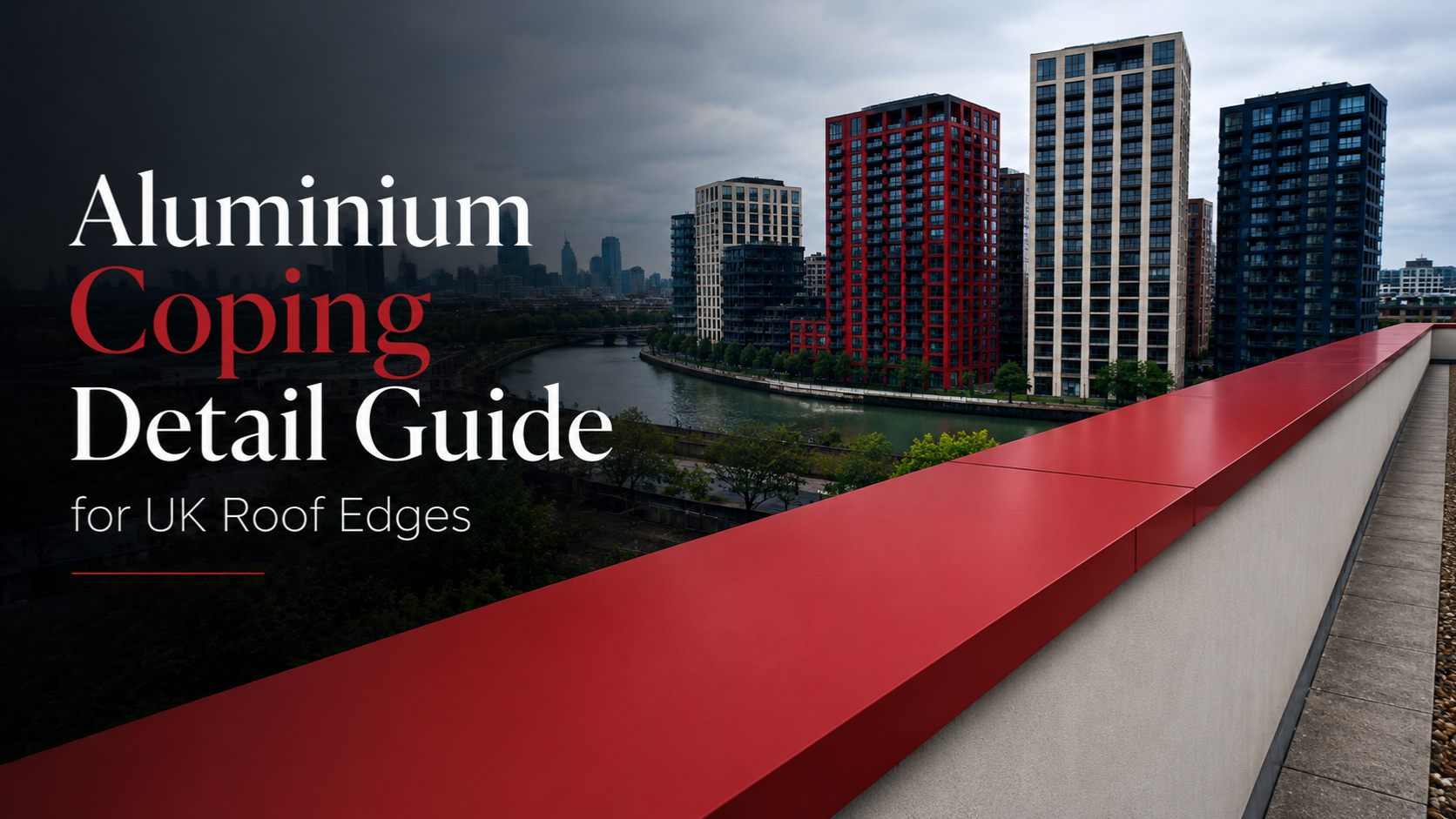
A parapet wall can define the whole appearance of a flat roof extension, terrace, balcony or commercial elevation. It creates a visible outer edge around the building and often becomes one of the strongest horizontal lines in the design. The coping that finishes the top of that wall may seem like a small part of the project, but it has a major influence on how complete and well resolved the parapet appears.
An aluminium parapet coping detail needs to do more than look neat. It should relate to the wall width, roof build-up, corners, roof membrane or flashing interfaces, rainwater route and the surrounding exterior finishes. A well-considered detail can make a parapet feel intentional and coordinated. A poorly planned one can interrupt the roofline and make even a carefully designed extension look unfinished.
This guide explains how to think through an aluminium parapet coping detail before product selection, specification or ordering. It is written for homeowners, architects, contractors, developers and property managers who need a clear understanding of the key design and planning points.
Understand the Parapet Before Choosing the Coping
A parapet is more than a wall standing at the edge of a roof. It may conceal part of a flat roof build-up, define a terrace, form a balcony wall or create a raised boundary around a commercial roof area. The coping sits at the top, making it highly visible from nearby gardens, upper windows, entrances and neighbouring buildings.
The first step is to understand the actual parapet form. Is it a long straight wall? Does it return around a corner? Does it step up or down? Does it meet cladding, glazing, a rooflight or another roof level? The answers affect the coping detail and should be understood before choosing a profile.
The aluminium coping category provides a useful overview of coping directions for parapet and wall-top applications. The final profile should still respond to the specific geometry, finish and roof context of the project.
Wall Width Is Only the Starting Point
Wall width is essential because the coping needs to fit across the finished parapet top. However, the visible relationship between the coping and the wall also matters. The profile should look balanced above brickwork, render, cladding or another external wall finish.
A coping that feels too narrow can make the parapet look incomplete. One that appears too deep can overwhelm a low wall or compact extension. The most suitable visible proportion depends on the scale of the building and the design direction of the wider elevation.
View the Detail from More Than One Angle
A parapet coping can look different from the garden, the driveway, a terrace or an upper-floor window. It may appear as a fine line from a distance but become more prominent when viewed close to a patio or entrance.
This makes it useful to assess the wall-top detail from several points around the project. Doing so can help determine whether the selected profile, colour and visible edge are appropriate for the building as a whole.
Design the Coping Detail Around Roof and Wall Junctions
The parapet coping does not sit alone. It often connects with roof membranes, flashings, rooflights, terrace finishes, wall cladding, doors and external metalwork. These relationships should be understood before the coping detail is finalised.
A simple parapet may have only straight runs and corners. A more complex flat roof can include changes in level, drainage outlets, wall returns and transitions to other materials. The coping needs to fit into this wider arrangement without being expected to solve unrelated roof or wall issues.
Parapets at Flat Roof Edges
Flat roof parapets often form the visible outer line of an extension. The coping may create the finished cap above the roof edge, while the roof covering and associated details remain behind it. The profile needs to be considered alongside roof falls, drainage routes and any flashing interfaces.
The flat aluminium coping range can be useful for projects considering a crisp, level parapet finish. The final selection should still be checked against the wall top, roof build-up, corners and wider project detail.
Balcony Walls and Terrace Parapets
Parapet walls around balconies and terraces are often more visible because people view them from close range. The coping may need to coordinate with balustrades, paving, glazing, doors, cladding or external lighting.
The visual quality of the detail matters, but the surrounding construction also needs to be clear. Terrace finishes, wall tops, drainage routes and adjoining materials should be coordinated before the coping arrangement is confirmed.
Junctions Often Define the Quality of the Finish
The straight sections of a coping line may be easy to visualise. Junctions are where the quality of planning becomes more visible. Internal corners, external corners, wall returns and transitions to other roof levels need to follow the actual building geometry.
Drawings and photographs can make these conditions easier to understand. They help avoid assumptions based on simple wall widths and allow the coping detail to be considered as part of the whole parapet perimeter.
Flat and Sloping Profiles for Parapet Coping
The choice between flat and sloping coping profiles affects both the appearance and the intended rainwater behaviour of the parapet top. A flat profile may support a clean architectural line. A sloping profile may be considered where the detail needs a form that supports the intended runoff direction from the exposed wall top.
The right choice depends on the parapet, roof context and overall project specification. It should not be made purely on visual preference.
Flat Profiles for a Controlled Architectural Line
Flat coping can work well where the parapet top is intended to appear level and restrained. It may suit contemporary brick or rendered extensions, low commercial rooflines and balcony walls where a crisp linear finish is important.
A flat profile should still be considered with the broader drainage and roof detail. The appearance of a level coping line does not remove the need for proper planning around the roof covering, wall-top interface and rainwater route.
Sloping Profiles for Exposed Wall-Top Conditions
Sloping coping may be relevant where the profile direction needs to support the intended movement of water from the parapet top. It can be considered for roof-edge walls, exposed parapets and other wall-top details where rainwater planning needs particular attention.
The sloping aluminium coping range provides a useful reference for this profile direction. The final choice should still be based on wall width, parapet arrangement, roof detail, corners and the wider drainage strategy.
Moisture Resistance and Wider Parapet Planning
An aluminium parapet coping detail should be considered within the wider context of how roofs, walls and exposed upper surfaces manage rain and moisture. For broader England-specific context, the Approved Document C guidance on resistance to moisture outlines wider moisture-resistance principles for roofs and walls. It is not a direct aluminium coping design guide, so the final wall-top profile, roof membrane interface, flashing detail and drainage route should be reviewed against the individual project.
Coping Is One Part of the Exterior Envelope
A coping may help form a finished cap to the parapet and support the intended water route from the exposed upper surface. It does not replace the need for a suitable roof build-up, drainage plan or wall construction detail.
This distinction is important for both domestic and commercial projects. A clear parapet detail identifies what the coping does, what the roof system does and how adjoining components connect. This makes specification and installation planning more straightforward.
Colour and Material Coordination Across the Elevation
An aluminium parapet coping can be a subtle part of the building palette or a more visible architectural feature. Dark powder-coated coping may create a bold line above light brick or render. A closely matched colour may help the parapet blend into adjacent cladding, glazing frames or roofline metalwork.
Colour decisions should be made in context. A finish that looks correct beside a sample panel may appear different once it runs across a long wall top under changing daylight. It is useful to consider the coping alongside doors, windows, fascia, gutters, cladding and other visible external components.
A wide range of RAL or BS colour options may be available, subject to the selected finish and project requirement. The selected finish should reflect the visual role the coping needs to play within the wider design.
Connecting Coping with Other Aluminium Details
Many modern projects use aluminium across more than one external feature. Windows, doors, cladding trims, fascias, gutters and copings may all contribute to the overall exterior appearance. A coordinated coping finish can help these elements feel connected without requiring every component to be identical.
For more background on the business and its architectural metalwork focus, readers can visit About Metal Profiles Ltd. The final parapet coping detail should still be based on the actual drawings, wall geometry and project-specific requirements.
What to Prepare Before Discussing a Parapet Coping Detail
A clear project brief should include the parapet width, total coping length, wall heights, corners, returns, finish preference and information about the roof or terrace detail behind the wall. Photographs, elevations, sections and marked-up sketches can all help show the coping in context.
It is useful to identify whether the parapet includes rooflights, drainage outlets, changes in level, cladding transitions or other unusual features. These may affect the profile direction, component requirements and the final appearance of the coping line.
For detailed project coordination, NBS specification support may help connect aluminium coping requirements with broader drawings and schedules. This can be particularly useful where several parties are contributing to the roof, wall and external metalwork details.
Metal Profiles Ltd supplies aluminium copings, roofline products and architectural metalwork for UK projects. An aluminium parapet coping detail may be considered for flat roof edges, balcony walls, terraces, boundary walls and project-specific exterior requirements. Share parapet dimensions, drawings, photographs, roof context, corner details, preferred profile direction and finish preferences when discussing a coping requirement. A wide range of RAL or BS colour options may be available, subject to the selected finish and project requirement. For product or project support, Contact Metal Profiles Ltd today.
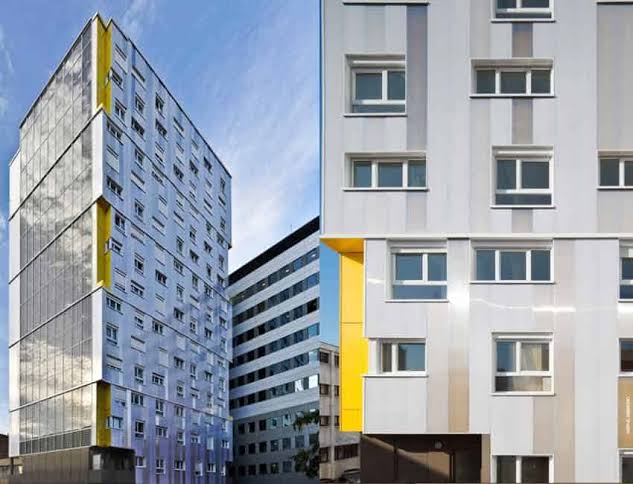
The evolution of the construction sector is attributed to the rise in the construction material sectors as well, such as rainscreen cladding.
Market reports associated to the construction industry have been put forward by Market Research Future which generates reports on other industry verticals that target the study of recent market scenarios better.
The Rainscreen Cladding market is projected to achieve a CAGR of 7 % in the course of the forecast period.The use of rainscreen cladding provides substantial benefits in terms of the energy savings that can be achieved from the structures.
The escalation in construction activities especially in emerging economies is expected to fuel the progress of the rainscreen cladding market in the approaching period.Segmental AnalysisThe segmentation of the rainscreen cladding market is carried out on the basis of type, end use and region.
On the basis of Type, the rainscreen cladding market is segmented into Composite Cement, Metal, Terracotta, Laminates, and Others.
The regions included in the rainscreen cladding market comprises of North America, Europe, Asia Pacific and rest of the world.Detailed Regional Analysis The regional analysis of the rainscreen cladding market comprises of North America, Europe, Asia Pacific and rest of the world.

Futuristic Reports introduces a new report titles Global Aluminium Plate Market 2020-2027. that studies all the vital factors related to the Global Aluminium Plate market that are crucial for the growth and development of businesses in the given market parameters.
The report highlights the important elements related to the market such as the market share, organization profiles, productivity, boundaries and restrictions, openings and threats, promoting, technological progressions, key market players, regional segmentation, and many more important elements related to the Global Aluminium Plate Market.Keyword Market Research Report presents a detailed analysis based on the thorough research of the in general market, especially on questions that border on the market size, development situation, possible chances, operation landscape, trend analysis, and competitive analysis.This is the most recent report, covering the current COVID-19 impact available.
The pandemic of Coronavirus (COVID-19) has affected each part of life generally.
This has brought along a few changes in market situations.
The quickly changing market situation and starting and future evaluation of the effect are covered in the report.Get Exclusive Sample copy on Aluminium Plate Market is accessible at: https://www.futuristicresearch.com/request-sample/FR100066Key Players Mentioned at the Aluminium Plate Market Report:ConstelliumKaiser Aluminium CorporationAlcoa CorporationAleris CorporationKobe Steel Ltd.Nippon Light Metal Co. LtdHulamin Henan Zhongfu industry Limited Nanshan Group Co. Ltd.Henan Mingtai Aluminum Industrial Co. LtdJingmei Aluminium Industry Co. LtdAlnan Aluminium lnc.GLEICH Aluminiumwerk GmbH & Co. KGAMAG Austria Metall AGApplications covered in this report are:Aerospace & AutomotiveRailway & TransportationShip building & Ocean EngineeringOthers (Consumer Goods, Electronics)Types covered in this report are:2XXX5XXX6XXX7XXXOthersAluminium Plate Market: Regional analysis includes:Asia-Pacific (Vietnam, China, Malaysia, Japan, Philippines, Korea, Thailand, India, Indonesia, and Australia)Europe (Turkey, Germany, Russia UK, Italy, France, etc.
)North America (the United States, Mexico, and Canada.