Introduction
Modern law enforcement agencies are under constant pressure to improve public safety while managing limited personnel, budgets, and operational resources. As crime patterns become more dynamic, relying on traditional reporting methods is no longer sufficient. Agencies require accurate, data-driven insights that help them deploy officers, equipment, and emergency resources where they are needed most.
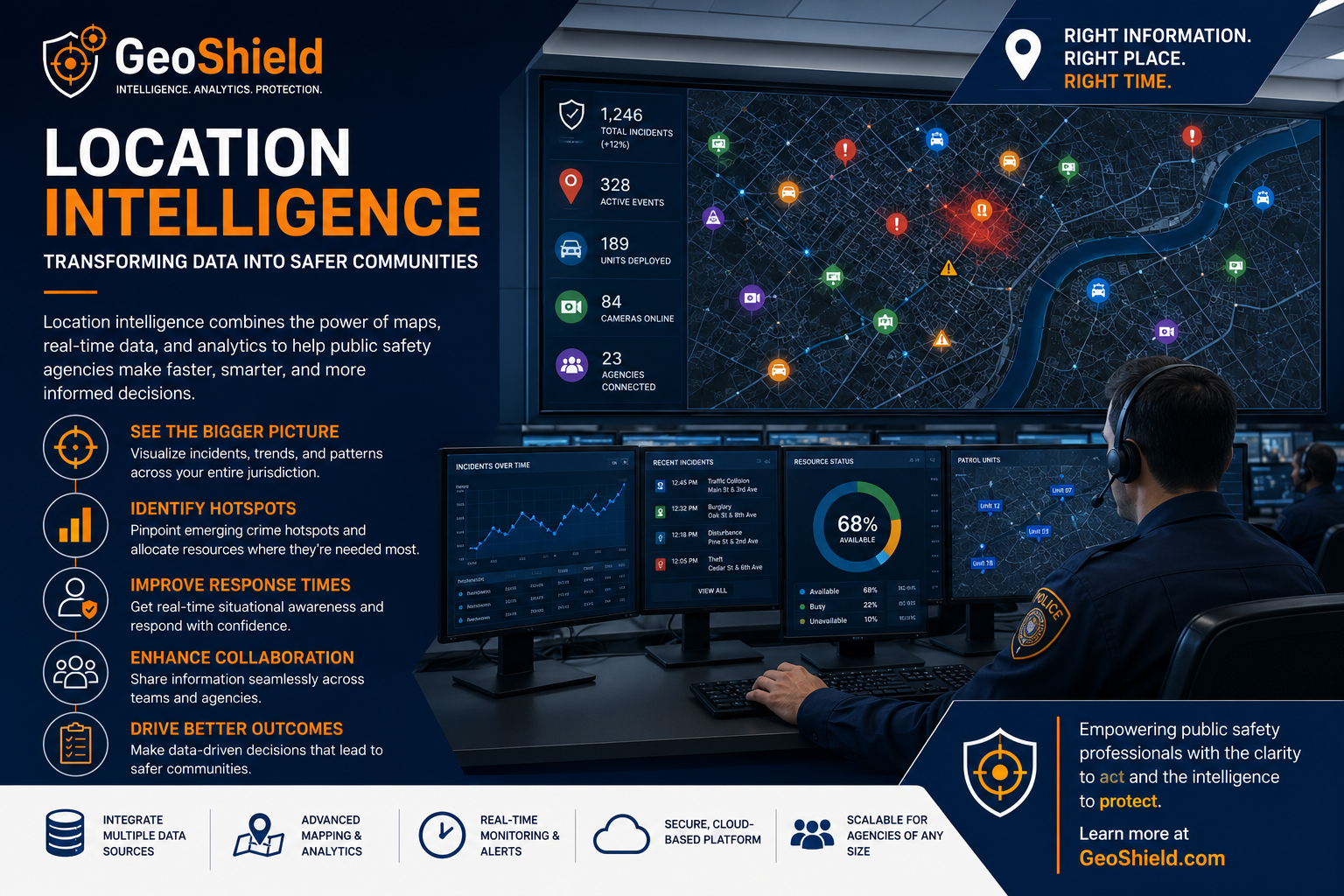
This is where crime mapping software plays a crucial role. By transforming crime data into interactive visual maps, law enforcement teams can quickly identify hotspots, monitor trends, predict emerging threats, and make informed operational decisions. Instead of reacting after incidents occur, agencies can proactively allocate resources based on real-time intelligence.
When integrated with a crime mapping system, Real Time Crime Center Technology, and a comprehensive Law Enforcement Operations Platform, crime mapping becomes a strategic decision-making tool that improves efficiency, response times, and overall public safety.
What is Crime Mapping Software?
Crime mapping software is a digital solution that collects, analyzes, and visualizes crime-related data on geographic maps. It enables agencies to identify patterns, detect hotspots, monitor criminal activity, and optimize patrol strategies.
Unlike static reports or spreadsheets, crime mapping provides an interactive view of incidents, allowing officers and command staff to understand exactly where crimes are occurring and how patterns evolve over time.
The software typically integrates with multiple data sources, including:
- Computer-Aided Dispatch (CAD)
- Records Management Systems (RMS)
- 911 call data
- Officer reports
- CCTV and surveillance systems
- License Plate Recognition (LPR)
- Public safety databases
- GIS mapping tools
These integrations provide a comprehensive operational picture that supports smarter decision-making.
Why Resource Allocation Matters in Modern Policing
Every police department faces operational challenges such as:
- Limited staffing
- Budget constraints
- Increasing service requests
- Large geographic coverage
- Rapidly changing crime patterns
- Emergency incident management
Deploying officers evenly across an entire jurisdiction often leads to inefficient coverage. Some neighborhoods may be over-patrolled while emerging crime hotspots receive insufficient attention.
Using crime mapping software, agencies can allocate resources based on actual crime intelligence rather than assumptions.
Benefits include:
- Better patrol distribution
- Faster emergency response
- Reduced overtime costs
- Improved officer productivity
- Increased community safety
- More efficient investigations
How Crime Mapping Supports Smarter Resource Allocation
1. Identifies Crime Hotspots
One of the biggest advantages of a crime mapping system is hotspot analysis.
The system automatically identifies areas experiencing higher-than-average criminal activity, including:
- Burglaries
- Vehicle thefts
- Assaults
- Drug-related crimes
- Vandalism
- Robberies
Instead of assigning patrols uniformly, commanders can increase officer presence in these high-risk locations.
This targeted deployment often deters crime before incidents occur.
2. Enables Data-Driven Patrol Planning
Traditional patrol assignments frequently rely on historical knowledge or manual scheduling.
Crime mapping replaces guesswork with data.
Using historical and real-time information, supervisors can determine:
- Where patrols should begin
- Which neighborhoods require additional officers
- Peak crime hours
- Weekend versus weekday patterns
- Seasonal crime trends
The result is more efficient patrol coverage and better use of available personnel.
3. Improves Emergency Response
When integrated with Real Time Crime Center Technology, crime mapping provides dispatchers and command centers with live situational awareness.
Agencies can instantly view:
- Active incidents
- Nearby officers
- Previous crimes in the area
- Camera locations
- Traffic conditions
- High-risk zones
This allows dispatch teams to send the closest and most appropriate resources, significantly reducing response times.
4. Supports Predictive Policing Strategies
Many offenses follow recurring geographic and temporal patterns.
Crime mapping software analyzes:
- Historical incidents
- Crime frequency
- Repeat offender activity
- Environmental factors
- Time-of-day trends
These insights help agencies anticipate where future incidents are likely to occur and proactively deploy resources before crimes happen.
5. Enhances Special Event Planning
Large gatherings require careful operational planning.
Examples include:
- Sporting events
- Festivals
- Political rallies
- Concerts
- Community celebrations
Crime mapping helps agencies analyze previous event data and identify areas requiring additional:
- Officers
- Traffic management
- Surveillance
- Emergency medical support
- Crowd control
This minimizes operational risks while maximizing public safety.
6. Optimizes Investigative Resources
Investigators benefit from visual crime analysis that links related incidents.
A crime mapping system helps identify:
- Repeat offense locations
- Similar crime patterns
- Geographic clusters
- Suspect travel routes
- Connections between multiple cases
This enables investigative teams to prioritize cases and allocate detectives more effectively.
7. Strengthens Community Policing
Community engagement becomes more strategic when officers understand neighborhood crime trends.
Crime mapping allows departments to:
- Identify vulnerable communities
- Plan neighborhood meetings
- Increase visibility in affected areas
- Address recurring local concerns
- Build trust through proactive policing
Data-driven engagement improves relationships between law enforcement and residents.
The Role of Real Time Crime Center Technology
Modern policing increasingly depends on Real Time Crime Center Technology.
Rather than reviewing reports hours after incidents occur, command centers receive live operational intelligence from multiple connected systems.
Key capabilities include:
- Live incident monitoring
- Real-time officer tracking
- Integrated surveillance feeds
- Automatic alerts
- GIS visualization
- Vehicle tracking
- Drone integration
- Mobile data sharing
When combined with crime mapping software, agencies gain an operational advantage by making informed decisions in real time.
How a Law Enforcement Operations Platform Complements Crime Mapping
Crime mapping delivers geographic intelligence, while a Law Enforcement Operations Platform connects every operational workflow into a single ecosystem.
Together, they provide:
- Incident management
- Resource deployment
- Dispatch coordination
- Case management
- Officer activity tracking
- Intelligence sharing
- Evidence management
- Operational reporting
Instead of using disconnected software solutions, agencies gain a unified operational environment that improves collaboration and efficiency.
Key Features to Look for in Crime Mapping Software
When evaluating a crime mapping solution, agencies should prioritize features such as:
Real-Time Data Integration
Automatically synchronize data from CAD, RMS, dispatch systems, and other operational platforms.
Interactive GIS Maps
Provide layered mapping with zoom, filtering, and geographic analysis.
Hotspot Detection
Automatically identify high-crime areas for proactive policing.
Predictive Analytics
Forecast future crime trends using historical data.
Mobile Accessibility
Allow officers to access maps from patrol vehicles and mobile devices.
Custom Dashboards
Create role-based dashboards for patrol officers, investigators, dispatchers, and command staff.
Reporting & Analytics
Generate operational reports for leadership and public safety planning.
Secure Data Sharing
Support collaboration across multiple agencies while maintaining security and compliance.
Benefits of Crime Mapping Software
Organizations adopting crime mapping software often experience:
- Faster emergency response times
- Smarter deployment of patrol officers
- Improved situational awareness
- Better investigative outcomes
- Reduced operational costs
- Enhanced officer safety
- More accurate crime trend analysis
- Stronger community engagement
- Better command-level decision making
- Increased operational efficiency
Future of Crime Mapping
As public safety technology evolves, crime mapping solutions are becoming increasingly intelligent.
Emerging capabilities include:
- Artificial intelligence for crime prediction
- Machine learning analytics
- Automated threat detection
- Drone integration
- Smart city connectivity
- IoT sensor integration
- Facial recognition support
- License plate recognition analytics
- Cloud-based collaboration
- Cross-agency intelligence sharing
These innovations will continue to improve how agencies allocate resources and respond to public safety challenges.
Conclusion
Efficient resource allocation is essential for effective law enforcement. Agencies must ensure that officers, equipment, and operational resources are deployed where they can make the greatest impact.
By leveraging crime mapping software, departments can move beyond reactive policing and embrace proactive, intelligence-led operations. When combined with a powerful crime mapping system, advanced Real Time Crime Center Technology, and an integrated Law Enforcement Operations Platform, agencies gain the visibility, coordination, and actionable insights needed to improve public safety while maximizing operational efficiency.
As crime patterns continue to evolve, investing in data-driven mapping and operational intelligence solutions will remain a critical strategy for modern law enforcement organizations.


The business world understands only the language of money.
And the currency is Time!
Organizations are obsessed with time tracking and their employees cannot hate time tracking enough.For businesses, time tracking is the way to showcase effort spent & work delivered.
And employees feel they are being micro managed, each of their moves are being tracked or they are not being trusted.And the whole range of negative emotions follow.But the most important aspects and value of time management are forgotten.
Read the full article at Orangescrum Blog