

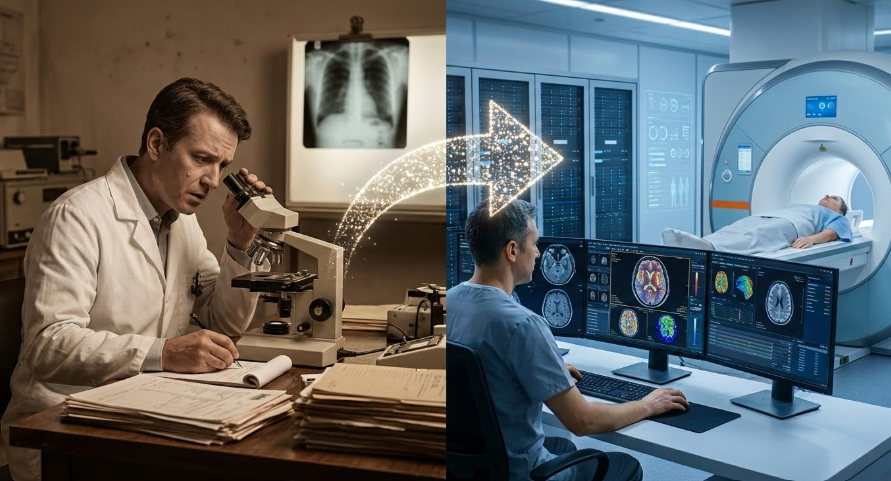
For centuries, the medical profession relied upon a series of educated guesses, draped in the heavy velvet of Latin terminology and delivered with a gravity that suggested insights when it merely masked a profound darkness.
Perhaps, this is to be expected; it is quite difficult to be precise when one is attempting to measure the invisible with tools no more sophisticated than a cold stethoscope and some imagination. The transition from the intuition to the unforgiving clarity of modern sight is a triumph of the aesthetic over the anecdotal.
The Indirect Measurement
Relying upon a patient to describe the inner workings of his own anatomy is a gesture of misplaced faith that borders on the reckless. A person who claims they feel better after a draught of bitter tonic may simply be exhibiting a desire to please the doctor, or perhaps they are merely enjoying the temporary distraction of a new ailment.
Clinical observation without visual proof is fiction: a narrative constructed from symptoms that are often as unreliable as a witness in a divorce court. The history of medicine is littered with the corpses of those whose progress was measured by the color of their cheeks rather than the state of their cells. Such methods belong to an age of superstition, where the absence of pain was mistaken for the presence of health.
Modernity demands a more rigorous standard of truth, one that does not rely upon the fickle testimony of the senses or the optimistic reports of those who wish to be cured. The old ways of gathering information were far too polite; they stood at the door and inquired after the health of the inhabitants without ever daring to look through the keyhole.
The Modern Sight
A photograph of a tumor is a masterpiece of clarity. The emergence of sophisticated visual technology has turned the interior of the human frame into a gallery of high-definition truths, where nothing can be hidden, and everything is exposed to the indifferent gaze of the machine.
Imaging for clinical trials enables exactly this. It is no longer necessary to wait for a catastrophe to understand how a drug interacts with the body; one can watch the drama unfold in real time, like a play where the actors are unaware of the audience.
Maintaining a distance from guesswork allows a researcher to achieve intellectual purity. When a change in a patient’s condition is documented by a scan, the possibility of a sentinel error is removed. The machine does not care for the patient’s comfort, nor does it seek to validate the scientist’s ego; it merely reports the shadows and the light with a devastating honesty.
The Safety of the Visible Subject
Hopefully, the days of endangering the subject through ignorance are long gone…. hopefully. In the days before great visuals, a patient was often treated as a black box, a mysterious vessel into which chemicals were poured with the hope that they might find their way to the correct destination.
The danger of such an approach was immense, as the physician could not know the damage he was doing until it was far too late to offer an apology. Increased visibility through modern technology is a shield for the individual: it provides a warning before the internal machinery begins to grind to a halt.
Prioritizing the safety of the participant requires a commitment to seeing what is happening beneath the skin at every moment. If a treatment causes a subtle swelling or an unexpected shift in blood flow, the image reveals it long before the patient feels a single pang of distress.
Reducing the reliance on invasive procedures enhances the comfort of those who lend their bodies to science. A scan is a much more civilized way to gather information than a needle or a knife, and it yields far more interesting results. The ability to peer into the heart of a problem without disturbing the rest of the house is a luxury that the modern world should not take for granted.
The Economy of the Perfect Image
Time is the only constant that a man of fashion should ever be stingy with, and the same is true of a clinical trial. The old methods of gathering data were agonizingly slow, requiring months or years of patient observation to see if a remedy had truly taken hold. The use of advanced visual technology accelerates the process as it reveals the truth almost instantly: a scan can show that a drug is working long before the patient feels the benefit.
Accelerating the timeline of discovery allows a clinic to bring new treatments to those who need them without traditional guesswork. Efficiency in a trial is not merely a matter of finances; it is also a matter of mercy. Every day saved in the laboratory is a day gained for the person waiting at home for a cure.
The Future of the Transparent Body
As the technology continues to evolve, the interior of the human body will become even more transparent, until there is nowhere left for a disease to hide. The prospect of such total visibility is both exhilarating and slightly terrifying, like a party where the host knows everyone’s secrets before they have even arrived.
Future advancements in imaging for clinical trials will likely allow for an even deeper level of insight, perhaps even capturing the very thoughts and impulses that drive our physical being.
The reliance on the image will only grow as the technology becomes more accessible and more powerful. We are moving toward a world where the diagnosis is as certain as the sunrise and the treatment is as precise as a surgeon’s scalpel. The days of guesswork are over, and the age of precision has begun. It is a triumph of the will over the unknown, a victory of the light over the dark. The only thing left to discover is what we will do with all this truth once we have it.