





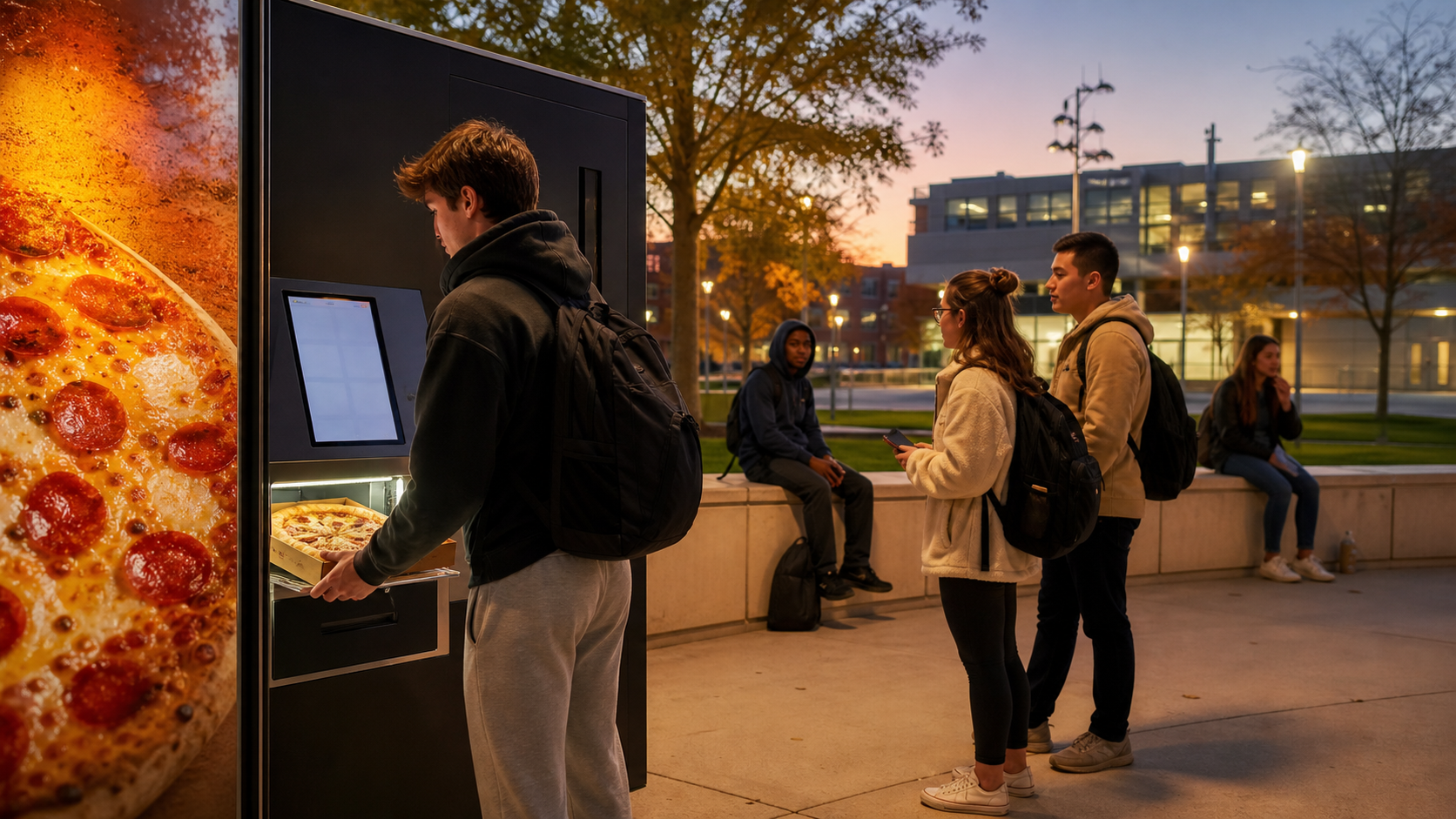
The hardest food-service hours are often the least economical to staff. Campuses see demand after libraries and dining halls close; travel stops serve customers between restaurant shifts and during overnight traffic. A pizza machine can extend hot-food access, but it succeeds only when the site can manage food safety, replenishment, throughput, cleaning, and exceptions.
For a U.S. operator, the starting question is not whether automation looks convenient. It is whether the proposed pizza machine can deliver a consistent product during the site's real demand windows while fitting local food-service and building requirements.
Map Demand by Hour, Not Daily Footfall
Daily traffic can hide the opportunity. A campus may have strong demand after evening classes and events but limited weekend use. A travel stop may peak around shift changes, bus arrivals, or late-night freight movement.
Build a daypart map that includes:
• Expected users and dwell time.
• Existing hot-food opening hours.
• Competing packaged and prepared-food options.
• Queue tolerance and desired service time.
• Staff access for refilling and cleaning.
• Security and supervision during overnight periods.
The best first site has a visible service gap and enough predictable demand to learn quickly.
Choose Placement Around the Transaction
Customers need space to approach, select, pay, wait, collect the pizza, and leave without blocking circulation. On a campus, that might be near a residence-hall common area or late-hour study zone. At a travel stop, it may be inside the main retail area rather than exposed to weather near fuel lanes.
Confirm delivery access, electrical capacity, ventilation or heat-clearance requirements, connectivity, floor condition, waste handling, fire-safety review, and accessible approach. Indoor and rain-sheltered ratings must be matched to the exact location; a canopy does not automatically create a suitable operating environment.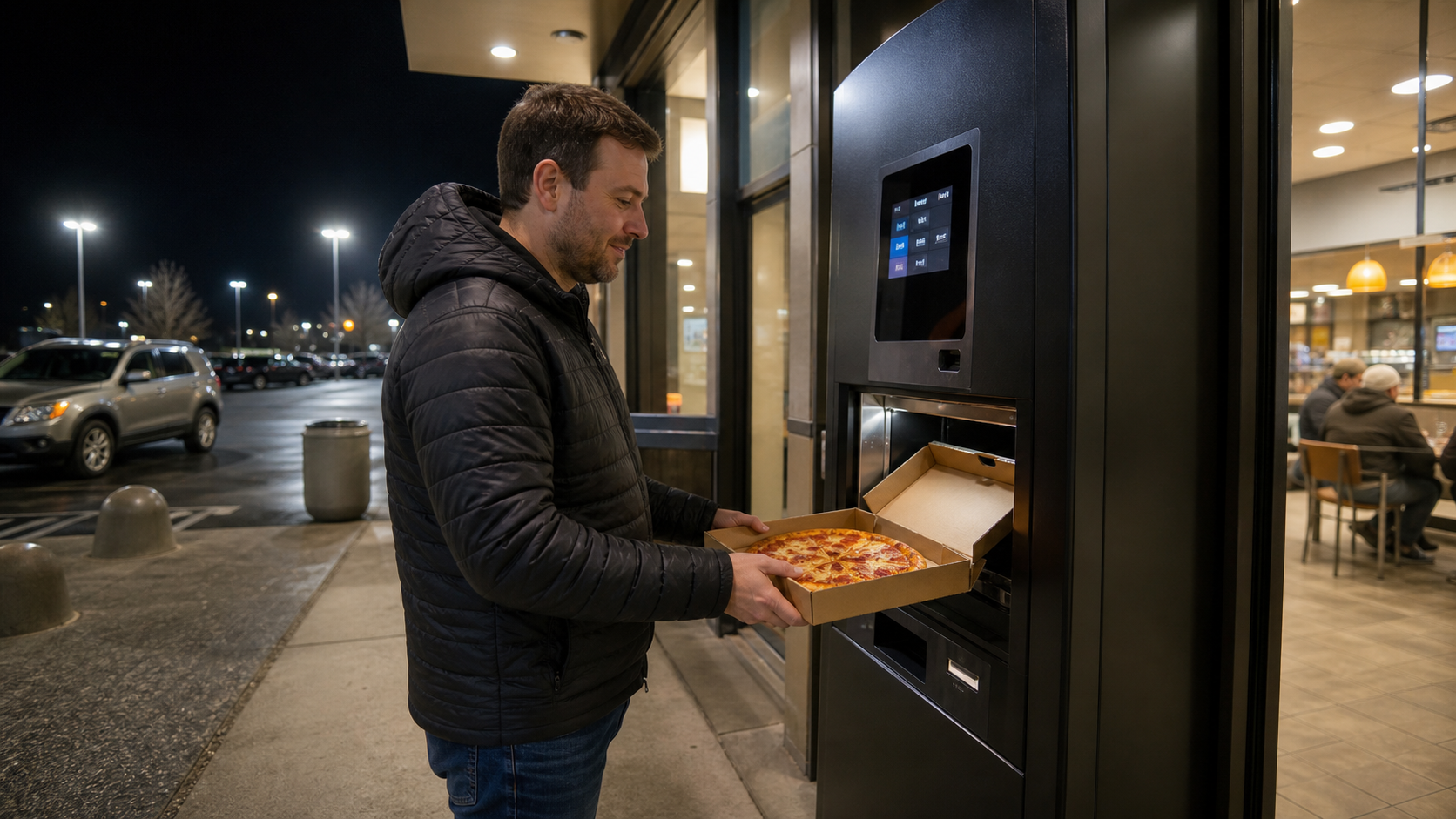
Build the Food-Safety Process Before the Menu
The operator must define how pizzas are received, stored, loaded, identified, cooked, held if applicable, and removed. Local requirements vary, so involve the authority having jurisdiction and the site's food-safety team early.
The operating file should address:
1. Approved products and supplier records.
2. Storage and loading temperature controls.
3. Product dates and stock rotation.
4. Validated cooking process for each pizza type.
5. Cleaning and sanitation of food-contact areas.
6. Allergen and ingredient communication.
7. Response to temperature, power, or cooking faults.
Do not expand the menu until each item has passed the same process. Different sizes, toppings, or packaging can change cooking performance and handling requirements.
Design for Rushes and Out-of-Hours Problems
A machine may quote a fast baking cycle, but customer throughput also includes selection, payment, transfer, and collection. Test consecutive orders rather than one demonstration pizza. Observe where customers stand and whether they understand the remaining wait.
Prepare for common exceptions:
• Payment approved but no product delivered.
• Selected pizza unavailable.
• Cooking cycle interrupted.
• Collection door not cleared.
• Network unavailable.
• Waste bin or surrounding area full.
The screen and signage should provide a support route that works during the same late hours the machine is intended to serve.
Control Menu, Stock, and Waste
Start with a tight menu that covers clearly different preferences. Use demand by daypart to set par levels and refill frequency. A campus may need vegetarian and allergen-conscious communication; a travel stop may prioritize familiar, fast-moving products.
Track loaded units, sold units, removed units, stock-outs, and reasons for waste. High sales with frequent stock-outs indicates lost demand, while a broad menu with regular disposal signals that the assortment is too complex.
Pilot With Operational Metrics
A useful pilot lasts long enough to include normal weekdays, weekends, and at least one high-demand event or travel period. Measure:
• Completed transactions and hourly pattern.
• Average and peak customer wait.
• Product availability by selection.
• Cook and dispensing exceptions.
• Cleaning and refill labor.
• Waste and product removals.
• Refunds, complaints, and response time.
• Machine availability.
Agree on stop conditions for any food-safety or repeated service issue. Expansion should depend on sustained results, not opening-week curiosity.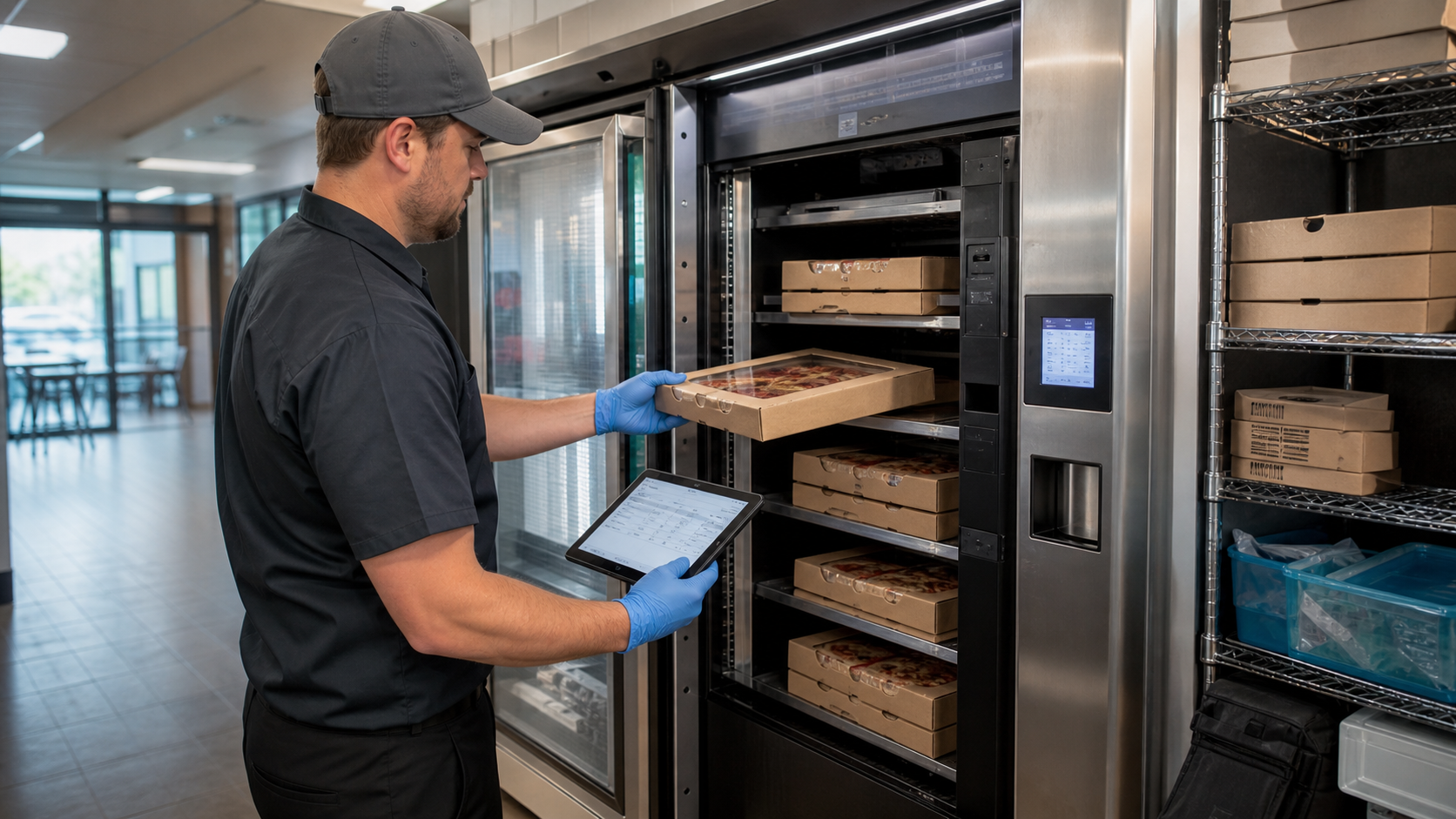
Frequently Asked Questions
Can a pizza machine replace a campus dining outlet?
It is better treated as a targeted extension for specific locations and hours. A machine offers a narrower menu and still requires food-service oversight, stocking, cleaning, and support.
Is the fastest baking time the most important specification?
No. Total throughput, product consistency, storage capacity, food controls, refill access, payment reliability, and recovery from faults are equally important.
Should the first pilot be indoors?
An indoor location often reduces environmental variables and makes service easier, but the correct choice depends on the specified machine, customer flow, utilities, and site requirements.
Prepare a Site and Menu Test Package
Caiyunjuan can evaluate the request when the operator provides the site type, placement drawings, expected demand by hour, pizza specifications, payment methods, utilities, indoor or sheltered conditions, refill plan, food-safety process, and acceptance tests. That information makes the equipment discussion measurable.
Sources and Reference Points
1. U.S. Food and Drug Administration, 2022 Food Code.
2. Applicable state and local retail food or vending requirements.
3. U.S. Department of Justice, 2010 ADA Standards for Accessible Design.
Review the pizza machine.
For a site-specific review, contact Caiyunjuan.


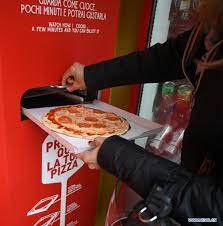
Pizza Vending Machine Market report published by Value Market Research, which studies the future outlook of the market.
It includes the size, share, growth, trends, key players, segments and regional analysis in detail during the study year 2020-2027.The research report also covers the comprehensive profiles of the key players in the market and an in-depth view of the competitive landscape worldwide.
The major players in the pizza vending machine market include Pizzapaesana, Pizza ATM Inc., Tombstone, Gizmodo, Pompei's, Sitos srl, Jin He Shi Ye, Atheela, SHIOK!
Pizza, Wonderpizza USA,LLC, and Dr. Oetker.
This section consists of a holistic view of the competitive landscape that includes various strategic developments such as key mergers & acquisitions, future capacities, partnerships, financial overviews, collaborations, new product developments, new product launches, and other developments.Get more information on "Global Pizza Vending Machine Market Research Report" by requesting FREE Sample Copy at https://www.valuemarketresearch.com/contact/pizza-vending-machine-market/download-sampleMarket DynamicsThe key factors driving the pizza vending machine market are increasing preference, increasing adoption of self-service devices, and advancing remote management technology.
Furthermore, considerable investment in R activities by companies to improve the pizza vending machine will also boost its demand.
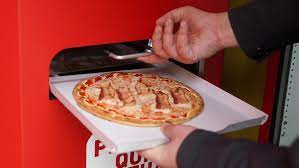
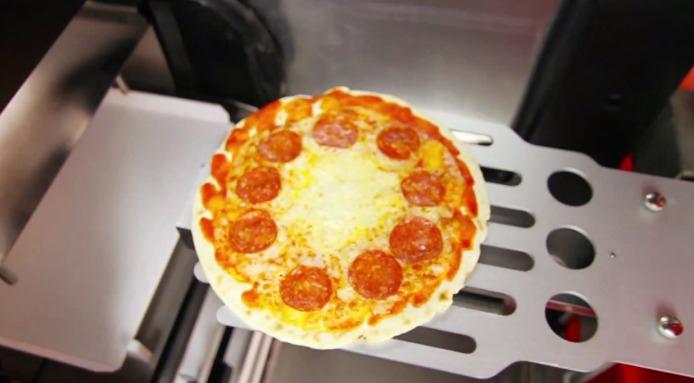
Pizza Vending Machine Market Insights 2019, Global and Chinese Scenario is a professional and in-depth study on the current state of the global Pizza Vending Machine industry with a focus on the Chinese market.
The report provides key statistics on the market status of the Pizza Vending Machine manufacturers and is a valuable source of guidance and direction for companies and individuals interested in the industry.Overall, the report provides an in-depth insight of 2014-2024 global and Chinese Pizza Vending Machine market covering all important parameters.Key Questions Addressed by the ReportWhat is the growth perspective of the Pizza Vending MachineMarket and the key dynamics and trends governing the market?What are key sustainability strategies adopted by the leading players in the Pizza Vending MachineMarket?What are the new and emerging technologies and use cases disrupting the Pizza Vending Machineindustry?What are the key applications where Pizza Vending Machineplays a significant role?Report Sample includes:- Table of Contents- List of Tables & Figures- Charts- Research MethodologyGet FREE Sample of this Report at https://www.24marketreports.com/report-sample/global-pizza-vending-machine-2019-2024-787The key ponits of the report:The report provides a basic overview of the industry including its definition, applications and manufacturing technology.The report explores the international and Chinese major industry players in detail.
In this part, the report presents the company profile, product specifications, capacity, production value, and 2014-2019 market shares for each company.Through the statistical analysis, the report depicts the global and Chinese total market of Pizza Vending Machine industry including capacity, production, production value, cost/profit, supply/demand and Chinese import/export.The total market is further divided by company, by country, and by application/type for the competitive landscape analysis.The report then estimates 2019-2024 market development trends of Pizza Vending Machine industry.
Analysis of upstream raw materials, downstream demand, and current market dynamics is also carried out.The report makes some important proposals for a new project of Pizza Vending Machine Industry before evaluating its feasibility.There are 3 key segments covered in this report: competitor segment, product type segment, end use/application segment.For competitor segment, the report includes global key players of Pizza Vending Machine as well as some small players.
At least 2 companies are included:Sitos srl(IT)WonderpizzaUSAThe information for each competitor includes:Company ProfileMain Business InformationSWOT AnalysisSales, Revenue, Price and Gross MarginMarket ShareFor product type segment, this report listed main product type of Pizza Vending Machine market in gloabal and china.Deep Dish Whole PieThin Crust Whole PieCustmized SliceFor end use/application segment, this report focuses on the status and outlook for key applications.
End users sre also listed.MallsUniversities and InstitutionsFueling/Service StationCorporationsOthersReasons to Purchase this Report:Estimates 2019-2024 Pizza Vending Machine market development trends with the recent trends and SWOT analysisMarket dynamics scenario, along with growth opportunities of the market in the years to comeMarket segmentation analysis including qualitative and quantitative research incorporating the impact of economic and policy aspectsRegional and country level analysis integrating the demand and supply forces that are influencing the growth of the market.Market value (USD Million) and volume (Units Million) data for each segment and sub-segmentCompetitive landscape involving the market share of major players, along with the new projects and strategies adopted by players in the past five yearsComprehensive company profiles covering the product offerings, key financial information, recent developments, SWOT analysis, and strategies employed by the major market players1-year analyst support, along with the data support in excel format.The report delivers a comprehensive overview of the crucial elements of the market and elements such as drivers, restraints, current trends of the past and present times, supervisory scenario, and technological growth.