

European fitness operators should not begin with a catalogue comparison. They should begin with a verification file. A protein-vending program crosses food information, hygiene, electrical equipment, payment, accessibility, consumer communication, data, and service obligations. The exact duties depend on the country, business model, and site.
The equipment evaluation is still important. A protein vending program needs the right capacity, mixing design, water arrangement, user interface, and remote-management functions. But no feature list replaces evidence that the complete service can be operated and documented locally.
Verify the Food Information Journey
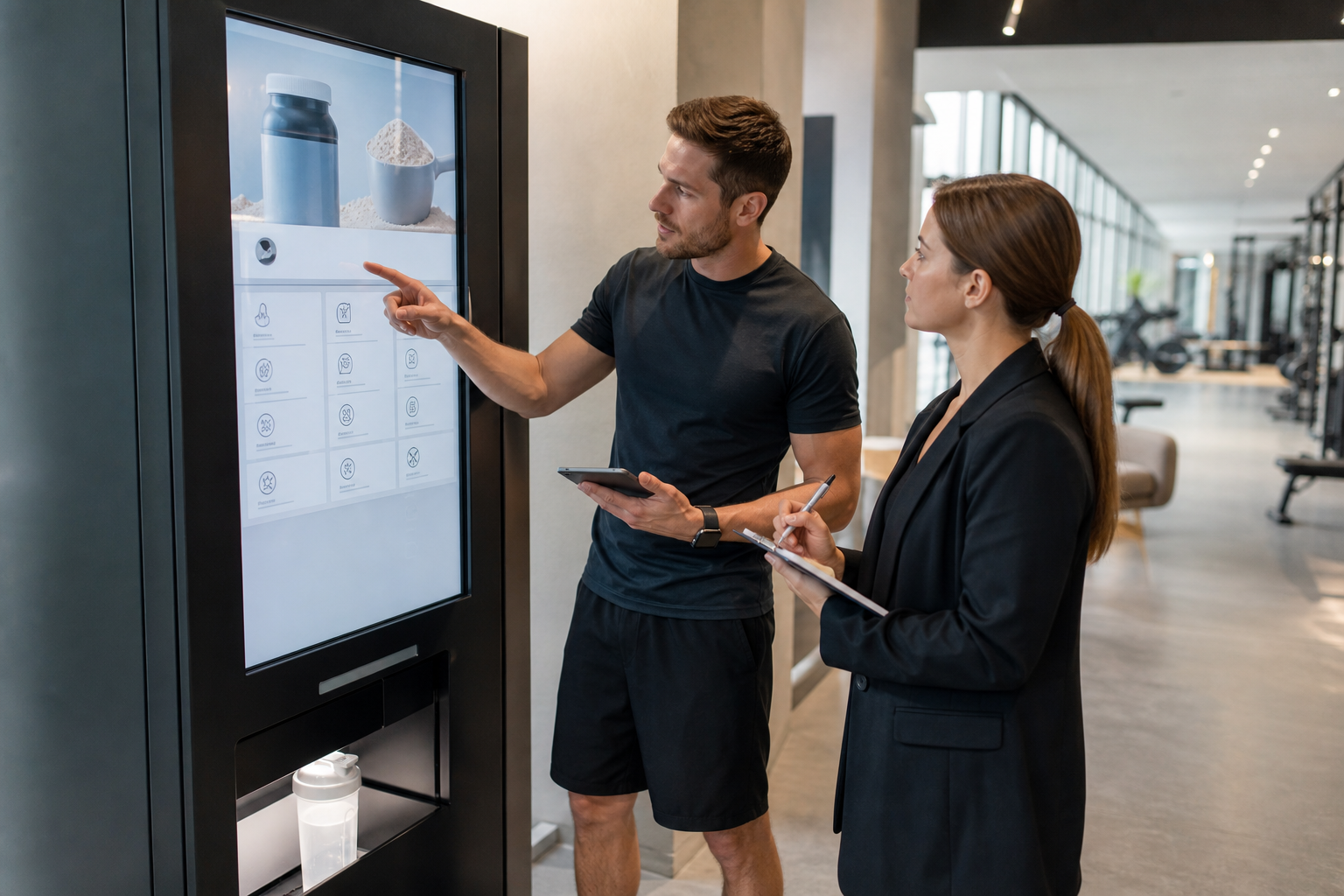
The customer should be able to understand what is being offered before committing to a purchase. Define how the machine presents the product name, portion, price, ingredients, allergens, nutrition information where required, and any usage warnings.
Test the complete language set
Translate the full transaction flow for the destination market: selection, customization, allergen information, payment, cancellation, out-of-stock messages, support, and refunds. Screen space is limited, so translations must be tested at the actual font size rather than approved in a spreadsheet alone.
Control recipe changes
If prices, ingredients, or recipes can be updated remotely, establish an approval process. The screen, refill instructions, ingredient records, and customer information must remain aligned after every change.
Verify Hygiene and Cross-Contact Controls
Powder dispensing introduces practical questions about storage, moisture, cleaning, residue, and cross-contact. Ask the operator and supplier to walk through the process from sealed product arrival to canister refill, dispensing, daily cleaning, deeper cleaning, and disposal.
Request evidence for:
• Food-contact materials and intended use.
• Recommended cleaning method and frequency.
• Access to mixing and dispensing components.
• Batch and refill traceability.
• Water-quality assumptions and connection options.
• Handling of partially used product during service.
• Communication of allergen and cross-contact risk.
The result should be a site procedure that staff can follow and managers can audit.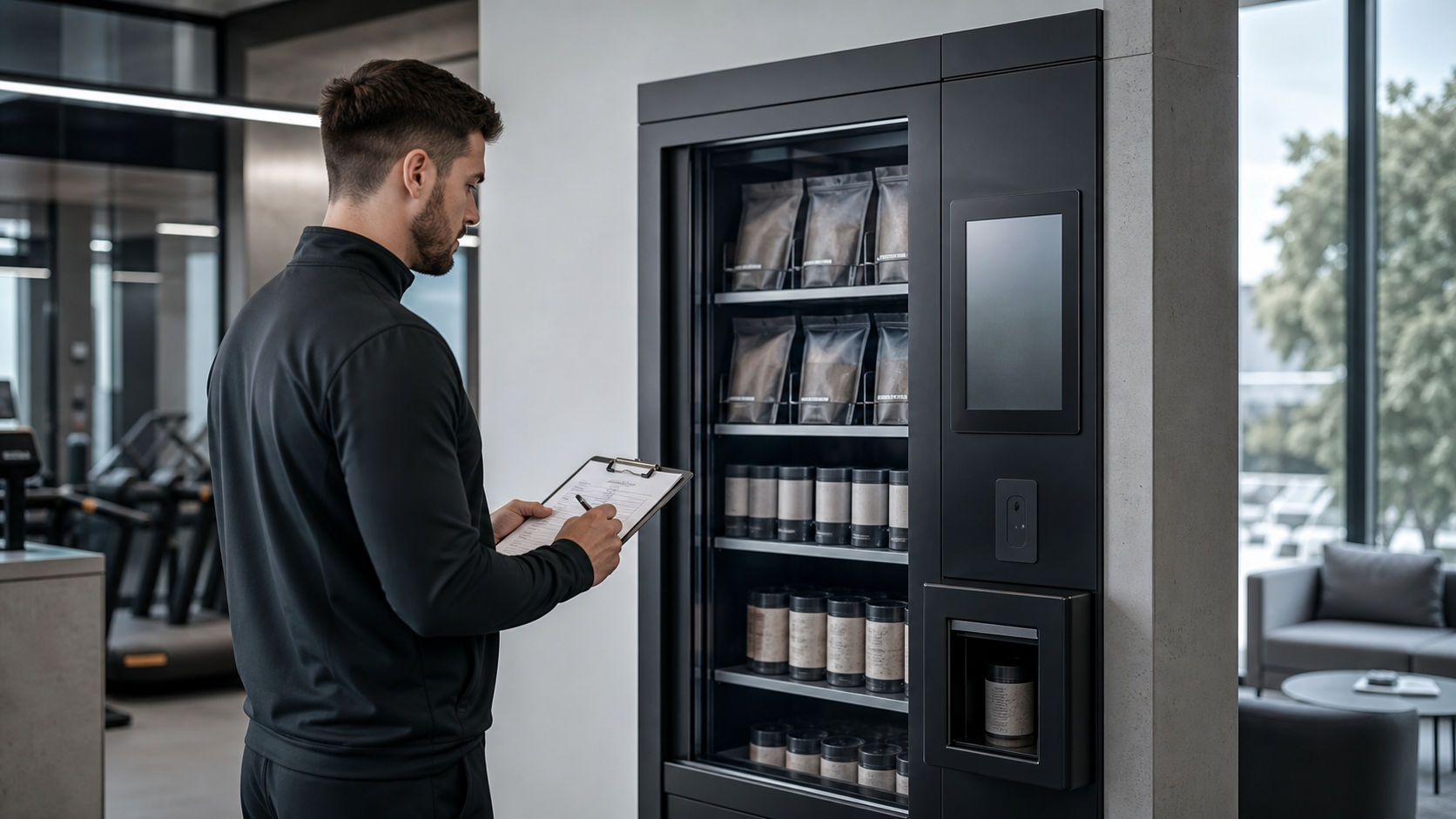
Verify Technical and Installation Documentation
Before delivery, obtain the exact model designation, electrical requirements, dimensions, weight, connection points, environmental limits, installation instructions, maintenance schedule, and applicable declarations or certificates. Confirm which party is responsible for local conformity work and whether any modification, payment integration, or branding change affects the supplied documentation.
The site survey should confirm delivery access, floor loading, clearances, ventilation, network coverage, water and drainage where used, and the safe isolation of utilities. A machine that fits the floor plan may still be difficult to install or service.
Verify Accessible Self-Service
Accessibility should be tested with the complete user journey. Review the approach space, control height, screen contrast, touch-target size, language clarity, payment terminal, audio or visual feedback, and product retrieval. European and national accessibility requirements are evolving, and their application depends on the service and operator, so obtain market-specific advice.
The strongest practical test is to observe users with different reach, vision, dexterity, and language needs completing a transaction without staff guidance.
Verify Payments, Connectivity, and Data Responsibilities
Confirm the payment methods expected in the market, offline behavior, refund route, settlement reporting, and responsibility for terminal support. If the machine or management platform records transaction, device, or user-related data, define what is collected, where it is stored, who can access it, and how long it is retained.
Connectivity loss should not create unsafe or confusing behavior. Document whether sales stop, continue offline, or queue data, and how the operator knows that remote monitoring is unavailable.
Use an Acceptance-Test File
An acceptance test turns claims into evidence. Include:
1. Correct model, options, and documentation received.
2. Repeated startup and normal transactions.
3. Each menu item and portion tested.
4. Ingredient and allergen information checked.
5. Payment approval, cancellation, and refund paths.
6. Low-stock, fault, and connectivity alerts.
7. Cleaning access and staff procedure.
8. Recovery from power or network interruption.
Record the result and corrective owner for every failed item before the public launch.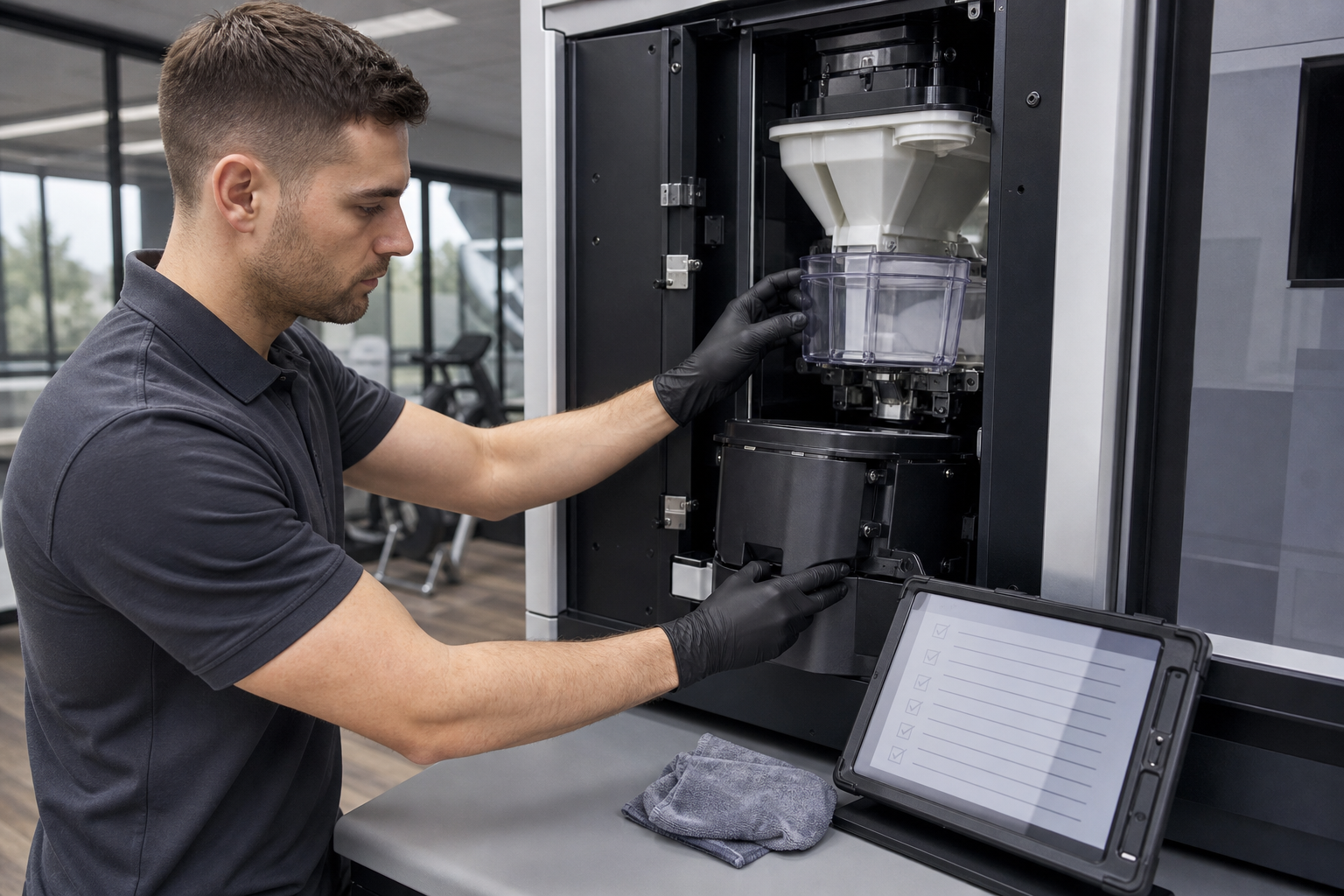
Frequently Asked Questions
Does CE marking alone prove the vending program is ready?
No. Product conformity is only one part of readiness. The operator still needs local food controls, installation checks, accessible service, payment support, staff procedures, and site acceptance testing.
Who should own allergen information?
The operating entity should assign clear responsibility for approving the information shown to customers and keeping it aligned with the actual products loaded in the machine.
Is one European pilot enough for a regional rollout?
It can validate the core operating model, but language, payments, authorities, ingredients, accessibility duties, and service logistics may require additional country-level verification.
Ask for Evidence, Not General Assurances
Caiyunjuan can respond more precisely when the buyer provides the destination country, site type, intended ingredients, languages, payment terminal, utilities, expected volume, accessibility requirements, cleaning model, and acceptance-test checklist. The procurement goal is a verified operating package, not only a machine quotation.
Sources and Reference Points
1. Regulation (EU) No 1169/2011 on food information to consumers.
2. Regulation (EC) No 1935/2004 on materials intended to contact food.
3. Directive (EU) 2019/882 on accessibility requirements for products and services.
Explore the protein vending program.
For a site-specific review, contact Caiyunjuan.
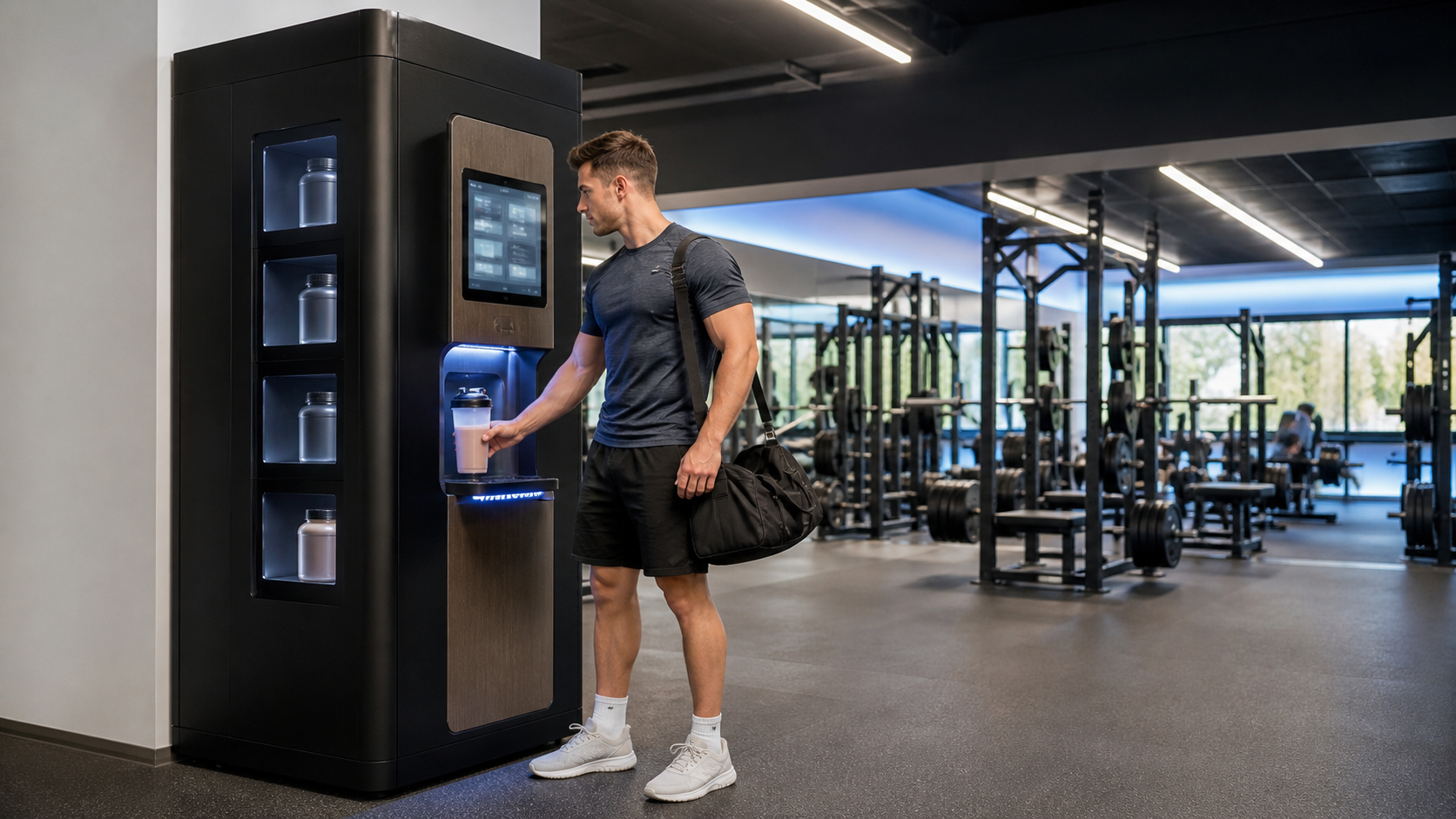
A 24-hour gym promises access beyond staffed hours, but its food and beverage offer often stops when the front desk closes. Protein vending can close that gap only when it behaves like a reliable m