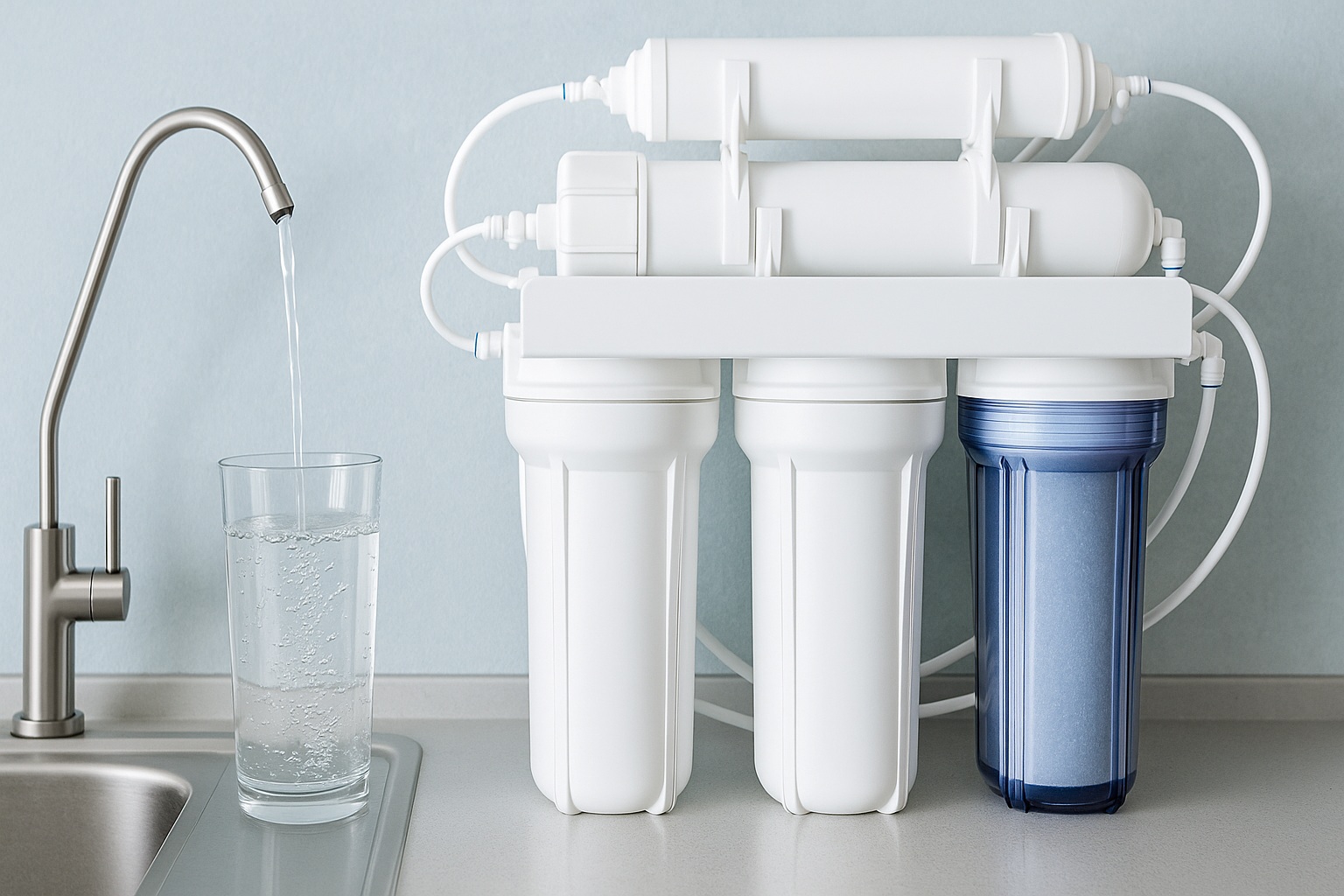
We all rely on the water flowing out of our faucets. Whether you're filling a glass after a workout, washing vegetables for dinner, or jumping into a morning shower, you expect that water to be clean and safe. But just because it comes from a treated municipal plant or a private well doesn't mean it's flawless by the time it reaches your sink.
Aging infrastructure, natural mineral deposits, and treatment chemicals can all alter the quality of your tap water. If you suspect something is off, it might be time to call in a professional plumbing service to assess your home's setup. A whole-house filtration system or even a point-of-use filter can completely transform the quality of your water. But how do you know if you actually need one? Here are a few clear indicators that your home's water supply could use an upgrade.
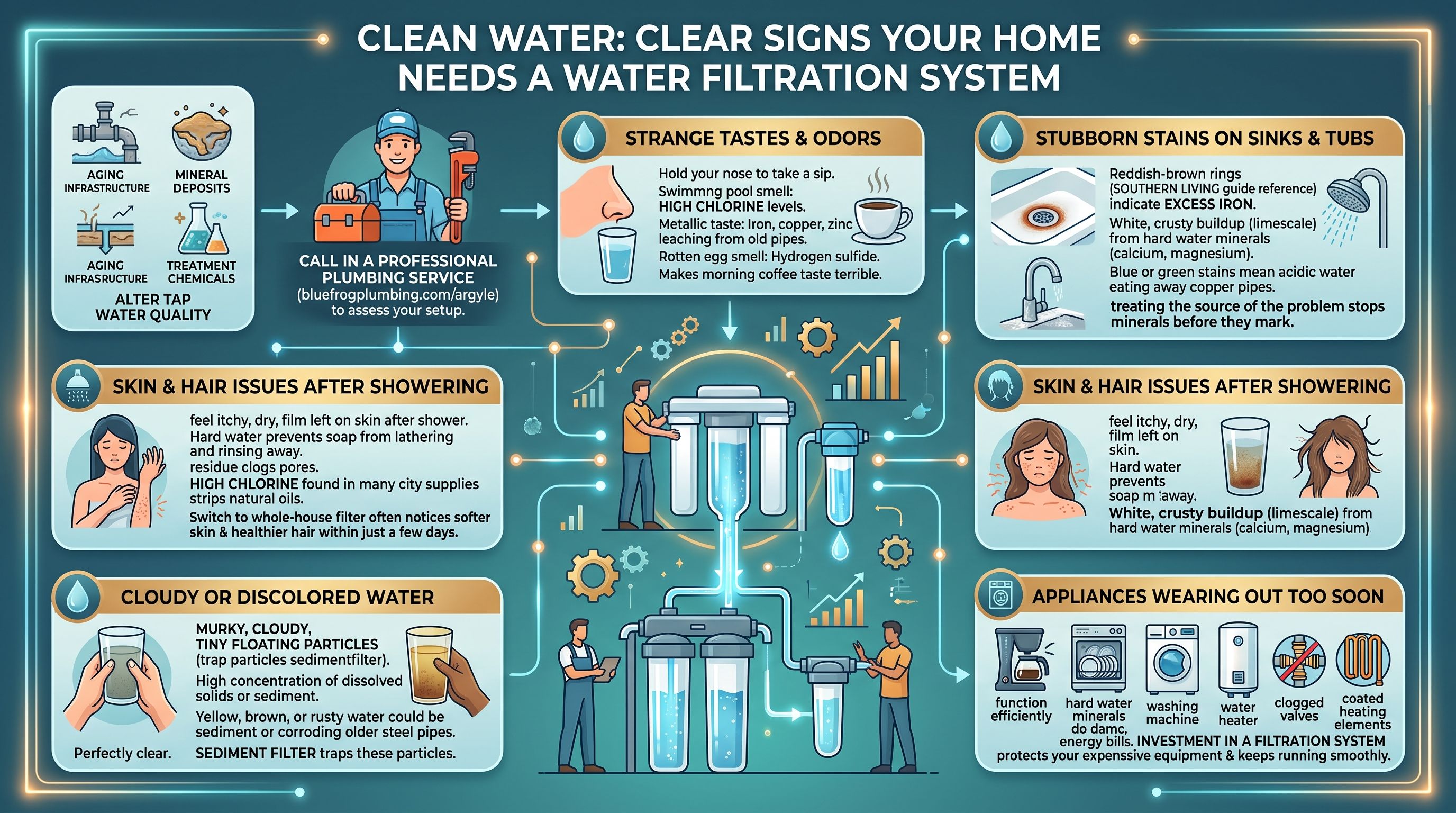
Strange Tastes and Odors
You shouldn't have to hold your nose to take a sip from the tap. One of the most obvious signs that your water needs filtering is an unpleasant smell or taste. If your water smells like a swimming pool, that's a strong indicator of high chlorine levels. Municipal treatment plants use chlorine to kill bacteria, but it isn't something you want lingering in your drinking glass.
A metallic taste often points to high iron, copper, or zinc, which can leach from old pipes. And if you turn on the faucet and you're greeted by a rotten egg smell, you're likely dealing with hydrogen sulfide. While not always dangerous, these odors and flavors ruin your drinking water and can even make your morning coffee taste terrible. A good carbon filter easily knocks out these issues.
Stubborn Stains on Sinks and Tubs
Take a close look at your bathroom and kitchen fixtures. Are you constantly scrubbing away reddish-brown rings around the bathtub drain? That's a classic sign of excess iron in your water supply. What about a white, crusty buildup on your showerhead or around the base of your kitchen faucet? This chalky residue is limescale, caused by hard water minerals like calcium and magnesium.
You might also spot blue or green stains, which indicate slightly acidic water that's slowly eating away at your copper pipes. No matter how much you clean, these stains will keep coming back until you treat the source of the problem. A filtration system, often paired with a water softener, stops these minerals before they can leave their mark.
Skin and Hair Issues After Showering
Your water doesn't just affect your plumbing; it impacts your body, too. If you step out of the shower feeling itchy, dry, or as if there's a film left on your skin, your water quality is likely the culprit. Hard water prevents soap from lathering properly and makes it difficult to rinse away completely. This leftover soapy residue clogs pores and irritates sensitive skin.
The high levels of chlorine found in many city water supplies also strip natural oils from your skin and hair. If you buy expensive moisturizers and conditioners but still struggle with dry skin and dull, brittle hair, a whole-house filter can make a remarkable difference. People who make the switch often notice softer skin and healthier hair within just a few days.
Cloudy or Discolored Water
Pour a glass of water and hold it up to the light. It should be perfectly clear. If the water looks murky, cloudy, or has tiny floating particles, you've got a problem. Sometimes, cloudiness is just trapped air bubbles that clear up after a few seconds. But if the water stays cloudy, it usually means there's a high concentration of dissolved solids or sediment.
If the water runs yellow, brown, or rusty, you might have sediment entering from a well, or your home's older steel pipes could be corroding from the inside out. Drinking discolored water is unappealing and can upset your stomach. A sediment filter traps these particles, ensuring your water looks and acts exactly as it should.
Appliances Wearing Out Too Soon
Your household appliances rely on clean water to function efficiently. If you find yourself frequently replacing coffee makers, or if your dishwasher leaves a chalky film on your glassware, hard water minerals are doing damage behind the scenes. These minerals build up inside washing machines, dishwashers, and water heaters, clogging internal valves and coating heating elements.
Over time, this buildup forces your appliances to work harder, driving up your energy bills and significantly shortening their lifespan. If you feel like you're constantly repairing or replacing water-reliant appliances, investing in a filtration system is a smart financial move. It protects your expensive equipment and keeps everything running smoothly.
Protecting Your Home and Family
Ignoring poor water quality doesn't just make your daily routines less enjoyable; it can take a real toll on your home and your comfort. From foul odors to stained sinks and ruined appliances, the symptoms of bad water are hard to miss once you know what to look for. If you recognize any of these signs in your own house, testing your water is the perfect next step. A simple test reveals exactly what contaminants are present, allowing you to choose a filtration setup that targets your specific issues. You deserve to turn on the tap and feel confident that the water flowing out is pure, clean, and safe for your entire family.


Anti-scale, sediment, magnetic, activated carbon filter or filter cartridge: Filtration of domestic water is done in many ways.Why install a water filtration systemBefore going into details, it is essential to understand that the installation of a water filtration system does not change anything whether the water is declared portable or not.
The filtration that we are going to talk about acts on parameters that are not representative to determine whether water can be consumed or not.Let's see the different cases where you can install a water filter.Drinking water filtrationWater filtrationYou can correct some parameters of the water that comes from the public distribution network, your well, or a water source, to improve its quality.
All suspended matter can be trapped by this system, provided the correct filter is used.Rainwater filtrationFrom a water collector or reservoir, this rainwater can be pumped to feed a toilet flush or high-pressure cleaner.
If you collect rainwater for sanitary purposes (toilet, washing machine, irrigation), the installation of a water filtration system is essential to preserve your installation and material.What are the different types of water filters?There is a multitude of filter types, but we will dwell on the most widespread and most used depending on the purpose.Cartridge filtersPack 4 osmosis filtersConventional filtering without real active ingredient, in other words purely mechanical.
Polyphosphate filters can be installed at the head of the network (after the meter) or before the devices to be protected (at the inlet of a water heater, for example).Polyphosphates act chemically on the different compounds in the waste, preventing scale from forming.
Polyphosphate filters can be in the form of cartridge filters.Magnetic filtersMagnetic filtersLike polyphosphates, magnetic filters can limit or remove scale or lime residue, but using magnetic waves.