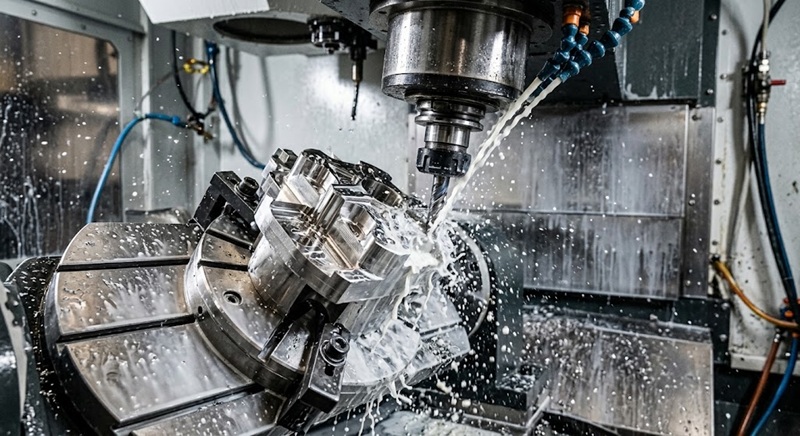
This guide looks at custom aluminum CNC machining specifically through an OEM lens: why it fits repeatable manufacturing programs, where aluminum machined parts show up on the production floor, and what a buyer should evaluate before committing a design to a machining partner.
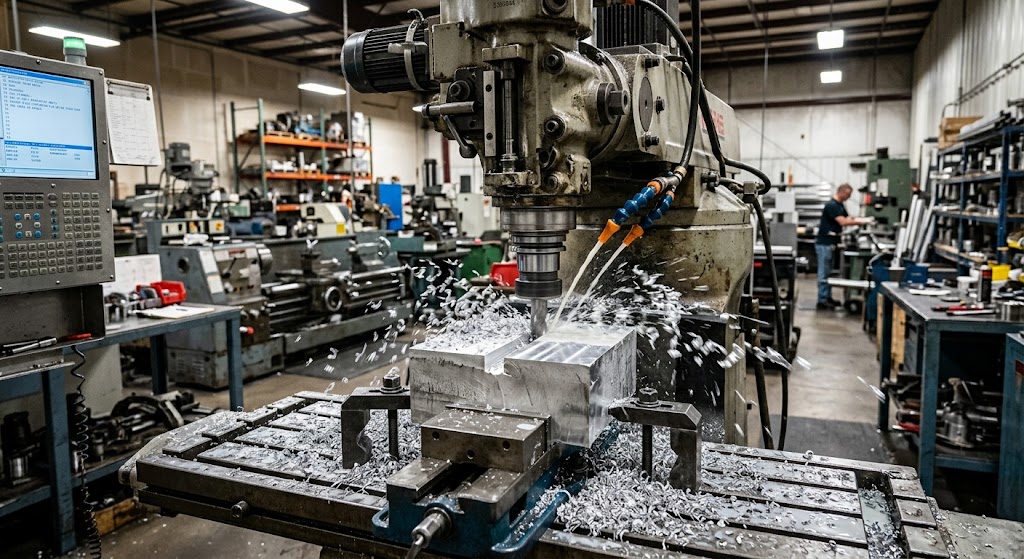
Why OEMs Default to Aluminum for Machined Components
OEM programs live and die by repeatability, lead time, and unit economics. Aluminum happens to check all three boxes better than most competing materials.
Machinability. Aluminum alloys cut at higher speeds and lower tool wear than steel or titanium, which shortens cycle times and keeps per-part cost predictable across long production runs.
Strength-to-weight ratio. For anything that moves — robotic arms, transportation subassemblies, portable equipment housings — shaving grams without losing structural integrity has a direct downstream benefit.
Corrosion resistance. Aluminum forms a natural oxide layer, and with anodizing or chromate conversion coating it stands up to industrial environments without the added cost of stainless steel.
Thermal and electrical conductivity. Heat sinks, enclosures, and electrical housings all benefit from aluminum's conductivity properties, which is why it dominates in electronics and power equipment.
Design flexibility. Aluminum accepts tight tolerances, thin walls, and complex geometries reliably, which matters when an OEM design has already been locked and the machining process has to match it exactly rather than the other way around.
None of this is new information to a design engineer. What changes the outcome of a program is how that machining is sourced and managed — which is where the OEM relationship comes in.
Where Aluminum Machined Parts Show Up in OEM Production
Custom aluminum CNC machining isn't tied to a single industry. It shows up anywhere a manufacturer needs a precise, repeatable metal component built to spec rather than pulled from a catalog.
Industrial automation and robotics — mounting plates, gearbox housings, end-effector components, and structural brackets that need to hold tolerance across thousands of duty cycles.
Transportation and mobility equipment — connectors, manifolds, and structural components where weight reduction translates directly into performance or efficiency gains.
Electronics and telecom enclosures — heat sinks, chassis, and shielding components that rely on aluminum's thermal and EMI properties.
Fluid power and hydraulics — valve bodies, manifold blocks, and fittings that require internal porting machined to tight dimensional accuracy.
Medical and lab equipment housings — parts that need a clean finish, consistent tolerances, and the ability to be anodized for durability and appearance.
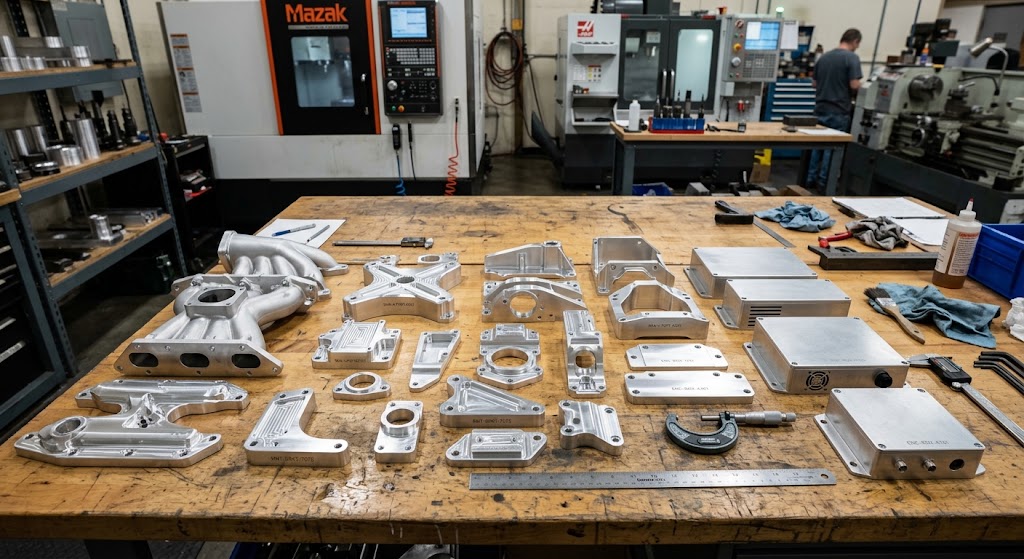
Common Aluminum Alloys Used in OEM Machining
Alloy selection is one of the first decisions that shapes cost, strength, and finish. The table below summarizes the alloys most frequently specified in OEM machining programs.
Alloy Key Characteristics Typical OEM Use Case
6061-T6 Good strength, weldable, excellent corrosion resistance General-purpose structural brackets, frames, enclosures
7075-T6 High strength-to-weight ratio, less corrosion resistant Load-bearing components, aerospace-adjacent hardware
5052 Good formability, strong corrosion resistance Sheet-derived parts, fluid-contact components
2024-T3 High fatigue resistance Structural components under cyclic stress
6063 Excellent surface finish, easier to extrude and machine Enclosures, trim components, anodized visible parts
Choosing the right alloy early avoids costly redesigns later — a part specified in 7075 for strength but requiring extensive welding, for example, creates friction between the design intent and the manufacturing process.
The OEM Machining Process, Step by Step
A mature machining partner doesn't just run a CNC program — they manage a process that protects the OEM's design intent from first article to full production.
Design review and DFM feedback. Before cutting begins, tolerances, wall thickness, and tool access are reviewed against the CAD model to flag anything that will drive up cost or cycle time.
Material sourcing and certification. Aluminum stock is sourced and, where required, certified with mill test reports for traceability.
Programming and first article production. CAM programming is set up, and a first article is produced and measured against the drawing.
Production run. Once the first article is approved, the part moves into batch or ongoing production with in-process quality checks.
Finishing. Anodizing, powder coating, bead blasting, or passivation is applied depending on the part's function and environment.
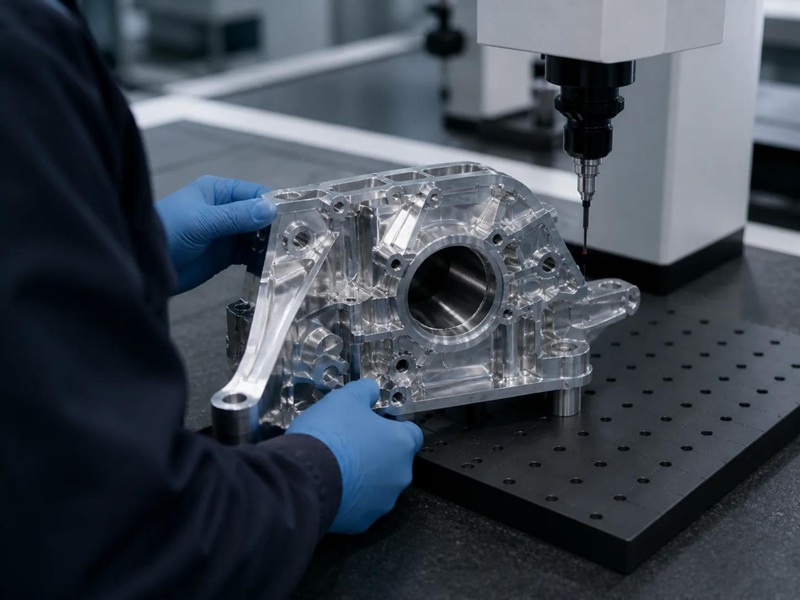
Inspection and shipment. Final dimensional inspection, often with CMM reporting for critical dimensions, precedes packaging and delivery.
For a closer look at how this process is structured end to end, this custom aluminum machining overview walks through capability ranges, tolerances, and finishing options in more detail. (Internal link — anchor text: "custom aluminum machining")
What OEM Buyers Should Evaluate Before Sourcing
Not every machine shop is built for OEM production. A few things separate a supplier who can handle a single prototype from one who can support an ongoing program:
Tolerance consistency across batches, not just on a first article
Capacity to scale from low-volume prototyping into production quantities without re-quoting the entire process
In-house finishing options (anodizing, plating, coating) to avoid coordinating multiple vendors