

Strategic Trends and Commercial Opportunities in the Worldwide Ion Exchange Chromatography Media Market
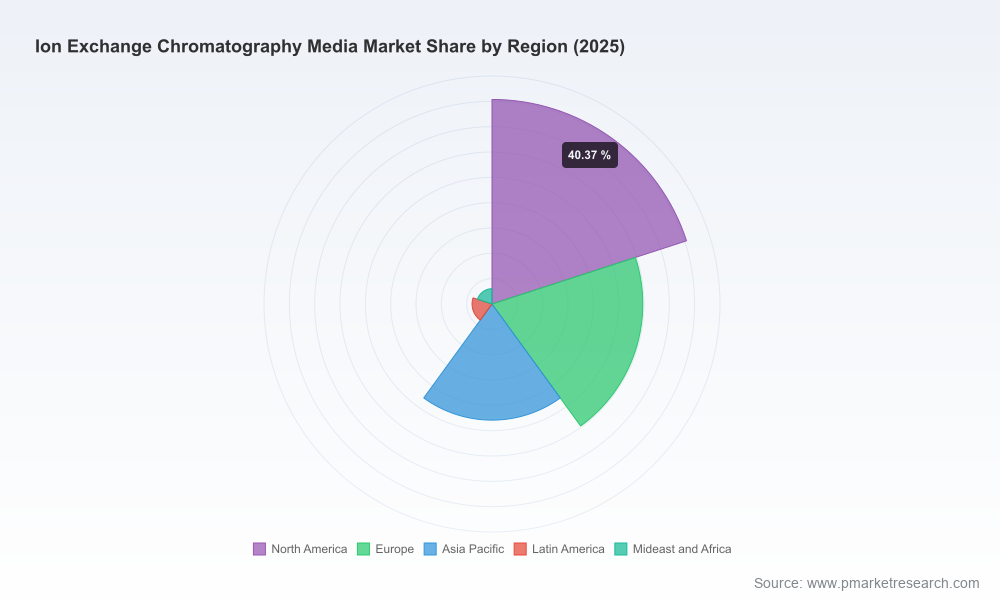
The worldwide ion exchange chromatography media market has entered a phase of sustained, structurally driven expansion. Revenue expanded from approximately USD 1.55 billion in 2020 to USD 2.45 billion in 2025, and the trajectory points toward USD 4.25 billion by 2032, reflecting a compound annual growth rate of 8.2 percent over the forecast period. This growth is not merely cyclical; it reflects a compounding effect of rising biologics manufacturing, stricter water quality mandates, and incremental adoption in food and beverage processing. The market’s composition reveals a clear hierarchy: resin-based media command the largest share of revenue, while synthetic polymers and other specialized formats occupy important, performance-driven niches. Geographically, mature economies in North America and Europe continue to anchor substantial volumes, while Asia Pacific, Latin America, and the Middle East and Africa are expanding at differentiated rates tied to localized manufacturing capacity, regulatory maturity, and downstream processing demand. Within applications, pharmaceutical and biotechnology consistently represent the largest revenue pool, followed by water treatment, food and beverage, and research and academic use. Concentration metrics indicate that the top three participants capture roughly 48.5 percent of revenue, and the top five account for approximately 62.4 percent, underscoring a landscape where scale, technical differentiation, and supply reliability confer meaningful advantages.
Against this backdrop, three structural challenges are shaping the industry’s next chapter. First, the economics of chromatography media are increasingly sensitive to input cost volatility, particularly in divinylbenzene, a key crosslinker for polystyrene-based resins. Price swings tied to benzene and styrene feedstock fluctuations can compress margins for manufacturers that have not secured long-term supply agreements or diversified chemistries. Second, environmental and regulatory friction is rising, especially in Europe, where REACH registration and RoHS compliance requirements, alongside tighter controls on the disposal of used chromatography resins and chemical waste, are elevating operational costs and prompting manufacturers to rethink lifecycle management. Third, the boundary between laboratory analytical resins and industrial-scale purification media is blurring in practice even as buyers maintain distinct procurement priorities; this creates category confusion, complicates demand forecasting, and raises the bar for suppliers that must serve both high-throughput bioprocessing and water treatment applications without compromising performance or compliance.
Key Drivers Reshaping the Market
Technical Innovation and Separation Performance
Performance requirements are moving beyond basic ionic exchange capacity toward multi-attribute optimization: higher dynamic binding capacity, improved tolerance to conductivity variations, lower nonspecific binding, and reduced leachable organic carbon. These attributes matter because downstream purification is a major cost and time driver in biologics manufacturing, and even incremental gains in resolution or throughput can reduce pool sizes, shorten cycle times, and improve overall process economics. In this context, manufacturers are advancing agarose-based formats for high-resolution protein and oligonucleotide purification, polymer-based media for robust large-scale separations, and hybrid formats that combine resin and membrane characteristics for specific conductivity windows. One notable signal is the continued engineering of high-purity resin grades, illustrated by the introduction of UltraPure resin lines designed for low total organic carbon in demanding applications with relevance to high-purity chromatography needs. The commercial implication is clear: differentiation is shifting from catalog breadth toward application-validated performance, and suppliers that can demonstrate lot-to-lot consistency, cleanability, and compatibility with single-use or continuous processing architectures are positioned to capture premium demand.
Policy, Regulatory Pressure, and Compliance as a Competitive Variable
Regulatory dynamics are increasingly embedded in purchasing decisions rather than treated as a compliance afterthought. In European markets, REACH registration and RoHS compliance have become prerequisites for market access, and the administrative burden of maintaining documentation and substance disclosures is compressing the field for smaller suppliers that lack robust regulatory affairs functions. At the same time, stringent environmental rules on the disposal of used chromatography resins and chemical waste are encouraging sustainable practices, from extended resin lifetime and reuse protocols to improved regeneration chemistry and waste minimization. These pressures influence procurement in two ways: they increase the total cost of ownership for lower-durability media, and they make suppliers with transparent environmental footprints and documented compliance infrastructure more attractive to risk-averse buyers. For manufacturers, regulatory readiness is no longer a cost center; it is a market-access lever and a credibility signal in qualification cycles. Ion Chromatography Column Market
Demand-Side Shifts Across End Markets
Demand is being shaped by a combination of biopharmaceutical scale-up, intensified water purification mandates, and emerging purification needs in food and beverage and research settings. Biologics manufacturing, particularly monoclonal antibodies and increasingly complex modalities, continues to expand purification throughput requirements, favoring media that maintain high capacity and resolution under scaled conditions. Water treatment demand is reinforced by tightening quality standards and reuse objectives, where ion exchange remains a practical tool for specific contaminant profiles and polishing steps. In food and beverage, purification requirements for quality, safety, and process efficiency are extending the addressable base for selective separation media. Meanwhile, research and academic users continue to drive steady demand for analytical-scale media, though this segment’s procurement patterns differ markedly from industrial buyers in terms of volume, specification sensitivity, and cost tolerance. The net effect is a diversified demand base that reduces dependence on any single vertical while requiring suppliers to manage multiple qualification pathways and use-case expectations.
Supply Chain Realignment and Manufacturing Footprint
Supply-side strategy is becoming a visible part of competitive positioning. Recent capacity expansions, including the opening of a new manufacturing facility in China focused on increasing production capacity of ion exchange resins for biopharma and purification markets, reflect a broader trend toward regionalizing supply to shorten lead times, reduce logistics exposure, and align with local qualification expectations. At the same time, raw material dynamics remain a pivotal variable: the divinylbenzene market, valued at approximately USD 77.1 million in 2025 and projected to reach USD 137 million by 2035, illustrates both long-term demand growth and the persistent risk of feedstock-driven price volatility. Manufacturers that combine forward procurement, alternate crosslinker strategies, and geographic diversification can dampen margin variability, while those reliant on spot exposure may face periodic profitability pressure. The strategic takeaway is that supply reliability, quality consistency, and regional presence now influence buying decisions as much as product catalog features.
Competitive Landscape and Leading Strategies
The competitive field includes a mix of globally integrated life sciences suppliers, established resin specialists, and regional manufacturers with growing technical capabilities. Cytiva, operating as part of Danaher, offers a broad range of ion exchange resins for capture and polishing of biomolecules across research and industrial bioprocessing, leveraging the advantage of an integrated bioprocessing ecosystem. Merck KGaA, through MilliporeSigma, provides Eshmuno and Fractogel resins associated with high-yield purification in biopharmaceutical manufacturing, emphasizing process reliability and performance consistency. Bio-Rad supplies Nuvia, UNOsphere, and Macro-Prep resins for process purification and analytical applications, combining scale with a strong analytical heritage. Thermo Fisher Scientific offers POROS ion-exchange resins for large-scale bioseparations of proteins, monoclonal antibodies, and other biologics, supported by extensive application documentation. Sartorius provides resins, membranes, and monoliths with high capacity across various conductivities for bioprocessing, enabling customers to address specific conductivity and throughput requirements. Tosoh Bioscience manufactures ion exchange chromatography media and columns for biomolecule separation, while Mitsubishi Chemical Corporation produces DIAION ion exchange resins used in chromatography and separation applications for over 70 years, reflecting deep process knowledge and long-standing supply relationships. LANXESS offers Lewatit resins, including grades for pharma and biotech purification, and has extended its high-purity engineering into areas with relevance to low total organic carbon requirements. Ecolab, through Purolite, specializes in ion exchange resins for biopharma purification and has reinforced its regional capacity with new manufacturing investments. Bio-Works Technologies manufactures WorkBeads agarose-based ion exchange resins for high-resolution protein and oligonucleotide purification, an example of specialty differentiation in high-value separations. Sunresin New Materials produces Seplite ion exchange chromatography media for biomolecule separation, alongside YMC’s BioPro hydrophilic polymer-based media for protein and nucleic acid purification, and Welch Materials’ high-capacity agarose-based and polymer-based media, collectively illustrating the growing presence of regionally anchored suppliers with expanding technical portfolios. Ion Exchange Membrane Market
These players are pursuing differentiation along several strategic axes. Integrated suppliers tend to compete on ecosystem breadth, application support, and the ability to connect chromatography media with upstream and downstream processing choices. Specialty resin manufacturers compete on separation performance, resin lifetime, and validated claims for difficult-to-purify targets. Regional manufacturers increasingly compete on supply responsiveness, localization of qualification support, and cost-effective scale. A notable competitive trend is the growing relevance of hybrid capability sets: suppliers that can offer resin, membrane, and monolith options across a conductivity range, or that can support both analytical and preparative scales, are better positioned to serve customers consolidating vendors. At the same time, the market is not simply consolidating; it is also fragmenting by application and region, where local presence, compliance documentation, and tailored service models can outweigh global catalog size in specific buying decisions. The result is a landscape in which scale provides negotiating leverage and cost advantages, but technical validation, regulatory readiness, and supply resilience determine real market access.
Outlook: Trends Shaping the Next Three to Five Years
Over the next three to five years, three trends are likely to define the market’s evolution. First, performance-per-gram economics will gain prominence as buyers seek media that sustain high capacity and resolution over more cycles, lowering total cost of ownership even when unit pricing is higher. This creates opportunities for suppliers that can publish credible lifetime, cleanability, and regeneration data, and for buyers that are willing to evaluate resin selection on process-level economics rather than piece price alone. Second, regional supply and qualification localization will deepen, with more capacity additions, technical support hubs, and documentation centers placed closer to major demand clusters. For suppliers, this can reduce lead-time risk and improve customer confidence; for buyers, it can shorten qualification timelines and improve continuity. Third, sustainability and regulatory compliance will become more embedded in specification and procurement criteria, especially where disposal constraints and substance regulation raise the cost of non-compliant or short-lived media. These forces open opportunities for manufacturers that design for durability, lower leachables, and efficient waste handling, while creating friction for entrants that underestimate documentation, validation, or lifecycle management requirements. PW Consulting
Risks and uncertainties remain meaningful. Feedstock volatility in key crosslinker chemistries can disrupt margin forecasts and complicate pricing commitments. Regulatory requirements may expand or shift in ways that alter cost structures and market access, especially across jurisdictions with differing compliance timelines. Demand patterns could diverge between high-growth biologics applications and more cyclical water or food and beverage users, making portfolio balance an ongoing strategic challenge. Finally, the growing capability of regional manufacturers may intensify competition in specific geographies, pressuring incumbents to demonstrate clear technical and service advantages rather than relying on brand familiarity.
Strategic Implications for Decision Makers
For manufacturers, the priority is to align product development with process-level value rather than catalog breadth alone. Invest in application-validated performance data, resin lifetime and cleanability claims, and compliance documentation that reduces qualification friction. Where feasible, secure raw material supply and diversify crosslinker strategies to mitigate divinylbenzene volatility. Evaluate regional capacity additions as a way to improve responsiveness and qualification support, but ensure that scale is paired with consistent quality systems and clear technical differentiation. For investors, the most durable value creation is likely to come from suppliers with defensible performance claims, strong regulatory readiness, and supply resilience, rather than from undifferentiated capacity expansion. Pay attention to end-market diversification, especially the balance between high-growth biologics demand and more cyclical purification applications, and monitor regional entrants that can win on localization and service even if they do not lead on global scale. For procurement and sourcing leaders, resin selection should be evaluated on total cost of ownership, including cycle life, regeneration efficiency, disposal considerations, and compliance burden, rather than on unit price alone. Build qualification processes that reward documentation quality and supply reliability, and consider multi-source strategies where performance equivalence can be demonstrated without sacrificing risk control. The market’s expansion is real, but the distribution of value will increasingly favor participants who can combine technical credibility, regulatory assurance, and dependable supply with clear application relevance. For organizations seeking a more granular view of segmentation dynamics, regional trajectories, and tailored sourcing or investment scenarios, the full research report provides detailed breakdowns and scenario-based guidance to support focused decisions.
For detailed analysis of this topic, please visit the official page: Worldwide Ion Exchange Chromatography Media Market
Lacy LeeSenior Marketing Managersales@pmarketresearch.com00852-95632430PW Consulting: www.pmarketresearch.com