

The DevSecOps Tool Market: Strategic Trends and Commercial Opportunities at the Intersection of Speed and Security
Market Landscape: Scale, Structure, and Core Challenges
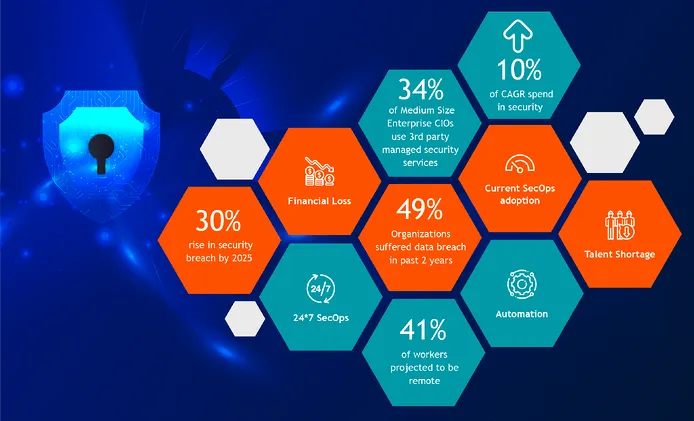
The enterprise software delivery environment has undergone a fundamental reorientation over the past half-decade. Security is no longer a final-stage checkpoint; it is embedded into the continuous flow of code commits, infrastructure provisioning, and deployment pipelines. This structural shift has translated into measurable commercial momentum for DevSecOps tooling. The total market revenue has expanded from a base of approximately 3.0 billion USD in 2020 to over 10.0 billion USD in 2025, and forward trajectories project continued acceleration through 2032. A compound annual growth rate hovering near the high twenties signals more than incremental expansion; it reflects a durable reallocation of enterprise budgets toward integrated security workflows that can keep pace with modern release cadences.
This growth is not uniform across all operational models. Cloud-based deployment patterns have clearly outpaced on-premise configurations, reflecting the broader migration of development, testing, and production environments to platforms where centralized visibility, automated policy enforcement, and elastic scanning capacity are easier to operationalize. At the same time, the deployment mix is not a simple binary narrative. Certain regulated environments, legacy modernization programs, and sectors with strict data residency or air-gapped requirements continue to sustain meaningful on-premise demand. The practical takeaway is that vendors and buyers are navigating a hybrid reality where platform flexibility, integration depth, and operational portability determine adoption more than deployment label alone.
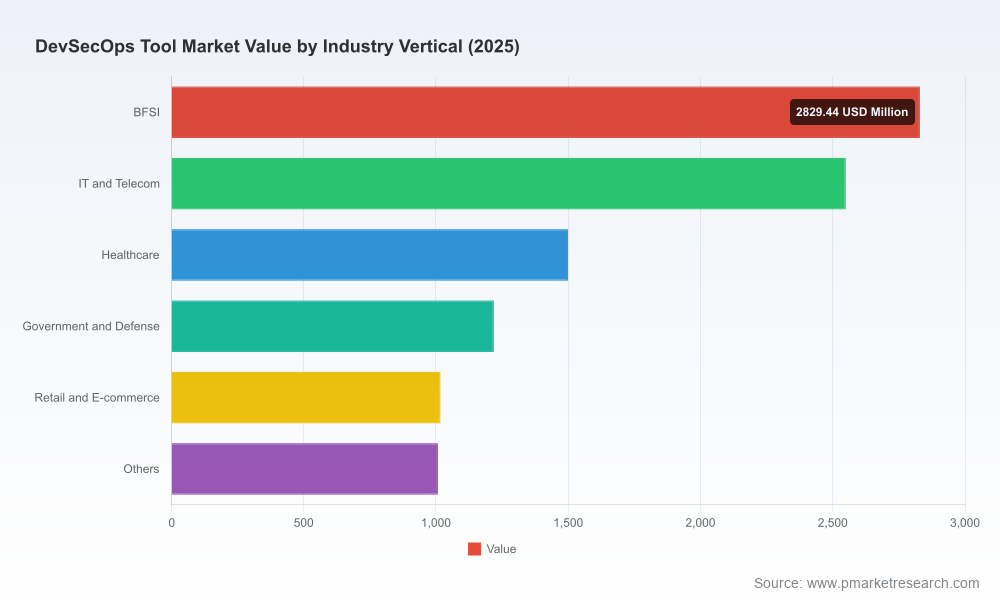
Industry demand is also distributed across multiple verticals rather than concentrated in a single anchor sector. Financial services and telecommunications have historically anchored application security spend, but healthcare, government and defense, retail, and broader enterprise operations are expanding their footprints rapidly. Each vertical brings a distinct compliance posture, release velocity expectation, and risk tolerance, which in turn shapes tool selection. This diversification is strengthening the market’s resilience, but it also raises the bar for vendors that must satisfy varied audit requirements, artifact types, and operational cultures without fragmenting their own product strategy. Application Security Software Market
Despite the positive momentum, three structural challenges are reshaping how the market evolves. First, tool sprawl and workflow friction remain persistent bottlenecks. Development and security teams frequently juggle overlapping scanners, manual approval gates, and duplicated scans across pipeline stages. The result is time lost to coordination overhead rather than risk reduction, which weakens the very efficiency promise that DevSecOps is meant to deliver. Second, the convergence of software supply chain risk with AI-assisted development is outpacing the maturity of existing controls. As code generation, dependency selection, and deployment recommendations become increasingly automated, organizations are struggling to maintain traceability, validation rigor, and runtime protection without slowing delivery. Third, regulatory and standards activity is becoming more specific and more operational. Emerging guidance around secure software development practices and continuous risk monitoring is pushing vendors and enterprises to translate policy language into verifiable pipeline behavior, which favors platforms with stronger evidence capture, policy automation, and compliance reporting.
For decision makers, the central implication is that spending is shifting from point solutions toward platforms that can compress friction, unify risk views, and produce auditable outcomes. The growth trajectory is strong, but the value capture increasingly depends on reducing process waste, adapting to AI-era development patterns, and aligning tooling with a faster-moving regulatory environment.
Core Drivers: Technology, Policy, Demand, and Operational Economics
Technology innovation remains the most visible driver of market expansion, but the nature of innovation has changed. The earliest waves of application security testing focused on discrete scanning capabilities for source code, dependencies, and running applications. Today, the competitive frontier is moving toward correlated risk intelligence, developer-native integration, and platform-level continuity across the software development lifecycle. Unified platforms that connect static analysis, software composition analysis, infrastructure-as-code scanning, container and runtime protection, and secret detection into a single workflow reduce context switching and make it easier to triage issues before they reach production. Equally important is the depth of integration with continuous integration and continuous delivery tooling, where security feedback is most actionable when it appears adjacent to the developer’s existing environment rather than in a separate console.
A second driver is the rapid entanglement of artificial intelligence with both code creation and threat behavior. AI-assisted development is accelerating output, but it also expands the surface area for insecure patterns, misinterpreted dependencies, and novel attack techniques against AI workloads. This has pushed security vendors to broaden beyond traditional scanning into AI trust, model-aware risk handling, and runtime protection for AI-enabled services. The market is responding with features designed to secure the AI software lifecycle itself, not merely the conventional components surrounding it. In practical terms, this means buyers are beginning to evaluate vendors on how well they handle emerging AI-related risk vectors, and vendors are investing in capabilities that position them to remain relevant as development workflows become more agentic and automated.
Policy and regulatory dynamics are exerting a more direct influence on purchasing criteria than in prior cycles. Public-sector and standards body activity is moving from general security principles toward applied, pipeline-oriented practice guidance. Recent releases illustrating secure software development and operations practices, alongside updated enterprise DevSecOps guidance from defense and civilian agencies, are helping codify expectations around risk-based controls, continuous monitoring, and the role of platform capability providers. The shift away from older risk management frameworks toward constructs designed for continuous monitoring reinforces the same message: compliance is increasingly evaluated through evidence generated during development and deployment, not only through periodic assessments. For commercial organizations, this trend raises the importance of tooling that can produce repeatable artifacts, automate policy checks, and simplify audit preparedness.
Demand-side behavior is also changing in ways that reinforce platform consolidation. Engineering leaders are under pressure to release faster while reducing incidents that trigger rework, customer impact, or regulatory scrutiny. That pressure is encouraging a preference for tools that can be adopted with lower process overhead and that provide clearer prioritization rather than large volumes of disconnected findings. At the same time, security and platform teams are increasingly selected on their ability to scale across multiple teams, languages, and cloud environments without proportional increases in administrative burden. This creates a strong pull toward solutions that combine broad coverage with streamlined workflows and consistent reporting.
Finally, operational economics is reshaping buying logic. The cost of inefficient security processes is becoming more visible as organizations quantify the labor lost to duplicate scans, manual approvals, and fragmented toolchains. When skilled professionals spend meaningful portions of their week on coordination tasks instead of higher-value analysis, the hidden cost of a fragmented stack becomes harder to ignore. In response, buyers are weighing not just license price but total workflow impact: how much time is recovered, how rapidly issues can be remediated, and how easily the toolset scales without adding administrative layers. Supply-side, the broader push toward cloud-native architectures and containerized delivery has also changed the cost structure of security operations by increasing the need for continuous, automated protection across ephemeral workloads, which favors platforms with scalable scanning and runtime instrumentation. PW Consulting Information & Electronics Research Center
Competitive Landscape: Positioning, Differentiation, and Market Evolution
The vendor landscape reflects a market in which scale, integration breadth, and developer experience increasingly determine commercial traction. Several established players have built recognizable franchises by pursuing distinct strategic positions, and those positions reveal where the market is heading.
Checkmarx has emphasized a unified DevSecOps platform approach that correlates multiple testing modalities, including static analysis, software composition analysis, dynamic testing, infrastructure-as-code, and container security, within shared risk views. Its differentiation rests on broad coverage combined with deep integration into continuous integration pipelines and development environments, which aims to make results more actionable within existing developer workflows. Snyk has positioned itself around a developer-first security model, concentrating on software composition analysis, container and infrastructure-as-code scanning, and expanding into AI-related trust and security capabilities. Its trajectory suggests a focus on meeting developers where they work and extending security concerns into the AI software lifecycle as development practices change. GitLab has pursued an all-in-one model that embeds security and compliance functions directly into a unified delivery platform. By integrating testing, secret detection, and compliance tooling alongside source management and pipeline execution, GitLab reduces the friction of adding separate security products, which can be attractive to organizations seeking fewer handoffs and simpler procurement.
Aqua Security has built its identity around cloud-native protection, with emphasis on containers, Kubernetes, serverless workloads, and supply chain security within DevSecOps pipelines. Its relevance is tied closely to environments where workload lifecycle protection and pipeline-based supply chain safeguards are central concerns. Palo Alto Networks, through its Prisma Cloud offering, positions around code-to-cloud security and multi-cloud visibility, combining compliance automation with lifecycle coverage across environments. That positioning appeals to organizations seeking a broader security fabric that can connect development-time checks with runtime and cloud posture concerns. Veracode continues to serve enterprise buyers with an application security testing orientation spanning static analysis, software composition analysis, and dynamic testing integrated into DevSecOps workflows, often aligning with organizations that prioritize enterprise-grade testing programs and compliance-oriented reporting.
OpenText has taken a different angle by emphasizing integration across tools, data, and teams over the full delivery lifecycle, which can appeal to organizations trying to connect heterogeneous tooling rather than standardize on a single platform. Wiz has gained attention for cloud-native security with code-to-cloud capabilities, including infrastructure-as-code scanning and runtime protection, extending DevSecOps practices into environments where cloud posture and workload behavior must be continuously correlated. Collectively, these players illustrate a spectrum of strategies: platform consolidation, developer-centric workflow integration, cloud-native runtime emphasis, and broad portfolio integration.
The market structure remains moderately concentrated, with the largest players holding meaningful but not prohibitive share. That concentration level matters because it leaves room for both consolidation and disruption. The competitive trend is moving toward consolidation at the platform layer, as buyers increasingly prefer fewer, more integrated systems that can reduce process waste and improve risk correlation. At the same time, differentiation is becoming more specific. Vendors are competing on the strength of their integrations, the quality of developer experience, the sophistication of AI-era protections, and the clarity of their compliance evidence. Mergers and partnerships are also reshaping the landscape. Recent activity includes an acquisition by Snyk of an AI security research firm to accelerate agentic AI security innovation and strengthen its AI Trust Platform; a product launch by Aqua Security focused on real-time protection for threats related to AI workloads; and a partnership between Amazon Web Services and GitLab to integrate developer tooling for accelerating DevSecOps workflows. These moves indicate that both capability expansion and ecosystem alignment are becoming central to competitive strategy.
For buyers, the practical implication is that vendor selection is less about checking a single testing box and more about evaluating which platform can most effectively reduce friction, support the organization’s deployment model, and adapt to emerging AI and compliance demands. For vendors, the pressure is to demonstrate measurable workflow improvement and to prove that broader coverage does not come at the expense of usability or deployment flexibility.
Forward Outlook: Three Trends Shaping the Next Three to Five Years
The first major trend is the continued shift from scanning-centric security to platform-centric, workflow-optimized security. Over the next few years, tools that merely generate findings are likely to face growing pressure from platforms that prioritize triage efficiency, correlated risk context, and integration into daily development activity. The commercial opportunity lies in solutions that can demonstrably reduce the time between detection and remediation while maintaining enough coverage to satisfy enterprise and regulatory expectations. Companies that can quantify workflow improvements, not just feature breadth, will be better positioned to justify expansion within existing accounts and to win competitive deals.
The second trend is the normalization of AI-era security as a core purchasing criterion rather than a niche add-on. As development becomes more automated and AI-assisted, security tools will need to cover not only traditional application artifacts but also the behaviors, dependencies, and runtime conditions associated with AI workloads. This creates opportunities for vendors that can provide secure development support for AI software, runtime protection for AI-related services, and clearer guidance on how to manage emerging risk patterns without crippling developer velocity. The uncertainty here lies in how quickly standards, customer expectations, and threat behavior will co-evolve. Early positioning can create advantage, but overinvestment in narrowly defined AI security claims without operational grounding may prove costly if requirements shift.
The third trend is the growing expectation that compliance and continuous monitoring will be embedded into pipeline operations. Guidance from standards bodies and public-sector agencies is moving toward risk-based, continuously monitored practices, which increases demand for automated evidence capture, policy enforcement, and audit-ready reporting. For commercial organizations, this trend opens the door to tools that can simplify compliance workflows and reduce the operational cost of demonstrating control effectiveness. The risk is that regulatory language may continue to diversify across regions and sectors, making it harder for any single platform to claim universal compliance fit. Vendors and buyers alike will need to focus on adaptable policy models and verifiable pipeline behavior rather than static checklists.
Strategic Guidance for Decision Makers
For platform and engineering leaders evaluating toolchains, the priority should be to reduce process friction before expanding feature count. Investments that consolidate overlapping scans, strengthen integration with existing pipelines, and improve prioritization are likely to yield faster returns than stacks that add more separate consoles or manual gates. Organizations should also pressure-test whether a platform can accommodate both current deployment patterns and the transition toward more cloud-native and AI-assisted workflows, since toolchains that lock teams into inefficient handoffs will become costlier over time.
For investors and strategic planners, the attractive exposure is not simply in market growth but in differentiation around workflow efficiency, AI-era security, and compliance enablement. Companies that can translate broad coverage into measurable operational improvement, and that can keep pace with evolving standards and cloud-native runtime demands, are better positioned to defend margins and expand share. At the same time, diligence should account for the risk of feature-level crowding, integration complexity, and the uncertainty surrounding how quickly AI-related requirements and regulatory expectations will coalesce. Worldwide Database Testing Tool Market
For procurement and security leadership, the emphasis should shift from isolated tool evaluation to total workflow impact. Total cost of ownership increasingly includes labor lost to coordination, duplicate effort, and delayed remediation. Buying decisions should therefore weigh integration depth, evidence generation for audit and continuous monitoring, and the platform’s ability to support developer adoption without creating new bottlenecks. Given the pace of change across AI development practices, cloud-native architectures, and regulatory guidance, detailed segment-level comparisons and tailored fit assessments can materially improve procurement outcomes, and organizations seeking that level of specificity will benefit from accessing fuller research coverage before finalizing commitments.
For detailed analysis of this topic, please visit the official page: DevSecOps Tool Market
Lacy LeeSenior Marketing Managersales@pmarketresearch.com00852-95632430PW Consulting: www.pmarketresearch.com