


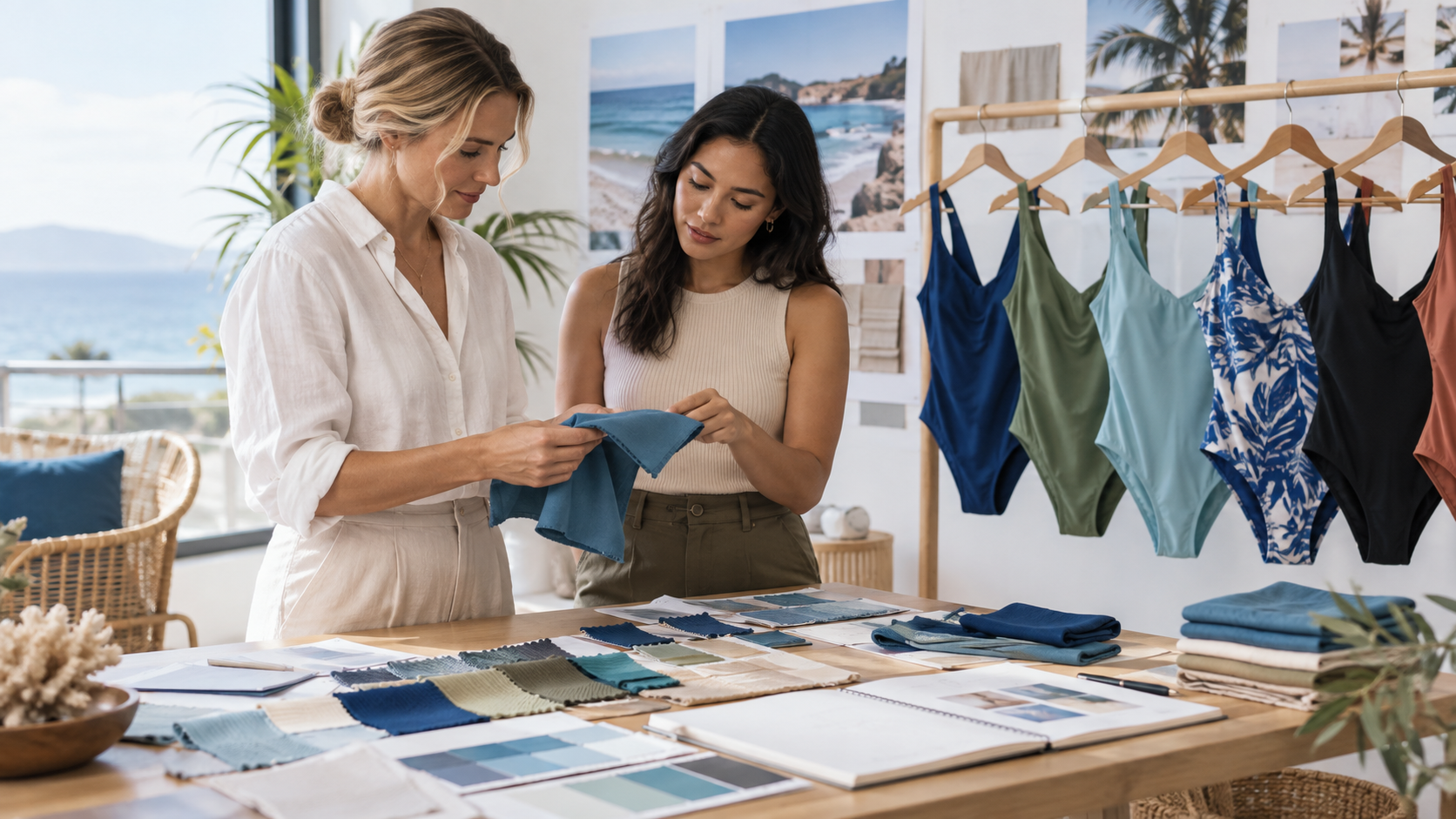
Swimwear development benefits from clear preparation because fit, fabric, lining, coverage, and trim choices need to work together. At Global Sourcing Expo Australia in Melbourne from 17 to 19 November 2026, product teams can use an in-person meeting to turn broad seasonal ideas into better questions. EcoChic Swim will attend the event. A concise pre-event brief helps buyers use that opportunity to discuss the intended collection without overstating decisions that still need review.
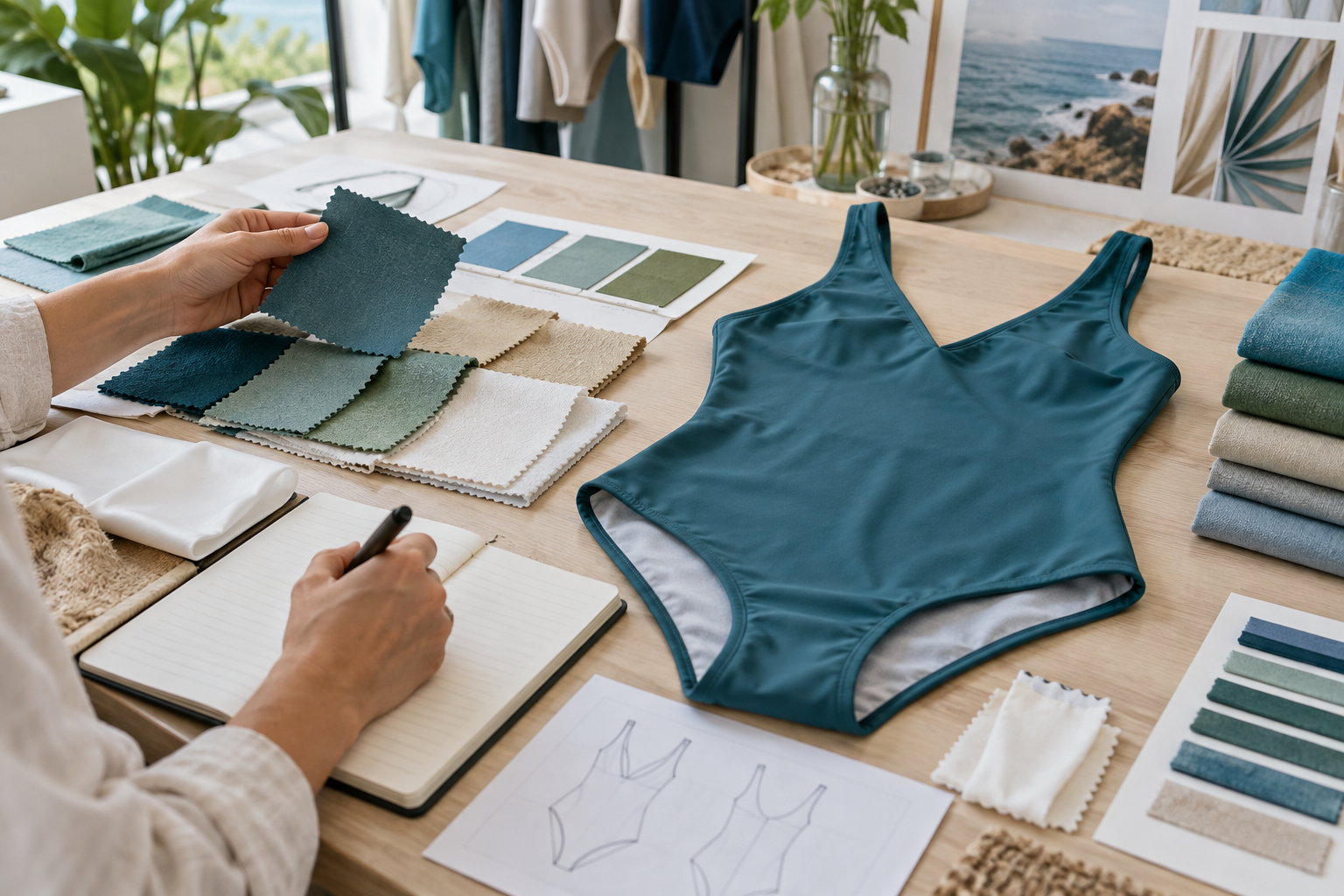
Start with the swimmer and setting
The first question is not simply which style looks current. It is who will wear the product and in what setting. Resort, beach, poolside, travel, and active-water use can point to different expectations for coverage, movement, support, and styling. Defining the setting lets a buyer explain the product's job before discussing a specific silhouette.
A buyer should also state where the collection will be sold and who will review it internally. A boutique range, a direct-to-consumer launch, and a broader seasonal assortment may need different levels of visual variation and product information. This context helps keep an exhibition discussion connected to a real decision rather than a collection of disconnected preferences.
Use a short written summary so the team can refer to the same objective throughout the event. The document can be simple: intended customer, planned use, proposed product types, visual direction, and questions to resolve. Its value comes from clarity, not from length or elaborate presentation.
Make fabric questions specific
Swimwear buyers often arrive with broad material language but no shared way to evaluate it. It is more useful to ask what needs to be understood about hand feel, stretch, recovery, opacity, lining, care, surface appearance, and the relationship between the fabric and the chosen design. Each question should relate to the product the customer will actually use.
Bring sample references when possible, but label the point of each reference. One image may show a preferred colour blocking approach, while another may show a neckline or a surface effect. Without those notes, the people in the meeting can easily interpret the same reference in different ways.
Where recycled materials are part of the direction, keep the conversation evidence-based. Ask which information can be provided for the fabric under discussion and what needs further confirmation. It is better to record an open question than to convert a general sustainability preference into an unsupported product claim.

Review product categories with intent
Before visiting the exhibition, a buyer can review a recycled swimwear collection and identify which product types deserve closer attention in Melbourne. This gives the discussion a practical starting point and lets the team prepare questions that connect to its own product brief rather than relying on a generic showroom conversation.
In person, look beyond a single front view. Consider how the garment may be evaluated by a customer, a stylist, and a technical team. Take notes on construction details, placement of features, intended coverage, and the questions that affect whether the style can become part of a coherent range.
Do not treat a category page as proof that every option will suit every project. Its value is orientation. The exhibition meeting is the right place to explain the target use and ask whether the specific product direction can be discussed in the context of the buyer's plan.
Plan a focused exhibition conversation
Global Sourcing Expo Australia is most useful when a buyer builds a small meeting agenda. Start with the collection purpose, then move to fabric and style questions, and finish with the information required for follow-up. This sequence gives the conversation structure while leaving room for relevant ideas that emerge during the meeting.
Assign one person to capture decisions and open questions. Photographs can be helpful, but they need context. Pair each image with a note describing why it was taken, what product it relates to, and what the team needs to check later. That simple discipline makes show-day material usable after travel.
There is no need to settle every point at the stand. Buyers should leave with a clear understanding of the next information exchange, not an artificial sense of certainty. A considered follow-up is usually more valuable than a rushed decision made in a crowded venue.
Create a useful follow up record
For teams preparing a recycled swimwear discussion, EcoChic Swim offers an official reference point for exploring the brand's public product categories before the event. Using that research to form better questions can make an in-person meeting more productive while keeping the final product decision appropriately evidence-led.
After the event, consolidate notes into one brief for design, buying, and development. Separate confirmed observations from items that need documents, samples, or a second conversation. This approach keeps the exhibition visit connected to the work that follows and gives the team a more reliable basis for its seasonal decisions.



UpMarketResearch offers a latest published report on “Global Swimwear and BeachwearMarket Industry Analysis and Forecast 2018-2023” delivering key insights and providing a competitive advantage to clients through a detailed report.
The report contains 137 pages which highly exhibits on current market analysis scenario, upcoming as well as future opportunities, revenue growth, pricing and profitability.Swimwear and Beachwear market research report delivers a close watch on leading competitors with strategic analysis, micro and macro market trend and scenarios, pricing analysis and a holistic overview of the market situations in the forecast period.
The report contains basic, secondary and advanced information pertaining to the Swimwear and Beachwearglobal status and trend, market size, share, growth, trends analysis, segment and forecasts from 2018 - 2023.Get FREE Exclusive PDF Sample Copy of This Report @https://www.upmarketresearch.com/home/requested_sample/3667The scope of the report extends from market scenarios to comparative pricing between major players, cost and profit of the specified market regions.
The numerical data is backed up by statistical tools such as SWOT analysis, BCG matrix, SCOT analysis, PESTLE analysis and so on.
The statistics are represented in graphical format for a clear understanding on facts and figures.The generated report is firmly based on primary research, interviews with top executives, news sources and information insiders.
Secondary research techniques are implemented for better understanding and clarity for data analysis.The report for Swimwear and Beachwearmarket industry analysis & forecast 2018-2023 is segmented into Product Segment, Application Segment & Major players.Region-wise Analysis Global Swimwear and BeachwearMarket covers:• North America• Europe• China• Japan• Southeast Asia• IndiaThe Report covers in-depth analysis as follows:• Chapter 1 Swimwear and BeachwearMarket Overview• Chapter 2 Global Economic Impact on Swimwear and BeachwearIndustry• Chapter 3 Global Swimwear and BeachwearMarket Competition by Manufacturers• Chapter 4 Global Swimwear and BeachwearProduction, Revenue (Value) by Region (2013-2018)• Chapter 5 Global Swimwear and BeachwearSupply (Production), Consumption, Export, Import by Regions (2013-2018)• Chapter 6 Global Swimwear and BeachwearProduction, Revenue (Value), Price Trend by Type• Chapter 7 Global Swimwear and BeachwearMarket Analysis by Application• Chapter 8 Global Swimwear and BeachwearManufacturers Analysis• Chapter 9 Swimwear and BeachwearManufacturing Cost Analysis• Chapter 10 Industrial Chain, Sourcing Strategy and Downstream Buyers• Chapter 11 Marketing Strategy Analysis, Distributors/Traders• Chapter 12 Market Effect Factors Analysis• Chapter 13 Global Swimwear and BeachwearMarket Forecast (2018-2023)Gain Full Access of Swimwear and Beachwearmarket industry analysis & forecast 2018-2023 along with complete TOC @ https://www.upmarketresearch.com/reports/swimwear-and-beachwear-market“Global Swimwear and Beachwear-Global Market Industry Analysis and Forecast 2018-2023” report helps the clients to take business decisions and to understand strategies of major players in the industry.
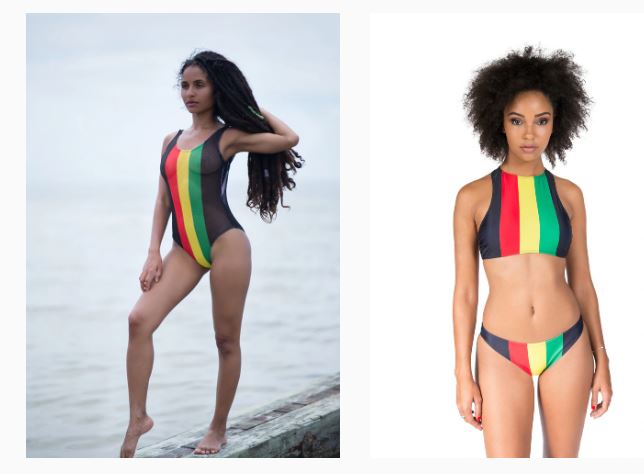
Hit the beach or pool in style this summer with our swimwear and beachwear for women.
Buy women's swimwear online in Florida from Cooyah!
Choose from a wide range of Bikinis, Ladies Swimwear, Swimsuits & Beachwear Dresses online at the best prices.