


Marketing professionals often have to deliver results without having enough money to fund every idea. The challenge is deciding where to spend, what to cut, and how to prove that the remaining budget is doing its job.
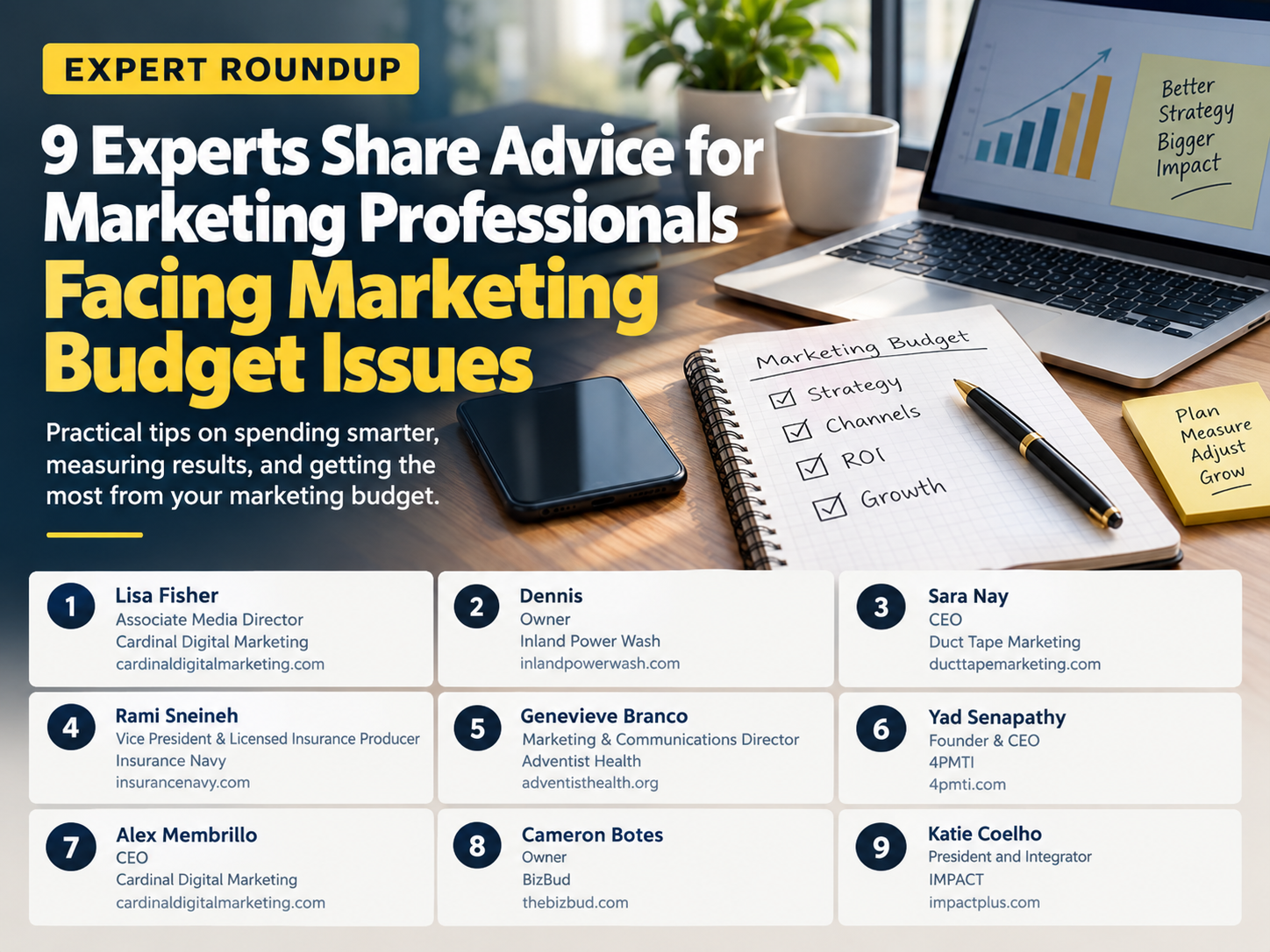
We asked nine business owners and marketing professionals to share advice for dealing with marketing budget issues. Their perspectives cover everything from choosing the right audience to tracking sales, making better use of existing resources, and avoiding wasteful spending.
1. Lisa Fisher, Associate Media Director at Cardinal Digital Marketing
"When the budget is tight, I would start by looking at the audience you actually need to reach. A campaign targeting a small local market has very different needs from one running nationally. You cannot simply take the same budget and expect both campaigns to work.
"I would also give the campaign enough time to produce useful results. Before spending anything, work out how many people you can realistically reach, what action you want them to take, and how you will measure success. If the numbers do not make sense, adjust the plan before the money goes out."
2. Dennis, Owner of Inland Power Wash
"My advice is to stop paying for marketing just because everyone says you need to be on a certain platform. If you run a local service business, you need to know where your customers actually look for help. Spending money on a channel that brings attention but no paying jobs is a fast way to burn through your budget.
"I would start with the basics. Keep your business listing updated, ask happy customers for reviews, and show real photos of your work. Then track how many calls and bookings come from your marketing. You do not need to spend a fortune to make a good impression, but you do need to know what is bringing customers through the door."
3. Sara Nay, CEO of Duct Tape Marketing
"Before cutting your marketing budget, take a step back and ask whether you have a clear strategy. I often see businesses spread their money across paid ads, social media, email, and content without knowing how those activities support their goals. Doing more things does not automatically produce better results.
"I would identify the business's biggest growth priorities, choose the marketing activities that support them, and measure what happens. Review the numbers regularly and be willing to stop activities that are not working. A smaller budget can still do useful work when every expense has a clear purpose."
4. Rami Sneineh, Co-President and Licensed Insurance Producer at Insurance Navy
"When money is limited, I would avoid making cuts across every marketing activity just to reduce spending. Some activities may be bringing in customers consistently, while others may be costing money without producing much in return. Treating them all the same could mean cutting something that is actually helping the business grow.
"Start by reviewing the results you can measure. Look at which campaigns bring in qualified inquiries, which ones turn those inquiries into customers, and what it costs to acquire each customer. Keep the activities that make financial sense, question the ones that do not, and leave room to test better approaches. The goal is not simply to spend less. It is to spend with a clearer reason."
5. Genevieve Branco, Marketing and Communications Director at Adventist Health
"When marketing budgets are limited, I would look for ways to build trust without relying entirely on paid promotion. In healthcare, people want to know that an organization is credible and that its services can meet their needs. Useful stories, community relationships, and earned media can help communicate that message.
"Marketing teams should work closely with the people who understand the services being promoted. That helps ensure the message is accurate and meaningful to the audience. A campaign does not always need a bigger advertising budget. Sometimes, it needs a stronger story, the right partners, and a better understanding of what people care about."
6. Yad Senapathy, Founder and CEO of 4PMTI
"I would treat a marketing budget like a project plan. Decide what you want to achieve, identify the work that matters most, and assign money to those priorities before committing to extra activities. Otherwise, small expenses can pile up until you have spent a large portion of the budget without making much progress.
"I would also review spending at regular intervals instead of waiting until the end of a campaign. If an activity is falling behind, find out why before putting more money into it. Maybe the audience is wrong, the message needs work, or the campaign needs more time. A quick review gives you a chance to make changes before the remaining budget disappears."
7. Alex Membrillo, CEO of Cardinal Digital Marketing
"One mistake I see is putting more money into lead generation when the business is not ready to handle the leads it already gets. You can have a well-run advertising campaign, but if nobody answers the phone or there are no appointments available, that spending will not deliver the results you want.
"Before increasing the budget, check what happens after someone clicks an ad or fills out a form. Are they contacted quickly? Do they book? Does the business have the capacity to serve them? Fixing those gaps may produce better results than buying more traffic. Marketing performance depends on what happens after the lead comes in, too."
8. Cameron Botes, BizBud
"My advice is to keep your marketing plan realistic. It is tempting to copy what a larger competitor is doing, especially when you see them running big campaigns across several channels. But their budget, team, and business goals may be completely different from yours.
"Choose a small number of activities you can afford to do well and give them a fair chance to work. Keep an eye on inquiries and sales rather than getting distracted by likes or views. If you find something that consistently brings in customers, you can build on it later. You do not have to do everything at once."
9. Katie Coelho, President and Integrator at IMPACT
"When a marketing budget gets squeezed, I would look at the work already happening before approving a whole new set of activities. Businesses often have useful content, customer insights, and sales resources that are not being used as effectively as they could be. Getting more value from those existing assets may be a better starting point than spending money on something new.
"I would also make sure marketing and sales agree on what success looks like. If one team is focused on generating more leads while the other needs better-qualified prospects, the budget can end up supporting the wrong goal. Clear priorities and regular conversations help everyone focus on the work most likely to support the business."
Conclusion
Marketing budget issues do not always require a bigger budget. They require a better understanding of where the money goes and what the business gets in return.
The experts' advice points to a few practical steps: set clear goals, focus on the channels that reach the right customers, measure actual business results, and fix problems in the customer journey before spending more on promotion. Marketing teams should also review their existing resources before adding new expenses.
A limited budget can still support growth when spending decisions are based on evidence rather than assumptions.
Frequently Asked Questions
1. How can marketing professionals work with a limited budget?
Start by identifying your main business goals and choosing marketing activities that directly support them. Track inquiries, sales, and customer acquisition costs so you can see which activities deserve continued investment.
2. What should marketers cut first when budgets are reduced?
Review activities that have unclear goals or consistently weak results. Do not automatically cut every channel by the same percentage. Check the data first, and consider whether a campaign needs a better audience, message, or approach before ending it.
3. How can marketers prove that their spending is worthwhile?
Connect marketing activity to business outcomes. Track how campaigns generate inquiries, how many inquiries become customers, and how much it costs to acquire those customers. Reports should help decision-makers understand what is working and what needs to change.