




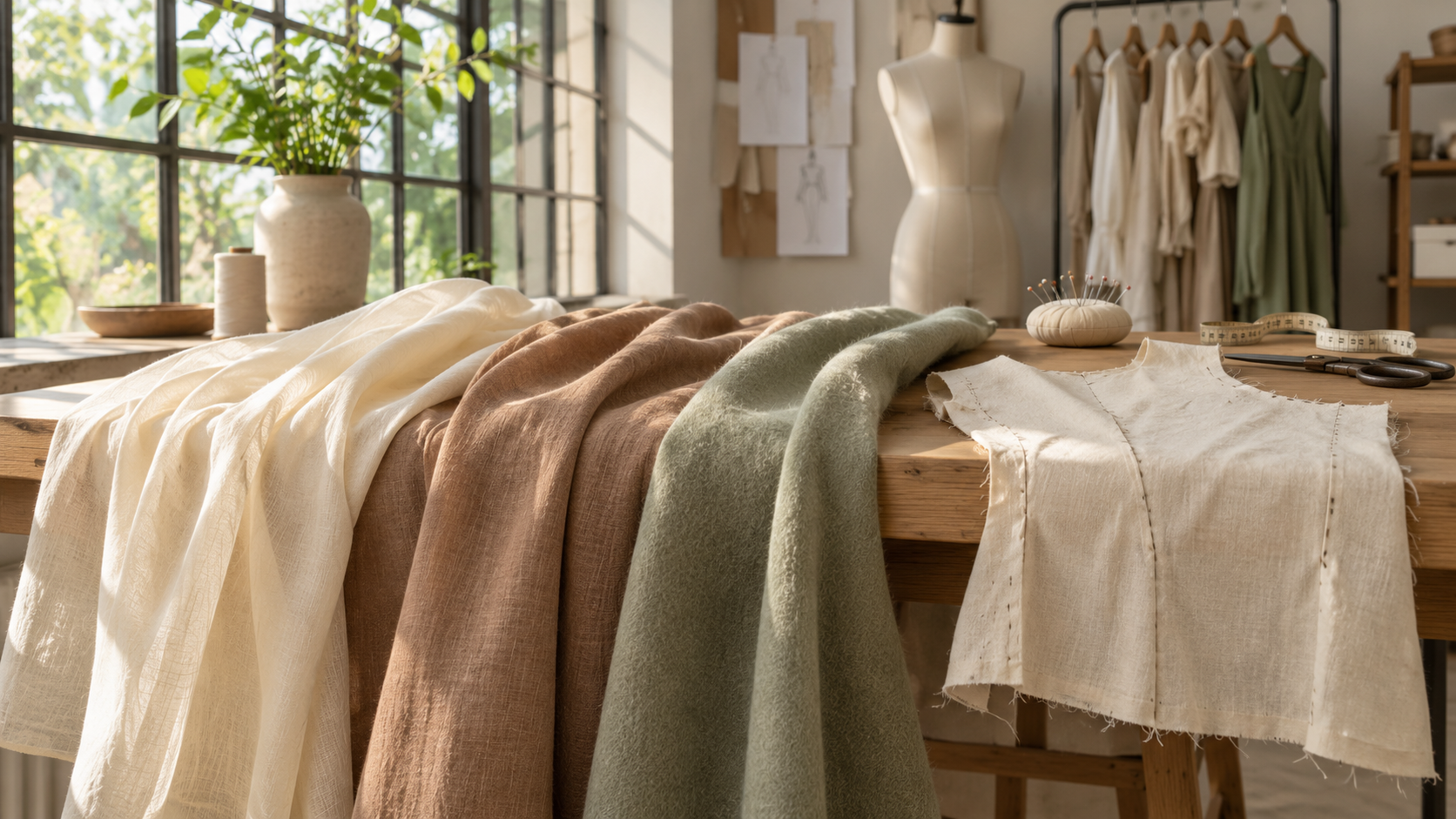
Two dress fabrics can have the same weight per square meter and behave very differently. One may stand away from the body while the other falls into narrow folds. A fabric weight is useful for comparing samples and specifying what was approved. To choose a fabric for a dress, pair that number with checks for coverage, drape and the way the material will be sewn.
Confirm What the Fabric Weight Describes
Grams per square meter, commonly written as GSM, measures mass per unit area. ASTM D3776 is a family of methods for measuring this property. Ask whether the figure on a supplier sheet refers to the fabric as finished, and whether it is a nominal specification or a result for the sample in front of you. If suppliers use different units, convert the units before making the comparison.
Keep the number with the sample ID, composition, construction and finish. Fabric weight is distinct from thickness and finished garment weight. A dress also includes seams, trims, pockets and possibly a lining. A swatch's weight per area cannot account for how much material those features add to the completed garment.
Compare Drape at the Scale of the Design
Hang comparable cuts from the same width of support. Compare the depth and shape of the folds and how they change when the material moves. Keep the grain orientation consistent if the fabrics will be cut the same way. If the garment includes a bias-cut section or a gathered waist, inspect a sample prepared in that configuration before deciding.
In a hypothetical comparison, a compact woven and a soft knit have the same nominal GSM. The woven holds a pronounced fold while the knit falls more closely against the body. Neither behavior is inherently preferable. The choice depends on whether the design needs a defined shape, easy movement or folds that hang close to the wearer.
Check Coverage Under Conditions the Wearer Will Encounter
Hold equal areas of the intended colorway against a consistent background and in more than one relevant light. A dark sample and a pale sample may look different even when they come from the same fabric range. For a fabric that stretches in use, inspect it under representative movement on a garment sample, particularly where the fit applies tension.

The Spruce Clothes dress and apparel overview gives context for comparing dresses with different constructions. If evaluating a finished style, ask for the fabric description and whether the relevant panels are lined. A product image taken under studio lighting can help identify the silhouette, but it cannot show how every colorway behaves in daylight or movement.
Sew a Detail That Could Rule Out a Fabric
Make a sample of the hardest detail to execute in that style. For one design that may be a gathered waist seam. For another it may be a narrow hem, a concealed zipper or the point where pockets attach. Compare bulk, appearance and handling with the intended seam and finish. Samples that look equally suitable on a hanger can behave differently when several layers meet.
If a fabric changes after the intended care process, repeat the comparison using the finished garment or relevant sewn sample. Follow the proposed care method on identified development samples. Record any change in hanging shape, seam appearance or coverage. Use the result when deciding whether to approve the fabric or adjust the construction.
Record the Decision for the Next Order
Keep a physical reference and note what passed. Record the weight or agreed range, the construction, the actual colorway and the checks that mattered to the design. If the team would accept a different fabric on reorder, list the behavior it would need to match. An agreed weight alone leaves too much freedom when the fabric drives the fit or appearance.
When asking Spruce Clothes or another dress supplier about a style, identify the intended fit, layer construction and care needs. Ask which specifications refer to the specific colorway or model. The resulting record gives a buyer a way to compare a later shipment with the garment that was originally approved.
Conclusion
Use GSM as one part of a dress fabric specification. Compare drape and coverage in the intended orientation and color, and sew the detail most likely to expose a problem. Keep those observations with the approved sample so a reorder can be checked against the same criteria.
Q&A
Does a higher GSM always mean better coverage?
No. Color, construction, stretch and the light behind the fabric can all affect coverage. Check the actual sample in representative conditions.
Can I compare fabric weights from two suppliers?
Yes, once the units and what was measured are clear. Use the weight comparison alongside sample checks for the intended garment.
Should I check the lining separately?
Record its properties separately and also review how it behaves with the shell in a sewn garment. The combined result matters when the dress is worn.


Hyper-personalized experiences must be meaningful.
It’s more than telling your customer, “Hey, we thought you might like this.” There has to be a why.
Simply, hyper-personalization drives sales.Get to know your customers beyond their first name.
Providing a hyper-personalized experience for customers saves them time and converts sales.
This is particularly important in the online space.
Whether you are delivering an email campaign, running retargeting ads, or offering an incentive, developing a deeper understanding of your customers wants and behaviors is a win-win.In a brick-and-mortar store, a customer may browse around looking for a specific product.