


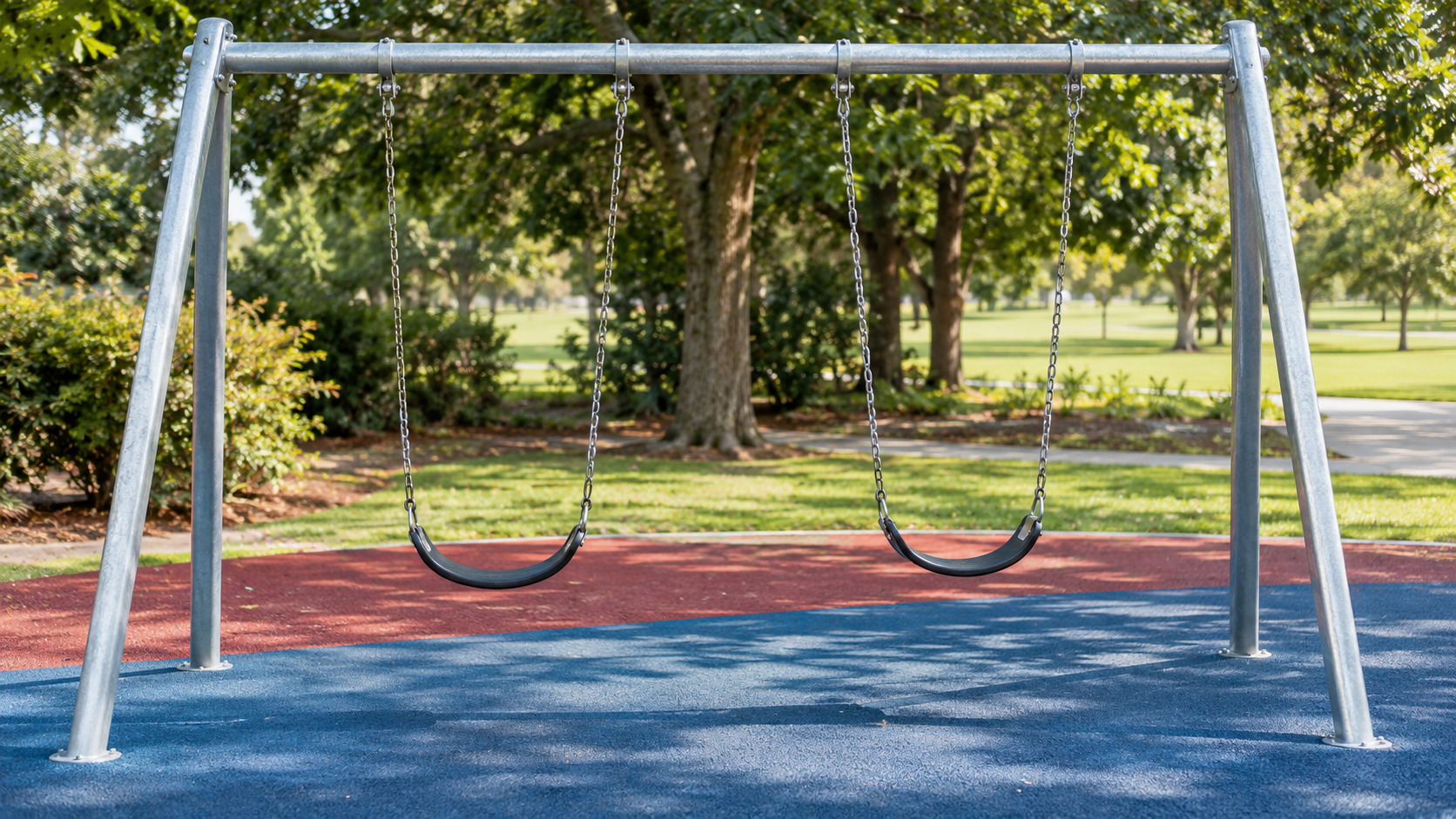
“Swing chain spacing” can refer to several different dimensions. A contractor may mean the distance between two hangers on one seat. A parks reviewer may mean the clearance between adjacent swings. A site plan may show the space needed in front of the equipment. Put those measurements on separate lines before anyone approves a layout. This guide uses the U.S. Consumer Product Safety Commission's July 2025 Public Playground Safety Handbook for single-axis public playground swings as the example.
Identify the Seat and the Two Points Being Measured
Start with the model, seat type, intended age group and manufacturer drawing revision. Label each measurement with its two endpoints and the reference height or position. The lateral space between two seats answers a collision question. The spacing between suspension members relates to side-to-side motion. The distance to the support and the height above surfacing answer other questions.
Ask for a drawing that shows the seat and frame together. A plan view can identify the bay and nearby equipment. An elevation can show the height and where to read a measurement. If one supplier drawing uses centerlines and an inspection sheet calls for a clear distance, the figures are not interchangeable. Ask the designer to annotate the intended endpoints.
Read the Handbook Figures With the Correct Seat Type
Figure 23 and Table 7 in the CPSC handbook identify four minimum clearance dimensions for the single-axis configurations shown. D1 relates to the support structure, D2 to adjacent swings, D3 to access and D4 to the spacing of the suspending members at the indicated measurement position. Use the figure to locate each dimension before reading its value.
For example, the table lists D2 as 20 inches for the toddler full-bucket column and 24 inches for the preschool and school-age belt columns. Those are handbook recommendations for the illustrated configurations. They should not be substituted for model-specific installation dimensions or a qualified review of the applicable requirements. If the layout has different seats, confirm which criteria apply to that bay.
Review the Use Zone as Its Own Drawing
Passing the lateral measurements does not settle the space required in front of and behind the swing. Review the applicable use-zone guidance for the seat type and identify the reference dimension that drives it. In the CPSC handbook, the front and rear use-zone calculations for belt and full-bucket swings use different reference points. Do not copy a belt-swing note to a bucket swing without checking the source.
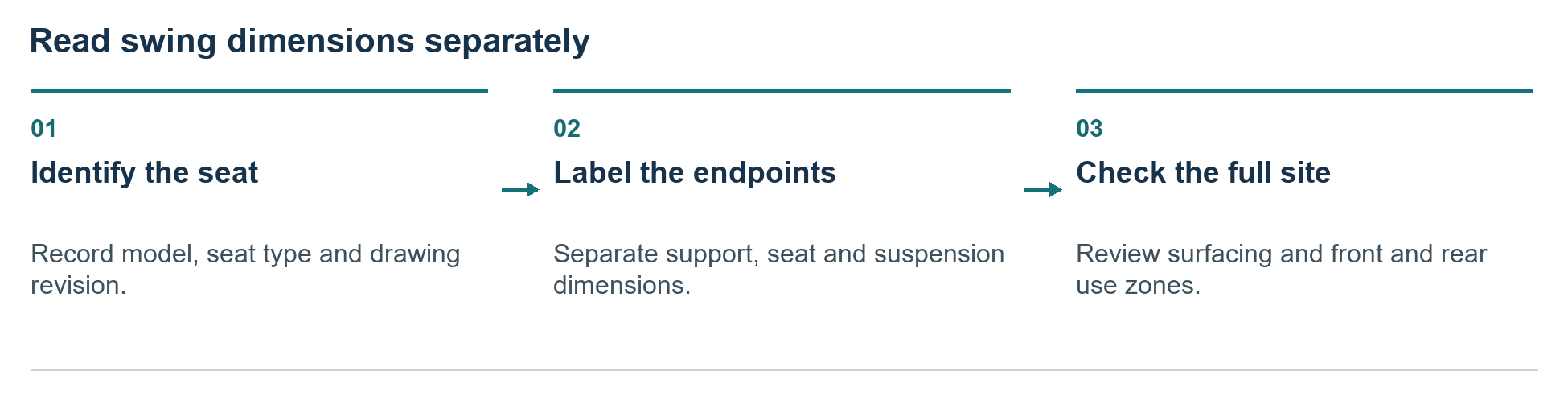
Ask for an overall site view that shows nearby play equipment, paths, fencing and surfacing boundaries. A playground equipment supplier overview is a starting point when identifying a supplier's scope. Request the actual model drawing and installation documentation for the proposed project. An overview cannot establish the use zone for a specific bay.
Keep a Record That the Installer Can Follow
Give each bay and seat a visible identifier on the drawing. Next to each measurement write the controlling document, revision, endpoints and who will check it. Include a space to record the installed result. When speaking with Qixin Amusement or the supplier selected for the project, ask for a written response on any dimension whose definition is ambiguous.
In a hypothetical review, a plan labels both the hanger spacing and the space between two swings as “24 inches.” The reviewer has no way to tell which points were used. Ask for the annotated plan and separate checks. A clearer drawing can resolve the ambiguity before anyone changes the equipment.
Verify the Installed Configuration Before Opening
Have a qualified person compare the installed swing, seats, hardware and surfacing with the approved configuration and applicable requirements. Verify the use-zone and layout alongside equipment clearances. Note any discrepancy between the delivered components and the approved documentation. A passed dimension does not close other questions about the installation.
Record where the measurements were taken and whether the ground surface had reached its specified finished condition. If a safety-related discrepancy remains unresolved, keep the affected equipment out of service while the responsible team assesses it.
Conclusion
Write swing spacing as a set of defined measurements with distinct endpoints. Confirm the seat type, use the applicable figure and installation drawing, and verify the actual bay and surrounding use zone before opening the equipment.
Q&A
Is swing spacing the distance between the chains on one seat?
It can mean that in conversation. On a drawing, state exactly which chains or edges are being compared and the position where the dimension is measured.
Can I apply the same table to a tire swing?
Confirm the swing type and use its applicable requirements. A multi-axis tire swing moves differently from the single-axis configurations discussed here.
Should a catalog image be used to verify spacing?
Use the released model drawing and the installed measurements. A photograph may help identify the equipment but does not establish its clearances.