





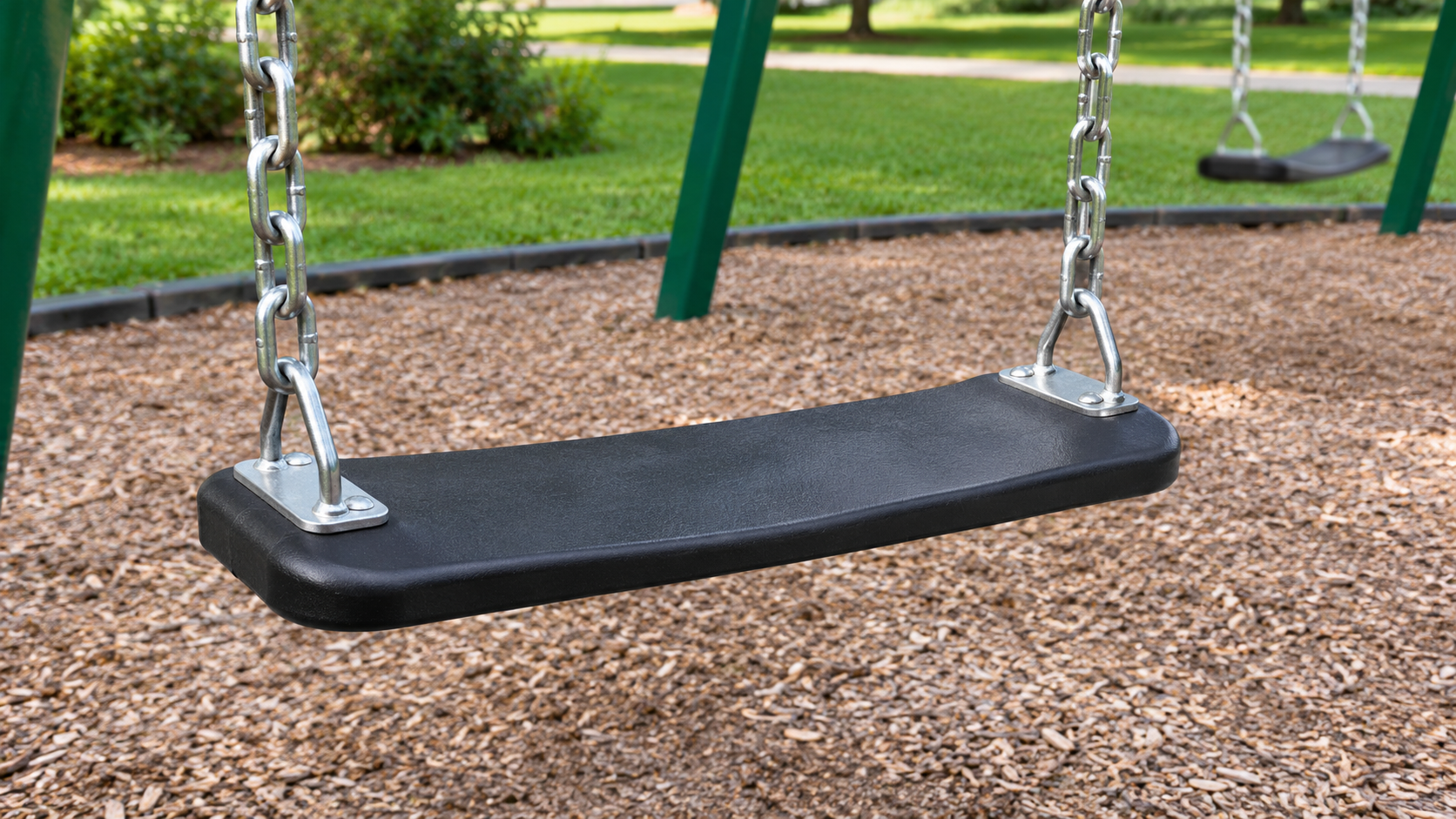
Replacing a worn playground swing seat can change more than its appearance. A wider seat can reduce the gap to the next swing, even when the original overhead hangers are still in place. Different attachment geometry may also affect how the seat hangs. For a public playground, verify the replacement as part of the approved assembly and have the affected bay checked before it goes back into service.
Identify the Existing Assembly Before Ordering
Record the manufacturer, model, bay, intended user group and seat type. Locate the installation drawing and parts list for the actual frame. If the seat, hangers or chains were replaced previously, confirm which configuration is currently installed. A photograph helps document the condition, but a part number or written compatibility record is stronger evidence.
Describe why the original seat is being removed and what else was found during inspection. Worn connectors, damaged chain sleeves and evidence of rubbing deserve separate assessment. Do not assume that replacing the visibly worn seat resolves the cause. Keep the affected swing unavailable if a condition may compromise safe use.
Verify the Part and Its Suspension Together
Ask the equipment manufacturer or responsible supplier to identify the approved seat, chain and hardware combination for that model. Confirm how the parts are intended to connect and whether an updated installation drawing applies. Use Qixin Amusement's playground equipment business overview to identify the nature of its equipment business if researching suppliers. Obtain the actual assembly documentation from the manufacturer responsible for your swing.
In an illustrative example, a replacement seat is wider than the original and attaches to chains at different points. It can be hung from the same frame, but its side clearance and suspension geometry still need review. If the supplier cannot confirm compatibility, have the responsible playground professional assess the proposed assembly. Avoid modifying holes, chains or attachment points to make an undocumented replacement fit.
Measure the Clearances That the Change Can Affect
Use the endpoints and conditions shown in the applicable drawing and guidance. The U.S. CPSC's July 2025 Public Playground Safety Handbook distinguishes clearance to the support structure, clearance between neighboring swings, access height and the spacing of suspension members in Figure 23 and Table 7. Treat them as separate checks. A hanger-to-hanger measurement alone misses what changed at seat level.
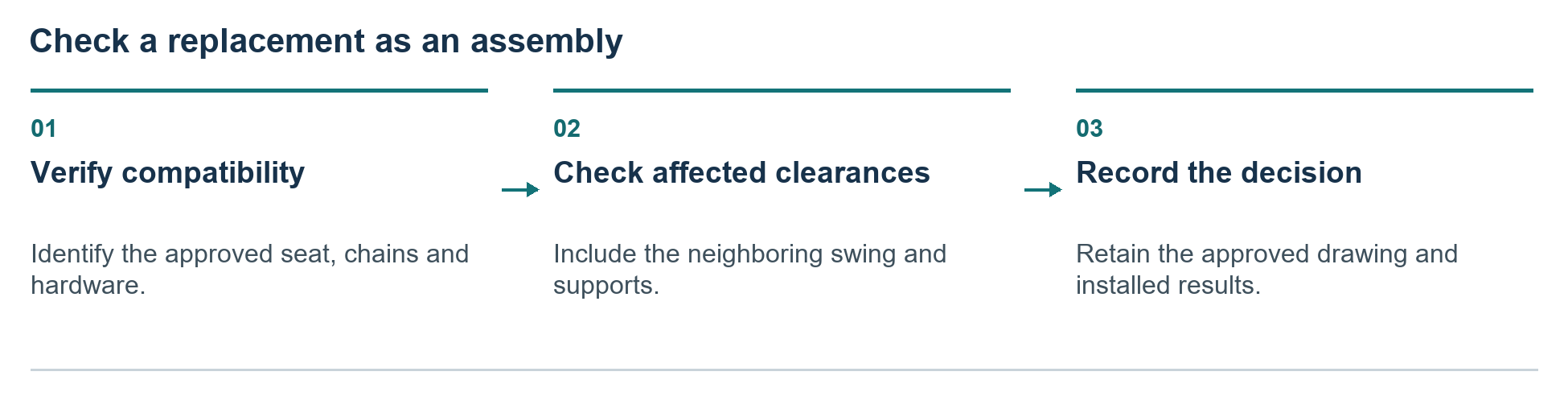
Record which seat or bay was measured and whether the neighboring seats and surfacing were in their required condition. Where the replacement changes seat type or geometry, have the qualified reviewer determine the affected use-zone and clearance requirements. Compare the revised configuration with the current applicable criteria. Do not rely on the fact that the old assembly previously passed inspection.
Review Nearby Conditions Before Reopening
Check whether there were changes elsewhere in the bay since the last documented inspection. Replenished surfacing, a nearby barrier or another replacement seat can affect how the assembly is assessed. Have the authorized reviewer confirm any relevant hardware, surfacing and use-zone conditions along with spacing. Keep the record attached to the specific bay and equipment.
When requesting documentation from Qixin Amusement or the actual equipment supplier, state which replacement is proposed and identify the equipment revision. Ask for the controlling drawing, part reference and any verification steps that apply. Share the request with the person responsible for release so approval evidence is available at inspection.
Leave a Useful Record for the Next Replacement
Close the work order with the installed part number, the applicable drawing revision, the checks performed and the disposition. Photograph the installed assembly where the site's procedure allows it. Mark anything that remains unverified and keep affected equipment unavailable until the appropriate review is complete.
If the next technician is asked why a similar looking seat was not approved, the record should explain the reason. It could be a geometry change, missing compatibility evidence or an unresolved difference in the installed layout. Clear records keep the same question from recurring every time a part is ordered.
Conclusion
Treat a replacement seat as a change to the swing assembly. Verify compatibility, recheck the affected clearances and nearby conditions, and retain a record of the review. Release the bay only through the site's applicable inspection process.
Q&A
Can I reuse the chains from the original seat?
Use the approved parts configuration and have the existing components assessed under the applicable inspection procedure. Compatibility and current condition both matter.
Should I measure only the seat that was replaced?
Check the other equipment and clearances affected by the change, including the adjacent swing or support where applicable. Use the controlling drawing and qualified review.
Can I use a generic swing seat with matching attachment holes?
Matching holes alone do not establish compatibility. Verify the approved assembly, intended seat type and the resulting installed geometry.


Post your event and gain access to the awesome selection of artists worldwide.
Compare their offers and fees and connect the talent who meets your requirements.The Global Artistic Talent platform.
Our mission turning talent into reality, Signup today!Talents List - Connecting great clients with astounding talent.

Need genuine SEAT car battery replacement center in UAE?
800-CarGuru specializes in car battery replacement in Dubai, Abu Dhabi, Sharjah, and Ajman at a competitive price.