


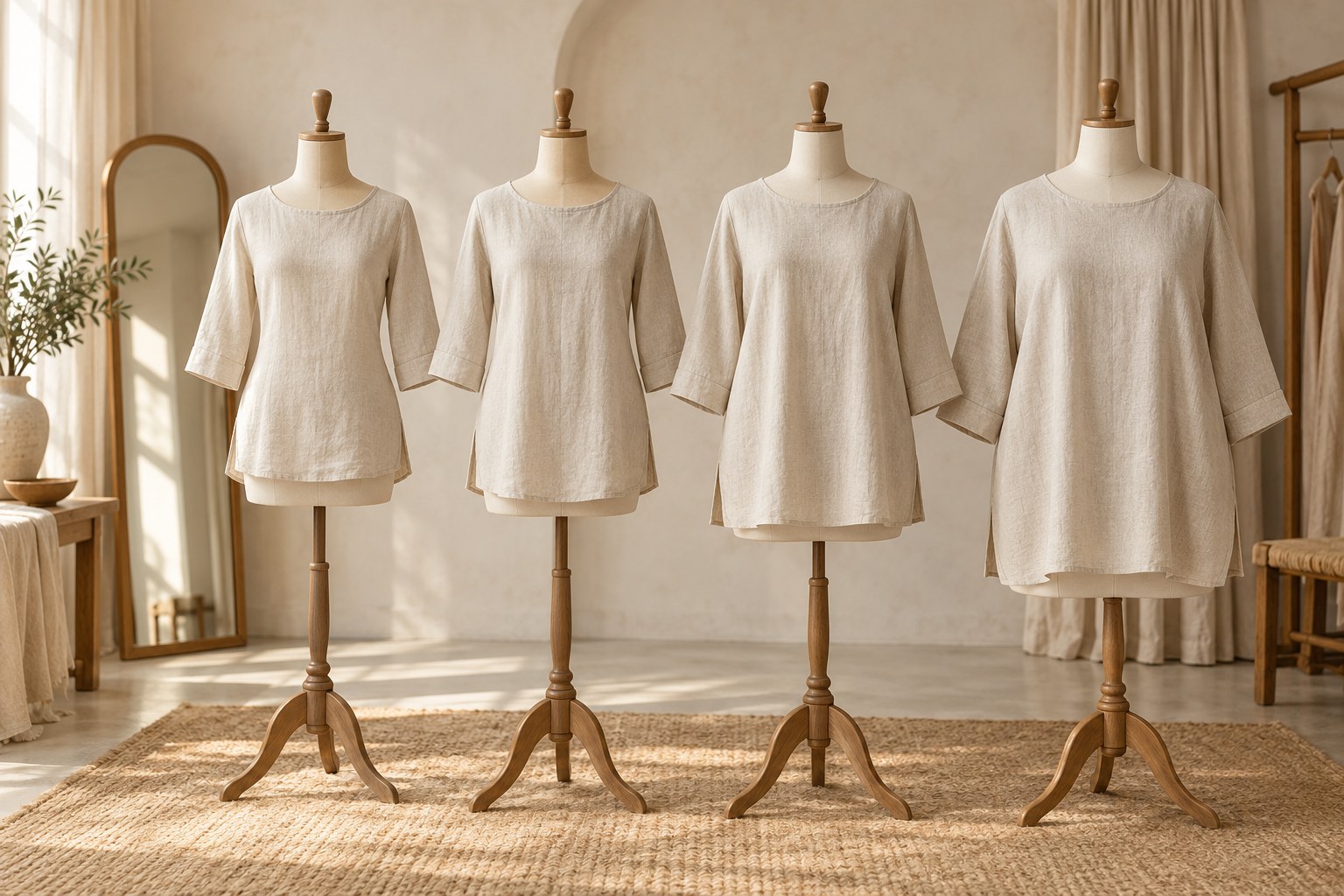
A dress or trouser sample can fit one model well while leaving the proposed size range unresolved. Scaling a pattern is a technical task, and a size label does not establish the body proportions the garment serves. Before approving womenswear production, a brand needs a clear relationship between its target customer, body information, finished measurements and fit evidence. This makes the size offer easier to assess and explain without pretending one fitting represents everyone.
Define the audience through relevant measurements
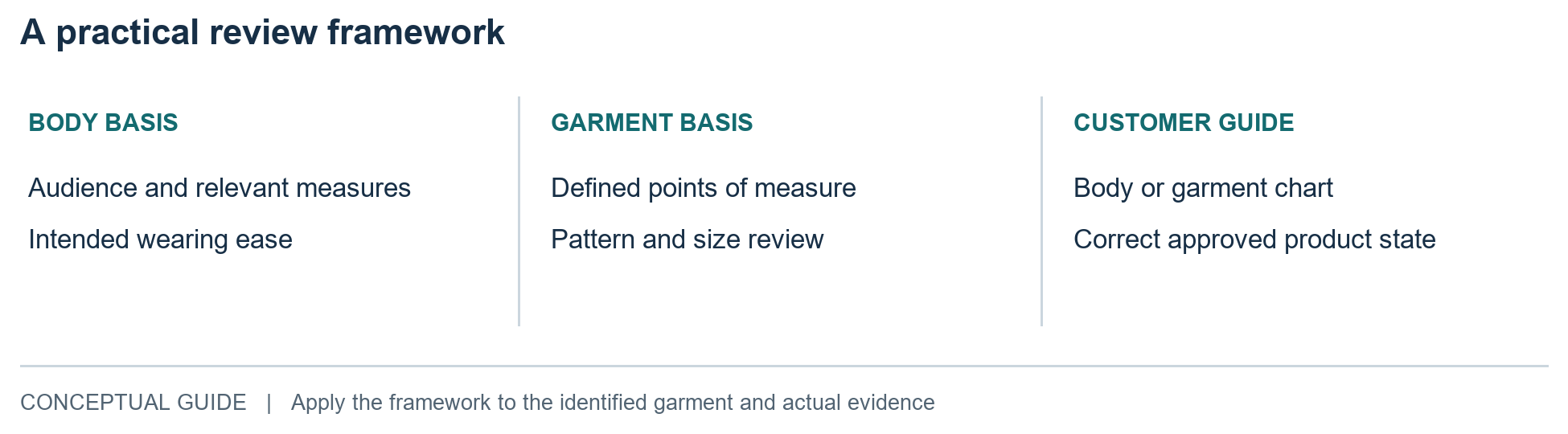
Describe the customer group and the product's intended fit. Identify which body dimensions matter to the garment rather than using a market label as a complete sizing specification. A US or UK customer description does not establish one universal body shape. Keep any underlying measurement data and assumptions available to the technical team so the pattern work has a clear basis.
Record how the garment is intended to sit and where ease is needed. A loose outer layer and a fitted bodice require different relationships between body and finished dimensions. Separate those two measurement sets in the documents. This prevents a body circumference from being copied into a garment chart without the intended ease, or a finished measurement from being presented to customers as though it describes their body directly.
Establish a shared measurement method
Define the points of measure, garment state and handling method. Explain whether a dimension is measured flat, along a seam or around a circumference. Include drawings where language alone could be ambiguous. Two accurate measurements taken by different methods may still disagree, so the method needs to travel with the number as the project moves between brand, factory and inspection team.
The womenswear preparation guide from Xuan Jia raises size charts, grading and sampling as linked development questions. Use it to organize the brief, then agree on the actual measurement and fit basis with the pattern specialist. A supplier's general size terminology cannot replace the brand's defined range or establish that every proposed size has been assessed.
Review grading as a pattern decision
Ask the specialist to explain the proposed grade and identify which proportions need particular attention. Increasing every dimension by the same percentage is not a substitute for a considered size development process. Keep the grade associated with the correct pattern version. If the base sample changes substantially, confirm whether the previous grade remains appropriate rather than assuming it transfers unchanged.
Identify which sizes should be sampled to resolve the relevant questions, including range endpoints where appropriate. A physical review can reveal a changed neckline relationship, pocket position or sleeve balance that a measurement chart alone does not communicate. State what the review established and what remains untested. This avoids turning a limited sample set into an unsupported claim that every possible body has been represented.
Include movement and care in the fit evidence
Assess the activities the garment must support, such as sitting, reaching or walking. Record the wearer measurements and sample identity, with consent and appropriate handling of personal information. Keep the observations focused on garment behaviour rather than judging the wearer's body. A specific note about restriction at an armhole is more useful than a vague statement that a size looks wrong.
Repeat relevant dimensions and appearance checks after the proposed care sequence. Material change can affect the finished size offer, so the approved chart should correspond to the intended production state. If a different cloth or lining is introduced, identify which fit and care questions reopen. The label size can stay the same while the actual wearing experience changes, making version control essential.
Publish a chart customers can use
State clearly whether the chart shows body or garment measurements and provide the method needed to interpret it. Keep the units consistent and check conversions. Include accurate model context where images are used for fit guidance. Avoid promising that one recommended size will work for every customer with a particular height or weight when the garment and evidence do not support that precision.
Retain the approved range, sample references and tolerances in the production record. Customer feedback can then be associated with an identifiable version rather than a loosely defined size name. Use recurring concerns to ask specific technical questions before the next order. A useful size system develops through coherent evidence and clear communication, not simply by offering more labels across a wider chart.
Conclusion
Approve a womenswear size range through defined bodies, finished measurements and pattern expertise. Use a shared measuring method, review relevant sizes in movement and account for care effects. Publish information that accurately explains the product. This provides a stronger fit offer than extending a single approved sample through unexplained numerical increments.
Q&A
Does one good fitting approve the full range
No. It provides evidence for that sample and wearer. Review the grading and the additional sizes needed to resolve the product's relevant fit questions.
Should a size chart show body or garment measurements
Either can be useful when clearly identified and explained. Keep the distinction explicit so customers and production teams do not interpret the same number in different ways.
Can changing fabric affect a familiar size
Yes. Material and finishing can alter dimensions and wearing behaviour. Assess the relevant changes before treating the revised garment as equivalent under the existing size information.



Several linen market figures can appear to contradict one another while measuring different things. A fibre report, a fabric report and a clothing report may each describe a separate part of the va