


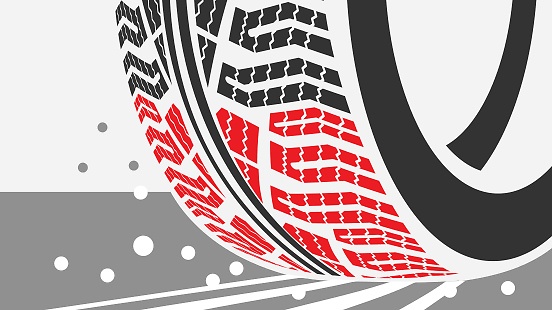
Some countries require you to change your summer tires to winter ones when the cold weather approaches. But what are winter tires? And why are they binding in some places but not in others?
How are they produced?
Winter tires have a higher content of natural rubber, which makes their structure softer. The interaction between the rubber compound of the tire and the road changes with increasing temperatures. This affects the tire grip. Summer tires harden below + 7 ° C, while a specially developed winter tire mix guarantees flexibility even below + 7 ° C.
How do winter tires work?
Their name suggests they are winter tires, while in fact, they are cold-weather tires, providing optimum performance in rain, ice, snow, and dry but cold roads. Their softer mix facilitates grip on the road at lower temperatures than summer or all-season tires that are made of a tougher mix.
Their miniature ducts "bite" snow, ice and rain, spraying water quickly and providing shorter braking distances and more traction. In the meantime, the deeper channels collect and retain snow, which helps to grip on trampled snow as well as the dispersion of water from the tire to reduce the risk of aquaplaning.
What are the benefits of winter tires?
Winter tires are ideal for cold grip, whether wet, dry, snowy or icy.
Nothing provides such grip on snow as snow. So, in the case of paved snow, winter tires fill their grooves in the tread with snow, thus providing traction on the road.
Their deeper tread allows them to repel more water, which helps reduce aquaplaning and improves handling.
Because they provide greater safety in cold weather and retain their flexibility, they are more difficult to wear than summer tires and therefore more cost-effective.
What are the disadvantages of winter tires?
Just as winter tires perform better in colder temperatures than summer tires, summer tires perform better in warmer and milder weather. Once temperatures rise above + 7 ° C, you will need to replace your winter tires with summer ones.
Having a full set of winter and summer tires, including spare tires, can be expensive - not only to buy but to store. In some countries, you have no choice, while in others it may be appropriate to use all-season words.
Winter tires are a great investment, especially if you live in an area with extreme climate. In milder temperatures, or in countries where winter tires are optional, you may consider the option of summer or all-season tires.





Refrigerator is a device which is designed to remove heat from a space that is a low temperatures that its surroundings.
The same device can be used to the heat a volume that it is at higher temperatures than the surroundings.
This is called the heat pump.
The distinction between the refrigerator and a heat pump is one of the purpose rather than the principle.
LG Refrigerator Service Center Pune is the best service center in the pune.
If you are facing in the refrigerator then just contact the number in the given below number.