


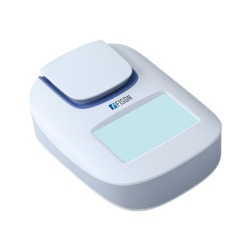
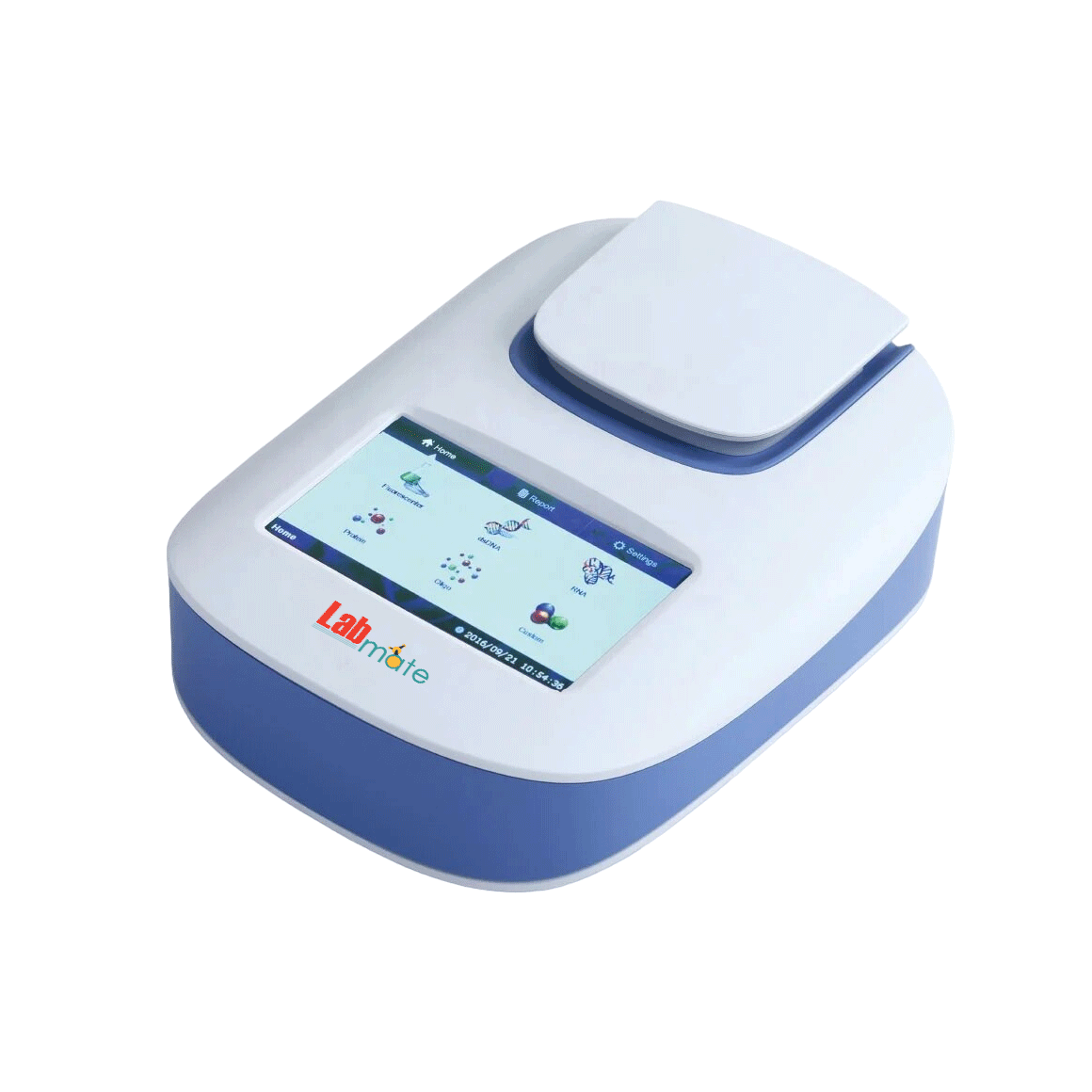
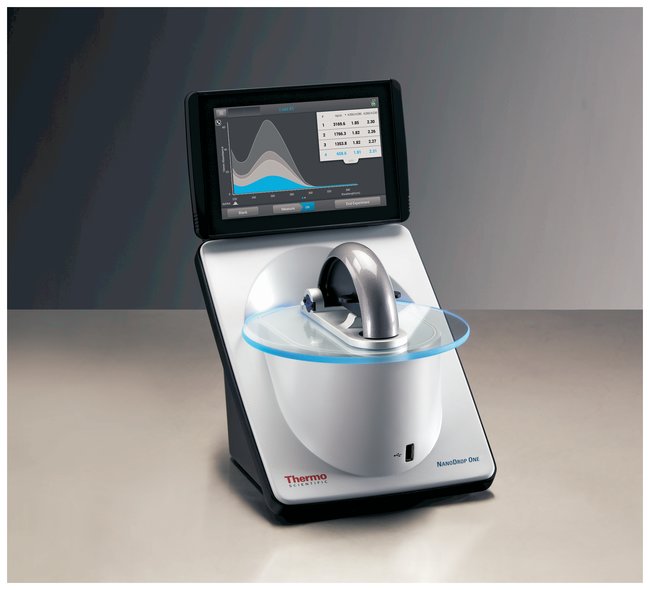
A fluorometer is a sophisticated scientific instrument used to measure the intensity and properties of fluorescence emitted by substances. Fluorescence is the emission of light by a substance that has absorbed light or other electromagnetic radiation.
The basic components of a fluorometer typically include:
- Light Source: Fluorometers usually have a stable and adjustable light source, such as a xenon lamp, LED, or laser. This light source emits specific wavelengths of light onto the sample being analyzed.
- Sample Holder: The sample holder or cuvette holds the sample being analyzed. It is typically made of quartz or glass and is transparent to the wavelengths of light being used.
- Monochromators or Filters: Fluorometers use monochromators or filters to select specific wavelengths of excitation light to illuminate the sample and to filter out any scattered light or unwanted wavelengths. This allows for precise control over the excitation and emission wavelengths.
- Detector: The detector captures the emitted fluorescence from the sample. It may be a photomultiplier tube (PMT), photodiode, or other light-sensitive device capable of detecting low-intensity light signals.
- Electronics and Data Acquisition System: Fluorometers are equipped with electronics and data acquisition systems to process the signals from the detector and display or record the fluorescence intensity and spectra. This may include analog-to-digital converters, signal amplifiers, and data processing software.
- Calibration and Control Mechanisms: Fluorometers often come with calibration mechanisms to ensure accurate measurements and control features to adjust parameters such as gain, integration time, and wavelength settings.
Fluorometers find applications in various fields such as biochemistry, molecular biology, environmental science, pharmaceuticals, and materials science. They are used to study fluorescence in substances like proteins, nucleic acids, dyes, and other fluorophores. Fluorometers are crucial tools for analyzing the structure, composition, and dynamics of biological molecules, as well as for monitoring environmental pollutants and assessing the quality of water and air samples.

The growth in this market is majorly driven by the high incidence of cancer and other target diseases, availability of reimbursement, and the growing focus on personalized medicine.
However, the availability of refurbished products, the lack of skilled professionals, and product recalls are expected to hamper market growth to a certain extent during the forecast period.North America accounted for the largest market share, followed by Europe.
The easy accessibility to advanced technologies, government initiatives for screening cancer patients, favorable reimbursement scenario for anatomic pathology diagnostic tests, increasing healthcare expenditure, and the presence of high-quality infrastructure for hospitals and clinical laboratories in the region are the major factors driving the growth of the market in North America.Download PDF Brochure :https://www.marketsandmarkets.com/pdfdownloadNew.asp?id=137323145The anatomic pathology market is estimated to grow from USD 33.0 billion in 2019 to USD 44.4 billion by 2024, at a CAGR of 6.1%.Anatomic Pathology Market segment dominated the healthcare distribution market in 2018By product & service, the market is segmented into services, instruments, and consumables.
The services segment accounted for the largest market share in 2018 and is expected to register the highest CAGR during the forecast period.
The growth of this segment can be attributed to the availability of reimbursements for diagnostic tests, rapid growth in the geriatric population, and the increasing incidence of cancer and other chronic diseases.Disease diagnosis segment accounted for the largest share of the anatomic pathology market, by application, in 2018Based on application, the market is segmented into disease diagnosis and medical research.
The market for disease diagnosis is further segmented into cancer and other diseases.