

The cultivation and curing of cannabis are intricate processes that significantly impact the quality, potency, and overall appeal of the final product. Commercial growers, who operate on a larger scale than hobbyists, utilize sophisticated techniques and state-of-the-art equipment to ensure their cannabis meets the highest standards. This article delves into the detailed processes and practices commercial growers use to cure weed, covering the entire journey from harvest to the finished, market-ready product.
1. Harvesting
1.1 Timing the Harvest
The curing process begins with the harvest, which is a critical step in ensuring the cannabis plants are at their peak potency. Commercial growers meticulously monitor the trichomes, the tiny resin glands on the buds, using magnifying tools to determine the optimal harvest time. Trichomes change from clear to milky white and then to amber, indicating different stages of cannabinoid development. Most growers aim to harvest when the trichomes are mostly milky with some turning amber, balancing THC potency and flavor profile.
1.2 Cutting and Trimming
Once the harvest time is determined, growers carefully cut the plants. This can be done by either cutting the entire plant or selectively harvesting the buds. The next step is trimming, which can be done either before or after drying, known as wet trimming and dry trimming, respectively. Wet trimming involves removing excess leaves immediately after cutting the plant, while dry trimming involves trimming after the buds have dried. Each method has its advantages, but commercial operations often prefer wet trimming to expedite the process and prevent mold growth.
2. Drying
2.1 Drying Environment
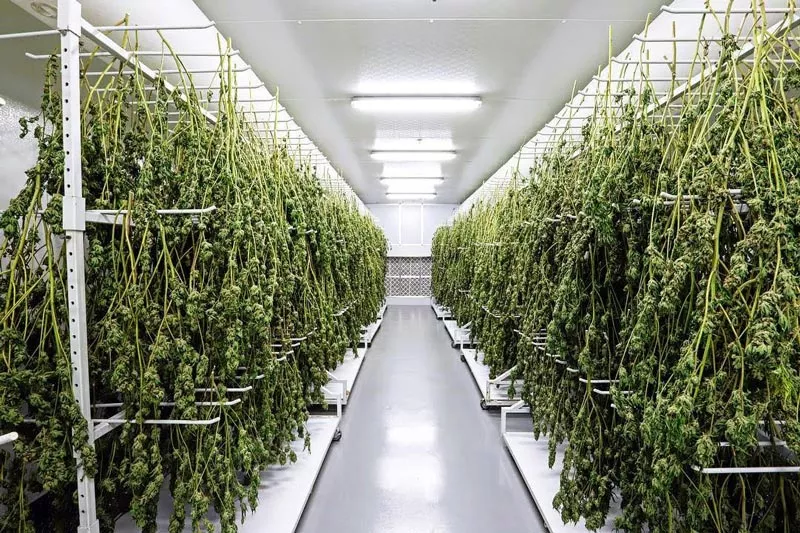
Drying is a crucial step that prepares the cannabis for curing. The primary goal during drying is to reduce the moisture content of the buds to about 10-15%. Commercial growers typically dry their cannabis in controlled environments with specific temperature and humidity settings. The ideal conditions are usually around 60-70°F (15-21°C) with 45-55% humidity. This environment helps to slowly and evenly remove moisture without damaging the cannabinoids and terpenes, which are responsible for the plant's effects and aroma.
2.2 Drying Methods
There are various methods for drying cannabis, but the most common in commercial operations involve hanging the whole plant or individual branches upside down in a dedicated drying room. This method allows for even airflow around the buds. Some growers also use drying racks, particularly for smaller buds and trimmings. Commercial growers often use dehumidifiers and fans to maintain consistent air circulation and humidity levels, ensuring a uniform drying process.
3. Curing
3.1 Importance of Curing
Curing is the process that follows drying and involves placing the dried buds in a controlled environment for an extended period. This step is essential for enhancing the flavor, aroma, and overall quality of the cannabis. During curing, the remaining chlorophyll breaks down, reducing the harshness of the smoke, and the cannabinoids and terpenes continue to develop and stabilize, resulting in a more potent and flavorful product.
3.2 The Curing Process
The curing process typically involves placing the dried buds in airtight containers, such as glass jars. These containers are stored in a dark, cool place with temperatures around 60-70°F (15-21°C) and humidity levels between 55-65%. Commercial growers use hygrometers to monitor the humidity inside the jars. The buds are "burped" regularly during the first few weeks, which means opening the jars to release built-up moisture and allow fresh air to circulate. This helps to prevent mold growth and ensures even curing.
3.3 Advanced Curing Techniques
Some commercial growers utilize advanced curing techniques to optimize the quality of their cannabis. These techniques may include:
- Vacuum Sealing: Using vacuum-sealed bags to cure the buds can speed up the process and reduce the risk of mold and oxidation.
- Nitrogen Curing: This involves flushing the containers with nitrogen to displace oxygen, which can degrade cannabinoids and terpenes.
- Controlled Humidity Packs: These are placed inside the jars to maintain consistent humidity levels, ensuring the buds do not dry out too much or retain too much moisture.
4. Storage and Packaging
4.1 Proper Storage Conditions
Once the curing process is complete, proper storage is crucial to maintain the quality of the cannabis. The ideal storage conditions are similar to curing: a cool, dark place with stable humidity levels. Commercial growers often use climate-controlled storage facilities to ensure the cannabis remains fresh until it reaches the consumer.
4.2 Packaging for Market
Packaging is an essential aspect of commercial cannabis production. It not only protects the product but also provides important information to consumers. Growers use a variety of packaging materials, including glass jars, mylar bags, and vacuum-sealed bags. The packaging must be airtight to preserve the potency and flavor of the cannabis. Additionally, commercial packaging often includes labels with strain information, cannabinoid content, harvest date, and other relevant details.
5. Quality Control
5.1 Testing
Quality control is a critical component of commercial cannabis production. Reputable growers conduct rigorous testing to ensure their product meets industry standards for potency, purity, and safety. This typically involves third-party lab testing for cannabinoid content, terpene profile, moisture levels, and contaminants such as pesticides, mold, and heavy metals.
5.2 Consistency
Consistency is key in commercial cannabis production. Consumers expect a reliable experience with each purchase, so growers strive to maintain consistent quality across batches. This involves meticulous monitoring and control of all cultivation, drying, curing, and storage processes.
6. Advanced Techniques and Innovations
6.1 Freeze Drying
An emerging technique in cannabis curing is freeze-drying, which rapidly removes moisture from the buds while preserving a higher percentage of cannabinoids and terpenes. This method involves freezing the cannabis and then reducing the surrounding pressure to allow the frozen water in the buds to sublimate directly from solid to gas. While freeze-drying can be more expensive, it results in a product with superior flavor and potency.
6.2 Technology Integration
Modern technology plays a significant role in optimizing the curing process. Automated systems can monitor and adjust temperature, humidity, and airflow in drying and curing rooms, ensuring optimal conditions are maintained without constant manual intervention. Data analytics and sensors provide real-time feedback, allowing growers to fine-tune their processes for maximum efficiency and quality.
Conclusion
The curing process for cannabis is a sophisticated and crucial phase in commercial cultivation. By employing precise techniques and state-of-the-art technology, commercial growers ensure their cannabis products are of the highest quality. From the careful timing of the harvest to the meticulous drying, curing, and storage processes, each step is designed to preserve and enhance the plant's desirable properties. As the cannabis industry continues to evolve, innovative curing methods and technological advancements will further refine the quality and consistency of commercially grown cannabis, meeting the growing demand for premium products in the market.
Thump Drying and Curing Buds
naturehydro@dehuangroup.com
https://www.mobilegrowsystem.com