Cat litter mats have become a staple in households with feline companions, promising to tackle one of the most persistent challenges of cat ownership: the relentless scattering of litter granules. These mats, strategically placed near litter boxes, aim to trap debris from cats'paws before it infiltrates carpets, hardwood floors, or furniture. Yet, the question of whether they are truly easy to clean lingers, complicated by variables such as material composition, design complexity, and the unpredictable behaviors of cats themselves. This article delves into the nuances of litter mat maintenance, weaving together insights from material science, user testimonials, and industry testing to provide a definitive answer. By examining the interplay between functionality and practicality, we'll uncover not only how cleanable these mats are but also how to optimize their use for a hassle-free experience.
The Material Divide: How Composition Dictates Cleanability
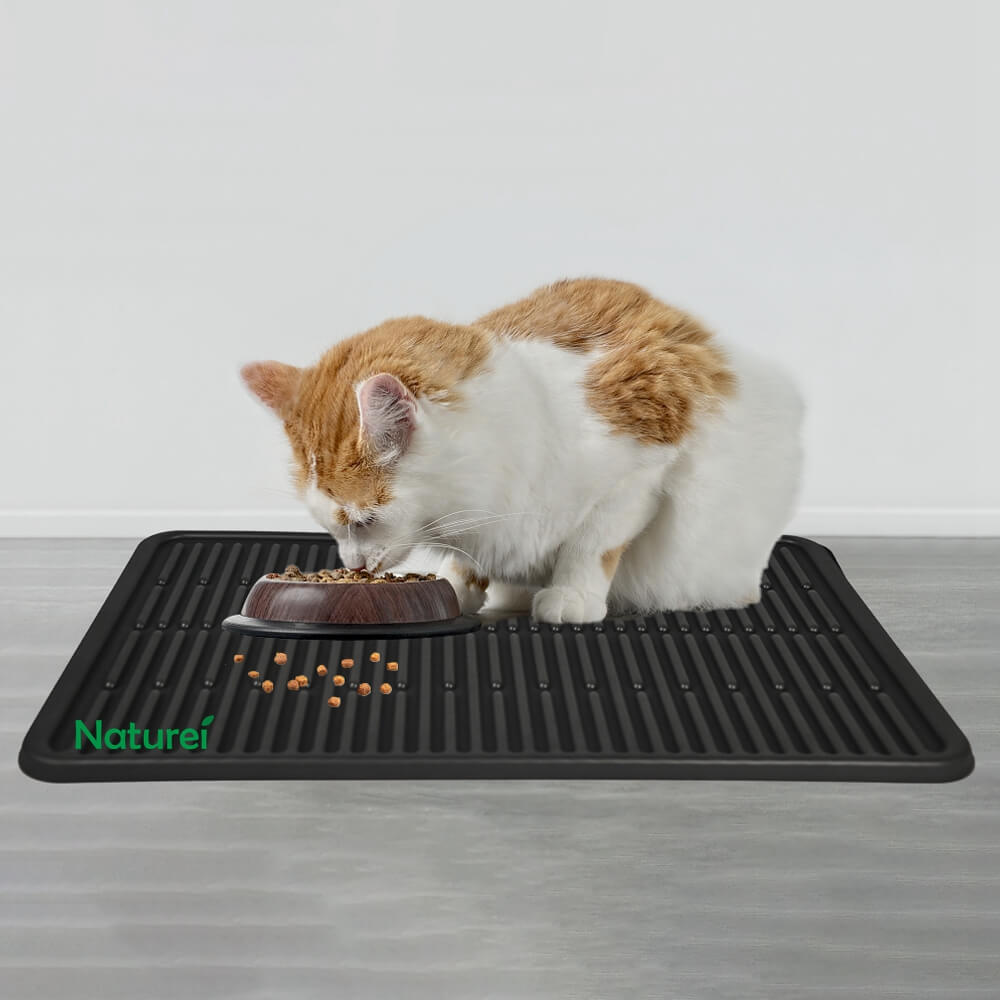
At the heart of a litter mat's cleanability lies its material. The market offers a range of options, each with distinct advantages and drawbacks. Rubber mats, particularly those made from thermoplastic rubber (TPR) or PVC, are celebrated for their durability and waterproof surfaces. These mats can typically be wiped down with a damp cloth or hosed off outdoors, making them a favorite for quick cleaning. However, lower-quality rubber may develop a porous texture over time, trapping odors and requiring periodic deep scrubbing with enzymatic cleaners to eliminate lingering smells. Silicone mats, on the other hand, represent a newer generation of products. Their non-porous surfaces resist staining and microbial growth, and many are dishwasher-safe, allowing for high-temperature sanitization. Yet, their lightweight nature can lead to shifting during use, necessitating frequent repositioning—a minor inconvenience that some users find offset by the material's effortless maintenance.
Fabric mats, often crafted from polyester or microfiber, present a different set of challenges. While their soft texture is gentler on cats'paws and some models are machine-washable, they are prone to absorbing urine and moisture, leading to persistent odors if not cleaned immediately. A 2023 survey by Pet Product Insights revealed that 62% of fabric mat users reported odor retention issues within six months of purchase, compared to only 18% of silicone mat users. Plastic grid mats, with their open designs, allow litter to fall through into a removable tray, simplifying daily cleanup. However, their rigid edges and gaps can accumulate dust and require disassembly for thorough washing, a process some find tedious. Thermoplastic polyurethane (TPU) mats, though less common, strike a balance between flexibility and stain resistance, often marketed as “self-cleaning” due to their smooth surfaces that repel debris.
Design Complexity: When Form Complicates Function
Beyond material, the design of a litter mat profoundly impacts its ease of cleaning. Mats with deep grooves or honeycomb patterns excel at trapping litter but demand vigorous shaking or vacuuming to dislodge particles lodged in crevices. For instance, the popular Gorilla Grip mat features a textured surface that captures up to 90% of litter, according to manufacturer claims, yet user reviews frequently cite the need for a handheld vacuum to clear stubborn granules. Conversely, mats with flat or slightly textured surfaces—such as the Pieviev Silicone Tray—allow for quick wipe-downs but may permit smaller granules to slip through, especially if the cat leaps off the mat at an angle.
Raised edges, a common feature intended to contain spills, introduce another layer of complexity. While they prevent litter from spilling onto surrounding floors, these edges often collect dust and hair in their corners, requiring a toothbrush or cotton swab for detailed cleaning. Size further complicates matters: oversized mats provide ample coverage but are cumbersome to move and clean, particularly if they lack portability features like foldable designs. Weighted mats, praised for their stability, present a paradox; their heft keeps them in place but makes lifting them for under-mat cleaning a laborious task.
The Cleaning Spectrum: Daily Rituals vs. Deep Maintenance
Routine maintenance is where the cleanability of litter mats is truly tested. For daily upkeep, most users adopt a two-step process: shaking or vacuuming loose litter, followed by spot-cleaning accidents with pet-safe disinfectants. Rubber and silicone mats excel here, as their impermeable surfaces allow for swift wipe-downs. Fabric mats, however, often require pre-treatment with enzymatic sprays to break down organic matter before machine washing—a process that adds time and effort. Weekly deep cleaning introduces additional variables. Silicone and TPU mats can withstand dishwasher cycles, a boon for busy households, while rubber mats may need soaking in vinegar solutions to dissolve mineral deposits from clay litter. Plastic grid systems, though modular, often accumulate grime in their joints, necessitating disassembly and scrubbing with bristle brushes.
Unexpected challenges arise from environmental factors. In humid climates, moisture trapped beneath mats can foster mold growth, even on non-porous materials. A 2022 case study involving a widely marketed “self-draining” mat revealed that users in coastal regions faced persistent mold issues despite regular cleaning, prompting the manufacturer to revise the design with improved airflow channels. Conversely, arid environments may cause certain materials—particularly low-grade plastics—to become brittle and crack over time, compromising both functionality and ease of cleaning.
User Experiences: A Tapestry of Triumphs and Frustrations
The real-world usability of litter mats is best illustrated through user testimonials and large-scale surveys. A 2023 analysis by Consumer Reports polled 2,000 cat owners and found a stark divide: 68% of silicone mat users rated their mats “easy to clean,” citing the ability to rinse debris in seconds, while only 34% of fabric mat users shared this sentiment. Complaints among the latter group centered on lingering odors and the inconvenience of air-drying bulky mats after washing. Rubber mat users fell in the middle, with 55% satisfaction, though many noted that heavy-duty mats required periodic scrubbing to maintain traction.
Case studies further highlight the consequences of poor design. The 2021 recall of the “LitterLock Pro” mat, for instance, was driven by widespread reports of its honeycomb grid becoming clogged with clay particles, rendering it unusable without intensive scraping. Conversely, the “Modkat Flap Mat” received accolades for its hybrid design: a silicone surface atop a removable plastic tray. Users praised its “dump-and-go” functionality, though some criticized the tray’s tendency to warp under high heat during dishwasher cycles.
Innovations and Alternatives: Pushing the Boundaries of Cleanability
Recent advancements aim to address historical pain points. Antimicrobial coatings, now featured in brands like PetFusion's BetterBin line, inhibit bacterial growth between cleanings. UV-C sanitizing devices, such as the LitterMat CleansePro, offer chemical-free disinfection for households wary of traditional cleaners. Biodegradable mats, crafted from materials like cork or recycled rubber, appeal to eco-conscious consumers but often sacrifice durability for sustainability—a trade-off evident in their shorter lifespans and higher maintenance requirements.
Alternative solutions have also emerged. Some users forgo traditional mats entirely, opting for washable rugs or DIY setups involving baking soda-lined trays. While these alternatives may reduce upfront costs, they often lack the specialized textures or raised edges designed to trap litter effectively. Robotic litter mats, though still niche, represent the bleeding edge of innovation. Products like the Litter-Robot 3 Connect integrate self-cleaning mechanisms that sift litter into a waste drawer, though their high price tags and mechanical complexity deter casual buyers.
The Verdict: Balancing Convenience and Compromise
So, are cat litter mats easy to clean? The answer hinges on a matrix of factors: material resilience, design intelligence, and the owner's commitment to maintenance. Silicone and high-grade rubber mats, with their waterproof and non-porous properties, emerge as the frontrunners for low-effort cleaning, particularly when paired with dishwasher-safe features. Fabric and intricate plastic designs, while functional, demand more rigorous upkeep and are best suited for owners willing to invest time in exchange for aesthetic or tactile benefits.
Ultimately, the cleanability of a litter mat is not a binary metric but a spectrum shaped by user priorities. For those valuing convenience above all, a minimalist silicone tray or self-emptying system may be ideal. For households prioritizing eco-friendliness or cat comfort, biodegradable or plush fabric mats—despite their higher maintenance—might justify the extra effort. As the market evolves, the ideal of a “perfectly cleanable” mat remains elusive, but informed choices can bridge the gap between expectation and reality. In the words of one seasoned cat owner: “A litter mat isn’t just a tool—it's a relationship. The easier it is to clean, the longer that relationship lasts.”