

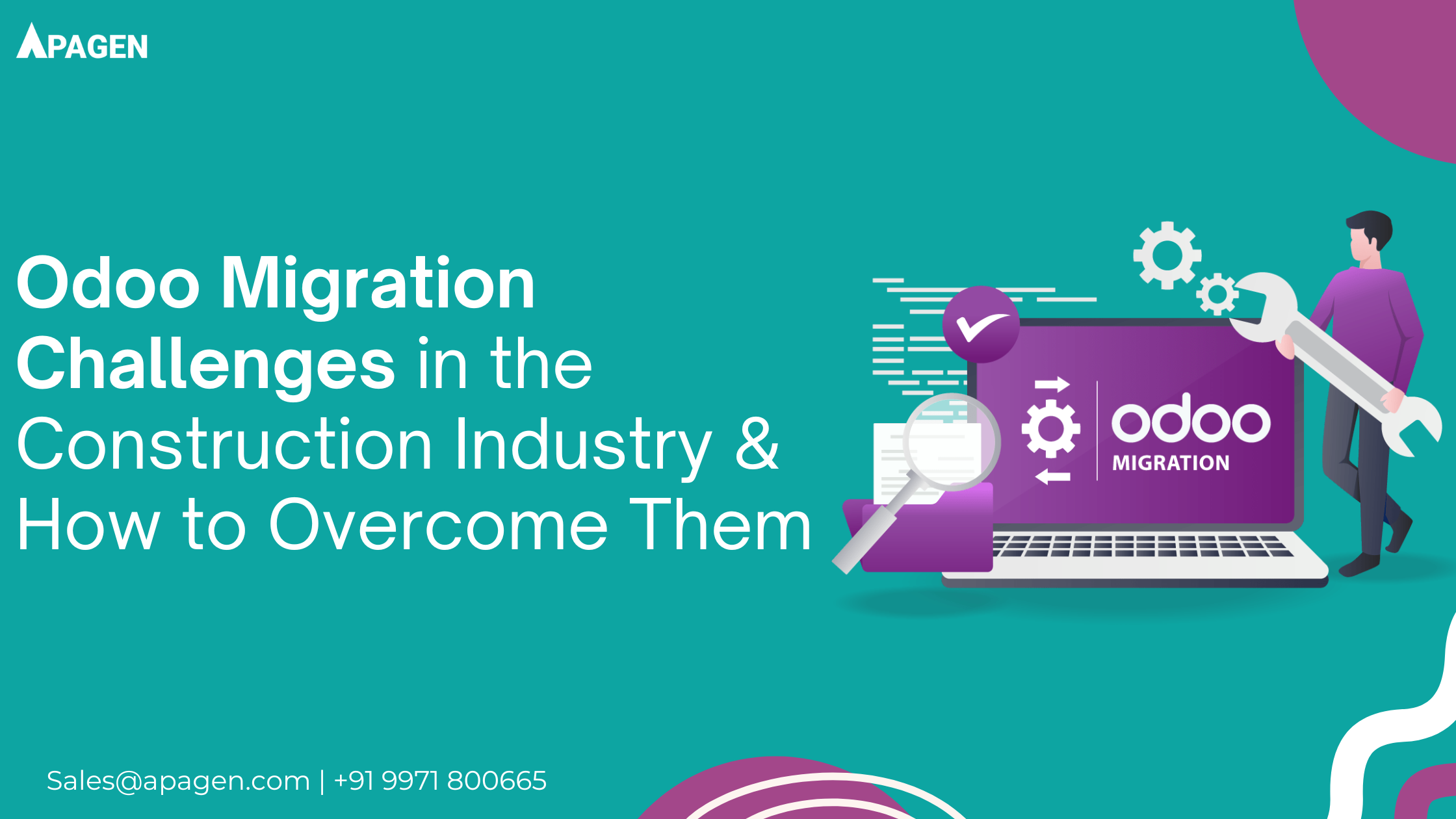
For construction companies looking to scale efficiently, upgrading to a more robust ERP system like Odoo is often a game-changer. Whether you’re moving from legacy software, outdated spreadsheets, or an older Odoo version, migration is a strategic investment. But, let’s be honest — it’s not a walk in the park.
Migrating to Odoo ERP brings significant opportunities to optimize operations. However, the construction industry’s unique structure, with its project-centric workflows, cost complexities, and multi-location operations, often leads to migration hurdles that can become serious roadblocks if not handled with care.
If you’re a contractor, builder, or construction project manager exploring Odoo migration, understanding these challenges in advance — and knowing how to tackle them — can save your business time, money, and frustration.
Why Migration Feels Like Climbing a Mountain for Construction Companies
Let’s break down the core challenges that companies face when migrating to Odoo ERP.
1. Complex Project Structures and Hierarchies
Construction businesses operate around intricate project lifecycles. A single project could involve multiple phases, contractors, vendors, budgets, and approvals. When migrating to a new system, replicating this complexity accurately in Odoo without losing control or data clarity is one of the biggest challenges.
2. Scattered and Unstructured Data
Many construction firms still rely on legacy systems, spreadsheets, or industry-specific tools that do not communicate with each other. Migrating this scattered, unstructured, or inconsistent data into Odoo can be time-consuming and risky without a clear strategy.
3. Resistance from Project Teams and Site Managers
The people who manage construction sites daily often hesitate to switch tools. They’re already comfortable using what they know — even if it’s inefficient. Migration introduces change, and with change comes resistance, especially when the teams are not consulted or trained properly.
4. Compatibility Issues with Old Tools and Systems
Legacy software may store data in outdated formats or lack open integration paths. This creates a technical challenge in extracting clean, usable data for migration into Odoo.
5. Overlooking Construction-Specific Requirements
General ERP migration strategies may not consider construction-specific needs like BOQ (Bill of Quantities), subcontractor billing, retentions, job costing, or project milestone-based invoicing. Missing these during migration leads to a poorly configured ERP that users quickly abandon.
What Happens When You Get It Wrong
Delaying or mishandling your ERP migration isn’t just a tech problem — it has real business implications:
· Loss of critical project data: Incomplete or inaccurate data migration can result in financial misreporting or missed deadlines.
· Project execution delays: Without proper system configuration, teams lose visibility into resources, progress, and timelines.
· Employee pushback: If users struggle with the new system, they may revert to manual methods, defeating the purpose of implementing the best ERP software for construction.
· Wasted investment: ERP migrations involve cost — both financial and operational. A failed migration means losing both.
· Regulatory risk: Improperly migrated records can lead to compliance gaps, especially for construction projects involving public or government contracts.
How to Migrate Smoothly to Odoo ERP in the Construction Domain
A well-executed migration strategy ensures that the transition is seamless, with minimal disruption to ongoing construction projects. Here’s how you can overcome the common roadblocks and ensure a successful Odoo ERP migration.
1. Conduct a Thorough Business Process Analysis
Before moving a single byte of data, map out your current processes — how you handle procurement, inventory, budgeting, contractor payments, and site execution. A clear “AS-IS” and “TO-BE” comparison will help you understand what to keep, what to optimize, and what to eliminate in Odoo.
Tip: A consultation with an ERP expert who understands the construction domain can fast-track this process.
2. Clean and Classify Your Data
Old records often contain duplicates, irrelevant entries, or outdated vendor information. Before importing data into Odoo, clean it thoroughly. Categorize materials, vendors, contracts, and clients properly. This will improve usability and reporting once the new system is live.
3. Choose the Right Construction-Specific Odoo Modules
Odoo is modular and flexible. For the construction industry, tailor your implementation to include:
· Project Management (with Gantt charts and task stages)
· Inventory and Purchase (for site-wise material planning)
· Accounting (with job-costing, retentions, and milestone billing)
· Timesheets and HR (for tracking labor hours and contracts)
· Field Service (for on-site work orders)
Ensure these modules are configured for construction workflows, not just generic use.
4. Involve On-Site Teams Early
Include site engineers, supervisors, and contractors in the migration conversation. Let them voice their concerns, understand how their work will change, and take feedback. This builds ownership and reduces resistance.
5. Plan a Pilot Phase
Instead of migrating the entire business in one go, start with a single project or site. Use this as a testing ground to validate workflows, spot gaps, and adjust configurations before rolling it out company-wide.
6. Ensure End-to-End Training and Support
Even the best construction ERP software fails without user adoption. Post-migration training is crucial — especially for site managers and procurement teams. Offer role-based training and create simple user guides tailored to construction use cases.
7. Work with a Construction-Focused Odoo Partner
The migration process becomes smoother when you partner with consultants who understand both construction and Odoo. They help translate real-world construction needs into efficient Odoo workflows, making your ERP truly effective.
Why Construction Businesses Trust Odoo as a Scalable ERP Solution
Many construction companies across the globe have successfully moved to Odoo because of its flexibility, modularity, and cost-effectiveness. It stands out as one of the best ERP software for construction businesses due to:
· Customizability: Workflows can be molded to match complex construction operations.
· Integrated Project View: Teams gain complete visibility over materials, manpower, and timelines.
· Budget-Friendly Licensing: Unlike traditional ERP systems, Odoo offers high ROI with lower TCO (total cost of ownership).
· Open Source Ecosystem: You’re not locked into one vendor, giving you freedom to expand.
Construction companies that take a consultative, step-by-step approach to migration are more likely to see results within weeks rather than months. With the right planning and execution, Odoo can become your central nervous system for managing projects more profitably and efficiently.
Ready to Migrate? Let’s Build the Right Foundation Together
If you’re still operating on outdated tools or facing growing pains with your current ERP, it might be time to migrate to a better solution. At [Your Company Name], we specialize in Odoo ERP consultation and migration for the construction industry. From process mapping to data transformation and user training, we handle every step with industry precision.
Book a free consultation to discuss your current systems and explore how Odoo can empower your next construction project — from blueprint to billing.