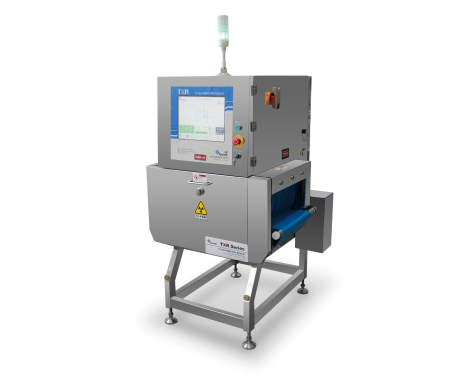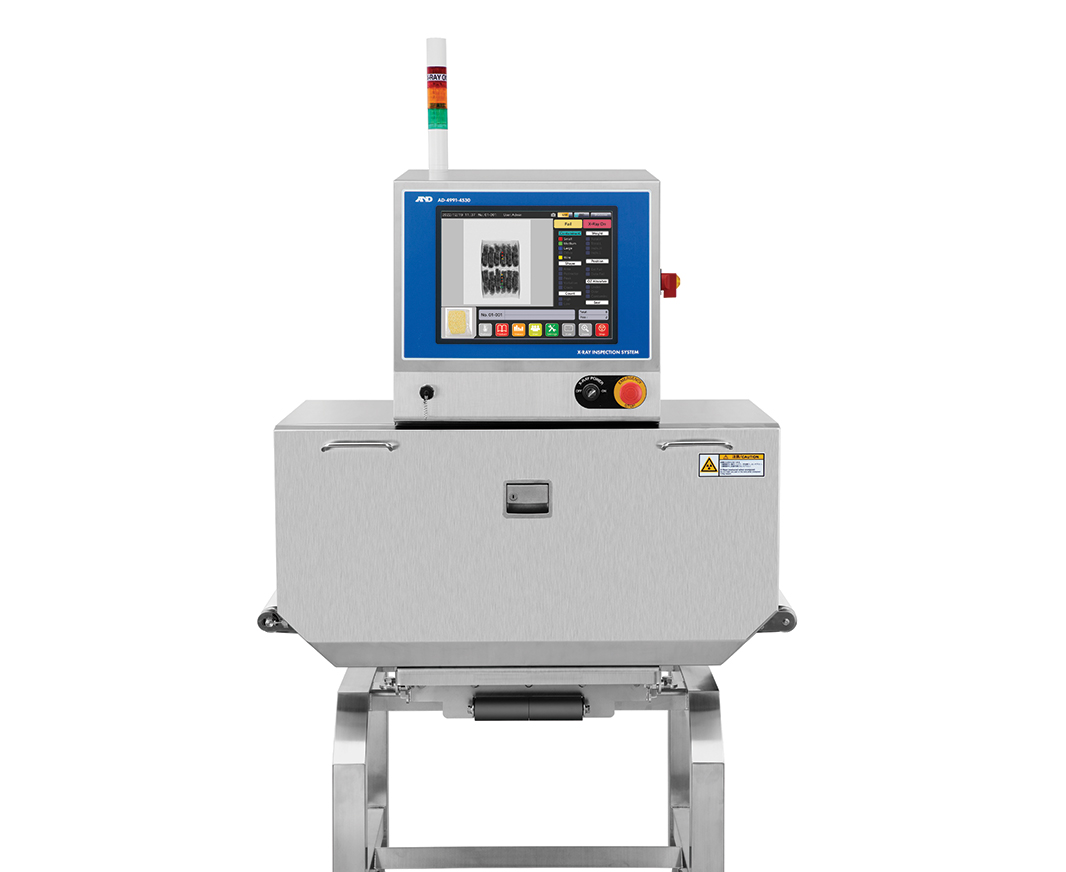
In today’s competitive food manufacturing landscape, ensuring product safety and maintaining consumer trust are non-negotiable priorities. With stringent regulations and high consumer expectations, manufacturers can no longer rely solely on traditional metal detectors or visual inspections. This is where modern food X ray machines come in—offering unmatched sensitivity and accuracy in detecting contaminants, verifying product integrity, and improving overall quality control.
Understanding Sensitivity and Accuracy in Food X-Ray Systems
Before diving into technological innovations, it’s important to understand what sensitivity and accuracy mean in the context of food X-ray inspection.
• Sensitivity refers to the system’s ability to detect small or low-density foreign objects within a product. The higher the sensitivity, the smaller the contaminant the machine can identify.
• Accuracy, on the other hand, describes how reliably the machine can detect and differentiate between contaminants and harmless product variations (like air bubbles or natural density differences).
In essence, sensitivity determines how small a contaminant can be detected, while accuracy ensures that the detection results are correct and consistent. Together, they define how effective an X-ray inspection system is in maintaining product quality and compliance.
How Modern Food X-Ray Machines Work
Food X-ray inspection systems operate on a simple yet powerful principle: they emit X-rays that pass-through food products, and a detector on the opposite side measures the amount of radiation that emerges. Differences in material density and thickness cause variations in the X-ray image, allowing the system to identify foreign materials such as:
• Metal fragments
• Glass shards
• Stones
• Bones
• Hard plastics
• Rubber pieces
Unlike traditional metal detectors, X-ray systems can detect both metallic and non-metallic contaminants, even when sealed in aluminium foil packaging or multilayered containers.
Factors Affecting the Sensitivity of Food X-Ray Systems
While modern X-ray inspection machines are incredibly precise, several factors influence their overall sensitivity:
1. Product Density and Composition
The density and texture of the inspected product play a major role in detection capability. Dense products like cheese or meat absorb more X-rays, potentially masking low-density contaminants. Systems must therefore be calibrated to optimise detection without generating false positives.
2. Product Size and Thickness
Thicker or larger products require stronger X-rays to penetrate completely, which can affect sensitivity. To overcome this, modern machines use dynamic adjustment algorithms that automatically adapt power and exposure for different product sizes.
3. Contaminant Type and Location
Different materials absorb X-rays at varying rates. For example, glass and bone are harder to detect than metal because they have similar densities to many foods. Additionally, contaminants near the centre of a dense product can be more difficult to identify than those near the surface.
4. Detector Resolution
Detector technology has advanced dramatically. High-resolution detectors with fine pixel sizes enhance image clarity and enable the identification of minute contaminants that older systems might miss.
5. System Configuration and Beam Energy
Modern X-ray machines offer adjustable beam energy levels to accommodate different products. Low-energy beams are ideal for thin, low-density foods, while high-energy beams are better suited to dense or packed items. Striking the right balance between energy level and resolution is key to achieving optimal sensitivity.
Technological Advancements Driving Accuracy
Over the past decade, food X-ray systems have evolved from basic detection tools into intelligent inspection platforms. Key innovations improving accuracy include:
1. Dual-Energy X-Ray Technology
Dual-energy systems use two energy levels to distinguish materials based on atomic number and density. This technique improves detection accuracy for contaminants that are difficult to identify in single-energy systems, such as bones in chicken fillets or glass in jars of sauce.
2. Advanced Image Processing Software
Modern machines are equipped with powerful software that applies machine learning and AI-driven algorithms to analyse X-ray images. These programs learn to differentiate between product variations and real contaminants, dramatically reducing false rejects.
3. Automatic Calibration and Adaptive Thresholding
To maintain consistent performance, modern systems automatically calibrate their detectors and adjust detection thresholds based on product characteristics. This ensures accuracy even when product density or packaging materials vary slightly from batch to batch.
4. Real-Time Performance Monitoring
Some X-ray systems now include built-in performance verification tools. These monitor system functionality in real time, alerting operators if sensitivity or accuracy begins to drift—thereby reducing downtime and improving operational reliability.
Beyond Contaminant Detection: Added Quality Control Features
While the main goal of X-ray inspection is to detect foreign bodies, today’s systems offer multi-functional quality assurance capabilities. These include:
• Mass measurement: Ensuring products fall within the specified weight range.
• Shape and size verification: Detecting deformed or mispacked items.
• Fill-level checking: Confirming containers are filled correctly.
• Seal integrity analysis: Ensuring packaging seals are free from trapped product that could compromise freshness.
By integrating these functions, manufacturers not only enhance safety but also improve process efficiency and reduce waste.
Regulatory Compliance and Consumer Confidence
Food safety regulations worldwide—such as HACCP (Hazard Analysis and Critical Control Points), BRCGS (Brand Reputation Compliance Global Standards), and FSMA (Food Safety Modernization Act)—require manufacturers to establish robust contamination control systems.
Modern food X-ray machines help meet these standards by providing traceable inspection records, automated rejection systems, and audit-ready data storage. This level of documentation is essential for demonstrating compliance during inspections and maintaining consumer trust.
The Future of Food X-Ray Inspection
The next generation of X-ray inspection is moving toward smarter, faster, and more connected systems. Innovations to watch include:
• AI-powered predictive maintenance, where the system anticipates when calibration or parts replacement is needed.
• Cloud-based data integration, allowing manufacturers to monitor multiple production lines remotely.
• Enhanced sensitivity through hybrid imaging, combining X-ray with infrared or hyperspectral imaging for superior detection.
• Eco-efficient X-ray sources, which reduce energy consumption while maintaining performance.
These advancements are transforming X-ray inspection from a quality control checkpoint into a strategic tool for process optimisation.
Conclusion
Modern food X-ray machines represent the pinnacle of inspection technology, combining exceptional sensitivity and accuracy with intelligent automation. They not only detect contaminants with microscopic precision but also deliver valuable insights into product consistency, packaging quality, and production efficiency.
For food manufacturers, investing in an advanced X-ray inspection system is no longer just about meeting compliance standards—it’s about protecting brand reputation, ensuring consumer safety, and achieving sustainable operational excellence. As technology continues to evolve, the capabilities of food X-ray systems will only become more sophisticated, setting new benchmarks for quality and trust in the global food industry.




This report studies the X-ray Inspection Machines market,X-ray Inspection Machines as one of the most promising methods of non-destructive testing (NDT).
The systems are also viewed as important screening tools for quality control and risk management, with their ability to detect contaminants, defects and inconsistencies in products.
X-ray imaging offers superior precision, repeatability and high-speed capabilities.Download FREE Sample of this Report @ https://www.grandresearchstore.com/report-sample/global-xray-inspection-machines-2025-804Globally, the x-ray inspection machines industry market is low concentrated as the manufacturing technology of x-ray inspection machines is relatively matures than some high-tech equipment.
And some enterprises, like YXLON International, Nikon Metrology, Nordson, GE Measurement & Control, etc.
The X-ray Inspection Machines market was valued at 620 Million US$ in 2018 and is projected to reach 820 Million US$ by 2025, at a CAGR of 3.6% during the forecast period.
In this study, 2018 has been considered as the base year and 2019 to 2025 as the forecast period to estimate the market size for X-ray Inspection Machines.This report presents the worldwide X-ray Inspection Machines market size (value, production and consumption), splits the breakdown (data status 2014–2019 and forecast to 2025), by manufacturers, region, type and application.The following manufacturers are covered in this report:YXLON InternationalNikon MetrologyNordsonGE Measurement & ControlAnritsu Industrial SolutionsNorth Star ImagingIshidaMettler-Toledo InternationalVJ TechnologiesBosello High TechnologySesotec GmbHAolong GroupLomaDanDong HuariShimadzuThermo Fisher ScientificDylogMeyerMinebea IntecMesnacX-ray Inspection Machines Breakdown Data by TypeDigital Radiography (DR)Computed Tomography (CT)OthersX-ray Inspection Machines Breakdown Data by ApplicationGeneral industryAutomotive industryPackagingOthersX-ray Inspection Machines Production by RegionUnited StatesEuropeChinaJapanOther RegionsX-ray Inspection Machines Consumption by RegionNorth AmericaUnited StatesCanadaMexicoAsia-PacificChinaIndiaJapanThe study objectives are:To analyze and research the global X-ray Inspection Machines status and future forecast?involving, production, revenue, consumption, historical and forecast.To present the key X-ray Inspection Machines manufacturers, production, revenue, market share, and recent development.To split the breakdown data by regions, type, manufacturers and applications.To analyze the global and key regions market potential and advantage, opportunity and challenge, restraints and risks.To identify significant trends, drivers, influence factors in global and regions.To analyze competitive developments such as expansions, agreements, new product launches, and acquisitions in the market.In this study, the years considered to estimate the market size of X-ray Inspection Machines :History Year: 2014–2018Base Year: 2018Estimated Year: 2019Forecast Year: 2019–2025This report includes the estimation of market size for value (million USD) and volume (Units).