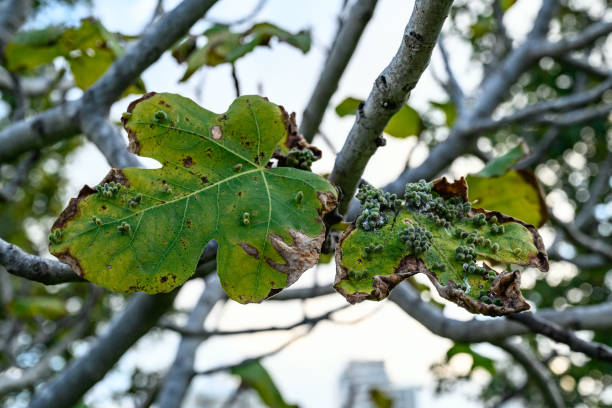
Fig trees are a beloved addition to many Australian gardens, prized for their lush foliage, shade, and sweet, abundant fruit. But like all fruit-bearing trees, figs can attract a variety of pests that threaten their health and productivity. Whether you’re a home gardener or a professional horticulturist, understanding these common pests—and knowing how to identify and control them—is essential for keeping your fig trees thriving all year round.
1. Fig Leaf Beetle (Poneridia semipullata)
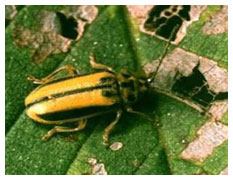
The fig leaf beetle is one of the most destructive fig trees pest in Australia, particularly in warmer regions such as Queensland and New South Wales.
How to Identify
• Adults: Small, oval beetles, about 6–8 mm long, with a bronze or greenish sheen.
• Larvae: Soft-bodied grubs that feed on the underside of leaves, leaving behind skeletonised foliage.
• Damage: Look for chewed leaves and clusters of tiny eggs on the underside of leaves.
Management Tips
• Manual removal: Pick off beetles and larvae by hand early in the morning.
• Pruning: Remove heavily infested leaves.
• Natural predators: Encourage ladybirds and lacewings, which feed on beetle larvae.
• Organic sprays: Apply neem oil or insecticidal soap for moderate infestations.
2. Fig Wax Scale (Ceroplastes rusci)
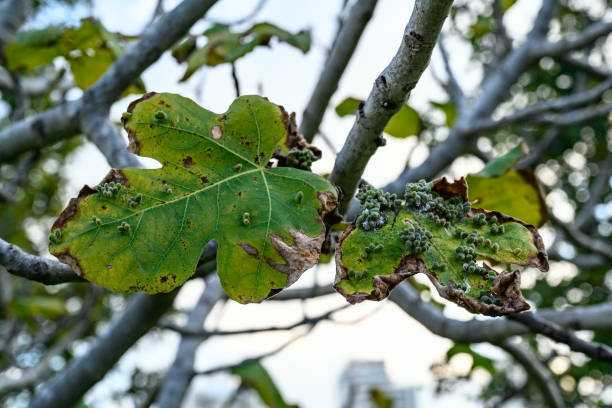
Wax scales are sap-sucking insects that attach themselves to stems and leaves, secreting a waxy covering that protects them from predators and sprays.
How to Identify
• Appearance: Small, dome-shaped bumps on stems and branches, often white, grey, or brown.
• Signs of infestation: Black sooty mould on leaves (caused by honeydew excreted by the scales), yellowing leaves, and stunted growth.
• Peak activity: Late Spring to early summer.
Management Tips
• Prune: Remove and destroy heavily infested branches.
• Natural predators: Encourage parasitic wasps and ladybirds.
• Treatment: Use horticultural oil during the crawler stage (young scale insects).
• Preventive care: Avoid over-fertilising with nitrogen, which encourages scale development.
3. Fruit Flies (Queensland Fruit Fly – Bactrocera tryoni)
The Queensland fruit fly is notorious across eastern Australia and can cause severe fruit loss in fig trees if not managed properly.
How to Identify
• Adults: About 7 mm long, reddish-brown body with yellow markings.
• Larvae: White maggots found inside ripened fruit.
• Damage: Small puncture marks on fruit, followed by soft spots and rot.
• Season: Most active from late spring through autumn.
Management Tips
• Fruit hygiene: Regularly pick up fallen or overripe figs to break the breeding cycle.
• Traps: Use pheromone or bait traps to monitor and control adult populations.
• Netting: Cover trees with fine mesh to prevent flies from reaching the fruit.
• Organic bait sprays: Apply eco-friendly attractant sprays approved for fruit fly control.
4. Spider Mites (Two-Spotted Mite – Tetranychus urticae)
Spider mites are tiny arachnids that thrive in hot, dry conditions—common across Australian summers. They are known for causing significant leaf damage on fig trees.
How to Identify
• Size: Almost microscopic, but visible as tiny red or brown dots under leaves.
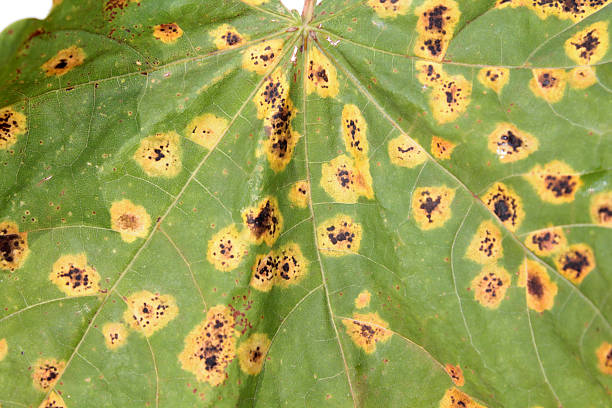
• Symptoms: Yellow stippling on leaves, fine webbing on the undersides, and premature leaf drop.
• Favourable conditions: Low humidity and dusty environments.
Management Tips
• Water management: Regularly mist foliage to increase humidity.
• Biological control: Introduce predatory mites such as Phytoseiulus persimilis.
• Sprays: Use miticide sprays or neem oil if populations become severe.
• Cultural control: Keep the area weed-free and avoid water stress on trees.
5. Mealybugs (Pseudococcidae family)
Mealybugs are common sap-feeding insects found on the stems and leaves of fig trees, often forming large colonies protected by a cottony, wax-like coating.
How to Identify
• Appearance: White, fluffy masses clustered along stems or leaf joints.
• Symptoms: Sticky honeydew, sooty mould, and general leaf yellowing.
• Hiding spots: Found in tight crevices or under bark and leaves.
Management Tips
• Manual cleaning: Wipe small infestations with a cotton swab dipped in isopropyl alcohol.
• Encourage natural enemies: Ladybirds and lacewings feed on mealybugs.
• Sprays: Apply neem oil or horticultural oil during the active growth stage.
• Monitor regularly: Check the underside of leaves and new shoots, especially in warm months.
6. Whiteflies (Trialeurodes vaporariorum)
Though small, whiteflies can quickly multiply and cause serious stress to fig trees, particularly in glasshouses or sheltered gardens.
How to Identify
• Appearance: Tiny white-winged insects that flutter up when disturbed.
• Symptoms: Sticky honeydew on leaves, yellowing foliage, and reduced vigour.
• Location: Found on the underside of leaves, especially new growth.
Management Tips
• Sticky traps: Place yellow sticky traps near trees to catch adults.
• Biological control: Introduce predatory wasps (Encarsia formosa).
• Neem oil: Spray fortnightly to manage large populations.
• Pruning: Remove heavily infested leaves to stop spread.
7. Fig Borers (Phryneta spp. and Other Wood Borers)
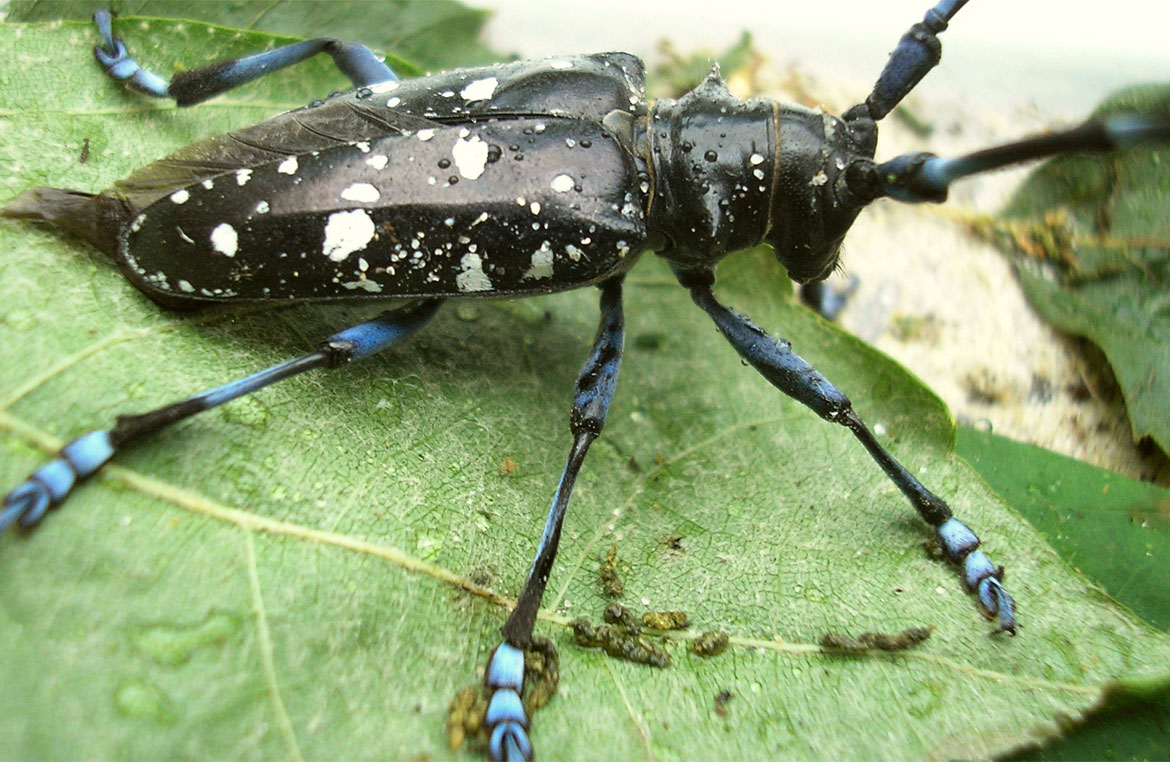
Borers can cause severe internal damage to fig tree trunks and branches, often going unnoticed until dieback occurs.
How to Identify
• Symptoms: Sawdust-like frass around trunk holes, wilting branches, and weakened limbs.
• Adults: Large beetles that lay eggs in bark crevices.
• Larvae: Tunnel through the wood, disrupting water and nutrient flow.
Management Tips
• Early detection: Check for frass or holes in the bark.
• Pruning: Cut off affected branches and destroy them.
• Tree health: Maintain overall tree vitality with proper watering and fertilising.
• Professional help: Severe infestations may require arborist intervention or systemic insecticide application.
Preventing Fig Tree Pest Infestations
While identification and treatment are important, prevention is the best strategy for maintaining healthy fig trees. Here are some key preventive tips:
• Regular monitoring: Inspect your trees weekly, especially during spring and summer.
• Good garden hygiene: Remove fallen fruit, pruned branches, and weeds around the base of the tree.
• Balanced fertilisation: Avoid over-fertilising with nitrogen, which can attract sap-sucking pests.
• Encourage biodiversity: Attract beneficial insects such as ladybirds, lacewings, and parasitic wasps.
• Pruning: Maintain open canopies to improve airflow and reduce pest hiding spots.
Final Thoughts
Fig trees can thrive beautifully in Australian gardens with the right care and attention. However, understanding common pests like fig leaf beetles, scale insects, fruit flies, and borers is essential for early detection and effective management. By combining regular monitoring, natural predators, organic sprays, and preventive practices, you can ensure your fig trees remain healthy, productive, and pest-free season after season. Protect your figs before the pests take over—and enjoy the sweet reward of your hard work!