



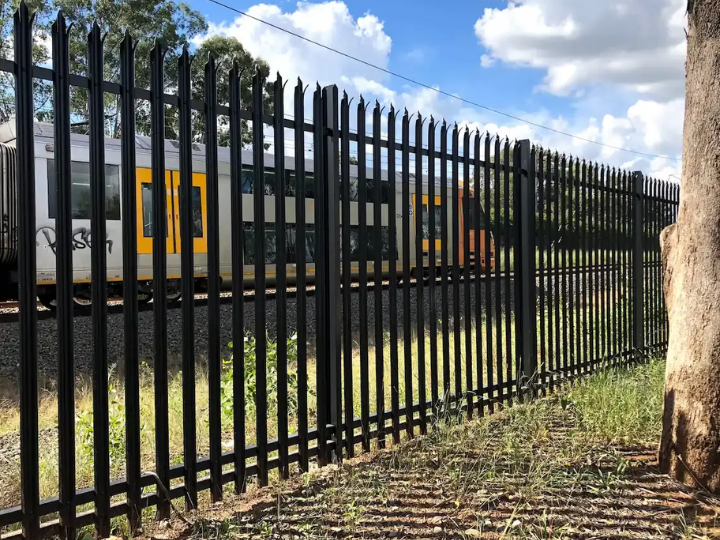
Rail and transport networks rely on secure perimeter systems to protect vital infrastructure, manage public access and ensure operational continuity. One of the most effective solutions widely adopted in these environments is 358 mesh fencing, which provides a high-security barrier designed to deter climbing, tampering, and unauthorised access. For rail corridors, freight terminals, depots, stations, marshalling yards, and maintenance facilities, the reliability of fencing directly influences safety and system efficiency.
The Importance of Perimeter Security in Transport Networks
Rail and transport infrastructure carries significant economic and social importance. Disruptions can affect freight distribution, passenger movement, and national logistics networks. Therefore, safeguarding rail zones against vandalism, trespassing, theft, and potential sabotage is critical.
Unauthorised access to rail tracks and depot areas poses severe risks, not only to individuals attempting entry but also to employees and the travelling public. A high-security fence acts as a difficult-to-breach barrier that helps control access points, restrict movement and maintain a safe operating environment.
Anti-Climb and Tamper-Resistant Design
Rail networks often cover large and diverse terrain, including remote areas where security staff presence is limited. For this reason, the fencing solution selected must be inherently resistant to climb attempts and manual tampering.
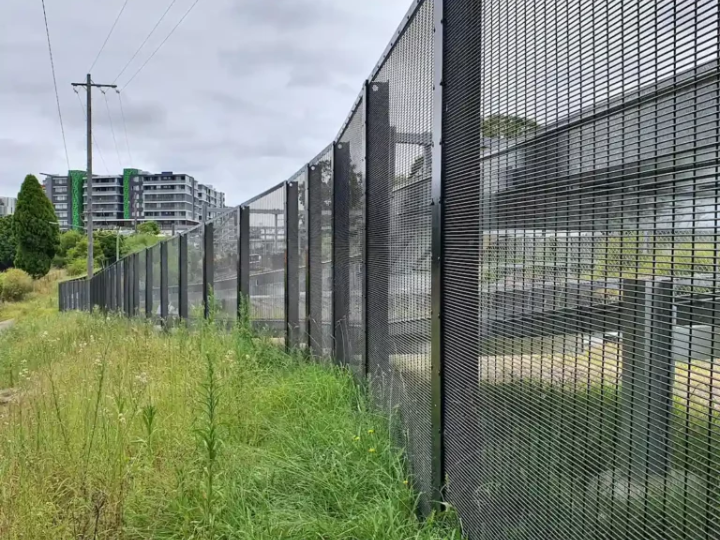
The design characteristics of high-security mesh fencing make it extremely difficult to scale. Narrow apertures prevent hands or feet from gaining grip, while closely welded wires create a rigid barrier that is hard to deform or cut using standard tools. This reduces both planned intrusion attempts and opportunistic trespassing.
Supports Surveillance and Operational Monitoring
Clear visibility through fencing is essential across rail sites, where sightlines assist with operational awareness, safety checks and incident response. The fine structure of high-security mesh offers strong security without obstructing camera systems, line-of-sight patrols or sensor arrays.
This visibility is particularly beneficial at locations such as:
- Passenger station perimeters
- Freight handling zones
- Trackside control points
- Electrical substation enclosures
- Rolling stock storage areas
By maintaining transparent perimeter lines, transport authorities can improve detection of suspicious activity and ensure quicker response times when required.
Integration with Modern Detection and Security Technologies
Rail infrastructure protection strategies increasingly rely on integrated technology systems. High-security mesh serves as a compatible platform for:
- Vibrational intrusion cables
- CCTV and thermal imaging systems
- Perimeter alarm wiring
- Lighting installations
- Access-controlled gate systems
Sensors fixed directly to the fencing can detect attempts to climb, cut or force entry. When connected to central monitoring facilities, these systems trigger immediate alerts, allowing railway security teams to take rapid action.
Long-Term Durability in Demanding Environments
Transport networks are exposed to harsh conditions such as coastal air, heavy industrial activity, dust, and corrosion-causing pollutants. The fencing used needs to withstand these environmental challenges without losing structural integrity.
High-quality mesh panel fences are engineered for durability, with anti-corrosive coatings that reduce rust risk and lower maintenance demands. This is particularly valuable for extended trackside fencing where access for repairs may be limited and costly.
Enhancing Safety While Minimising Public Risk
Rail corridors frequently run close to communities, highways and public pedestrian routes. Secure fencing ensures the public is kept at a safe distance from high-voltage systems, moving trains and heavy industrial operations.
Effective fencing also supports safe movement of employees by ensuring that access routes, gates and operational zones remain clearly defined and controlled. This structured approach reduces accidents and improves procedural compliance.
As rail and transport networks continue to expand and modernise, the need for dependable perimeter protection remains essential. High-security fencing solutions play a crucial role in preventing trespassing, reducing vandalism, protecting vital infrastructure and ensuring smooth operations across large and complex networks. 358 mesh fencing is a proven choice to meet these demands, providing durability, anti-climb performance and compatibility with advanced surveillance technologies to create a secure and resilient transport environment.

With a multi-disciplinary approach, Fact.MR elaborates an extensive analysis of the historical, current and future outlook of the global cancer profiling market as well as the factors responsible for such a growth.
Our highly dedicated professionals have inputted critical and accurate insights associated with every industry, and region by doing thorough primary and secondary research.We leverage space-age industrial and digitalization tools to provide avant-garde actionable insights to our clients regarding the cancer profiling market.
For enhancing readers’ experience, the report starts with a basic overview about the cancer profiling market and its classification.Competitive Assessment The cancer profiling market report includes global as well as emerging players:Qiagen N.V.Roche Molecular Systems INC.Abbott LaboratoriesSiemens AGNeogenomics LaboratoriesIllumina, Inc.HTG Molecular DiagnosticPerkinElmer Inc.Genomic Health INC.Nanostring Technologies, Inc.BioGenexThermo Fisher Scientific Inc.Pacific BiosciencesAgilent Technologies, Inc.The insights for each vendor consists of:Company profileSWOT analysisMain market informationMarket shareRevenue, pricing and gross marginRequest Sample Report - https://www.factmr.com/connectus/sample?flag=S_id=358Regional Analysis Important regions covered in the cancer profiling market report include:North America (U.S., Canada)Latin America (Brazil, Mexico)Europe (Germany, U.K.)APEJ (China, India)The cancer profiling market report also provides data regarding the key countries in the defined regions.Segmentation AnalysisBy Product:InstrumentsConsumablesBy Indication:Breast CancerColorectal CancerOvarian CancerMelanomaKidney CancerLung Cancer (including NSCLC)Rare CancersWhat insights does the cancer profiling market report provide to the readers?Cancer profiling market fragmentation on the basis of product type, end use, and region.Comprehensive assessment of upstream starting materials, downstream demand, and present market landscape.Collaborations, R projects, acquisitions, and product launches of each cancer profiling market player.Various regulations imposed by the governments on the consumption of cancer profiling market in detail.Impact of modern technologies, such as big data & analytics, artificial intelligence, and social media platforms on the global cancer profiling market.Questionnaire answered in the cancer profiling market report include:What is the present and future outlook of the global cancer profiling market on the basis of region?What are the challenges and opportunities for the cancer profiling market?Why the consumption of cancer profiling market highest in region?In which year segment is expected to overtake segment?Request Research Methodology - https://www.factmr.com/connectus/sample?flag=RM_id=358And many more …