


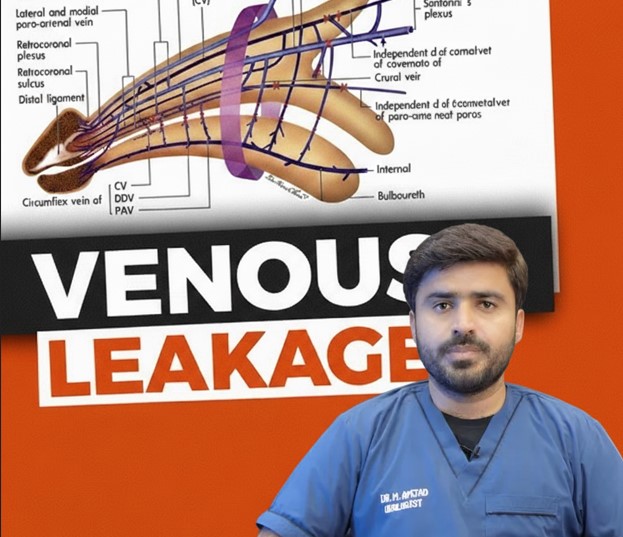
Erectile dysfunction (ED) is often associated with aging, stress, or hormonal imbalance, but a significant number of men suffer from a more complex and often misunderstood condition called venous leak, also known as veno-occlusive dysfunction. This condition disrupts the penis’s ability to trap and maintain blood during an erection, resulting in weak or short-lasting erections.
Because venous leak is structural in nature—not psychological—traditional ED pills often fail to provide adequate relief. Fortunately, modern medical advancements now offer a variety of options to diagnose, manage, and in many cases, successfully treat venous leak.
This in-depth article explains everything you need to know about venous leak, including causes, symptoms, diagnostic tools, and the most effective treatment methods available today.
What Is Venous Leak?
An erection depends on a delicate balance between arterial inflow (blood entering the penis) and venous occlusion (blood being trapped to maintain rigidity). During sexual arousal:
The arteries expand, allowing blood to rush into the penis.
The erectile chambers fill, expanding like balloons.
This expansion compresses surrounding veins, blocking blood from flowing out.
The penis remains firm until arousal ends or ejaculation occurs.
This natural blood-trapping mechanism is called the veno-occlusive mechanism.
What Happens in Venous Leak?
In venous leak:
The veins fail to compress properly,
Blood flows out too quickly,
Erections cannot be sustained.
Men with venous leak often describe erections that:
Start normally but fade quickly,
Are inconsistent or unstable,
Require constant stimulation to maintain,
Become weaker over time,
Respond poorly to medications like Viagra or Cialis.
Venous leak is physical—not psychological—and requires medical intervention.
Causes of Venous Leak
Penile Venous leak can arise from a wide variety of structural, hormonal, metabolic, or lifestyle-related factors. Understanding these underlying causes is essential for effective treatment.
1. Age-Related Penile Tissue Weakening
Aging naturally reduces:
Collagen elasticity
Smooth muscle strength
Blood vessel flexibility
Nitric oxide production
As penile tissues stiffen or weaken, they lose the ability to fully compress veins, causing blood to escape.
2. Diabetes and Metabolic Disorders
Diabetes is one of the leading causes of venous leak. It damages:
Blood vessels (microvascular disease)
Nerves (neuropathy)
Smooth muscle
Endothelial cells
This damage prevents veins from sealing properly during erection.
Other metabolic conditions like insulin resistance, high cholesterol, and fatty liver disease also contribute.
3. Hormonal Imbalance (Especially Low Testosterone)
Testosterone is essential for:
Maintaining smooth muscle structure
Supporting nerve signaling
Regulating sexual desire
Promoting healthy blood flow
When testosterone is low, the penile tissue becomes weaker and less responsive.
4. Trauma, Injury, or Surgery
Physical damage to the pelvis, perineum, or penis can disrupt the venous system.
Common sources:
Bicycle seat pressure
Pelvic fractures
Road accidents
Penile trauma
Prostate surgery (particularly prostatectomy)
Spinal injuries
Even minor, repetitive trauma can gradually weaken vein structures.
5. Congenital or Genetic Weakness
Some men are predisposed to venous leak due to natural variations in:
Tunica albuginea thickness
Collagen structure
Venous valve strength
These men may experience ED early in life, even in their teens or 20s.
6. Lifestyle Factors
Daily habits directly influence erectile function.
Key contributors include:
Smoking
Obesity
Excessive alcohol
Poor cardiovascular health
Lack of exercise
Chronic stress
Poor sleep
These factors damage veins, reduce nitric oxide, and accelerate tissue aging.
Symptoms of Venous Leak
Men with venous leak typically notice the following symptoms:
1. Difficulty Maintaining an Erection
They may achieve an erection initially but cannot keep it firm throughout sexual activity.
2. Erections Fade Quickly
The erection collapses prematurely even with arousal and stimulation.
3. Weak or Partial Erections
Even at peak arousal, the erection may not be fully rigid.
4. Poor Response to ED Pills
Viagra, Cialis, and similar medications provide limited or temporary improvement.
5. Need for Constant Stimulation
Erections weaken quickly once stimulation stops.
6. Decreased Confidence and Anxiety
As the condition worsens, emotional frustration often follows—but this is a result, not a cause.
Diagnosis: How Venous Leak is Confirmed
Venous leak can only be accurately diagnosed with proper medical testing. Self-diagnosis or guesswork is unreliable.
1. Penile Doppler Ultrasound (Primary Diagnostic Tool)
This is the most commonly used test because it is non-invasive, accurate, and widely available.
How it works:
A medication is injected to induce an erection.
Ultrasound imaging tracks blood flow into and out of the penis.
Measurements are taken at multiple time intervals.
What doctors examine:
Arterial inflow (should be high)
Venous outflow (should be low during erection)
Peak systolic velocity
End-diastolic velocity (a key indicator of venous leak)
Elevated venous outflow is the hallmark of venous leak.
2. Cavernosometry and Cavernosography (Gold-Standard Tests)
These tests are more invasive but extremely precise.
Cavernosometry:
Measures how well the penis can trap blood under pressure.
Cavernosography:
Uses a contrast dye and imaging to map the exact veins responsible for leakage.
These tests are essential when planning advanced treatments like embolization.
3. Hormonal Evaluation
Blood tests measure:
Testosterone
Estradiol
Prolactin
LH/FSH
Thyroid hormones
Lipid profile
Hormonal issues may worsen or mimic venous leak.
4. Psychological Screening
Although venous leak is structural, emotional or psychological factors may coexist.
A thorough evaluation ensures treatment covers all contributing aspects.
Venous Leak Treatment Options
Venous leak was once considered extremely difficult to treat, but advances in regenerative medicine and interventional radiology have changed the landscape. Today, multiple effective options exist, ranging from lifestyle changes to minimally invasive procedures and surgical solutions.
1. Lifestyle and Foundational Medical Management
Although lifestyle changes cannot fully cure venous leak, they improve vascular health and enhance the effectiveness of treatments.
Recommended measures:
Stop smoking
Improve diet
Exercise regularly
Reduce stress
Treat hypertension
Control diabetes
Lose excess weight
Improve sleep quality
These changes strengthen the circulatory system and support erectile function.
2. Oral Erectile Dysfunction Medications
PDE5 inhibitors help increase blood flow but rarely resolve venous leak by themselves.
Common drugs:
Sildenafil (Viagra)
Tadalafil (Cialis)
Vardenafil (Levitra)
Avanafil (Stendra)
Advantages:
Easy to use
Effective for mild cases
Improves confidence
Limitations:
Usually ineffective for moderate to severe venous leak
Does not repair tissue damage
Men often seek further treatment after poor response to medication.
3. Intracavernosal Injections (ICI Therapy)
This is one of the most reliable treatments for moderate and severe ED, including venous leak.
How it works:
Medication (such as Alprostadil or Trimix) is injected directly into the erectile tissue.
Results:
Generates strong erections even with leakage
Works quickly
Highly effective for men who fail oral medications
Drawbacks:
Involves injection
Possible bruising or fibrosis over long-term use
Requires proper technique
Still, it remains a powerful option for non-surgical management.
4. Shockwave Therapy (LI-ESWT)
Low-intensity shockwave therapy stimulates natural repair mechanisms.
Benefits:
Promotes new blood vessel growth
Improves tissue elasticity
Enhances blood flow
Strengthens veno-occlusive function
Increases sensitivity
Treatment schedule:
6–12 sessions
15–20 minutes each
It is ideal for early to moderate cases and often combined with other treatments.
5. PRP (Platelet-Rich Plasma) Treatment / P-Shot
PRP therapy introduces concentrated growth factors from the patient’s own blood.
Key effects:
Stimulates tissue regeneration
Supports vascular repair
Improves structural integrity
Enhances erectile performance
It is frequently used alongside shockwave therapy for better outcomes.
6. Endovascular Venous Embolization (Breakthrough Minimally Invasive Treatment)
This is one of the most advanced and effective treatments available for venous leak.
How the procedure works:
A catheter is inserted into a peripheral vein.
Imaging identifies leaking venous channels.
These veins are sealed using coils, medical glue, or embolic agents.
Advantages:
Minimally invasive
No incisions on the penis
Quick recovery
Permanent sealing of leaking veins
Addresses the root cause
High success rate when properly selected
This procedure is rapidly becoming the preferred treatment for structural venous leak.
7. Surgical Vein Ligation
Before embolization became popular, vein ligation surgery was commonly used.
Process:
Surgeon ties off leaking veins manually
Performed under anesthesia
Limitations:
Invasive
Longer recovery
Higher recurrence rate
Today, this method is less favored but still an option in selected cases.
8. Penile Implants (Definitive Solution for Severe Cases)
When all other treatments fail, penile implants offer a permanent solution.
Types:
Inflatable implants
Semi-rigid implants
Benefits:
Near 100% success rate
Completely independent of natural venous function
High patient satisfaction
This option is typically reserved for advanced or long-standing venous leak.
Which Treatment Is Right for You?
Mild Venous Leak:
PDE5 inhibitors
Shockwave therapy
PRP
Hormone balancing
Moderate Venous Leak:
Shockwave + PRP
Intracavernosal injections
Endovascular embolization
Severe Venous Leak:
Embolization
Penile implant surgery
A proper diagnostic evaluation determines the best course of action.
Can Venous Leak Be Cured?
Many cases can be significantly improved or even corrected permanently, especially with:
Embolization
Regenerative therapies
Early treatment
Hormonal optimization
Severe structural cases may require implants, but these provide highly reliable outcomes.
Final Words
Venous leak is a complex yet treatable cause of erectile dysfunction. While traditional ED medications often fail to address it, modern diagnostic methods and advanced treatments offer real hope.
From non-invasive therapies to minimally invasive embolization and prosthetic surgery, men today have access to solutions that can restore confidence, improve sexual function, and greatly enhance quality of life.


Venous Thromboembolism Treatment Market report published by Value Market Research, which studies the future outlook of the market.
It includes the size, share, growth, trends, key players, segments and regional analysis in detail during the study year 2020-2027.The research report also covers the comprehensive profiles of the key players in the market and an in-depth view of the competitive landscape worldwide.
The major players in the venous thromboembolism treatment market include Argon Medical Devices, Arjo, Boston Scientific, Cardinal Health (Medtronic), Cook Medical, DJO Global, Koninklijke Philips N.V., and Stryker.
This section consists of a holistic view of the competitive landscape that includes various strategic developments such as key mergers & acquisitions, future capacities, partnerships, financial overviews, collaborations, new product developments, new product launches, and other developments.Get more information on "Global Venous Thromboembolism Treatment Market Research Report" by requesting FREE Sample Copy at https://www.valuemarketresearch.com/contact/venous-thromboembolism-treatment-market/download-sampleMarket DynamicsThe key drivers behind global venous thromboembolism treatment market growth are increasing incidence of VTE and increasing awareness about the existing treatment options.
Introduction of new VTE treatment devices, increasing the number of treatment choices for patients will contribute significantly towards VTE treatment market.
Furthermore, technological advancements in VTE treatment, such as, development of heparins and associated inhibitors with low molecular weight are expected to bring lucrative growth opportunities for VTE market.