


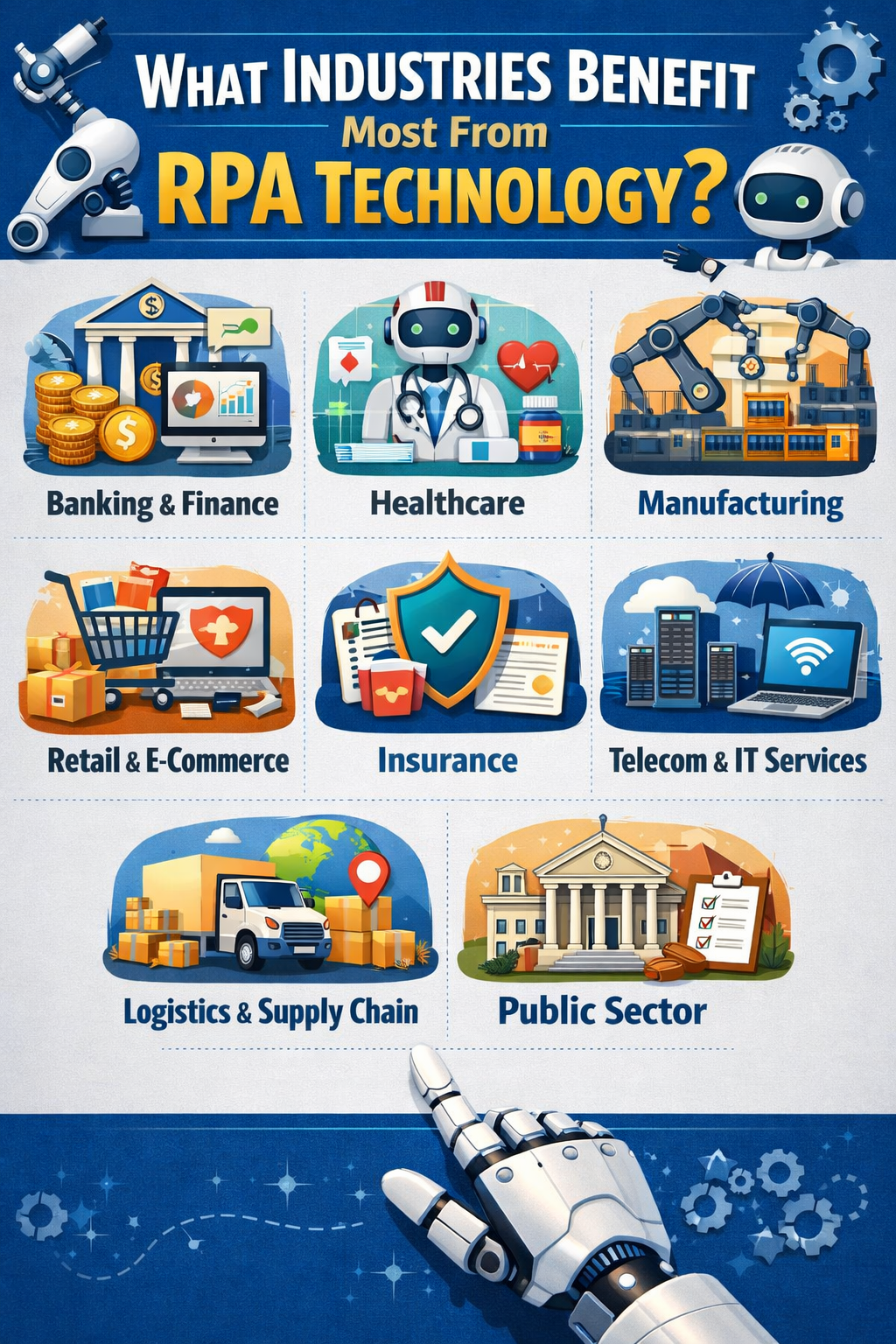
Robotic Process Automation (RPA) is a game-changer for industries burdened by high-volume, repetitive, and rule-based tasks. By 2026, the technology has evolved from simple "macro-style" automation into Intelligent Automation, often integrated with AI to handle unstructured data.
Here are the industries benefiting most from RPA today:
1. Banking and Financial Services (BFSI)
Historically the earliest and largest adopter, the BFSI sector uses RPA to handle massive amounts of data with near-zero error rates.
Key Use Cases: Loan processing, KYC (Know Your Customer) verification, fraud detection, and automated account reconciliation.
The Benefit: Reduces processing time from days to minutes. For example, a bot can verify customer IDs against global databases much faster and more accurately than a human agent.
2. Healthcare
Healthcare has seen a surge in RPA adoption to combat administrative burnout and improve the "patient journey."
Key Use Cases: Patient registration, appointment scheduling, billing, and insurance claims processing.
The Benefit: By automating the "paperwork," medical staff can focus more on patient care. Some hospitals have reduced patient onboarding time by up to 60% using these bots.
3. Manufacturing and Logistics
In this sector, RPA acts as the digital glue between supply chain management and back-office operations.
Key Use Cases: Inventory management, Bill of Materials (BOM) generation, purchase order processing, and shipment tracking.
The Benefit: RPA provides real-time visibility into stock levels and automatically triggers reorders, preventing production delays and reducing warehouse overhead.
4. Retail and E-commerce
With the 2026 focus on "Hyper-personalization," retailers use RPA to manage the logistics of a global customer base.
Key Use Cases: Automated returns processing, price monitoring (adjusting prices based on competitors), and order tracking updates.
The Benefit: It allows retailers to scale during peak seasons (like Black Friday) without hiring thousands of temporary data-entry clerks.
5. Insurance
Insurance involves a heavy amount of legacy systems that don't always "talk" to each other. RPA bridges these gaps.
Key Use Cases: Claims adjudication, underwriting support, and policy renewals.
The Benefit: By automating the initial intake of a claim, insurers can reduce operational costs by 30–40%, leading to faster payouts for customers.
Industry Impact Summary
Industry
Primary RPA Focus
Top Benefit
BFSI
Compliance & Transactions
Risk mitigation & speed
Healthcare
Patient Data & Billing
Reduced administrative burnout
Manufacturing
Supply Chain & Inventory
24/7 operational reliability
Retail
Order Fulfillment & CX
Scalability during peak demand
Telecom
Customer Support & Billing
Improved First Call Resolution (FCR)

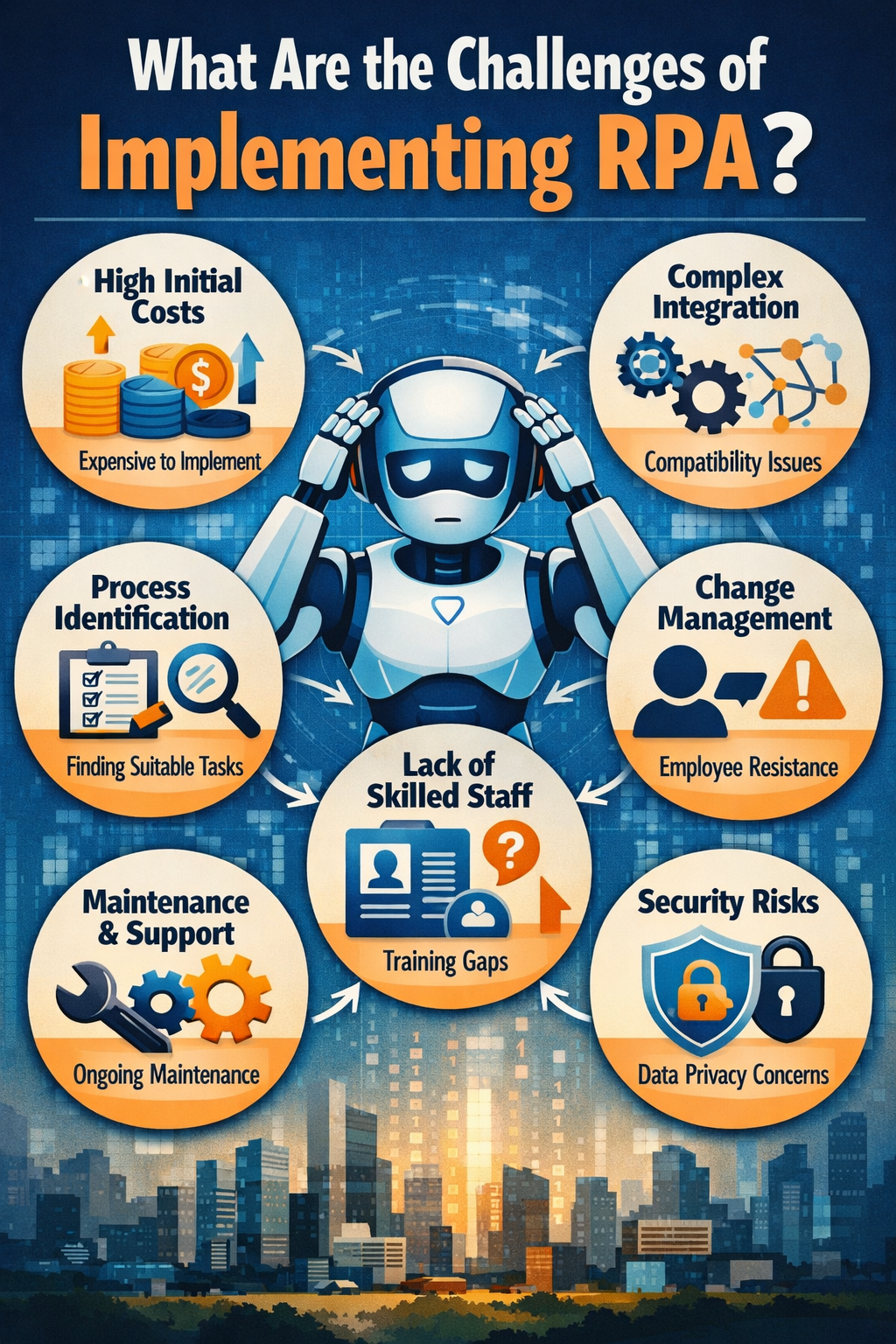


Take a look at top 11 use cases of Robotic process automation in Telecom industry , how rpa helps in telecom industry , benefits and 5 steps to implement rpa in telecommunications .RPA adoption in telecom is a great approach to overcome many of these challenges and issues hindering the growth of telecom companies.
The flexibility and ease of implementation of the RPA technology allow a wide range of operations to be automated for telecom providers.

