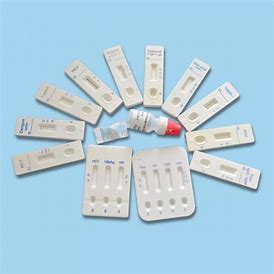
Molecular diagnostics is now a standard component of laboratory testing for viral infections. By using PCR technology to test the DNA and RNA found in a specimen taken from a patient, a laboratory can directly detect and confirm any viral infection and measure its progression. Laboratories can now rely on PCR methods to directly detect the viral genome(s) in a patient’s blood instead of believing on clinical symptoms and/or antibody responses alone.
A variety of laboratory tests are available to detect viral infection; for example, HCV kits, HBV PCR and EBV PCR are all routinely utilized in clinical diagnostic laboratories to identify the presence of hepatitis C infection, hepatitis B infection and Epstein-Barr virus infection. The results of these tests allow physicians to diagnose a patient’s illness, monitor the progression of the disease and assess the response of the patient to treatment.
HCV Kit for Genotyping
The Hepatitis C Virus (HCV) primarily attacks the liver and can develop into a long-lasting (chronic) illness if not adequately treated. A key factor in treating and managing HCV infection is knowing what genotype of the virus exists for each individual patient. Each of the six known HCV genotypes respond differently to treatment, making it necessary to perform virology testing as part of the diagnostic process for HCV infection.
An HCV kit based on PCR technology detects viral RNA and identifies the genotype present in the sample. The test typically uses serum or plasma collected from the patient. During the laboratory procedure, RNA is extracted from the sample and converted into complementary DNA through reverse transcription. The PCR instrument then amplifies targeted regions of the viral genome to identify the genotype.
These tests are designed to detect several major HCV genotypes, including genotype 1, 1a, 2 (2a and 2b), 3, 4, 5a and 6. Because the assay targets specific genetic sequences associated with each genotype, laboratories can determine the exact viral type present in the patient.
PCR-based genotyping assays are highly sensitive and can detect viral RNA even when the viral load is relatively low. Many assays have a detection limit around 25 IU/ml, which helps laboratories identify infection even in early or low-level cases.
HBV PCR Test for Viral Load Measurement
An additional major problem associated with global liver disordering is hepatitis B virus (HBV) and its impact on patients with HBV infection; as part of the evaluation of their level of activity through HBV, there is an increased need to measure the HBV quantity circulating in their blood.
HBV is typically measured using a HBV PCR test that directly measures the number of HBV DNA copies per mL present in the blood. Thus, an individual can have test results indicating they are infected with HBV as well as a value that indicates how many HBV copies are in their blood.
Real-time PCR instruments measure the amplified DNA using fluorescent signals. As the viral DNA is amplified during each cycle, the instrument calculates the viral load present in the original sample.
In order to ensure that the virus load results are consistently reported by all labs, a large number of PCR assays have been assigned through the use of internationally recognized calibration standards. Some of these tests can quantify levels of virus DNA to as low as 2.5 IU/ml or less, which enables labs to monitor infections even when they are very low.
PCR kits supplied by 3B BlackBio Biotech India Ltd are designed to work with common real-time PCR platforms used in clinical laboratories.
EBV PCR Test for Viral Detection
Among the many viruses that can infect humans, the Epstein-Barr virus is one of the most common. It is a member of the herpesvirus family and is classified as a human herpesvirus type 4. The majority of adults have contracted EBV at some point during their lives, typically through direct or indirect exposure to saliva.
An EBV PCR test uses real-time PCR technology to identify the presence of the virus via detection of its DNA through the patient's specimen directly. The specimen undergoes a process that extracts the DNA for amplification using specific primers and probes which will bind to certain sequences of the Epstein-Barr virus in order to amplify the viral DNA. The amplification of the DNA creates fluorescent signals that the PCR machine can recognize to show that the viral DNA is present in detection of the EBV.
Many assays to detect EBV utilize dual target detection systems which enhance the reliability and sensitivity of the assay to detect EBV at low levels of the virus.
Many of these assays have an estimated sensitivity of around 100 IU/ml which allows laboratories to confirm the presence of EBV in clinical samples. Additionally, many of the commercially available PCR kits have internal control mechanisms built into them to ensure both the extraction and amplification steps are done properly.
PCR Testing in Laboratory Practice
PCR testing has become a standard technique in diagnostic laboratories because it provides accurate detection of viral genetic material. Compared to traditional testing methods, PCR assays can detect infection earlier and with greater specificity.
PCR diagnostic kits generally contain all of the reagents needed to amplify DNA, including enzyme, primer, probe, and internal controls. They also are intended to be used with most common commercially available real-time PCR machines, allowing labs to decrease variation in results between different laboratories through use of uniform testing procedures.
Examples of PCR diagnostic assays commonly used in hospital labs, medical diagnostic centres and research laboratories are HBV /HCV/EBV PCR assays. These assays provide substantial assistance to clinicians in evaluating the status of an individual patient with a viral infection, as well as allow for the ongoing evaluation of the progression of viral infections within individual patients.
With standardized PCR kits and established laboratory workflows, molecular diagnostic testing continues to support clinicians in managing viral infections and monitoring patient health.