






Quick Answer: A viscous liquid filling machine moves lotion or cream through a controlled product path and doses it with a piston, servo-driven system or suitable pump. The correct design limits air pockets, dripping and weight variation while remaining easy to clean between formulas.
Viscous products do not behave like water. They resist flow, respond to temperature and may become thinner under shear. Some lotions also contain suspended ingredients or form strings when the nozzle closes. These characteristics affect every part of the machine, from hopper geometry to nozzle shutoff.
What Makes a Liquid “Viscous” in Filling Operations?
Direct Answer: In packaging, viscosity describes how strongly a product resists flow, but the number on a laboratory report is only part of the story. Production behavior also depends on temperature, shear, air content and how long the product has been resting.
A lotion may flow easily after mixing but thicken while waiting in a hopper. A cream may need gentle product movement to avoid air incorporation. For that reason, equipment selection should use samples from normal production conditions, including the lowest expected operating temperature.
How a Viscous Filling System Controls the Dose
A well-matched viscous liquid filling machine for lotion combines positive product movement with programmable timing. The objective is not simply to force material through a nozzle; it is to deliver a repeatable amount without damaging the formula or contaminating the package.
Product Supply
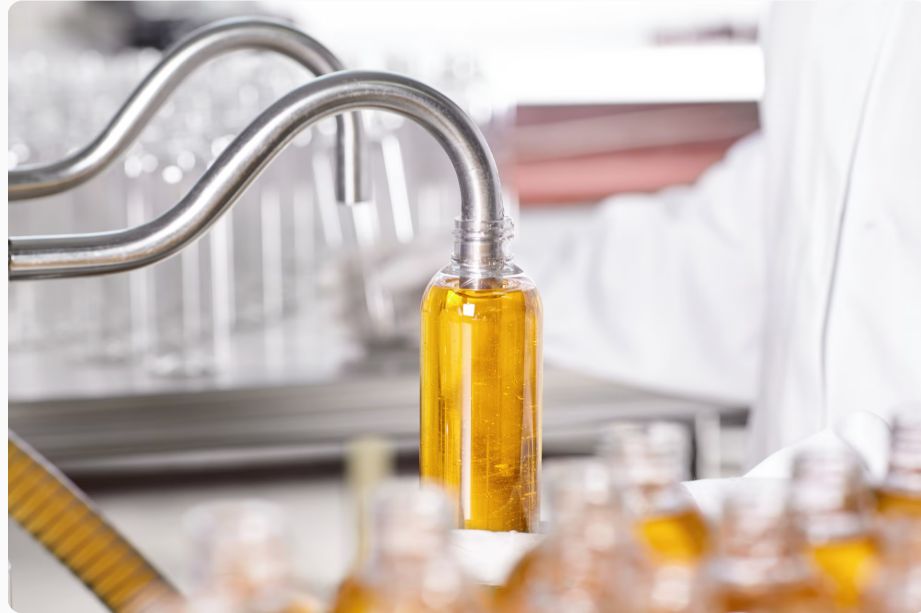
The hopper, transfer pump and hoses should keep the filler supplied without introducing air. Short, smooth product paths reduce pressure loss and simplify cleaning. Level detection can help maintain consistent inlet conditions, while slow agitation may be useful when ingredients tend to separate.
Dosing
Piston filling uses a defined displacement, making it a common choice for lotions and creams. Servo control allows the stroke and speed profile to be stored by recipe. Pump-based systems can also be effective when the pump is selected for the product's viscosity and shear sensitivity.
Nozzle Shutoff
High-viscosity products often stretch into a tail. A positive shut-off nozzle, suck-back function or bottom-up motion can keep the container neck clean. The best setting is established by trial because too much suction may pull air into the nozzle and disturb the next dose.
What Determines Filling Accuracy?
Accuracy is the combined result of stable product conditions, repeatable machine motion and consistent containers. A precision drive cannot compensate for a hopper that repeatedly runs low or a lotion whose temperature changes throughout the shift.
• Product temperature: Establish a permitted range and record it during tests.
• Air in the formula: Deaerate where necessary and prevent the feed pump from drawing air.
• Seal condition: Worn piston or valve seals can cause gradual volume drift.
• Recipe control: Protect validated settings from accidental changes.
• Sampling method: Use calibrated scales and a consistent tare procedure.
Factories should define whether acceptance is based on net weight, volume or both. Weight is often easier to verify consistently, but the product label and local requirements determine the final control plan.
Matching Nozzles to Containers
A wide-mouth jar may allow a large nozzle and short fill time. A narrow-neck bottle may require a smaller nozzle, slower speed and more careful vertical movement. Container centering is critical because even a small misalignment can smear product onto the sealing surface.
For multiple package sizes, check the adjustment range of guides, filling-head height and container indexing parts. Changeover should be demonstrated with the smallest and largest formats, not just described in a quotation.
Cleaning and Formula Changeover
Thick products can remain in hose bends, valve chambers and the bottom of a hopper. Product-contact parts should drain as completely as practical and be accessible for inspection. Quick connections and clearly identified seals reduce reassembly errors.
• Document the disassembly sequence and approved cleaning agents.
• Check seal compatibility with both product and cleaning chemicals.
• Set an objective endpoint for visual cleanliness or residue testing.
• Record the time from last good unit to first good unit after changeover.
Factory Acceptance Testing
A meaningful test uses production product, bottles and closures for a sustained run. Measure average net weight, variation, drip frequency, external cleanliness and changeover time. Run the machine at the agreed normal speed, not only at a short peak-speed demonstration.
Frequently Asked Questions
Can a viscous filler also handle thin liquids?
Some machines can cover a broad range, but the optimum nozzle, valve and speed settings may differ. Each product needs its own trial and recipe.
Does heating always improve lotion filling?
No. Heating may reduce viscosity, but it can also affect stability, fragrance or package compatibility. Use it only when the formulation process permits and temperature is controlled.
Why does fill weight drift during a shift?
Possible causes include temperature change, air in the feed, falling hopper level, worn seals or an unstable product supply. Trend data helps identify the cause.
Conclusion
Reliable viscous filling comes from controlling the product as carefully as the machine. Aile provides filling-series solutions for cream, lotion, shampoo, detergent and other products across different viscosity ranges. Buyers should base the final design on representative product trials, clear accuracy definitions and a cleaning process that operators can repeat every day.


Looking for cosmetic filling near you?
Get natural looking teeth filling in Bayside, NY at Bayside Family Dentistry.
Book an appointment with filling specialist now!