


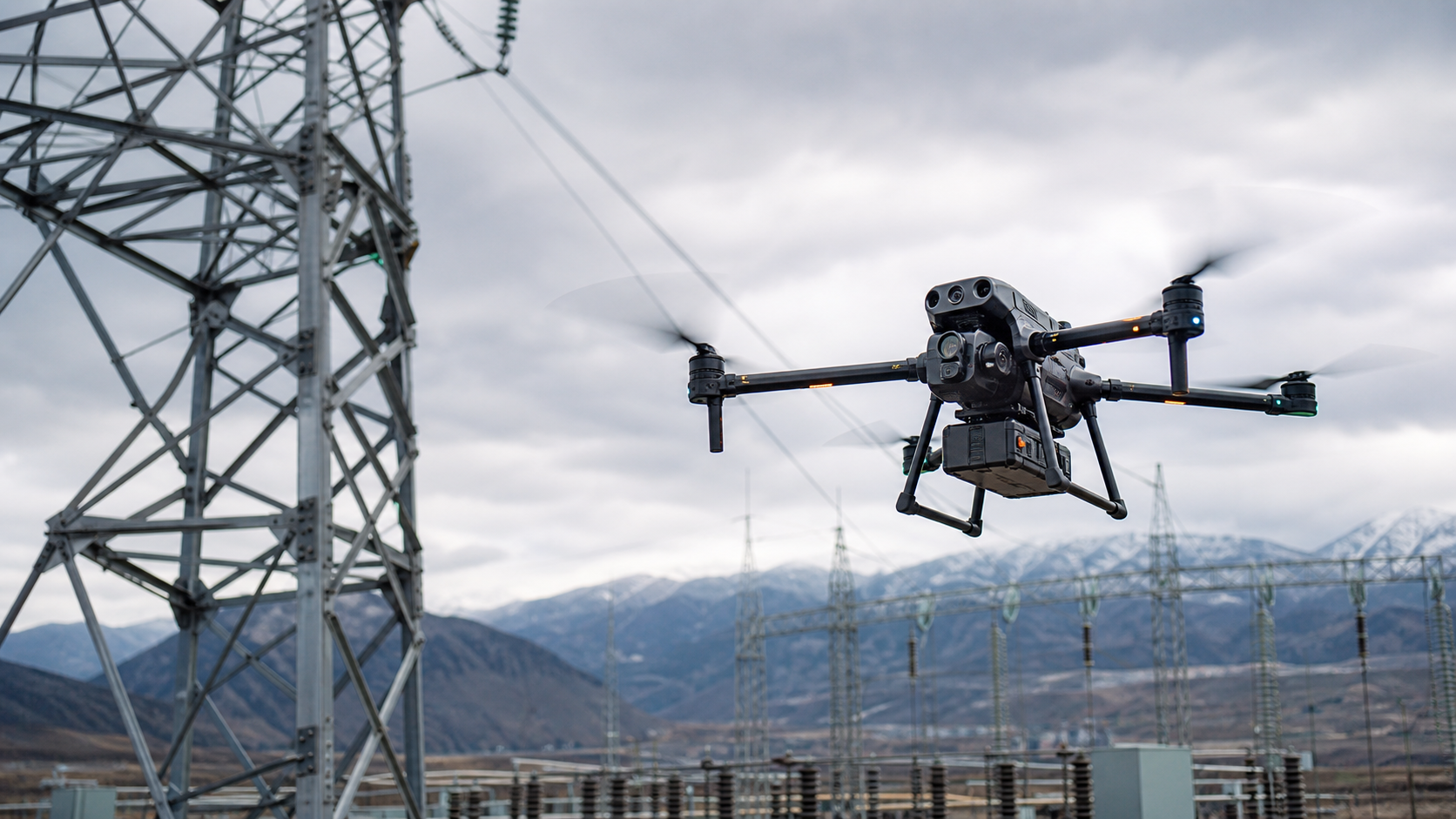
Drones AI edge computing is a constrained system-design problem. The onboard computer must finish perception and decision workloads within the mission's latency limit, yet every additional watt can increase battery demand, cooling difficulty, mass, and reduced flight time. Select the compute tier only after defining sensors, models, duty cycle, power source, thermal path, payload allowance, and what the aircraft must do when AI results are unavailable.
A high-performance platform can be appropriate for Drones AI edge computing in a large inspection aircraft, tethered drone, ground-connected system, or specialized unmanned vehicle. It may be unsuitable for a small battery aircraft even when its AI performance is attractive.
Quick Sizing Decisions for Drones AI Edge Computing
- Mission: inspection, mapping, detection, tracking, navigation, delivery, or search support.
- Sensor payload: camera types, resolution, frame rate, lidar, radar, thermal imaging, positioning, and inertial data.
- AI workload: models, precision, concurrency, preprocessing, fusion, and recording.
- Timing: maximum age of a usable result and required control or operator response.
- Energy budget: continuous and peak power for the entire payload.
- Mass budget: computer, enclosure, storage, converters, cables, and cooling.
- Thermal environment: airflow in flight, ground operation, solar load, altitude, and enclosure.
- Flight behavior: safe or degraded mode after computer, sensor, storage, or network faults.
These inputs should be reviewed with the flight controller, payload, electrical, mechanical, and software teams together. Optimizing the AI board in isolation can move a problem into the battery, cooling system, or aircraft balance.
Separate the Flight-Critical and AI Functions
The flight controller typically handles stabilization, motor outputs, and other deterministic functions. The edge AI computer can provide perception, route suggestions, object locations, inspection results, or high-level autonomy, but the architecture must define what happens when that input is late, uncertain, or missing.
Ask three boundary questions
- Which functions are required to keep the aircraft stable and recoverable?
- Which AI outputs can be ignored without losing basic flight safety?
- What independent conditions trigger hover, return-to-home, landing, or operator takeover?
This separation affects interfaces, watchdogs, testing, and compliance. It also prevents a software restart or overloaded model from becoming an uncontrolled flight event.
Build the Complete Onboard Workload
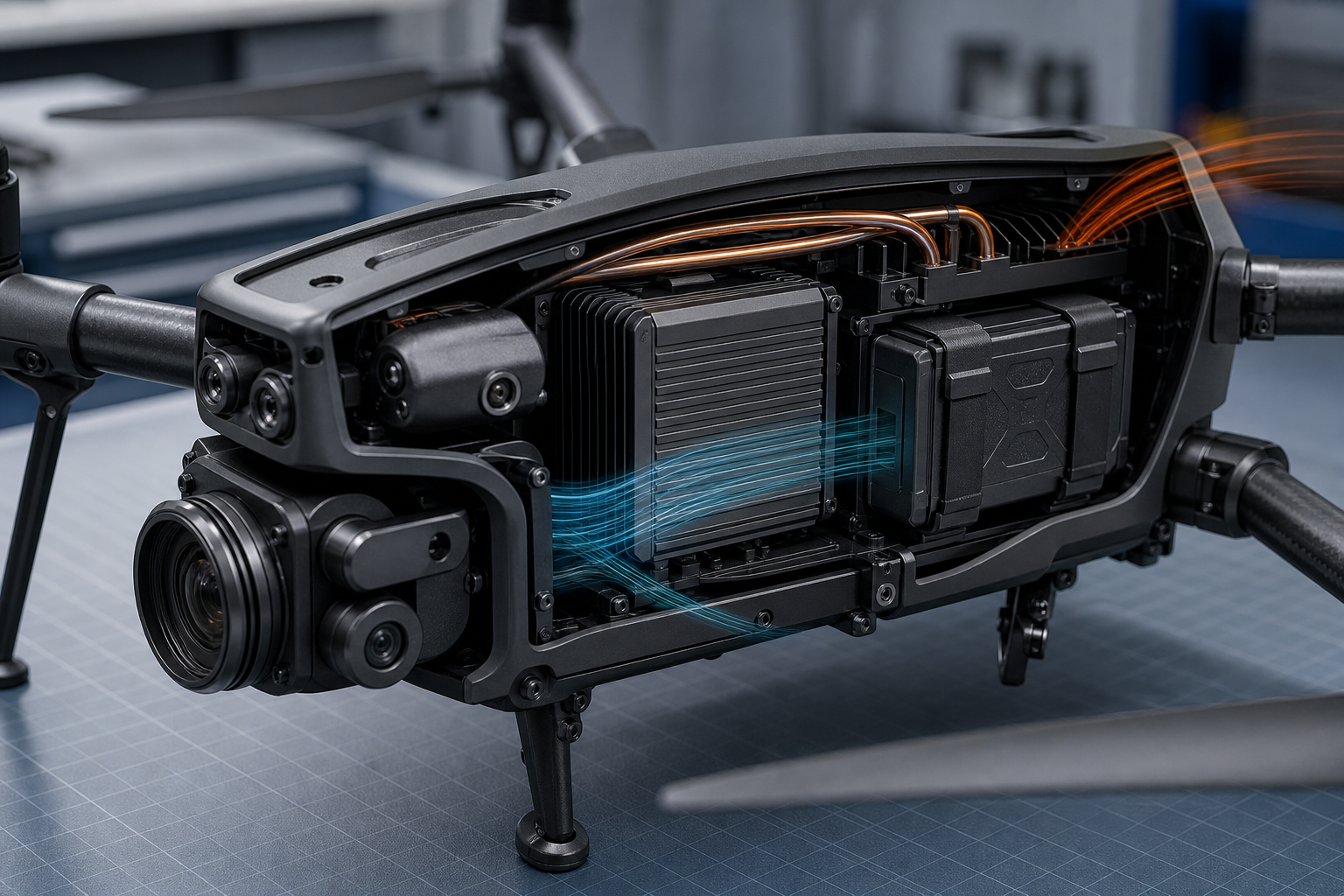
The visible neural network is only part of the load. A drone may also perform camera capture, correction, encoding, mapping, tracking, sensor fusion, navigation, logging, encryption, video streaming, and remote management.
Model inventory
- Model architecture and version.
- Input resolution and precision.
- Target frame rate or event rate.
- CPU, GPU, accelerator, and memory requirements.
- Preprocessing and post-processing.
- Conditions that create worst-case compute demand.
Sensor inventory
- Interface and data format.
- Continuous and peak bandwidth.
- Timestamp and synchronization method.
- Local recording requirements.
- Driver and operating-system compatibility.
Background services
Include telemetry, positioning, flight-controller communication, storage, networking, health monitoring, and encryption. Run the benchmark with all of them active.
Common mistake: Demonstrating one vision model on a bench, then assuming the same frame rate will remain after mapping, recording, telemetry, and thermal limits are added.
Use End-to-End Latency, Not Inference Time
For navigation or tracking, measure from sensor capture to the time the flight controller or operator receives a usable output. The path may include image transfer, preprocessing, inference, tracking, fusion, coordinate conversion, and communication.
Latency budget
- Sensor exposure and readout.
- Transfer to the edge computer.
- Preprocessing.
- Inference.
- Tracking, fusion, or mapping.
- Communication to flight controller or radio.
- Decision and actuation allowance.
- Safety margin.
Measure percentiles and worst-case delays during representative motion and scenes. Fast average inference can hide long tails caused by memory pressure, thermal throttling, storage, or competing workloads.
Calculate the Payload Energy Budget
Start with electrical energy, then translate it into flight impact using the aircraft's measured power model.
Step 1: Measure payload power
Include:
- Edge computer and AI module.
- Cameras and other sensors.
- Storage.
- Network or radio equipment.
- DC-DC conversion losses.
- Cooling fans, pumps, or heaters.
Record idle, typical, peak, startup, and fault-recovery states. Do not use a module thermal-design-power figure as the complete payload value.
Step 2: Estimate mission energy
Illustrative formula:
Payload energy (Wh) = average payload power (W) × operating time (hours)
If a 45 W payload runs for 24 minutes, the direct payload energy is:
45 × 0.4 = 18 Wh
This is an illustrative calculation, not a flight-time guarantee. The real aircraft impact also includes battery usable capacity, reserve policy, converter efficiency, added mass, drag, temperature, wind, hover power, and mission profile.
Step 3: Test on the aircraft
Compare flight logs with the original payload and the AI payload under controlled conditions. Record battery current, voltage, temperature, flight time, hover behavior, and reserve. Repeat enough flights to separate normal variation from the payload effect.
Compute Tier: Orin Nano, Orin NX, or AGX Orin?
Choose the lowest tier that passes the complete mission workload with documented margin.
Lower-power tier
- Best fit: one or a few optimized models, moderate sensor load, and strict mass or energy limits.
- Main advantage: easier power and cooling integration.
- Main trade-off: less capacity for large models or multiple simultaneous pipelines.
Mid-range tier
- Best fit: multi-sensor perception, higher-resolution vision, or several concurrent models.
- Main advantage: stronger balance between compute and embedded constraints.
- Main trade-off: increased thermal and power design compared with an entry platform.
High-performance tier
- Best fit: complex multi-model pipelines, dense perception, large memory needs, or multiple high-bandwidth sensors on an aircraft that can carry the system.
- Main advantage: greater compute and memory headroom.
- Main trade-off: higher system power, cooling, mass, volume, and cost.
The switch point is when the lower tier cannot meet sustained end-to-end timing after optimization—not when a larger TOPS number becomes available.
Where Can the TWOWIN T930 Fit?
The TWOWIN T930 page describes Jetson AGX Orin-based 32 GB and 64 GB edge-computer configurations with published 200 and 275 TOPS values. It also lists 10–36 V input, M12 Ethernet, optional networking and positioning, storage, serial and CAN interfaces, and a substantial industrial enclosure.
Those features can suit ground vehicles, large unmanned platforms, tethered systems, mobile inspection equipment, or drone ground stations. For an airborne installation, buyers must verify the complete mass, dimensions, input behavior, cooling, vibration, altitude, and continuous payload power. The product page lists module power ranges, but aircraft design requires measured system power in the selected configuration.
Do not force an industrial box into a small aircraft
If the T930 enclosure is too large or heavy, the correct discussion may be a different edge computer, a module and custom carrier, or a split architecture where onboard hardware performs urgent inference and a ground system handles heavier analysis.
Cooling Changes Between Ground and Flight
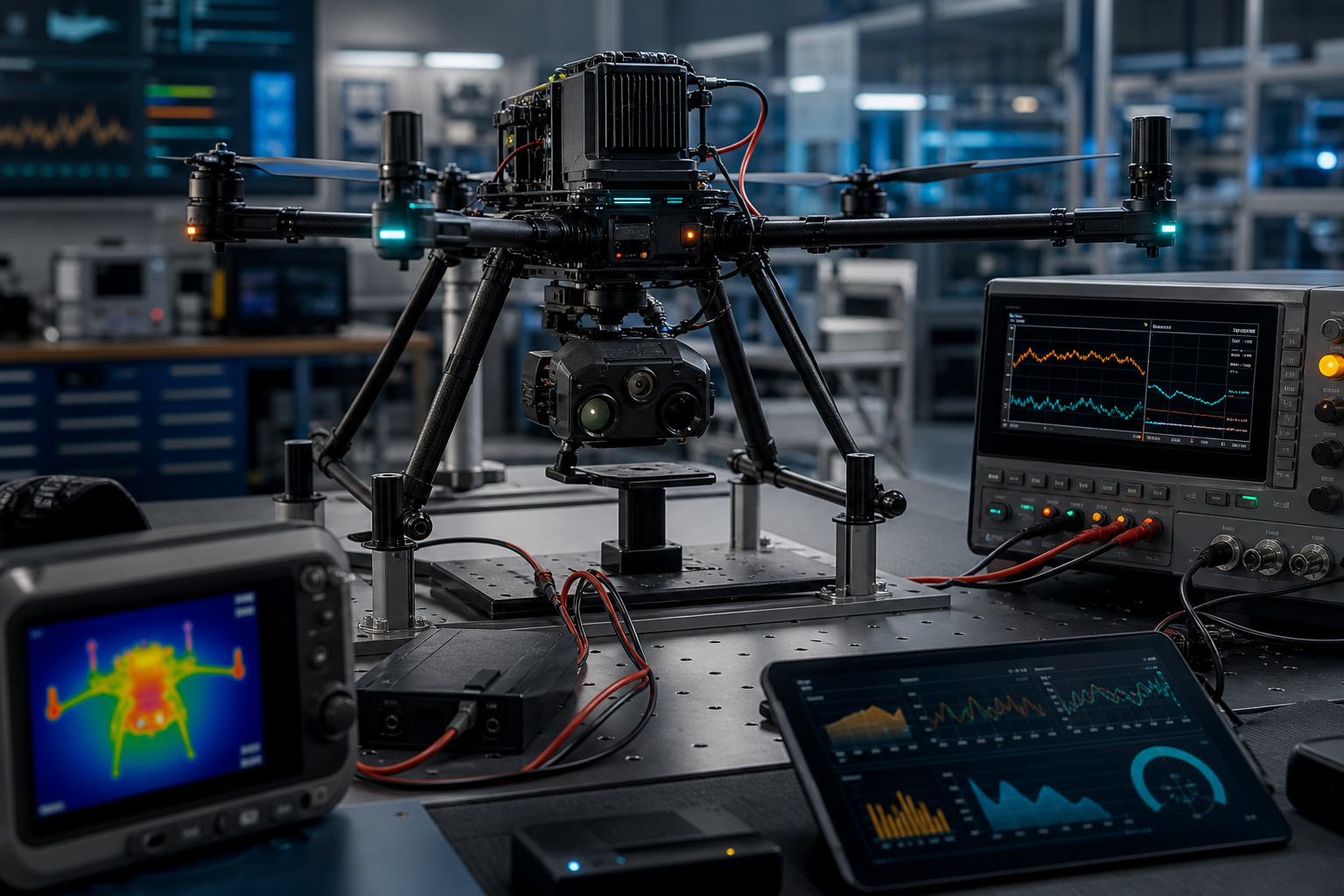
Airflow in forward flight can improve cooling, while a stationary drone on the ground may experience the worst thermal condition. Solar heating, low air density at altitude, sealed enclosures, dust, moisture, and propeller airflow all change the result.
Thermal test cases
- Full workload during ground idle.
- Hover at high ambient temperature.
- Low-speed inspection near a structure.
- Forward flight.
- Enclosure exposed to direct sun.
- Takeoff after the payload has been operating.
- Fan or airflow degradation if active cooling is used.
Monitor device temperature, frequency, power, frame drops, and latency. The system passes only if the workload remains within limits without uncontrolled throttling.
Storage and Communications Strategy
A drone may not have reliable high-bandwidth connectivity. Decide what must be processed onboard, what is streamed live, and what is stored for later retrieval.
Local priorities
- Flight-relevant detections or navigation outputs.
- High-value inspection evidence.
- Health and fault logs.
- Enough buffering for network interruption.
Transmission priorities
- Operator alerts and low-bandwidth metadata.
- Selected preview imagery.
- Telemetry and system health.
- Evidence clips when bandwidth allows.
Use a retention policy so storage-full behavior is predictable. Critical flight logs should not be overwritten by nonessential video.
Acceptance Test for a Drone Edge-AI Payload
Bench phase
- All sensors start after repeated cold boots.
- Full software stack runs at the target rates.
- Power states and startup peaks are measured.
- Sensor and flight-controller interfaces recover from faults.
- Thermal performance is tested with representative airflow.
Ground integration phase
- Center of gravity and mounting are approved.
- Cable restraint and electromagnetic effects are checked.
- Return-to-home or safe-state behavior is tested without propellers where possible.
- Radio and positioning performance are verified with the payload operating.
Flight phase
- Begin with limited, low-risk conditions.
- Compare energy and thermal logs with the baseline aircraft.
- Measure end-to-end latency during representative motion.
- Introduce model and sensor complexity in controlled stages.
- Retain configuration, software versions, and test evidence.
Buyer Checklist
- State the aircraft type, payload allowance, and center-of-gravity limits.
- Provide exact sensors, models, rates, and software baseline.
- Define continuous and peak input power.
- Ask for complete device mass and dimensions, not module values.
- Verify voltage range, startup, shutdown, and brownout behavior.
- Test worst-case ground and flight cooling.
- Separate flight-critical control from AI functions.
- Define network-loss, storage-full, sensor-fault, and computer-restart behavior.
- Agree on measurable acceptance criteria before final hardware selection.
Frequently Asked Questions
Does a drone need onboard AI if it has a fast radio link?
Not always, but onboard AI can reduce dependence on connectivity for urgent perception and can filter large sensor streams into useful results. A hybrid architecture may keep time-sensitive functions onboard while using a ground or cloud system for heavier analysis.
Is 275 TOPS better for every drone?
No. It is useful only when the full workload needs that tier and the aircraft can support the power, cooling, mass, and volume. An optimized smaller platform can produce a better mission result when flight endurance is the main constraint.
How should flight-time impact be estimated?
Measure the complete payload power and mass, apply the aircraft's reserve policy, and compare controlled flight logs. A simple watt-hour calculation is useful for screening but cannot capture propulsion, weather, temperature, or aerodynamic effects.
What should a supplier test?
Ask for the exact sensor and software configuration running the complete workload while recording power, temperatures, latency, dropped data, and recovery. Then repeat the test after integration with the aircraft.
Turn the Mission into a Compute and Energy Specification
TWOWIN can review an unmanned-system request when it includes the aircraft or vehicle type, mission, sensors, models, latency, power source, payload and size limits, operating environment, interfaces, storage, networking, software baseline, and acceptance test. Use those inputs to decide whether a T930-class system, a lower-power computer, or a split onboard/ground architecture is the responsible choice.
References and Sources
- TWOWIN, NVIDIA Jetson AGX Orin T930 edge-computer product page.
- NVIDIA, Jetson AGX Orin technical specifications and technical brief.
- NIST SP 500-325, Fog Computing Conceptual Model.

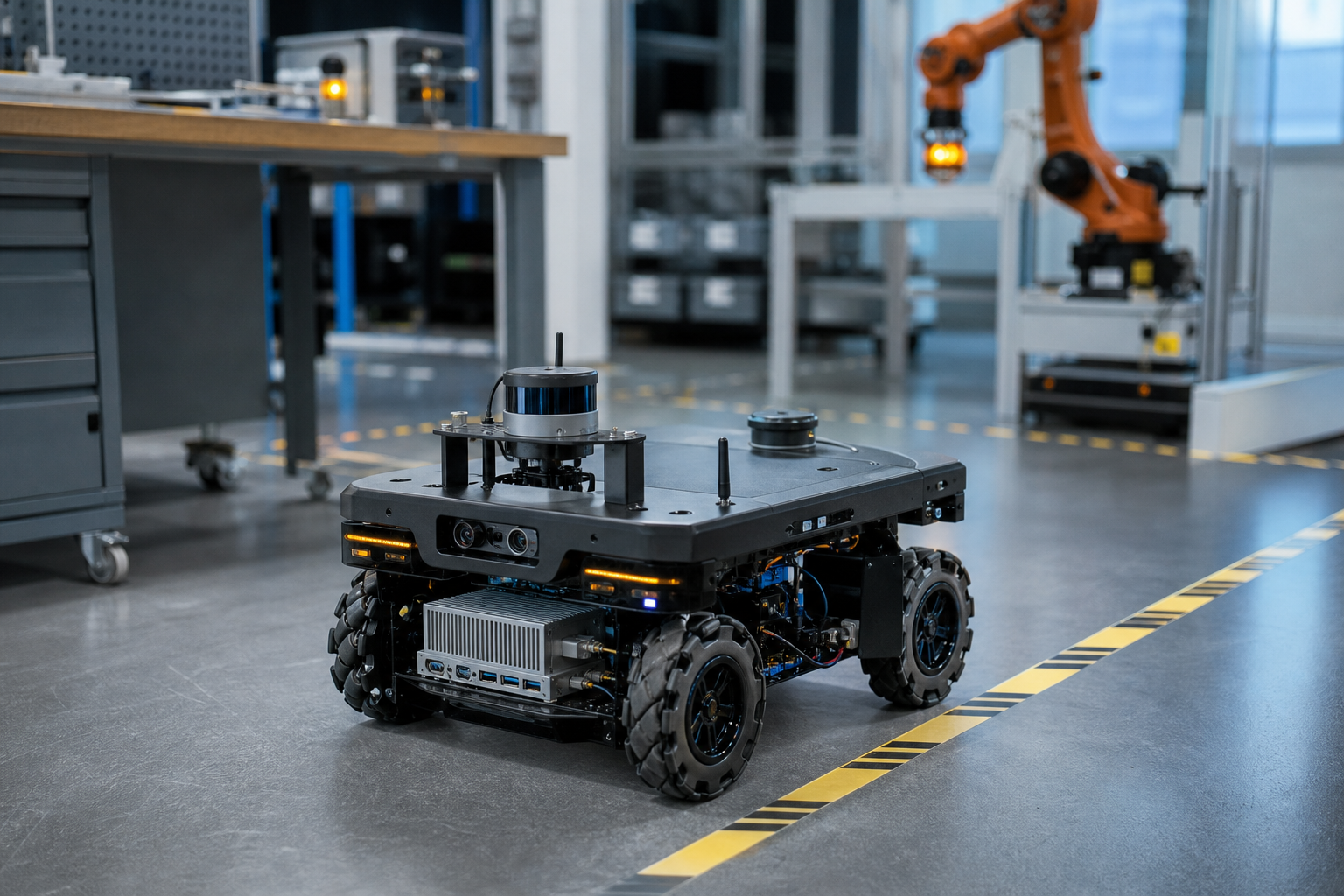
Autonomous vehicles AI depends on reliable sensor timing and predictable end-to-end response, not camera count or accelerator speed alone. Multiple cameras expand coverage and improve scene underst