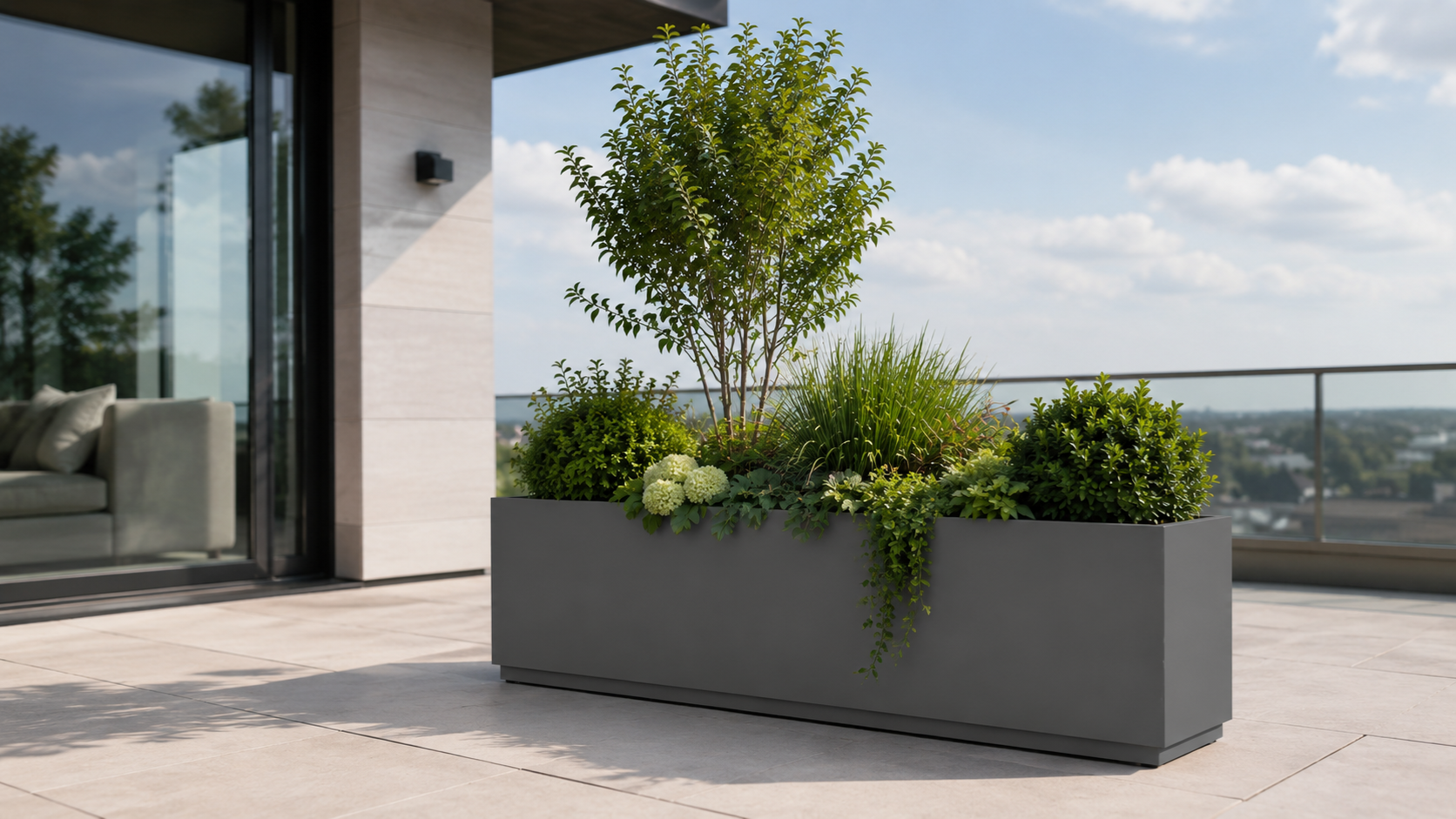
Custom metal planters are useful when a standard product cannot respond neatly to the dimensions, geometry or finish direction of an outdoor space. They may be designed to follow a long boundary, fit between architectural features, frame an entrance or create repeated planting modules across a commercial landscape.
Bespoke manufacture is not simply a matter of asking for a different length. The planter material, height, width, assembly route, drainage, planting, finish, access and supporting surface all need to be coordinated before the order can be defined responsibly.
Metal Profiles Ltd is a UK manufacturer of architectural metal products and custom metal planters. Its Corten steel, PPC mild steel and PPC aluminium ranges provide different starting points for bespoke garden, terrace, courtyard and commercial requirements.
When a custom planter is the right route
Standard planters work well where their published dimensions fit the site comfortably. Custom metal planters become valuable when standard formats create awkward gaps, interrupt paving lines or fail to support the intended planting depth and visual proportion.
A bespoke approach may also be considered where several planters need to align with glazing bays, columns, seating zones or a specific frontage. It can help create consistency across a larger scheme, provided the dimensions and responsibilities are agreed before manufacture.
Custom should solve a real project requirement. Increasing complexity without a clear design reason can add avoidable coordination, so the brief should explain why the standard range is not suitable.
Start with purpose, not measurements
Before deciding dimensions, define what the planter needs to do. It may hold seasonal planting, support shrubs, create separation, frame a doorway or soften a long expanse of paving.
The intended role affects height, depth and length. A low planter used to guide movement has different requirements from a tall unit intended to provide privacy or a deep planter designed for substantial roots.
Clarifying the purpose also helps the landscape designer or gardener choose planting that will remain appropriate as it matures.
Selecting the material for custom metal planters
The Metal Profiles Ltd planter range includes Corten steel, PPC mild steel and PPC aluminium. Each can support custom discussions, but the correct choice depends on visual direction, handling, exposure and the wider project specification.
Corten provides a weathering finish that changes outdoors. PPC mild steel offers a controlled powder-coated appearance and substantial feel. PPC aluminium can provide a clean coated finish where lighter handling is an important part of the installation plan.
Material should be fixed before detailed fabrication information is agreed because it influences how the planter is produced, transported and positioned.
Custom Corten steel planters
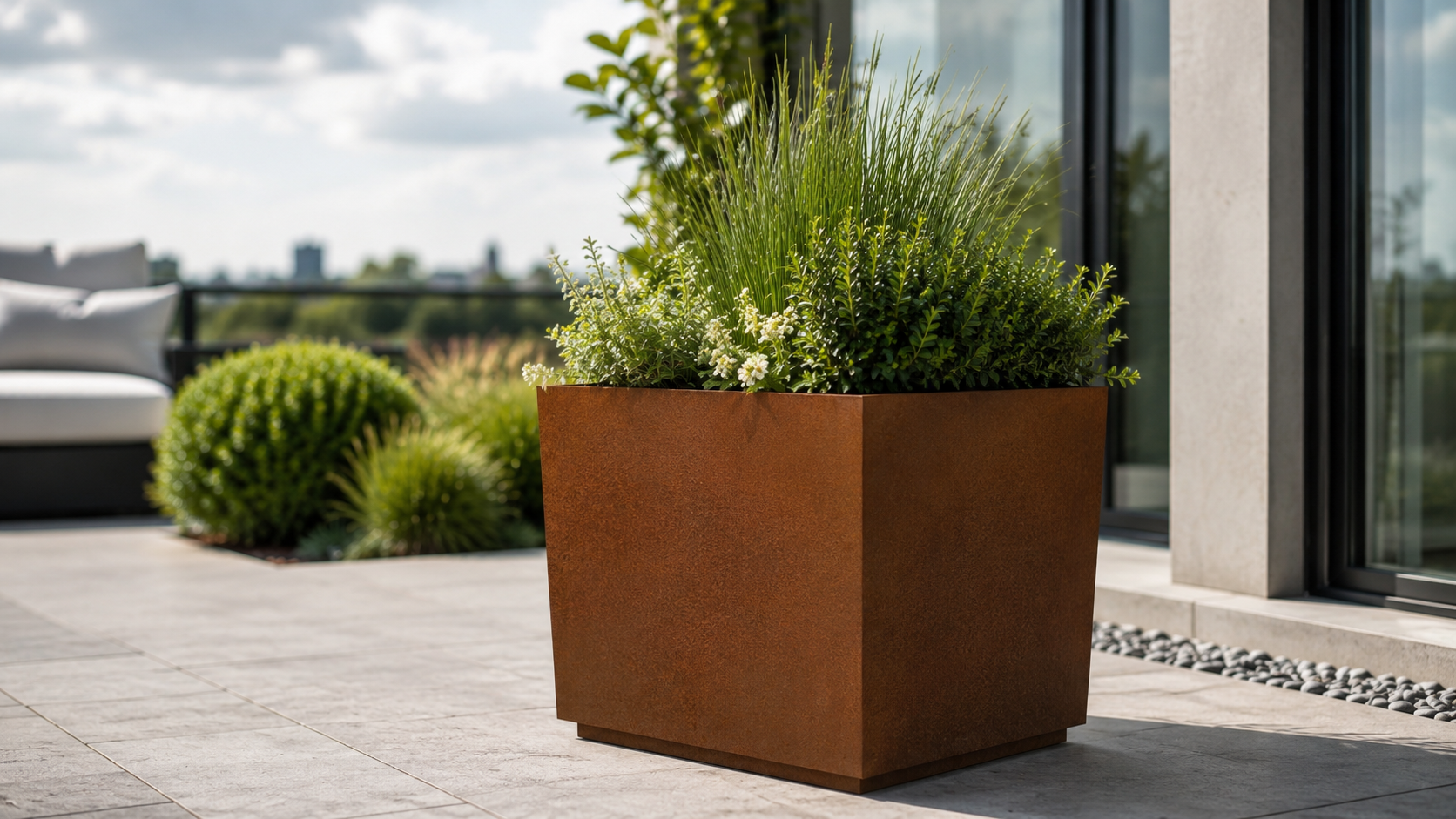
Custom Corten steel planters can suit schemes that need a warm, weathered material beside brick, stone, timber or naturalistic planting. The changing patina should be part of the design intention rather than treated as a colour choice.
The Corten planter product confirms that custom dimensions can be discussed and that planters may be supplied assembled or in sections. Early weathering run-off and adjacent surfaces should be considered when finalising the location.
A long or unusual Corten unit may need additional thought around handling and site assembly. The route from delivery point to final position should be documented before the product is approved.
Custom powder-coated mild steel planters
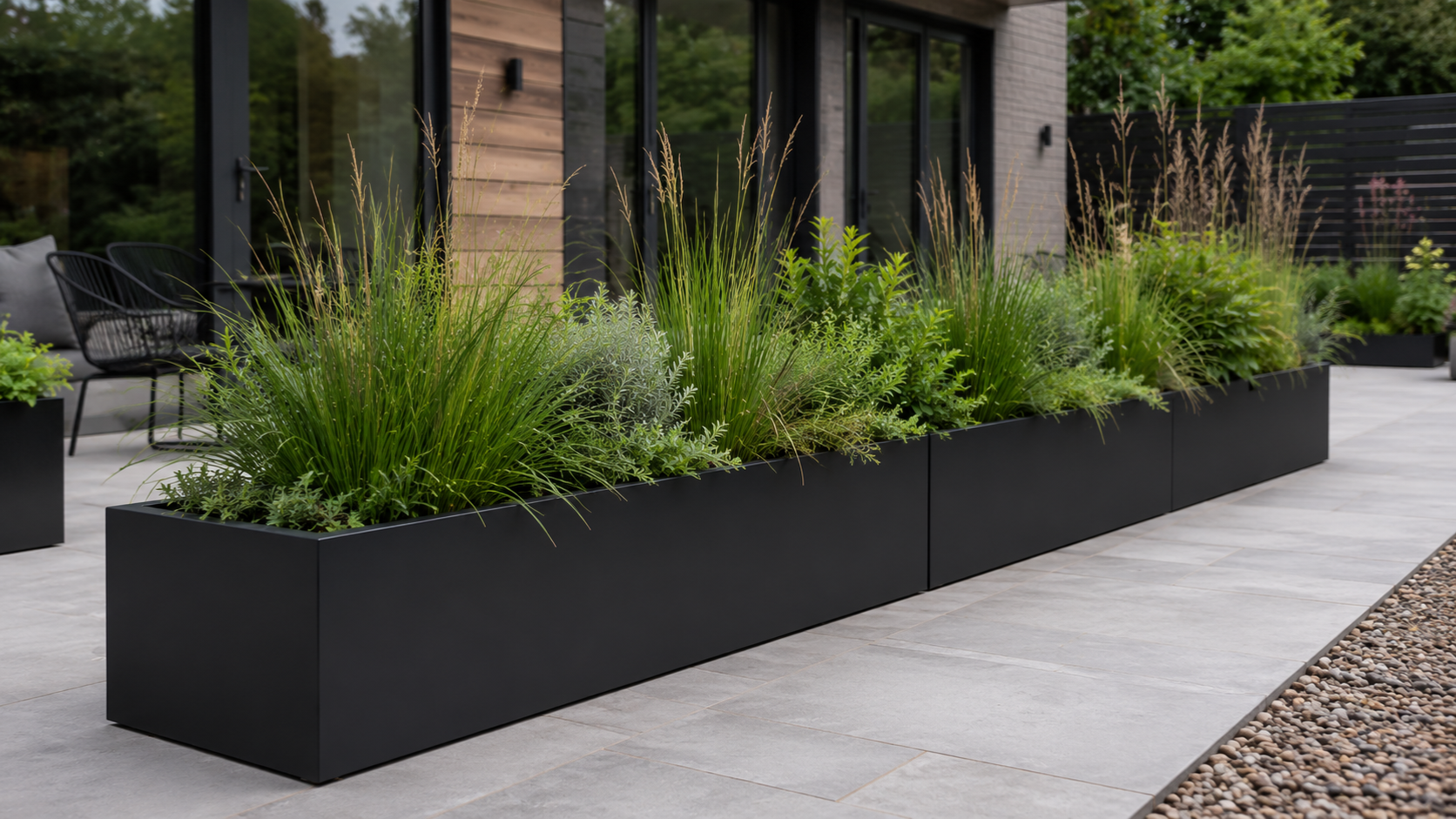
PPC mild steel is often considered where custom metal planters need a controlled colour and a strong architectural presence. It can coordinate with railings, windows, cladding, doors or landscape furniture.
The PPC mild steel planter range provides a standard starting point and offers a wide selection of published colours. For a custom requirement, the finish reference, dimensions and delivery format should be agreed together.
Handling is especially important for large mild steel units. A component format may be more practical where the route contains narrow gates, steps, restricted courtyards or interior access before the planter reaches an external terrace.
Custom powder-coated aluminium planters
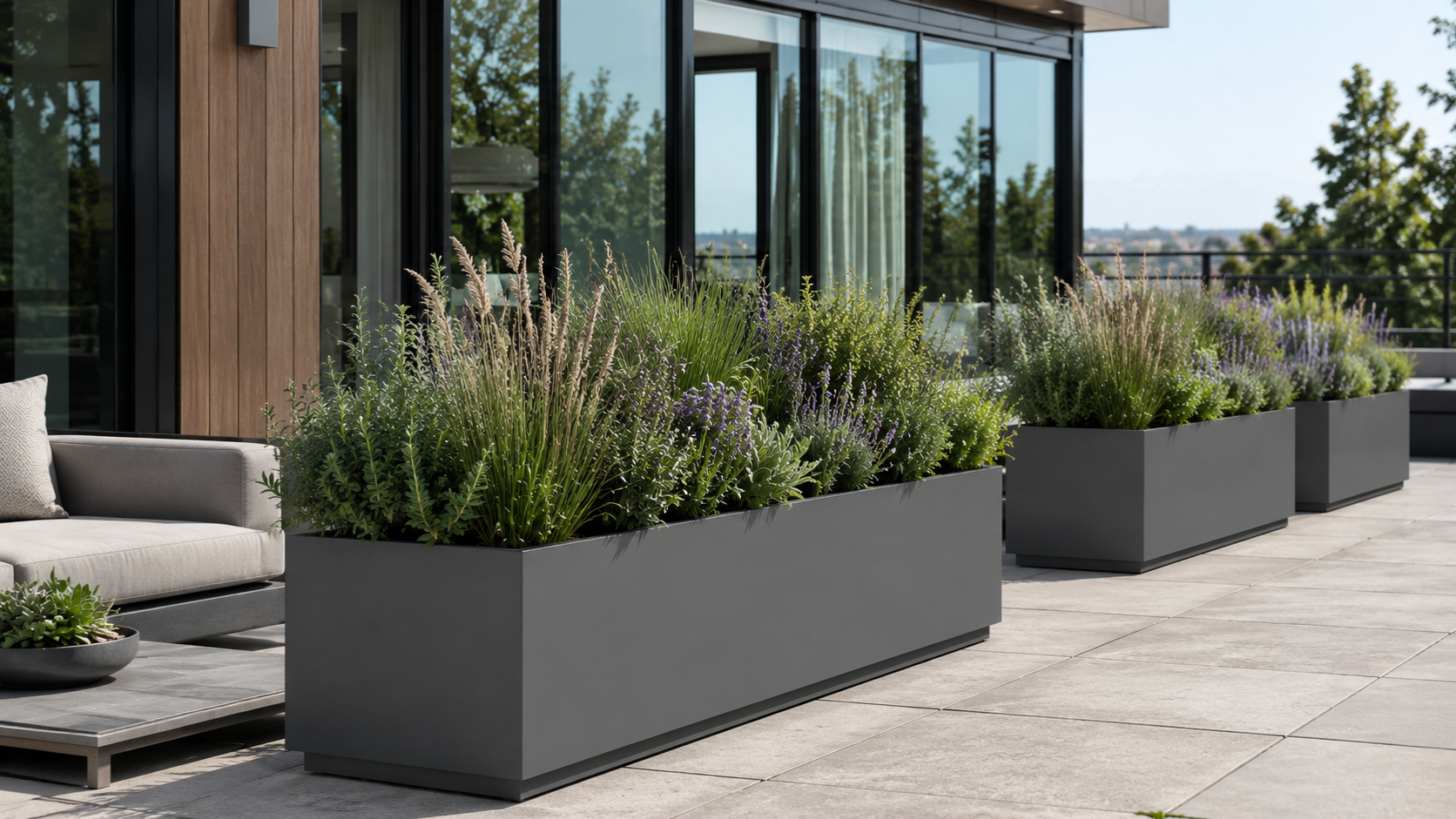
PPC aluminium may be appropriate where a bespoke profile, colour coordination and more manageable handling are priorities. It can align well with other architectural aluminium details and contemporary façade materials.
The PPC aluminium planter is manufactured by Metal Profiles Ltd in Essex and can be discussed for project-specific requirements. The selected finish should be recorded clearly, especially where it needs to match existing metalwork.
The completed planter and growing media may still create a substantial load. Roof terraces, balconies and raised decks require appropriate project review even when the empty aluminium shell is easier to handle.
How to prepare accurate dimensions
Custom metal planters should be based on confirmed dimensions, not an estimated gap measured from a photograph. Record the overall length, width and height, then identify any restrictions around walls, columns, thresholds, steps or drainage channels.
Dimensions should reflect the final finished space. Cladding, paving, render, skirtings and other elements may change the available opening between an early drawing and site completion.
Where several planters repeat, identify whether all units are identical or whether the site contains small variations. A schedule with clear references is more reliable than a single unlabelled sketch.
Corners, returns and unusual geometry
A bespoke planter may need to follow a corner, wrap around a column or align with a stepped boundary. These conditions should be shown in plan and, where necessary, section.
L-shaped or non-standard forms require clear internal and external dimensions. The team should also decide whether the planter will be manufactured as one unit or divided into coordinated sections for access and assembly.
Do not assume that a planter can be trimmed or adjusted easily on site. Custom metal planters are most successful when the geometry has been resolved before fabrication.
Drainage and planting design
Drainage should be included in the custom brief. The project team needs to understand how excess water will leave the planter, where it will discharge and whether the surrounding surface can accommodate it.
The RHS container-growing guidance provides useful general advice on drainage, compost and ongoing care. Project-specific planting and outlet requirements should still be agreed with the relevant landscape or gardening professional.
Root depth, mature plant size and irrigation influence the internal arrangement. A visually elegant profile will not compensate for a planting volume that is unsuitable for the intended species.
Planning for delivery and installation
The delivery route should be measured with the same care as the final location. Record gate widths, turns, steps, lifts, doorways and changes in level. Photographs should show the complete route from unloading point to installation area.
Custom metal planters can be discussed as assembled units or component arrangements where the product allows. The practical method should be agreed before manufacture because it can affect design, handling and installation responsibilities.
The final position must be ready before filling. Once soil, water and planting are added, repositioning a large planter can become difficult and may require specialist handling.
Supporting surfaces and elevated locations
Planters should stand on a stable and suitable surface. Uneven paving can affect alignment, while roof terraces and balconies may require structural, waterproofing and drainage review by the relevant professionals.
A bespoke planter should not cover roof outlets, inspection points or access zones. If it sits close to a wall or façade, enough room should remain for cleaning and maintenance.
Where integrated seating or other functions are proposed, the planter becomes part of a wider construction detail and should be designed accordingly rather than treated as a standard container with added components.
Finish coordination across the project
Custom metal planters often form part of a coordinated exterior palette. Powder-coated finishes may repeat windows, doors, railings or cladding, while Corten may provide deliberate contrast with pale stone or rendered surfaces.
Use an agreed colour reference where matching matters. Descriptions such as anthracite, charcoal or black can be interpreted differently, particularly across different coating systems and substrates.
Review the product policy before approving a made-to-order finish or dimension so the project team understands the implications of bespoke manufacture.
Information to include in a custom enquiry
A complete enquiry should include the required quantity, dimensions, material, finish, final location and planting intent. Add drawings, photographs and any relevant architectural references.
Explain the delivery route and whether the planter is expected to arrive assembled. Identify any programme constraints, but avoid approving dimensions before the responsible person has checked them.
Use the request an estimate page to submit the project information. A clear brief allows meaningful discussion and reduces the need for assumptions.
Approving the design before manufacture
The approval stage should confirm dimensions, material, finish, quantity and any special geometry. All parties should understand which drawings or schedules represent the final instruction.
Check that the planter still fits the completed site and access route. Where construction is ongoing, verify that finishes or thresholds have not changed the available space.
Custom metal planters should only move into manufacture when the information is sufficiently clear to avoid later adaptation.
Using mock-ups to test custom metal planters
A simple full-size mock-up can be valuable before custom metal planters are approved. Cardboard, timber battens or temporary markers can show the proposed footprint and height without committing to fabrication.
The mock-up helps the client review views, circulation, door clearances and the relationship with paving or façade lines. It may also reveal that a planter needs to be divided into modules or adjusted to make maintenance easier.
For repeated custom metal planters, testing one representative location can reduce uncertainty across the wider scheme. Any changes should be transferred clearly to the final drawing and schedule.
Managing cost without relying on generic prices
The cost of custom metal planters depends on the confirmed material, dimensions, quantity, finish, geometry, assembly route and delivery requirement. A generic price from another project may not reflect the work involved in a new scheme.
A more reliable approach is to prepare a complete brief and request a project-specific estimate. This allows the quotation to respond to the actual planter design rather than to an assumed standard box.
Where budget needs to be controlled, review whether standard dimensions, repeated modules or a simpler geometry could meet the design intent. Cost decisions should not remove essential drainage, access or support considerations.
Planning aftercare for custom metal planters
Custom metal planters should be handed over with a clear understanding of cleaning, drainage checks and planting maintenance. The project team should record the finish reference so future touch-up or coordinated work can be discussed accurately.
Any removable panels, joints or access zones should remain available after planting. Avoid covering parts that may need inspection with permanent hard landscaping or fixed furniture.
The aftercare plan should also reflect the material. Corten weathering, powder-coated surfaces and planting irrigation each create different routine considerations.
A practical custom-planter workflow
Begin with the design purpose and site layout. Select a material direction, prepare accurate dimensions and coordinate the planting and drainage strategy.
Next, review delivery, assembly, supporting surfaces and finish references. Submit photographs and drawings, then resolve any questions before approval.
This sequence keeps the custom process focused and helps the finished planter support the landscape rather than becoming an isolated fabricated object.
FAQ
What information is needed for custom metal planters?
Provide quantity, overall dimensions, material preference, finish, planting intent, final location, delivery access, photographs and drawings. Clearly identify who is responsible for confirming the final measurements.
Can custom metal planters be supplied in sections?
Relevant planter products may be available assembled or in component form, depending on the selected system and project. This should be discussed early where access is restricted.
Which material is best for a bespoke planter?
There is no universal best material. Corten, PPC mild steel and PPC aluminium each offer a different appearance and handling profile, so the choice should reflect the project rather than the keyword custom alone.
Can a custom planter follow a corner or unusual wall?
Non-standard geometry can be discussed, but it needs clear plans, dimensions and an agreed fabrication approach. Site conditions and access may influence whether the form is produced as one piece or coordinated sections.
When should bespoke dimensions be approved?
Approve dimensions only after the finished site, planter location and delivery route have been checked by the responsible person. Changes after manufacture may be difficult to accommodate for a project-specific product.
Metal Profiles Ltd is a UK manufacturer of custom metal planters and architectural metal products for domestic, commercial and landscape projects. Bespoke requirements can be developed from the company’s Corten steel, PPC mild steel and PPC aluminium material directions. Accurate dimensions, clear drawings, drainage planning, access information and finish references are essential to a well-resolved custom planter. The project team should confirm responsibilities and approve the final specification before manufacture begins. Contact Metal Profiles Ltd to discuss custom metal planters, drawings, materials or a project-specific estimate.