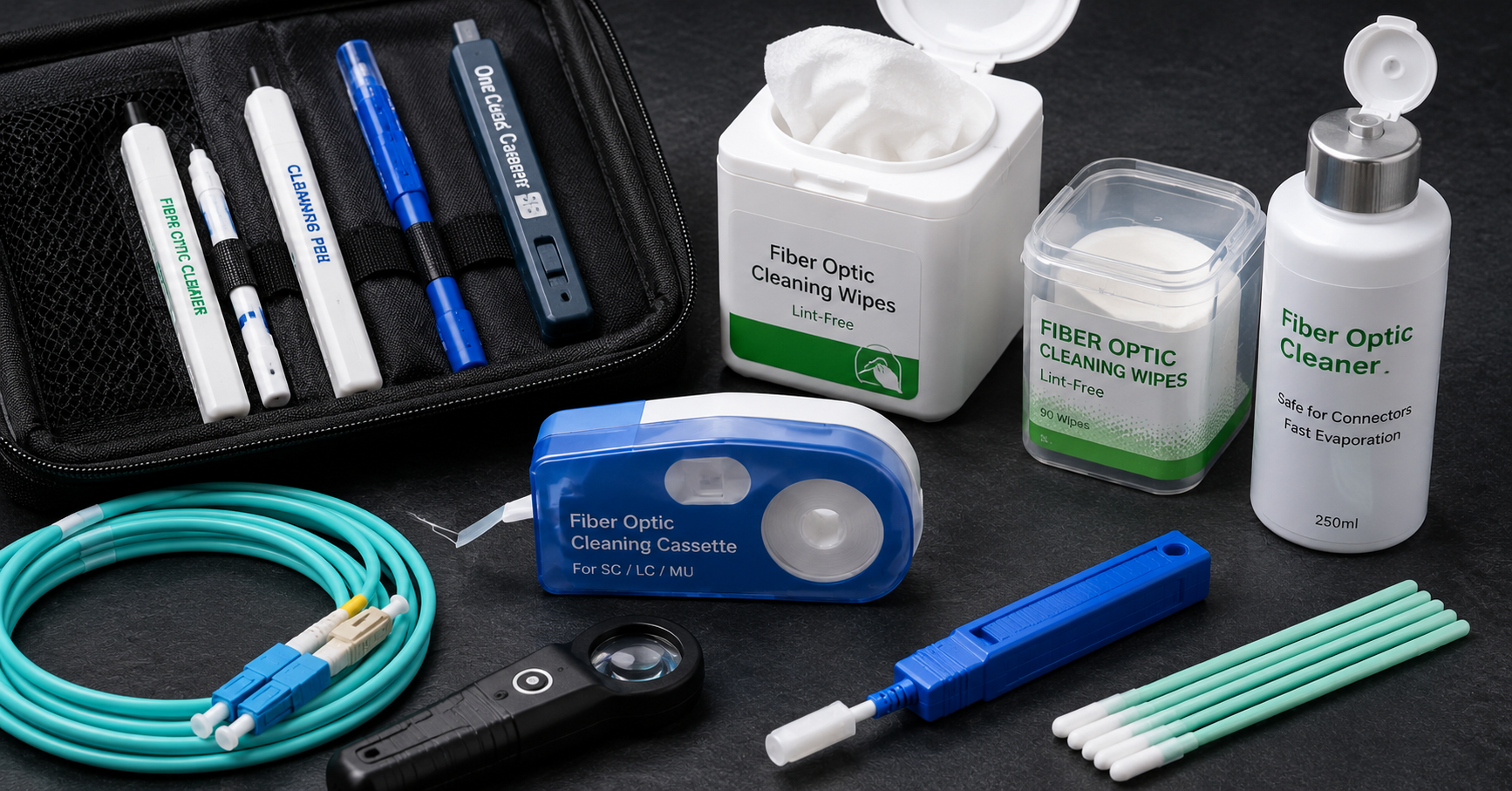
A good cleaner for fiber optic cable is a purpose-built optical cleaning tool that uses lint-free media sized to the ferrule in front of it, which in practice means a dry one-click cleaner pen or reel-fed cassette cleaner for everyday particulate, backed by optical-grade cleaning fluid and lint-free wipes for oils and films. The test of a good cleaner is not how clean the connector looks, but whether the end face passes inspection against IEC 61300-3-35 afterwards. Anything that sheds fibers, leaves residue, or cannot reach the surface that carries light fails that test regardless of what the label promises.
Why Fiber Cleaning Is a Different Discipline
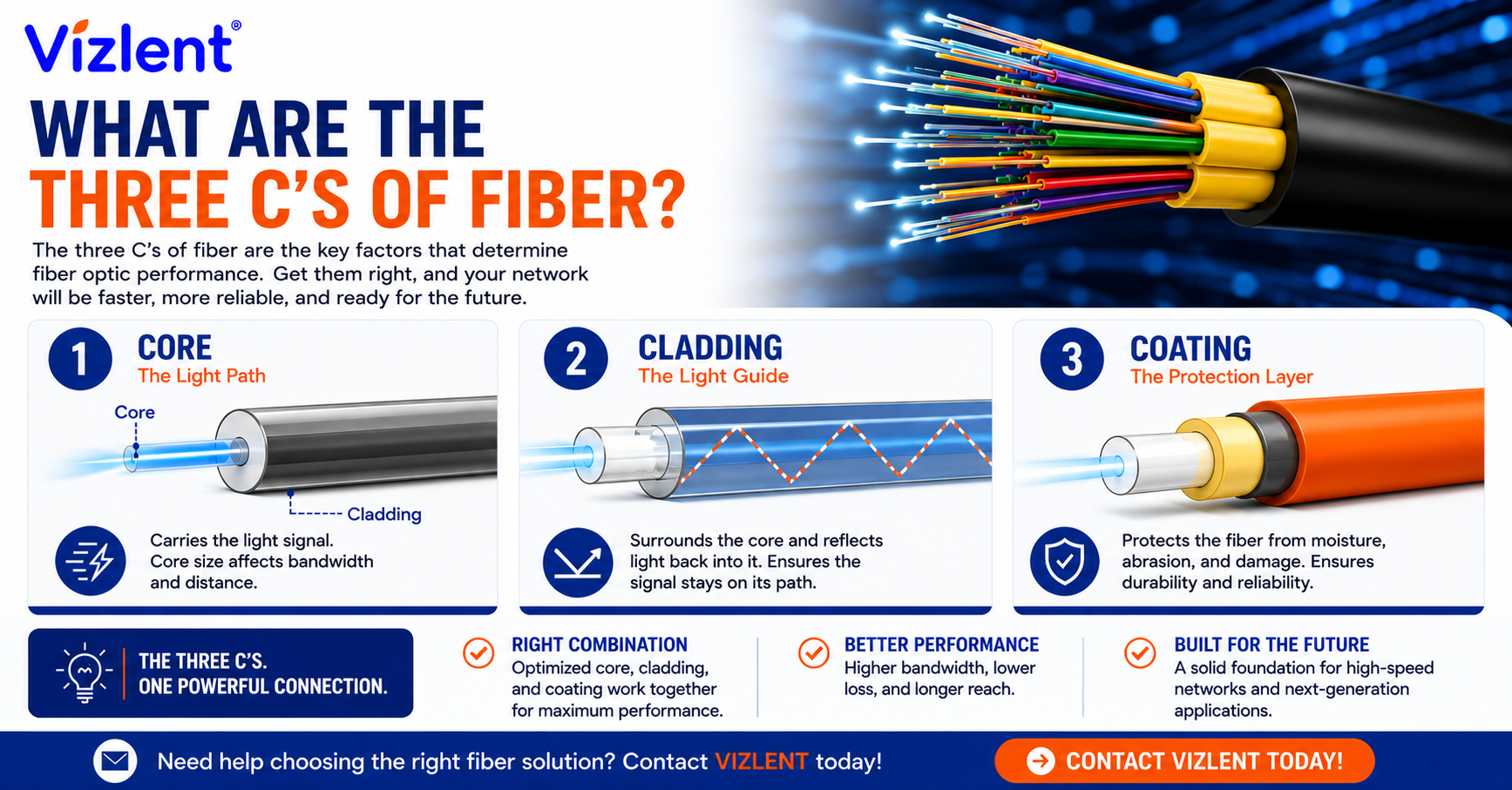
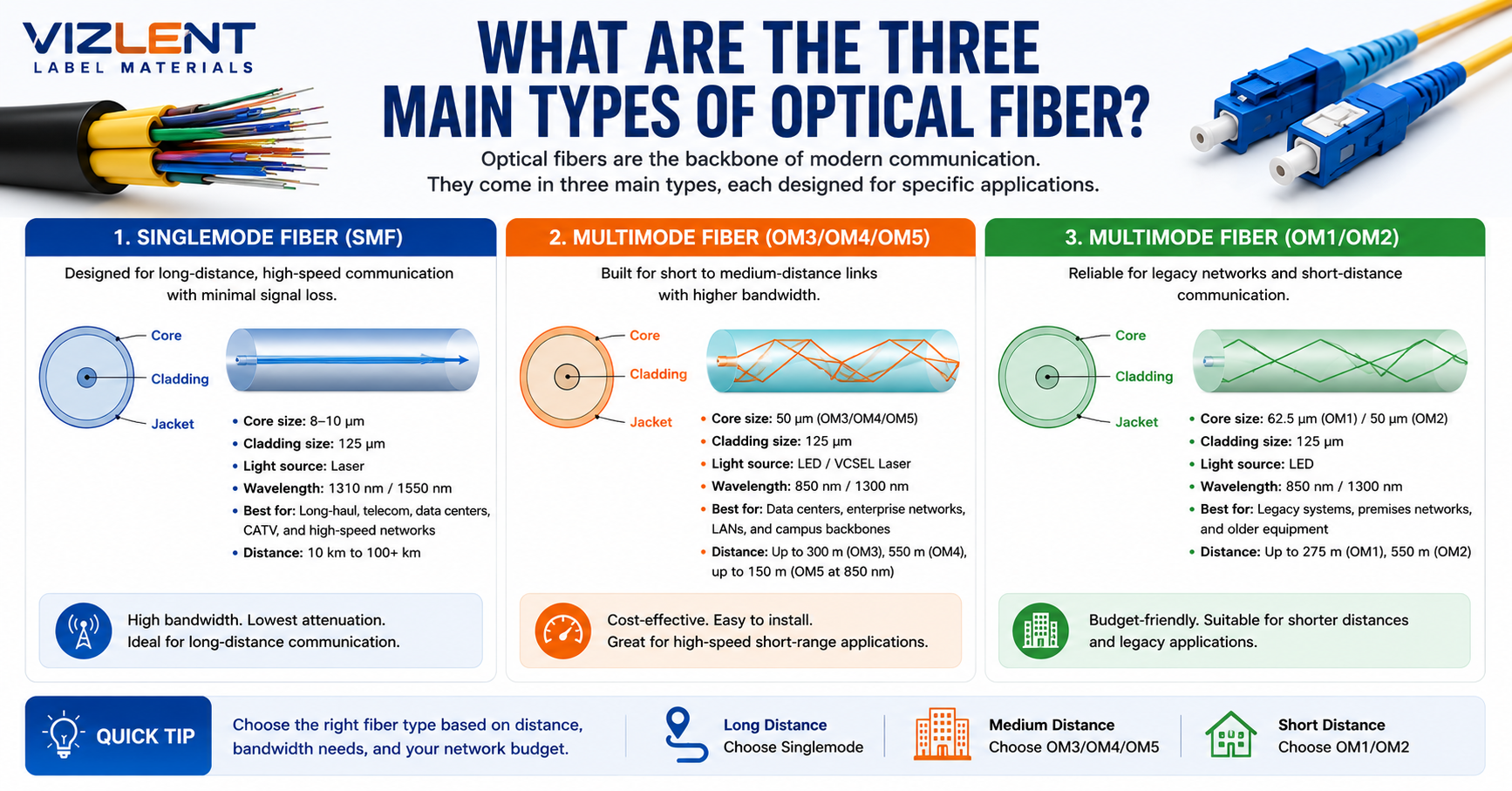
Fiber optic cable carries light through a core measured in microns, and on single-mode fiber that core is roughly nine microns across. A dust particle of five to ten microns, invisible without magnification, can therefore sit squarely over the light path and block, scatter, or reflect a meaningful share of the signal. That is why contamination is widely described in the industry as the leading cause of troubleshooting call-outs on optical networks.
The damage is not always reversible either. When a contaminated connector is mated and tightened, the particle is trapped between two ferrules under spring pressure, and under optical power it can be burned into the glass permanently. A cleaning tool that leaves anything behind therefore does more than waste a minute of labour, it risks converting a cleanable connector into a scrap one.
- Dry particulate: dust, concrete debris, and shed textile fibers
- Films: skin oil, hand cream, index-matching gel, and cable gel
- Process residue: mould-release compound from dust caps, adhesive, and solvent drying rings
What Is a Good Cleaner for Fiber Optic Cable in Everyday Use
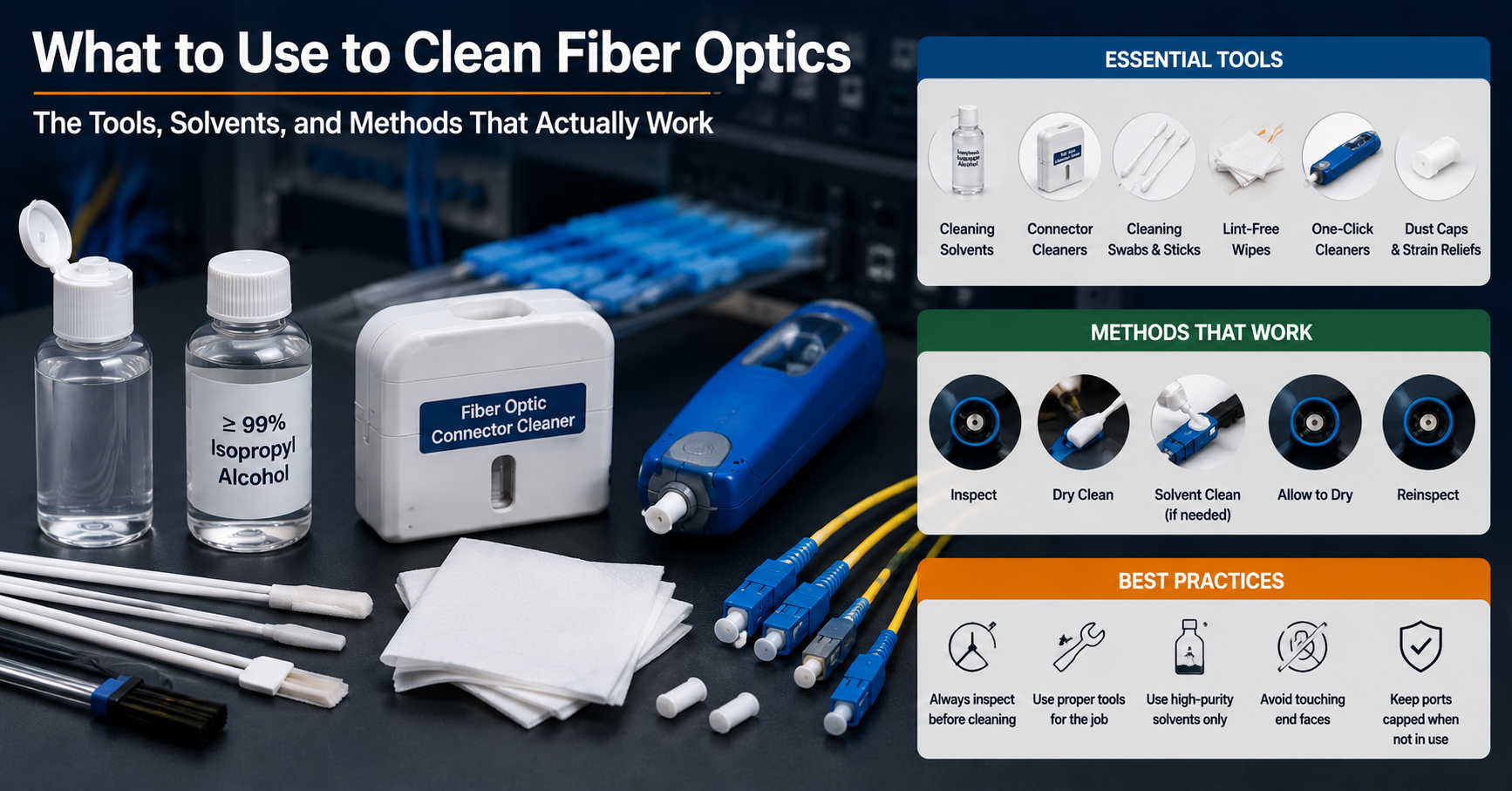
What is a good cleaner for fiber optic cable for the bulk of daily work is a dry mechanical cleaner, because most contamination in the field is loose particulate that lifts away without solvent. A fiber optic cleaner in one-click pen format pushes a fresh length of dry cleaning fabric across the ferrule in a single stroke, and it reaches connectors that are already seated inside an adapter or bulkhead. Cassette and reel formats do the same job for exposed connectors on jumpers and pigtails, advancing new cloth with every swipe so no surface is ever wiped twice.
Choosing between them comes down to access rather than preference. If the connector is mated behind a panel and cannot be removed without breaking a live link, only a push-style tool can reach the recessed ferrule. If the connector is in your hand, a reel-fed cassette is faster and usually cheaper per clean across a large patch field.
- One-click pens: mated connectors, ports, and single splice work
- Cassette and reel cleaners: high-volume bench work and QC lines
- Cleaning swabs: empty adapter sleeves that no pen or cloth can enter
When Dry Cleaning Is Not Enough
Dry cleaning fails predictably on one class of contamination, and knowing that boundary is what separates a technician from a guesser. Oils, gels, and fingerprints do not lift off a surface, they spread across it, so a dry pass tends to redistribute the film into a thinner and wider smear. Inspection after a dry attempt on an oily end face usually shows the same defect covering more area than before.
The correct response is a wet-then-dry pass rather than more dry passes. Apply a small amount of optical-grade cleaning fluid to one area of a fiber optic cleaning wipe, draw the ferrule across the damp area, then move immediately to a dry section of the same wipe before the fluid evaporates. The dry pass is not optional, because solvent left to air-dry on glass is what creates the drying rings and streaks that show up as a failed clean under magnification.
Cleaning Fluid: What Actually Belongs on Glass
Engineered optical cleaning fluids are formulated for this job in ways that general-purpose alcohol is not. They are designed to evaporate quickly and completely, to carry dissolved contamination away rather than deposit it as a ring, and to be safe on the epoxy and polish of a finished ferrule. Because they dry fast, the wet-then-dry window is short and forgiving, which matters when a crew is working through hundreds of connections.
Isopropyl alcohol remains common in the field, and it will dissolve oils, but it carries known drawbacks worth understanding. It is hygroscopic, meaning it draws moisture from the air, and that absorbed water slows evaporation and leaves a visible residue if the alcohol is allowed to dry on its own. If alcohol is the only option available, use a high-purity grade from a sealed container and always follow it immediately with a dry lint-free pass.
Matching the Cleaner to the Connector
A cleaner that does not fit the ferrule is not a good cleaner, however well made it is. Cleaning heads are built around ferrule diameter rather than connector brand, so 1.25 mm tools serve LC and MU connectors while 2.5 mm tools serve SC, FC, ST, and E2000. Multi-fiber MPO and MTP connectors need a dedicated cleaner because their rectangular ferrule presents twelve or more fibers in a row that must all be swept in one pass.
Polish type changes technique rather than tool selection. Angled physical contact connectors are polished at eight degrees, so the cleaning surface has to meet the angled face flat instead of square to the connector body. Manufacturer instructions for the specific tool should govern stroke direction and pressure, since designs differ and over-pressure can score a soft polish.
- 1.25 mm: LC, MU
- 2.5 mm: SC, FC, ST, E2000
- MPO and MTP: multi-fiber trunks, cassette rears, and high-density modules
Building a kit from scratch? List every connector type on your network first, then buy cleaning heads to match, rather than the other way round.
Cleaning Bare Fiber Before Splicing
Connector end faces are only half the job on a live build, because bare fiber preparation has its own cleaning requirement. After the coating is stripped, the exposed 125 micron cladding carries coating fragments and residue that will contaminate the cleaver blade and compromise the splice if left in place. A lint-free wipe moistened with high-purity alcohol, drawn along the fiber once in a single direction, is the accepted method here.
Technique matters more than product at this stage. Wipe away from the stripped end rather than back and forth, use a fresh area of wipe for each fiber, and cleave promptly so the clean surface is not exposed to dust for long. A fiber that squeaks slightly during the wipe is generally clean, while one that drags is still coated in residue.
Verifying the Clean Rather Than Assuming It
Cleaning without inspection is unverified work, which is why the professional standard is a closed loop. Inspect the end face with a video probe or microscope, clean only if it fails, then re-inspect before mating to confirm the result. Pairing a fiber optic cleaning kit with an inspection probe gives a crew both halves of that loop in one bag.
The acceptance criteria are published rather than subjective. IEC 61300-3-35 divides the end face into concentric zones covering the core, cladding, adhesive, and contact areas, and sets different limits on scratches and particles within each, with the current edition published in 2022. Many probes apply those rules automatically and return a pass or fail, which takes personal judgement out of the decision.
What to Keep Away From Optical End Faces
Several widely used substitutes are actively harmful. Paper tissue, cotton buds, clothing, and paper towel all shed cellulose fibers, and a shed fiber lying across a nine micron core is functionally identical to any other blockage. Water, glass cleaner, acetone, and household solvents have no place near a ferrule, since they either leave mineral residue or attack the epoxy holding the fiber in place.
Compressed air deserves a specific warning because it is so often reached for first. Canned dusters can expel liquid propellant if tilted or held too close, depositing residue on the exact surface being cleaned, and blowing air across an end face tends to move contamination rather than remove it. Air has a role in clearing loose debris from an enclosure, not in preparing a connector for mating.
Clean First, Test Second
The best cleaner for fiber optic cable is the one that matches the contamination, the connector, and the access you have, and that means carrying more than one option. Stock dry tools for particulate, keep optical-grade fluid and lint-free wipes for films, size your heads to every ferrule on your network, and verify the result with a probe rather than an assumption. Audit your current cleaning kit against the connector types you actually work on, and replace anything improvised before your next commissioning job.
Frequently Asked Questions
What is a good cleaner for fiber optic cable if I can only carry one tool?
A one-click cleaner pen sized to your most common ferrule is the single most useful tool, because it handles both exposed connectors and those already seated in an adapter. Most designs are rated by the manufacturer for several hundred cleans, so one pen covers a substantial amount of field work. It will not solve oil contamination, which is why most crews add a solvent pen and wipes as soon as the budget allows.
Is isopropyl alcohol safe for fiber optic connectors?
It is safe for the materials but imperfect as a cleaner. High-purity alcohol dissolves oils effectively, yet it absorbs atmospheric moisture and leaves residue if it dries on the surface, so it must always be followed immediately by a dry lint-free pass. Purpose-made optical fluids are formulated to dry faster and leave less behind.
How many times should I clean before giving up on a connector?
Two dry attempts, then one wet-then-dry attempt, is a common working rule. If the end face still fails inspection after that, the defect is likely a scratch, pit, or embedded particle rather than surface contamination. Damage in the core zone cannot be cleaned out and the connector should be replaced or re-terminated.
Do I need to clean a brand-new patch cord?
Yes. Factory dust caps protect against handling damage but do not guarantee a clean end face, and the caps themselves can shed plastic particles or hold mould-release compounds. Treat every connection as contaminated until inspection proves otherwise.
What is the difference between a cleaner pen and a cassette cleaner?
A pen cleans through an adapter with a push action, reaching connectors that cannot be unplugged. A cassette presents a fresh strip of lint-free cloth for wiping exposed end faces held in the hand. They solve different access problems, so most kits include both.
Can I clean an MPO connector with a standard pen?
No. MPO and MTP ferrules are rectangular and hold multiple fibers in a row, so they require a cleaner with a matching head that sweeps the full ferrule width in one pass. A 1.25 mm or 2.5 mm head cannot make contact across the array.
How often should fiber optic cable be cleaned?
Before every mating event, rather than on a calendar schedule. A capped and undisturbed connection does not accumulate contamination, but every disconnection exposes the end face to the surrounding environment. The habit that prevents most problems is cleaning and inspecting immediately before insertion, not afterwards.
Does cleaning fix high insertion loss?
Often, but not always. Contamination is a frequent cause of elevated insertion loss and reflectance, and cleaning followed by re-inspection resolves a large share of those cases. If loss remains high on a clean, passing end face, the cause lies elsewhere, such as a macrobend, a poor splice, or a damaged connector.