





Setting the scene: why “fast, clean” delivery is suddenly a big deal
Kratom has traditionally been used and sold in formats that are slow, messy, and variable: dried leaf, powders, and strong-tasting liquids. Those formats can work, but they come with friction—unpleasant flavour, unpredictable onset, and stomach upset for some people. In parallel, the wider consumer market has been moving towards products that feel more “engineered”: measured doses, less plant material, faster feedback, and a more discreet experience. That demand is one reason you are now seeing kratom-adjacent products in devices that look and behave like modern nicotine vapes.
At the centre of that shift is a specific compound: 7-hydroxymitragynine, often shortened in everyday talk to “7-hydroxy” or “7-OH”. It is not new in the science, but it is newly visible in marketing. The pitch is simple: if you want effects sooner and with less digestive involvement, inhalation plus a potent alkaloid sounds like the obvious shortcut. The reality is more nuanced, and if you want to understand what a “faster onset” really means—and what trade-offs come with it—you need to get clear on kratom’s chemistry, how vaping changes pharmacokinetics, and what “cleaner” can and cannot honestly claim.
kratom alkaloids explained: the chemistry behind the experience rather than the hype
Kratom is not one active ingredient. It is a plant with a mixture of alkaloids—nitrogen-containing compounds that can interact with receptors in the body. The subjective “kratom effect” people describe is the combined outcome of multiple alkaloids, dose, individual metabolism, and route of administration. When people argue about whether kratom is “stimulating” or “soothing”, they are often describing different alkaloid profiles, different doses, and different bodies, not necessarily contradictions.
Two alkaloids get most of the attention: mitragynine and 7-hydroxymitragynine (7-OH). Mitragynine is usually the most abundant alkaloid in leaf material, and the body can convert it into 7-OH through metabolism. 7-OH is typically present only in small amounts in the raw plant, but it is pharmacologically notable because it appears to be more potent at certain opioid receptors than mitragynine. That potency is exactly why it is now turning up in concentrated products.
There are also other alkaloids—such as paynantheine, speciogynine, speciociliatine, and ajmalicine—which may contribute to muscle relaxation, perceived “smoothness”, and side-effect profile. While these are rarely centre stage in marketing, they matter when discussing “cleaner” experiences. A product that isolates one alkaloid may feel more predictable in one way, but less rounded in another, because you have removed much of the plant’s natural complexity.
Another key point in kratom alkaloids explained is that potency is not the same as quality. A more potent compound can deliver an effect at a lower milligram amount, but it can also narrow the margin for dosing error. When potency rises, the consequences of poor measurement, poor labelling, or impulsive re-dosing rise with it.
7-hydroxy kratom: what it is, why it is different, and why it changes the risk–reward maths
7-hydroxy kratom is an everyday label rather than a precise scientific category. In practice, it usually means a kratom product marketed around the presence of 7-hydroxymitragynine, either as an enriched extract or as an ingredient used to standardise potency. Because natural leaf typically contains only small amounts of 7-OH, products claiming high percentages are generally relying on extraction, conversion, or concentration methods rather than simply “better leaf”.
What makes 7-OH feel different in practice is not just strength; it is the shape of the experience. Many people report a more immediate, more pronounced effect compared with traditional powder, and sometimes a more distinctly analgesic or sedating profile depending on dose and individual response. That said, subjective reports are not a substitute for controlled data, and experiences vary widely based on tolerance, other substances, sleep, food intake, and mental state.
Mechanistically, 7-OH is often described as having stronger activity at the mu-opioid receptor than mitragynine, while kratom alkaloids more broadly can show mixed actions across receptor systems. The practical implication is that a product driven by 7-OH can feel “closer” to conventional opioid-like effects for some users, especially when delivered quickly. That is exactly why clear-eyed discussion matters: faster delivery plus higher potency can increase the chances of overuse, dependence, and unpleasant withdrawal for susceptible individuals.
It also changes the dosing mindset. Traditional leaf products, for all their inconsistency, naturally limit how quickly someone can take a large amount because the volume is unpleasant and the onset is slower. A concentrated 7-OH product removes some of those friction points. That is convenient, but convenience is not always a safety feature.
kratom vapes explained: what is actually being vaped, and what that implies
To talk sensibly about “kratom vapes”, you have to separate three ideas that often get blended together: vaping leaf (which is generally impractical), vaping a broad-spectrum kratom extract (chemically complex), and vaping a more isolated or standardised alkaloid (simpler to formulate but potentially more intense). When someone says “kratom vape”, they are almost always referring to a device filled with a formulated liquid containing extracted alkaloids rather than any meaningful amount of plant material.
Vapes work by heating a liquid to create an aerosol that can be inhaled. For nicotine, the active ingredient is small, stable enough, and readily absorbed through the lungs. For kratom alkaloids, the question is whether the compound can be delivered effectively in an aerosol without decomposing, and whether the formulation avoids ingredients that are risky to inhale. Even if a compound is “safe to swallow” at some level, that does not mean it is safe to inhale. Lungs are not a digestive system, and inhalation carries different hazards.
“Cleaner” in vape marketing often implies fewer digestive side effects because there is no powder sitting in the stomach. That can be true for some people in a narrow sense—less nausea from plant fibre, less heaviness, less taste. But “cleaner” can also be used vaguely to imply purity and safety without proving either. A vape can be “clean” in the sense of being filtered and measured, while still being chemically harsh or contaminated if manufacturing standards are poor.
There is also a behavioural dimension. Vapes are designed for convenience: you can take a small puff, wait, and take another. That makes titration easy, but it also makes repeated dosing effortless. With fast-onset substances, that pattern can lead people to “stack” doses before the first one has fully stabilised, especially if they are chasing a particular feeling rather than aiming for minimum effective use.
7-hydroxy vape: why this specific format is spreading so quickly
A 7-hydroxy vape is, in simple terms, an inhalable product formulated to deliver 7-OH rapidly. The appeal is straightforward: if 7-OH is potent, and inhalation is fast, combining them promises a quick, noticeable effect with minimal fuss. For consumers accustomed to the immediacy of nicotine vapes, gummies and powders can feel slow and imprecise. A 7-hydroxy vape is positioned as the modern alternative: fast, discreet, and standardised.
From a product-design perspective, focusing on 7-OH can also make standardisation easier. Instead of relying on a broad alkaloid profile that varies by batch, a manufacturer can aim for a target milligram amount per millilitre, then claim consistency. That said, standardisation is only meaningful if the product is accurately tested and honestly labelled. Without transparent, batch-specific laboratory results, “standardised” is just a word.
Another reason the 7-hydroxy vape format is spreading is the broader trend of “functional” consumer products: people want an effect that fits into a schedule. Traditional kratom use can be time-consuming—measuring, mixing, tolerating flavour, waiting. A vape fits into the same behavioural slot as a coffee break or a nicotine hit. That convenience is precisely why the conversation must include pacing, tolerance, and the risk of escalating use.
What “faster onset” really means: timing, intensity, and why it changes decision-making
“Onset” is the time from taking a substance to feeling its effects. With traditional oral kratom products, onset is typically slowed by digestion and first-pass metabolism. Food in the stomach, individual digestive speed, and formulation can all shift timing. People often describe oral onset in the range of tens of minutes rather than a few minutes, and peak effects may take longer still.
With inhalation, the pathway is different. The lungs have a large surface area and a rich blood supply, so certain compounds can enter circulation quickly. In practical terms, “faster onset” can mean you feel something within minutes, sometimes within a short handful of minutes, rather than waiting half an hour or longer. That shift is not just about convenience; it changes behaviour. When feedback is fast, people adjust dose more aggressively—sometimes wisely, sometimes impulsively.
Intensity is the second piece. Faster delivery can create a steeper rise in blood concentration, which can feel more forceful even if the total dose is not huge. That steeper curve can be experienced as more “punchy” or more satisfying, but it can also increase side effects such as dizziness, nausea, sweating, or an uncomfortable sense of being overpowered—particularly for people with low tolerance.
Duration is the third piece. Rapid-onset routes can sometimes feel shorter-lasting because the body absorbs and processes the compound quickly, and the user may take smaller doses more frequently. That can encourage repeated use across the day, which may increase tolerance and dependence risk. If you are trying to interpret marketing claims, it helps to ask: faster onset compared to what, at what dose, and with what duration trade-off?
The “cleaner experience” claim: separating fewer plant solids from genuine safety
When people say a 7-hydroxy vape feels “cleaner”, they often mean one of three things. First, there is no gritty powder, no sludge, and no bitter taste. Second, there may be less stomach discomfort because the digestive system is not dealing with plant material. Third, the effects may feel more focused, with fewer “background” sensations that come from broader alkaloid mixtures.
Those points can be real. But they are not the same as saying the product is safer. Safety depends on formulation quality, ingredient choice, device materials, heating temperature, and contamination control. Inhalation adds specific concerns: certain solvents, flavourings, and diluents can be irritating or harmful when heated and inhaled. Even “food-grade” is not an assurance for lungs.
A genuinely cleaner product, in a meaningful sense, would require transparent evidence: manufacturing standards, contaminant screening (including heavy metals, residual solvents, and microbial contaminants), and stability testing showing the active compound does not break down into something more harmful when heated. Without that, “clean” is largely a sensory description dressed up as a quality claim.
How potency and measurement work in practice: why milligrams matter more than marketing
With leaf powder, people often dose in grams, and variability is tolerated as part of the experience. With 7-OH-focused products, dosing moves into milligrams, and that is a different world. Small measurement errors can produce large differences in effect. That is one reason why people are attracted to cartridge-style products that claim a fixed amount per puff: it feels simpler than weighing powder. But per-puff claims can be misleading because puff duration, device power, coil condition, and user technique all change delivery.
There is also the issue of labelling: “X per cent 7-OH” sounds precise, but without context it is not very informative. Is that percentage by weight of the total liquid? Of the alkaloid fraction? Is it per millilitre, per cartridge, or per batch? Does the label specify mitragynine content too? For consumers trying to avoid surprises, the most useful information is a batch-specific lab report that clearly lists milligrams of key alkaloids per unit volume and screens for contaminants.
Because 7-OH is potent, a product can feel strong even at low concentrations if delivery is efficient. That can be misread as “high quality”, when it may simply be high potency. Quality is better assessed by consistency, transparency, and the absence of unwanted substances—not just strength.
What to watch for with inhalation: formulation, device temperature, and respiratory irritation
Vaping is not a neutral delivery method. Heating creates chemical reactions, and the aerosol carries particles deep into the respiratory system. Even with well-understood substances, vaping has open questions; with novel alkaloid formulations, the unknowns widen. Irritation—coughing, throat burn, tightness—can be a sign that the formulation or temperature is harsh, or that an ingredient is not suitable for inhalation.
Device temperature matters because higher heat can increase degradation. A product that is stable at room temperature can behave differently when repeatedly heated on a coil. If a brand cannot explain the intended power range, the recommended device type, and the thermal stability of the active ingredients, that is a practical red flag.
Another concern is the presence of oil-based ingredients. Inhaling oils is generally a bad idea because it can contribute to lung injury. A responsible approach to inhalable products avoids oil-based carriers and avoids vague ingredient lists. Transparency is not optional in a category where the route of administration is inherently more sensitive than swallowing.
Tolerance, dependence, and the behavioural trap of convenience
Any product that is fast and repeatable can reshape patterns of use. With a vape, dosing becomes a small action you can perform frequently, which can turn occasional use into a routine without much friction. If the active compound is potent and quick, the brain learns the association rapidly: puff equals fast feedback. That is not a moral judgement; it is basic learning.
Tolerance can develop when the body adapts to repeated exposure, leading some users to increase dose or frequency. Dependence is when stopping produces unpleasant symptoms. The risk is not identical for everyone, but it is not imaginary either—especially when a product concentrates the more opioid-like aspects of kratom’s pharmacology and delivers them quickly.
Practical caution looks like boring discipline: keeping use infrequent, avoiding all-day micro-dosing, not using to solve every stress spike, and being honest about whether you are increasing intake over time. The more a product markets “instant relief”, the more important it is to maintain boundaries rather than letting the device set the rhythm.
Interactions and contraindications: when “natural” is the most misleading word in the room
Kratom alkaloids can interact with other substances. Mixing with alcohol, sedatives, benzodiazepines, or opioids can raise risk, particularly around sedation and impaired judgement. Stimulants can also create uncomfortable combinations for some people. Because 7-OH-focused products can feel more forceful, the margin for error can shrink.
People with respiratory conditions may be more sensitive to inhaled irritation. People with liver issues, cardiovascular concerns, or a history of substance use disorder should be especially cautious, and ideally seek professional medical advice. Pregnancy and breastfeeding are also contexts where avoiding psychoactive substances is generally the safer default.
It is also worth stating plainly: “plant-based” is not a safety guarantee. Hemlock is plant-based. Tobacco is plant-based. The relevant question is pharmacology, dose, route of administration, and individual vulnerability.
Legality and consumer reality: the product may be easy to buy, but that does not make it straightforward
Rules vary widely by country and can change. Even where kratom products are available through online shops, that availability does not necessarily indicate clear regulatory oversight of manufacturing standards. In markets where kratom sits in a grey area, quality can range from careful to careless, and consumers end up acting as their own quality assurance department.
For inhalable products, that is a heavy burden. The practical takeaway is not panic; it is scepticism. If a company cannot provide credible documentation, cannot clearly state ingredients, or relies on vague phrases like “proprietary blend”, you are being asked to trust marketing in place of evidence.
How to evaluate a product claim without fluff: questions that expose substance behind the slogan
Marketing for a 7-hydroxy vape often leans on three promises: faster onset, cleaner feel, and consistent dosing. Each can be interrogated calmly. Faster onset compared with oral use is plausible, but the brand should still explain expected timing and what variables affect it. Cleaner feel should be backed by ingredient transparency and contaminant screening, not just taste and convenience. Consistent dosing should be supported by meaningful measurements and a realistic discussion of variability in per-puff delivery.
Look for specificity. A responsible seller will tell you what is in the liquid, what is not in it, and how it was tested. They will not rely solely on testimonials. They will not dodge questions about heating, solvents, or degradation. In a category that is evolving quickly, caution is not cynicism; it is basic consumer competence.
Where this trend is heading: concentration, standardisation, and the need for adult-level honesty
The rise of 7-OH in vapes is part of a broader pattern: plant materials being converted into refined, standardised consumer products. That trend can bring improvements—less mess, more predictable effects, potentially fewer gastrointestinal complaints—but it also concentrates risk. When potency rises and delivery speeds up, the product becomes less forgiving of careless use and less tolerant of poor manufacturing.
If the conversation stays stuck at the level of slogans—“clean”, “fast”, “premium”—people miss what matters: pharmacology, formulation, testing, and behaviour. A genuinely adult-level approach acknowledges that faster onset is a real shift with real consequences. It can be convenient, but it can also nudge people towards frequent dosing. It can feel smoother on the stomach, but it introduces respiratory questions. It can be consistent on paper, but only if the brand proves it with transparent data.
Putting it together: a practical interpretation of kratom vapes explained for real-world readers
To summarise the core logic without the fluff: kratom contains multiple alkaloids, and 7-hydroxymitragynine is a standout because it is potent and more distinctly opioid-like in its receptor activity than many people expect from a “herbal” product. A 7-hydroxy kratom product leans into that potency, and a 7-hydroxy vape pairs it with a route of administration that can produce faster onset by delivering the compound through the lungs rather than the gut.
That combination can feel like a “faster, cleaner experience” in the narrow sense of speed and reduced plant-matter burden. But it is not automatically cleaner in a safety sense, and it is not automatically easier to use responsibly just because it is easy to use. The same features that make it appealing—speed, discretion, convenience—are the features that can accelerate tolerance and make overuse more likely if you are not deliberate.
If you take one idea away, let it be this: when potency and delivery speed increase, precision and transparency become non-negotiable. kratom alkaloids explained properly leads to a simple conclusion—chemistry drives experience, and when products concentrate chemistry into a vape, the need for clear information and cautious pacing goes up, not down.


Why 7-hydroxymitragynine attracts attention in conversations about kratom
7-hydroxymitragynine (often shorte
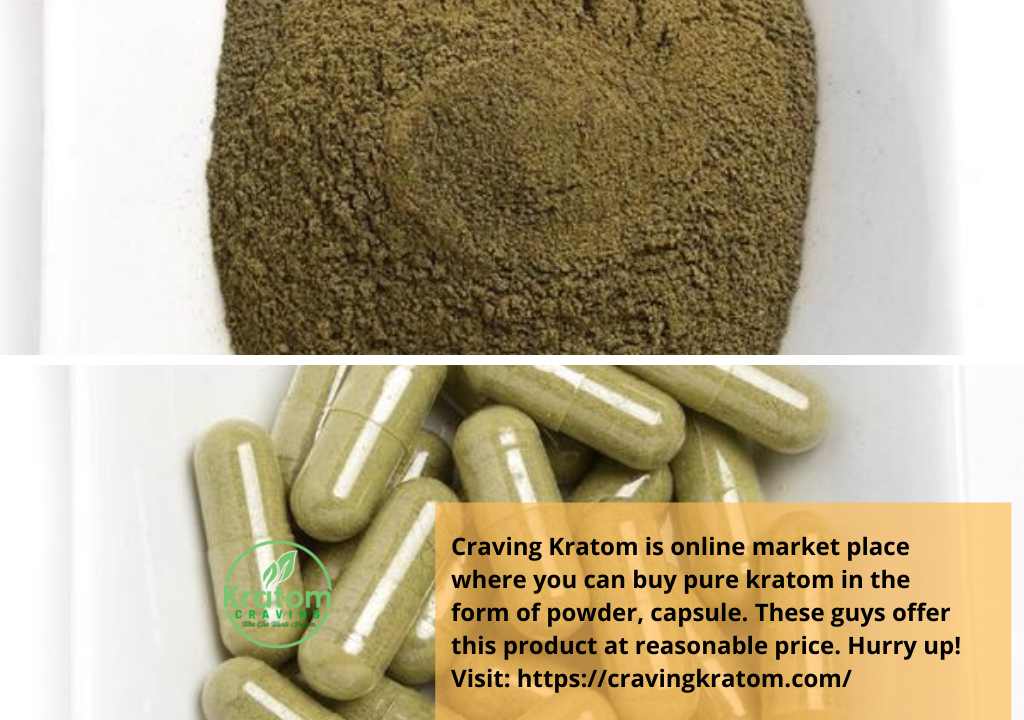
Craving Kratom is in one of the most reputable brands believes in providing best kratom in the form of capsule, powder or extract.
All of our kratom imported from south-east Asia then go for lab test process.
We will bring 100% pure and high-quality organic product to your door.
