

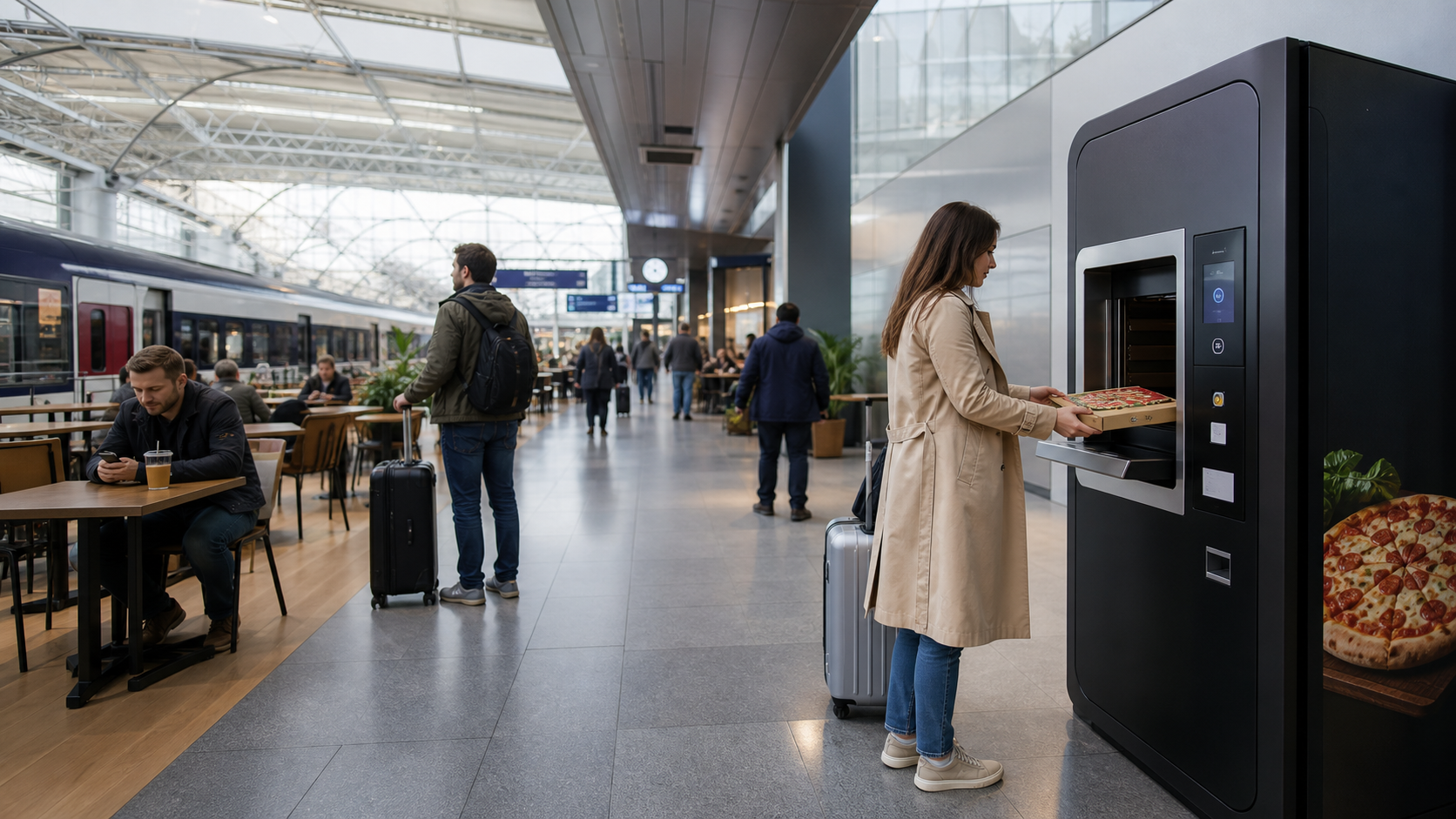
A commercial rollout begins when the novelty wears off. At that point, the operator needs repeatable food quality, understandable customer information, documented conformity, accessible transactions, predictable energy use, and a service process that works across real distances.
European buyers evaluating a commercial pizza machine should ask for an evidence pack and acceptance test before committing to multiple sites. A model name and demonstration video are not sufficient procurement evidence.
Require an Exact Technical Package
The supplier package should identify the exact machine, options, software version, electrical characteristics, dimensions, weight, environmental limits, installation instructions, maintenance intervals, and component access. Ask which declarations, certificates, standards, and technical documents are supplied for the destination market.
Clarify responsibility for modifications. A local payment terminal, customized enclosure, ventilation change, or software integration can affect the final installation and documentation. The buyer, importer, integrator, and operator should agree who verifies the completed configuration.
Prove the Food Process for Every Menu Item
Pizza products differ in diameter, thickness, topping load, packaging, initial temperature, and cooking response. Validate the actual commercial menu, not a convenient test product.
The evidence should cover:
• Approved product and supplier specification.
• Receiving and storage conditions.
• Loading method and stock rotation.
• Cooking parameters and verification.
• Ingredient and allergen information.
• Food-contact cleaning and sanitation.
• Handling of interrupted cycles or temperature excursions.
• Product withdrawal and traceability.
The operating entity should confirm country and local food requirements with the relevant authority. If menu content can be changed remotely, the food-control and customer-information records must change with it.
Design an Accessible End-to-End Transaction
Review more than the screen height. A customer must approach, read the offer, select, pay, receive status feedback, collect the pizza, and obtain support. Check touch-target size, contrast, language, timeout behavior, payment-terminal position, audible or visual cues, and collection access.
The European Accessibility Act and national implementation may apply differently depending on the product, service, operator, and timing. Treat accessibility as a design and legal review topic early enough to influence configuration.
Quantify Energy, Heat, and Site Impact
A pizza machine combines refrigeration, controls, standby functions, and high-temperature cooking. Request power and energy data under representative operation, not only maximum connected load. The site team should assess ventilation, heat around the unit, electrical capacity, noise, and peak demand.
Track energy per sale during the pilot. A low-volume site may consume substantial standby energy relative to revenue. This metric also helps compare operating hours, menu, and placement decisions.
Waste should be measured in product, packaging, and service travel. A machine that sells well but requires frequent emergency visits may have poor portfolio economics and a larger environmental burden.
Make Serviceability a Procurement Criterion
Commercial availability depends on response time and parts, not only nominal reliability. Ask:
1. Which tasks can trained site staff perform?
2. Which faults require a specialist?
3. What remote diagnostics are available?
4. Which parts should be stocked regionally?
5. What are the escalation and warranty processes?
6. How are software updates tested and recovered?
Use the proposed site map to model travel time. A service plan that works in one capital city may not work for a dispersed transport or campus network.
Run a Factory and Site Acceptance Test
The factory or pre-delivery test should confirm the ordered configuration, menu, payment, alerts, documentation, and repeated cooking cycles. The site acceptance test should repeat critical functions after transport and installation.
Include power loss, network loss, rejected payment, low stock, unavailable selection, interrupted cooking, door or collection faults, and restart. Record the expected customer message and recovery action for each case.
Do not start public sales with unresolved critical defects. Define which failures block launch and who signs the final acceptance record.
Use Rollout Gates
Expand from one site to a small cluster before a broad purchase. The cluster should prove local supply, cleaning execution, service travel, parts availability, refund handling, energy performance, and consistent food quality.
Set thresholds for availability, fault frequency, response time, waste, customer complaints, and contribution margin. If the cluster misses them, improve the operating model before adding sites.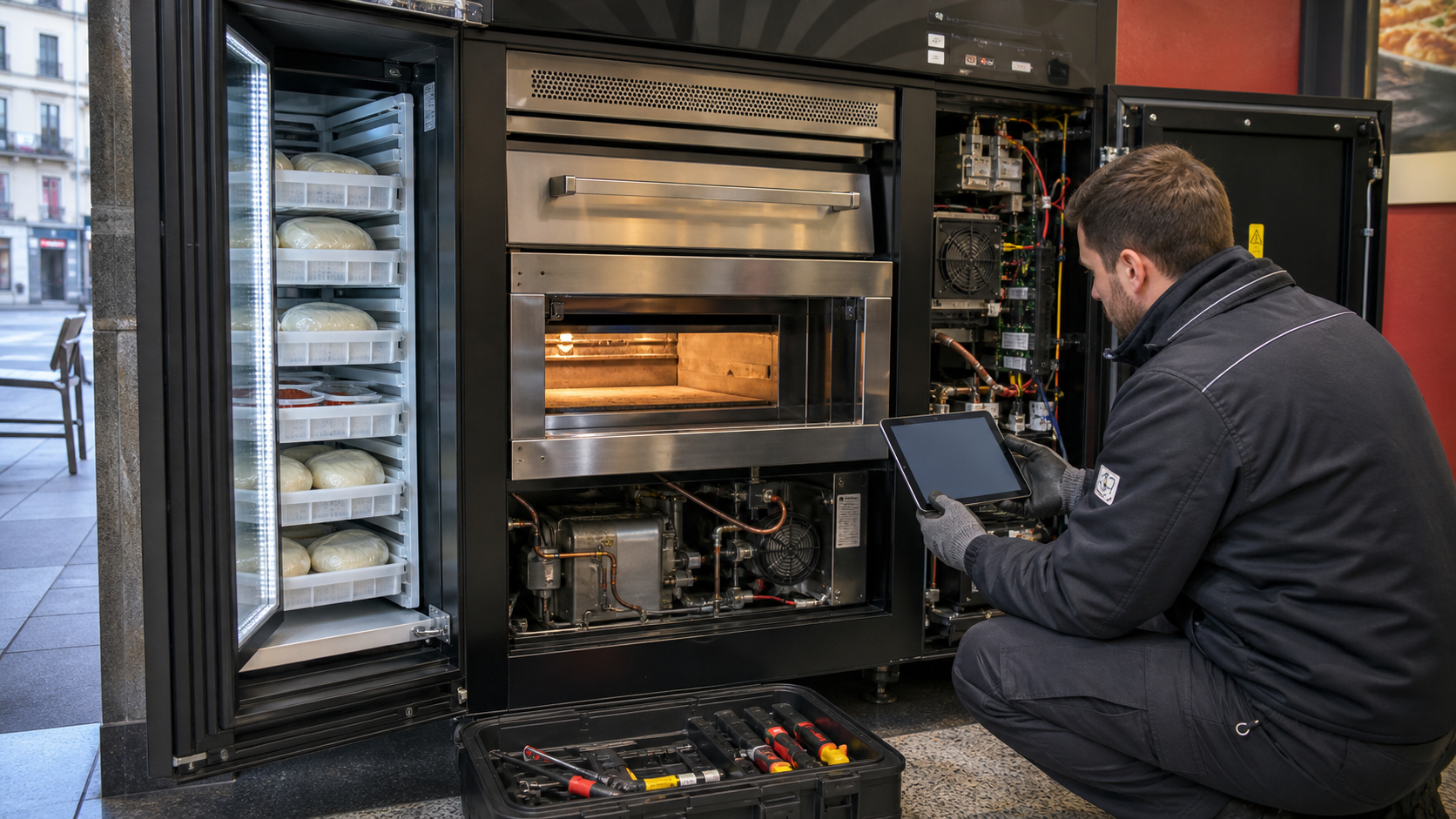
Frequently Asked Questions
Is a CE-marked machine automatically ready for every EU country?
No. Product conformity is essential, but food operation, installation, accessibility, language, payment, consumer information, site approval, and service arrangements still need destination-specific verification.
What is the most important rollout document?
The acceptance and responsibility matrix is especially valuable because it connects claims to tests, evidence, owners, and launch decisions.
Should operators request one fixed energy figure?
Request both technical ratings and measured energy under a representative duty cycle. Actual energy per sale depends on volume, ambient conditions, operating mode, and menu.
Procure a Verified Operating Package
Caiyunjuan can respond to a European project when the buyer provides the destination countries, site types, product specifications, languages, payment system, electrical and environmental conditions, accessibility criteria, service map, documentation checklist, and acceptance tests. The commercial objective is a repeatable operating package, not simply equipment delivery.
Sources and Reference Points
1. Regulation (EC) No 1935/2004 on materials intended to contact food.
2. Regulation (EU) No 1169/2011 on food information to consumers.
3. Directive (EU) 2019/882 on accessibility requirements for products and services.
4. Regulation (EU) 2023/1230 on machinery, including its application timeline.
Deployment and service illustration:
Review the commercial pizza machine.
For a site-specific review, contact Caiyunjuan.