


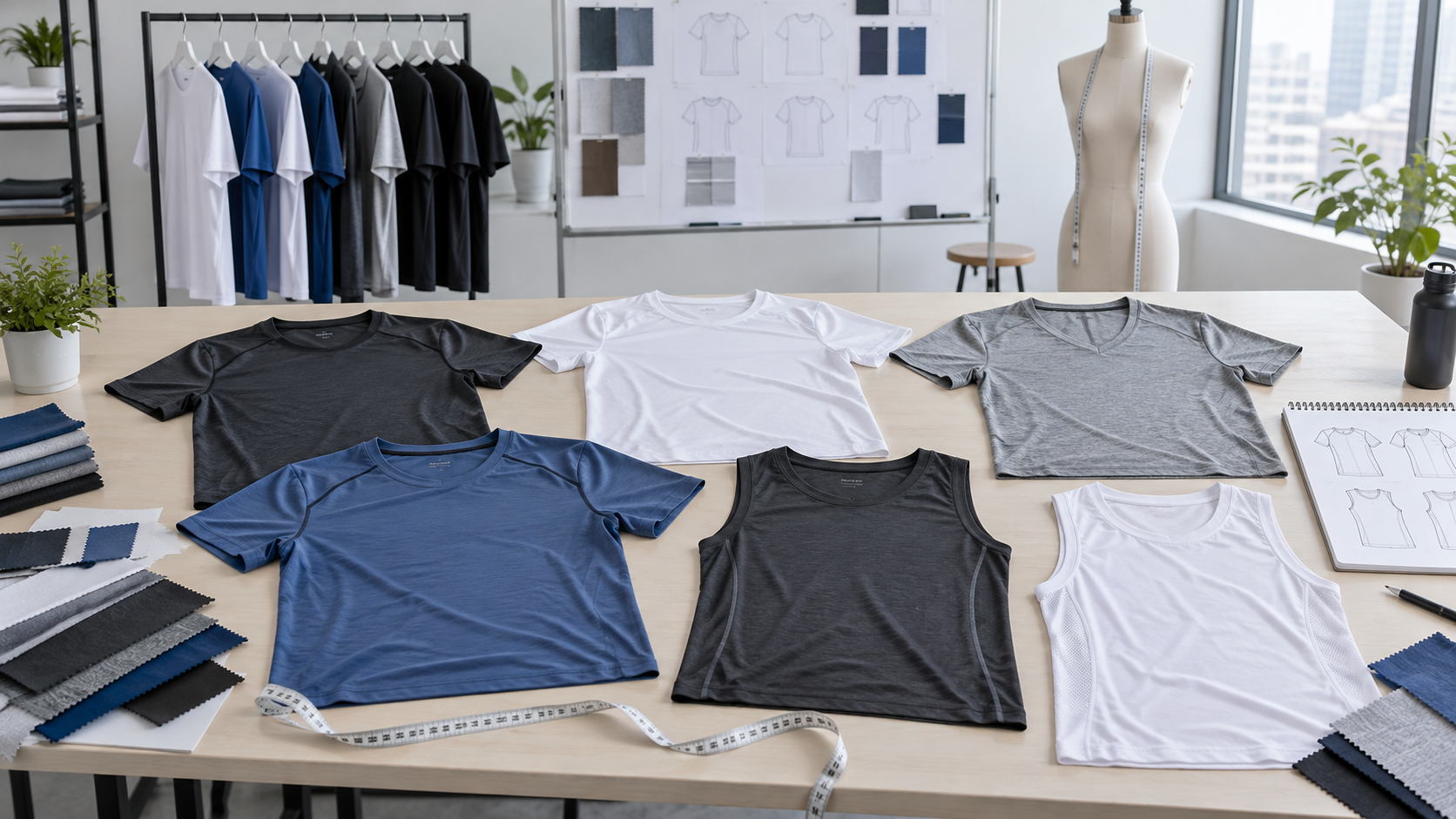
A sports T shirt is often treated as a simple product, but small choices can change its role in a collection. Fabric, fit, neckline, sleeve shape, paneling, and surface treatment all affect how a customer experiences the garment. A structured comparison process helps product teams discuss those choices with more precision. The aim is to decide what should be tested, what must be documented, and what can remain open until the next development stage.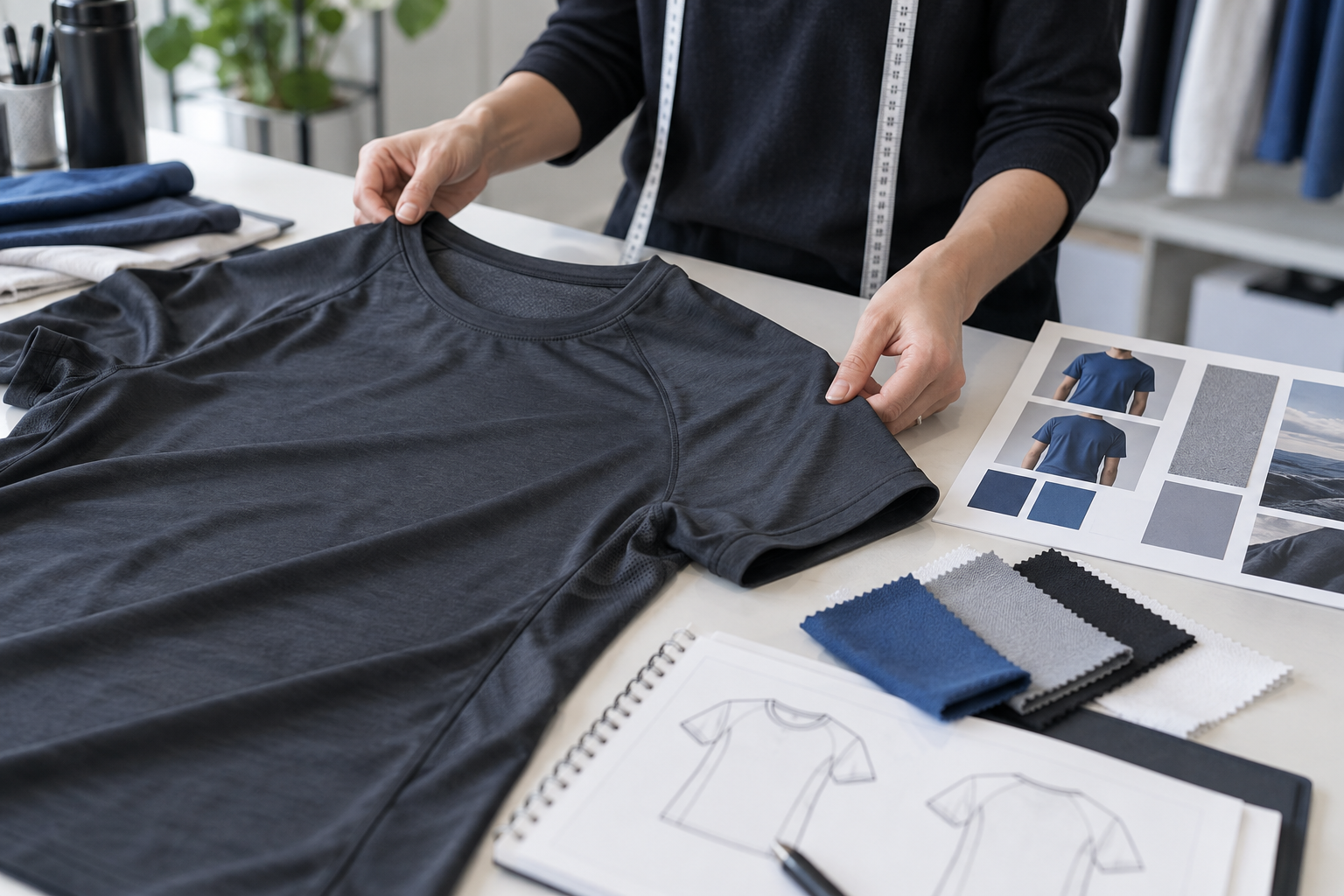
Begin with the customer activity
The best starting point is the intended activity and wearer. A shirt for training, outdoor movement, studio sessions, or relaxed athleisure can call for different priorities. The product brief should say how the garment is expected to feel and perform in context, without assuming that one fabric or construction approach is automatically right for every use.
Write down the points that influence the customer experience. These may include coverage, ease of movement, layering, neckline preference, sleeve length, visual weight, and likely care routine. This list is more useful than a vague description such as performance style because it gives design and sourcing teams a shared way to assess a proposed sample.
Where a collection includes more than one style, clarify the role of each one. A foundational crew neck, a more technical silhouette, and a looser warm-up layer may belong together, but they should not be evaluated by the same brief. Distinct roles lead to clearer product choices and more coherent assortment planning.
Create a comparable specification
A comparison works only when the team asks the same questions of each option. Set out the product type, expected fit, fabric direction, colour approach, trim requirements, and any design references in one concise document. This does not need to predict every production detail; it needs to make the current decision criteria visible.
Use a simple priority system. Mark which details are essential for the intended product and which are adjustable. A required body length or sleeve construction should not be confused with a preferred seam detail that might change after sampling. This distinction allows the product conversation to stay practical when trade-offs are discussed.
Avoid turning an online image into a full technical instruction. Images can communicate proportion, styling, and attitude, but they rarely show every construction choice. Annotate each reference with the feature that matters and use written questions to capture the information the image cannot provide.
Study the category before sampling
A review of custom sports t shirts can help a buyer identify relevant silhouettes before beginning a more detailed sourcing discussion. Looking across a category is useful when it leads to precise questions about product type, neckline, sleeve treatment, fabric direction, and the relationship between a T shirt and the rest of an active range.
Use that review to prepare a short set of questions for sample assessment. For example, ask how the chosen fabric behaves with the preferred fit, whether a detail changes the garment's balance, and what information would be needed to evaluate the style in a real collection context. These questions make the first conversation more focused.
A category overview is not proof that a particular design will suit every customer or market. It is a way to orient the team before it makes a decision. The final comparison should still be based on the specific brief, observed samples, and the information needed by the people who will approve the product.
Review the sample in context
When samples are available, compare them against the original use case rather than against memory. Look at proportion, neckline, sleeve position, hem behaviour, and overall visual balance. If the shirt is intended to be layered or worn for movement, make those conditions part of the review so the notes reflect actual use rather than a static display only.
Capture observations with enough detail to be useful later. Instead of writing that a shirt feels better, record whether the change relates to fabric hand, fit ease, construction placement, or the way the garment sits on the body. Specific notes make revision requests clearer and reduce the chance that a later conversation starts from an incomplete recollection.
Keep unresolved questions visible. A sample may answer some styling questions while raising new ones about colour, trim, fit, or care. That is normal in product development. A reliable process records the next check instead of treating an early sample as a final result.
Make follow up easy to manage
For product teams building an activewear brief, Aikoo Apparel offers a public starting point for examining its product categories and preparing better questions for a future discussion. Bringing an organised brief to that discussion can make the information exchange more useful for everyone involved.
After a review, consolidate decisions and open items in a short follow-up note. State what has been observed, what needs confirmation, and what the next sample or document should address. This creates a useful bridge between a first category review and the detailed work required to develop a product with consistency.
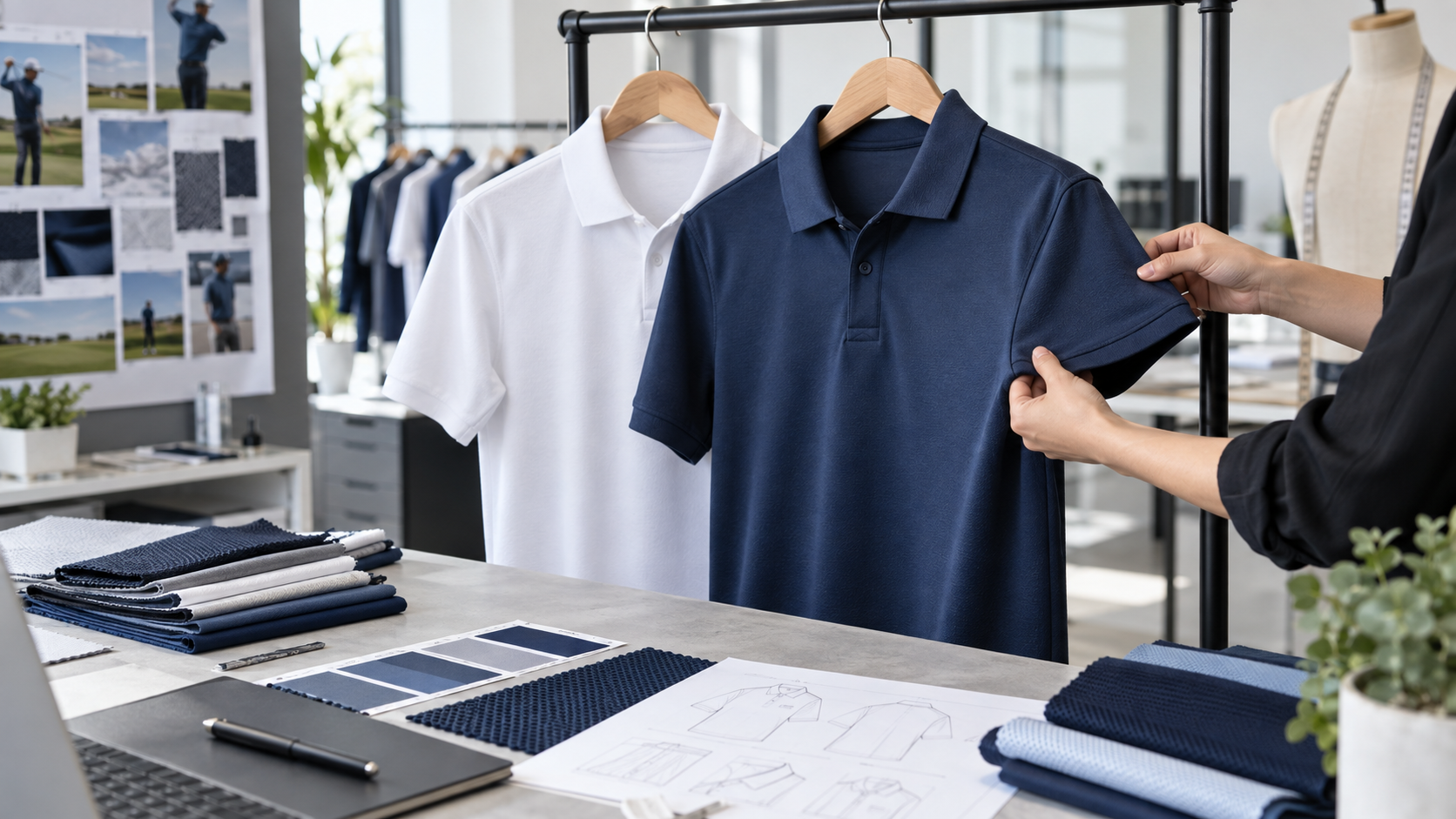
A sports polo shirt can sit between active apparel and everyday uniform dressing, so a productive sourcing discussion needs more than a colour reference. Product teams should define the wearer's ac