


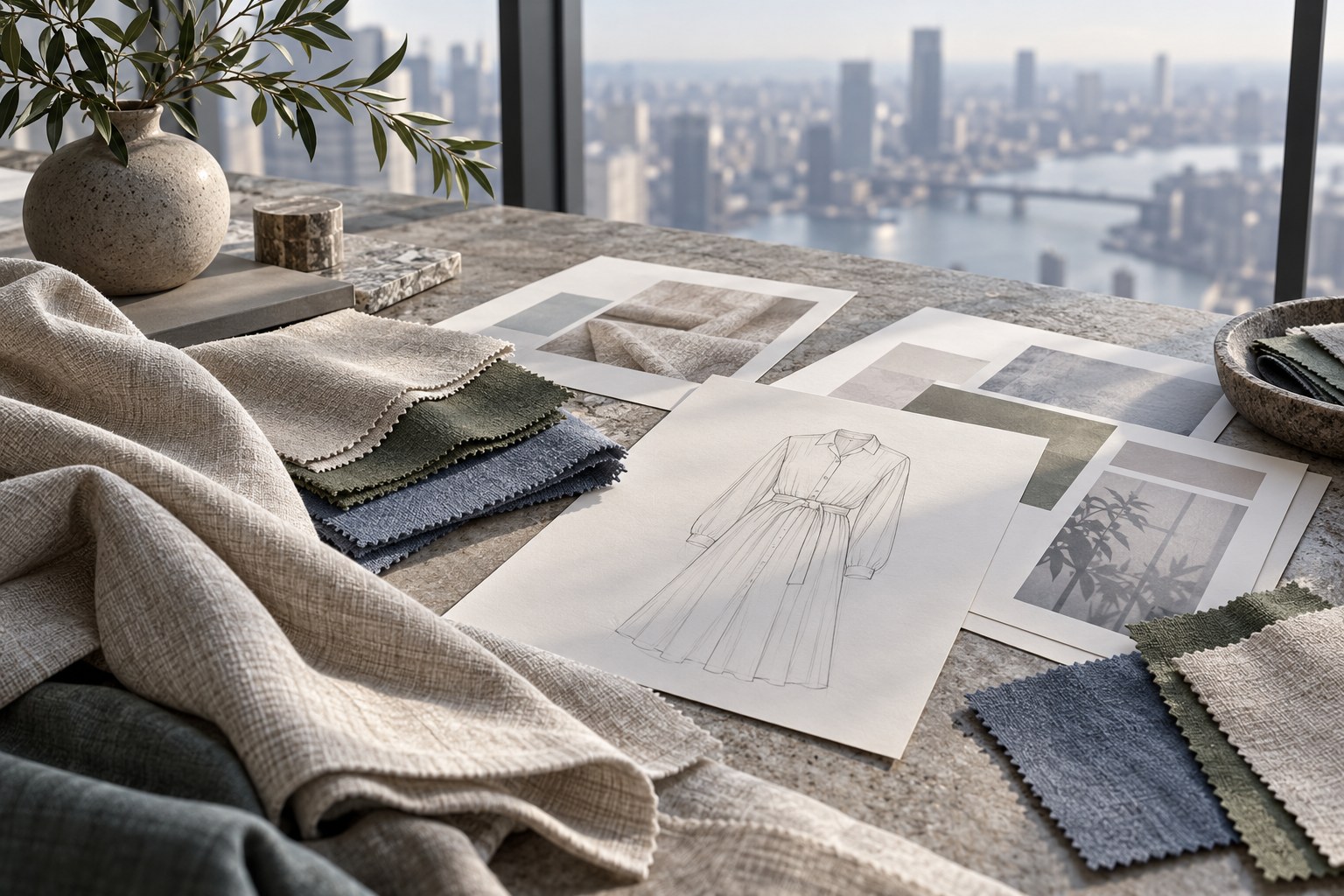
Several linen market figures can appear to contradict one another while measuring different things. A fibre report, a fabric report and a clothing report may each describe a separate part of the value chain. For a brand planning products, the useful task is to identify what a number covers before deciding whether it informs the collection. A large global forecast is not a direct estimate of demand for one garment, price point or customer group.
Identify the market being measured
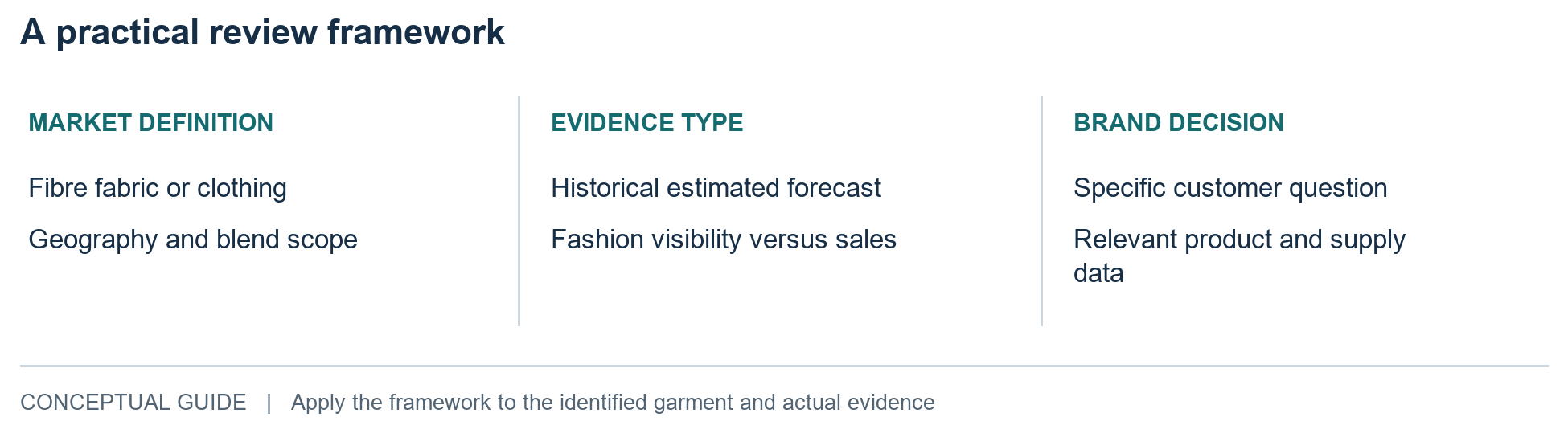
Read the report's category definition and geography. Check whether it covers flax fibre, linen yarn, fabric, finished clothing or a narrower segment. Identify whether blends are included and how the researcher treats them. Two reports using the word linen may have different boundaries, so their totals should not be placed side by side as though they measure identical sales.
The linen industry trends overview from Xuan Jia brings several market scopes and proposed directions together. It is useful as a list of research questions. Before using a figure in a buying decision, follow it back to its source and assess the definition and methodology rather than combining unlike categories into one apparent market opportunity.
Separate historical observations from forecasts
Check the base year, publication date and forecast period. A projection for future sales is not an observed result, even when it appears in a table alongside recent estimates. Ask how the forecast was developed and what assumptions drive it. Where the methodology is not available, preserve that limitation instead of treating the precision of the number as evidence of certainty.
Avoid using a growth rate without its scope. Growth in a global fabric category does not establish the same trajectory for a local boutique's dresses. The rate may reflect price, volume, product mix or other factors not explained in a short summary. Use the figure only for the decision its evidence can support, and distinguish a broad background signal from a product level demand estimate.
Distinguish fashion visibility from customer purchases
A runway study can show where designers used linen within a defined sample of collections. The Alliance for European Flax Linen and Hemp's discussion of a Tagwalk study provides that kind of fashion context. It does not automatically establish retail sales or the preferences of every price segment. Keep the population and method attached to the finding when interpreting its relevance to the brand.
Retail assortment observations have their own limits. A store adding linen styles may indicate a direction worth investigating, but it does not reveal sell through or profitability. Record what is actually visible and avoid filling the missing commercial information with assumptions. Several signals can justify a focused test without being presented as conclusive proof that the proposed product will succeed.
Translate a direction into a product question
Choose one idea relevant to the audience, such as a different silhouette, blend or season of use. State the customer need it could address and what evidence would support developing it. A general sustainability narrative should not substitute for a usable garment. Likewise, a material certification requires applicable product and supply chain evidence; it cannot be inferred from a market report discussing certified linen as a category.
For a hypothetical example, increased fashion visibility of tailored linen could prompt a brand to assess a relaxed blazer with its existing customers. The next questions concern fit, material, care, price and delivery feasibility. They do not require assuming that the brand will receive a proportional share of a global forecast. The report supplies an investigation direction, while the product test supplies more relevant local evidence.
Keep the buying decision tied to its evidence
Compare the selected idea with customer records, current alternatives and technical feasibility. Identify the uncertainties that would make a larger commitment inappropriate. A limited capsule may be useful when it can answer a clear question with manageable scope. The quantity and assortment should follow the brand's circumstances rather than a universal allocation percentage taken from an industry article.
Retain a short source record with each planning claim: original URL, date, category, geography and whether the statement is historical, estimated or forecast. Update the record when newer evidence changes the interpretation. This prevents a future planning presentation from repeating an old projection as though it were a confirmed result and keeps the collection decision understandable to people who did not conduct the initial research.
Conclusion
Read linen market figures through their definitions, dates and methods. Separate forecasts, fashion visibility and actual customer behaviour, then turn the relevant signal into a focused product question. Keep the buying decision tied to evidence for the brand's audience and capabilities. This makes market research useful without asking a global number to predict the outcome of an individual garment.
Q&A
Can fibre and clothing market totals be compared directly
Not as equivalent categories. Check their definitions and place in the value chain. Similar wording does not mean the reports measure the same products or transactions.
Does more runway linen prove greater retail demand
No. It demonstrates visibility within the study's scope. Use it as a signal to investigate alongside customer and product evidence, without converting it directly into a sales forecast.
Should an unsupported forecast be ignored completely
It may suggest a question, but keep its evidentiary limits explicit. Do not use an opaque projection as the main justification for a large product commitment or a factual marketing claim.


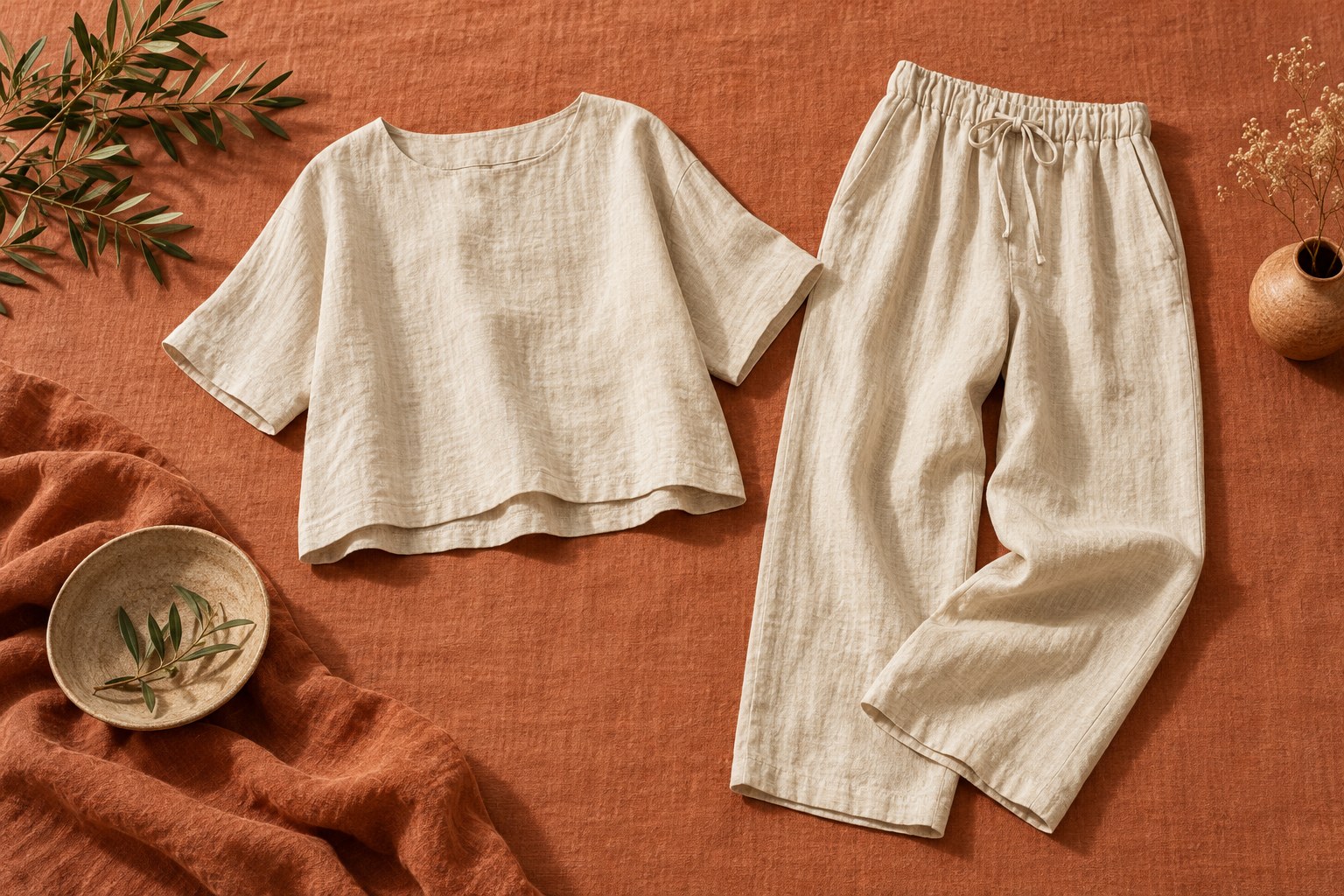

A dress or trouser sample can fit one model well while leaving the proposed size range unresolved. Scaling a pattern is a technical task, and a size label does not establish the body proportions th