


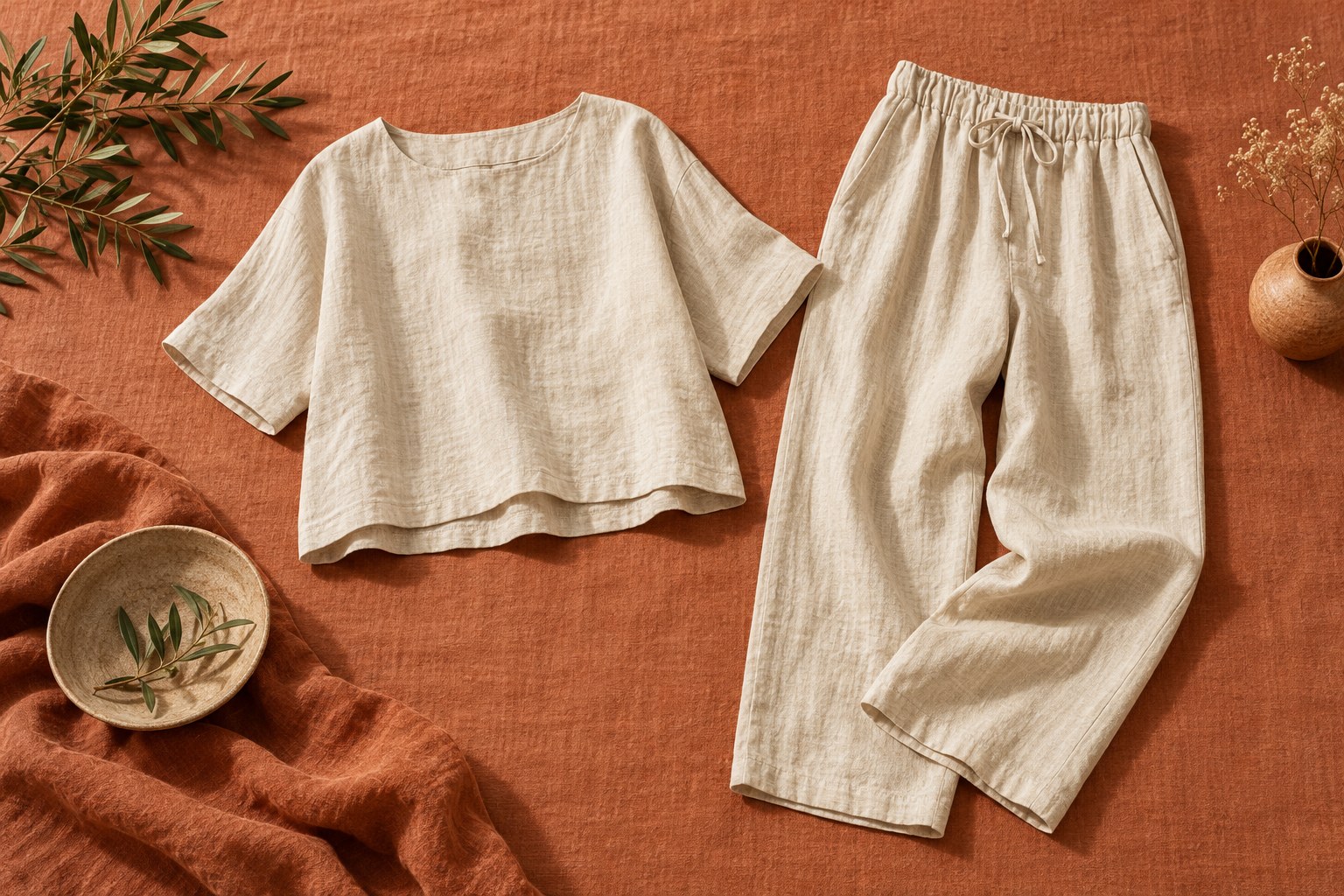
A matching set needs to look coherent together while remaining useful as separate pieces. That creates more questions than choosing one attractive linen swatch. The top and bottom may need different ease, component construction and care observations, even when they share a fabric. A development brief should identify which qualities must match and which should be tailored to each garment. This makes the set a functional product rather than two independently approved items photographed side by side.
Define how customers will buy and wear the set
Decide whether the pieces are sold together in one size or separately. Customers may need different sizes for top and bottom, so the sales model affects fit and stock planning. Describe the intended combinations and whether either garment should work alone. Keep those requirements visible during development rather than deciding only after the product photography makes separate sales seem attractive.
Identify the shared visual elements, such as colour, surface character or a recurring trim. Distinguish them from garment specific needs. A shirt may need a particular collar hand, while trousers need appropriate pocketing and movement. The collection can remain coherent without forcing every component into an identical treatment. Ask the technical team where shared material is practical and where the construction needs a separate solution.
Compare material options by both garment tasks
Record composition, construction, weight, width and finish for the proposed cloth. Ask whether the same material can support the intended top and bottom. A fabric that gives a blouse attractive movement may reveal pocketing or lack the desired body in trousers. Review both uses before treating a shared roll as approved simply because it simplifies purchasing or produces a consistent swatch colour.
The women's linen fabric selection guide from Xuan Jia discusses pure linen and several blend options across garment categories. Use it to frame a comparison rather than assign a guaranteed result to a blend name. Confirm the exact composition and evaluate representative samples, including any lining or reinforcement that changes the finished garment's feel.
Check proportion when the pieces are worn together
Assess where the top ends relative to the waistband and hip. Review reaching, sitting and ordinary movement, including whether the pieces catch, bunch or reveal an unintended gap. Photograph both the combined outfit and the individual garments. A proportion that appears balanced in a tucked campaign pose may work differently when a customer wears the top loose or sits at a table.
Include relevant size combinations if pieces are sold separately. Do not assume that two garments each passing a development size fitting automatically work together throughout the proposed range. Record which combinations were assessed and what the review established. The pattern specialist can then identify whether an adjustment belongs in length, ease, placement or the size offer rather than making a vague proportional change to both pieces.
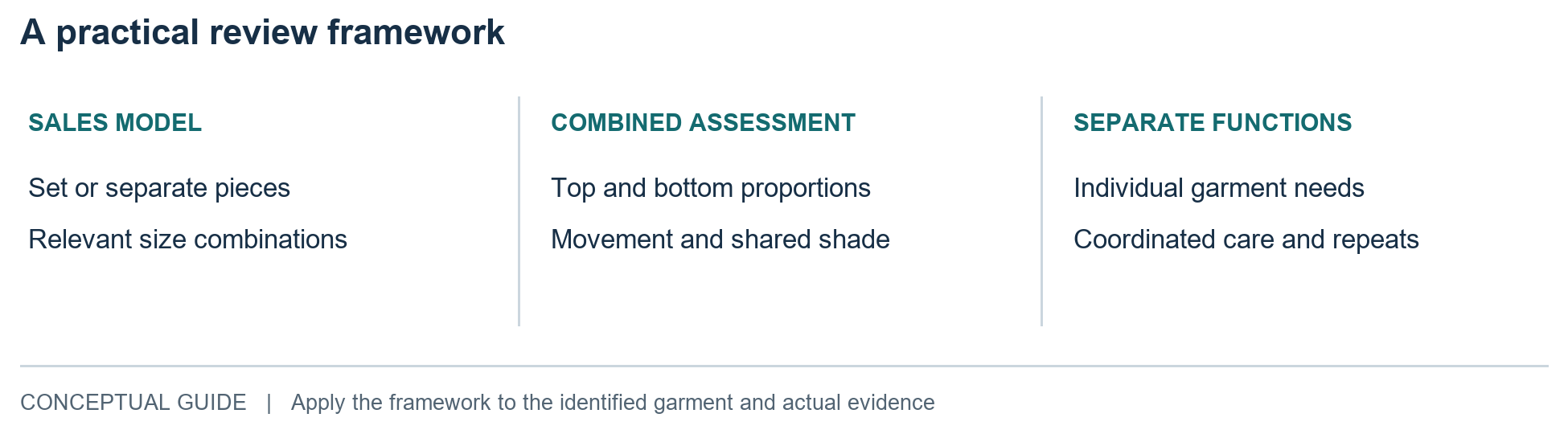
Keep colour and care coordination explicit
Ask how fabric lots and shade groups will be managed across the set. If the pieces are made in different runs, preserve references that allow a meaningful match review. A shared colour name does not establish visual identity between separate lots. Decide the acceptable relationship and retain physical references instead of relying entirely on images taken under different lighting conditions.
Assess both garments after the proposed care routine. Record dimensions, appearance and their relationship when worn together. If one component changes differently, the set may no longer present the intended proportions. Establish instructions for each actual garment and ensure customer information is clear. Do not assume that matching composition makes all trims, linings and construction equally suitable for the same treatment without assessment.
Approve the set and its separate uses
Create a release record identifying both styles, their material references and the approved combined presentation. Record any limits, such as a colour combination not yet checked or a component awaiting confirmation. Keep customer dimensions specific to each piece. If sold as a set, explain how sizing is selected; if sold separately, ensure the shopping experience does not imply that every customer should choose identical size labels.
Before a reorder, review whether both pieces can be repeated in the intended shade and finish. A substitute approved for one item may alter the combined appearance. Assess the relevant relationship again rather than extending the approval silently. The set's identity depends on coordination, while its usefulness depends on each garment meeting its own wearing and care requirements.
Conclusion
Develop a linen matching set through shared appearance and separate garment functions. Confirm the sales and sizing model, assess material in both uses and review combined proportions in movement. Preserve shade and care coordination through production and reorders. This creates two useful garments whose relationship has been deliberately checked rather than assumed from a matching swatch.
Q&A
Must a matching set use identical fabric in both pieces
Not necessarily. Different constructions can work together if the intended appearance and care are assessed. Describe the actual materials accurately and approve their relationship in the finished set.
Should top and bottom always use the same size label
Customers may need different combinations. Decide the sales model and review the target audience before assuming that one paired size offer serves every wearer.
Can a repeat of one piece match the original set automatically
No. Confirm the material, shade and finish against the retained reference. Separate production lots or substitutions can affect the appearance when old and new pieces are worn together.


Several linen market figures can appear to contradict one another while measuring different things. A fibre report, a fabric report and a clothing report may each describe a separate part of the va