





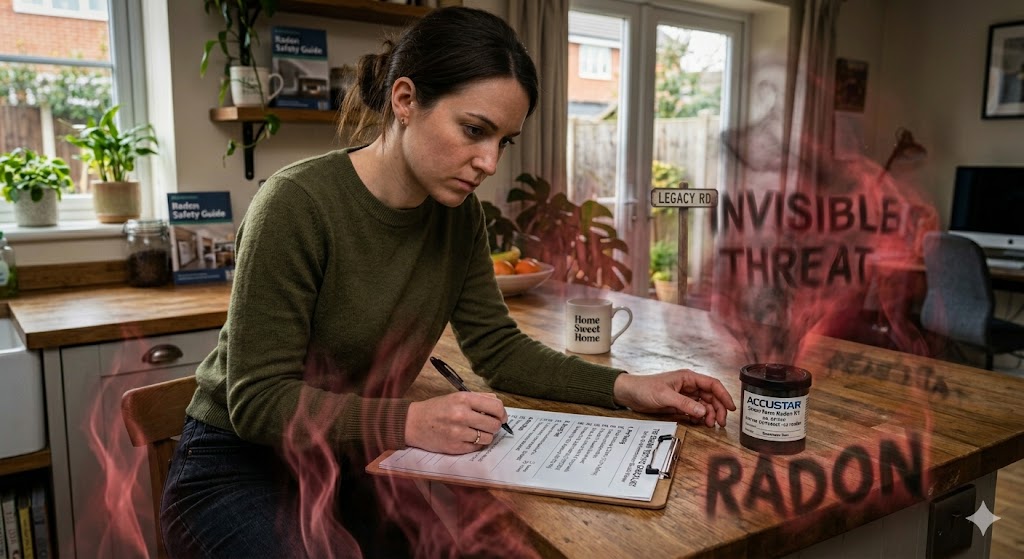
Most homeowners think the biggest threats to their home are obvious—leaks, mold, pests, or structural damage. But one of the most dangerous risks is something you can’t see, smell, or feel at all. That threat is radon gas.
Radon is a silent intruder that can build up inside any home, regardless of its age, location, or condition. And the only way to detect it is through proper testing.
This is why radon testing matters in every home—not just as a precaution, but as a critical step in protecting long-term health and safety.
In this guide, we’ll break down what radon is, why it’s dangerous, how it enters homes, and why ignoring testing could put your health at serious risk.
What Is Radon and Why Is It So Dangerous?
Radon is a naturally occurring radioactive gas formed when uranium in soil, rock, and groundwater breaks down. As it rises through the ground, it can enter homes through cracks and openings in the foundation.
From a scientific standpoint, radon is classified as a radioactive decay product of uranium, meaning it releases energy as it breaks down. This makes it invisible and potentially harmful when inhaled over time.
What makes radon especially dangerous is its stealth nature. It is:
- Invisible
- Odorless
- Tasteless
- Impossible to detect without equipment
Because of this, radon exposure often happens without any awareness until testing is done.
The health concern is serious: prolonged radon exposure is a leading cause of lung cancer among non-smokers, according to global health research linked to Radon gas.
How Radon Enters Your Home Without Warning
Radon doesn’t need a large opening to enter a home. It seeps in quietly through small gaps and structural vulnerabilities.
Common entry points include:
- Cracks in basement floors
- Gaps around pipes and utility lines
- Foundation joints
- Crawl spaces
- Sump pump openings
- Unsealed construction seams
- Well water systems
Once inside, radon can accumulate, especially in lower areas of the home where airflow is limited.
Homes with basements or tightly sealed energy-efficient construction are particularly vulnerable because the gas becomes trapped indoors.
Why You Can’t Rely on Your Senses
One of the biggest misconceptions about indoor air safety is the belief that danger can be detected naturally.
Radon challenges that assumption completely.
Unlike smoke, gas leaks, or mold, radon gives off no sensory warning. There is:
- No smell
- No visible residue
- No irritation symptoms
- No immediate physical reaction
This means a home can appear completely safe while still containing elevated radon levels.
That’s why radon is often referred to as a silent environmental hazard.
The Real Health Risk: What Radon Does to Your Body
When radon gas is inhaled, it doesn’t stay in its gaseous form. It breaks down into radioactive particles that can lodge in the lungs.
Over time, exposure to these particles can damage lung tissue at a cellular level.
The primary health concern is lung cancer
Radon exposure is strongly linked to Lung cancer, particularly with long-term exposure in enclosed spaces.
Here’s how the damage happens:
- Radon enters the lungs during breathing
- It decays into radioactive particles
- These particles release radiation into nearby tissue
- Repeated exposure increases cellular damage
- Damaged cells may become cancerous over time
The risk increases significantly for smokers, but non-smokers are also vulnerable.
Why Every Home Is at Risk
A major myth about radon is that it only affects certain regions or older homes. That is not true.
Radon levels depend more on geology and construction than geography alone.
Any home can have radon problems, including:
- New construction homes
- Older houses
- Rural homes
- Urban apartments
- Homes with or without basements
Even houses next door to each other can have drastically different radon readings due to soil composition and foundation differences.
This unpredictability is exactly why testing is essential.
Why Radon Testing Is the Only Way to Know
There is no shortcut or visual inspection that can determine radon levels.
Only a test can measure concentration in the air.
Radon levels are typically measured in picocuries per liter (pCi/L), which indicates the amount of radioactive decay occurring in a given volume of air.
General safety guidelines:
Below 2.0 pCi/L: relatively low risk
2.0–4.0 pCi/L: moderate concern
4.0 pCi/L and above: action strongly recommended
However, many experts agree there is no fully “safe” level of radon exposure, which makes reduction the ideal goal whenever possible.
The Hidden Danger of Not Testing
Failing to test for radon is one of the most common mistakes homeowners make.
The danger is not just exposure—it’s unawareness of exposure.
Without testing:
- You may live in high-radon conditions for years
- Health risks accumulate silently
- You may assume your home is safe when it is not
- Long-term damage may go unnoticed until it’s too late
Radon exposure does not cause immediate illness, making early detection even more important.
How Radon Levels Fluctuate Over Time
Radon levels are not static. They can change daily, seasonally, or even hourly, depending on environmental conditions.
Factors that influence radon levels include:
- Temperature changes
- Air pressure shifts
- Rainfall and soil moisture
- Ventilation patterns
- Heating and cooling systems
- Seasonal weather changes
For example, radon levels often rise during winter because homes are more sealed, trapping gases indoors.
This variability is another reason why periodic testing is necessary.
Types of Radon Tests Homeowners Can Use
There are several methods for measuring radon levels.
1. Short-Term Radon Tests
These typically run for 2–7 days.
Best for:
- Quick screening
- Home purchases
- Initial assessments
2. Long-Term Radon Tests
These last several months have provided more accurate averages.
Best for:
- Understanding yearly exposure
- Confirming borderline results
3. Continuous Monitoring Devices
These electronic monitors track radon levels in real time.
Best for:
- High-precision tracking
- Professional assessments
Each type has value, but the key is proper usage and placement.
Common Radon Testing Mistakes
Even when homeowners test, mistakes can lead to inaccurate results.
The most common errors include:
- Placing the test near windows or vents
- Testing in bathrooms or kitchens
- Not following closed-house conditions
- Testing for too short a period
- Moving the device during testing
- Ignoring instructions from the manufacturer
Even small mistakes can significantly affect results and lead to false reassurance.
Why Air Purifiers Are Not Enough
Many homeowners assume that air purifiers solve radon problems. Unfortunately, this is not the case.
While air purifiers can reduce dust, allergens, and some airborne particles, they do not effectively remove radon gas itself.
Some filters may capture radon decay particles, but the gas continues to enter the home unless the source is addressed.
This is why radon requires specialized mitigation—not general air filtration.
What Happens If Your Home Has High Radon Levels?
If testing reveals elevated radon levels, the next step is mitigation.
Common radon reduction methods include:
- Sub-slab depressurization systems
- Vent pipes that redirect gas outdoors
- Radon exhaust fans
- Sealing foundation cracks and entry points
These systems are highly effective when properly installed and can reduce radon levels significantly.
The Role of Radon Testing in Home Buying and Selling
Radon testing has become a standard part of many real estate transactions.
Buyers often request testing before finalizing a purchase to ensure the home is safe.
Sellers who proactively test and mitigate radon can:
- Increase buyer confidence
- Avoid negotiation delays
- Improve property value perception
In many cases, a home with a mitigation system is more attractive than one with unknown radon levels.
How Often Should You Test Your Home?
Radon testing is not a one-time task.
Experts generally recommend:
- Testing every 2 years
- Testing after renovations
- Testing after installing mitigation systems
- Testing before buying or selling a home
- Testing when major HVAC changes occur
Regular testing ensures that changes in the home or environment have not altered radon levels.
The Cost of Ignoring Radon
Ignoring radon testing may seem harmless in the short term, but the long-term consequences can be serious.
Potential risks include:
- Increased health complications
- Higher medical expenses
- Reduced home value
- Complications in real estate transactions
- Long-term exposure to radioactive particles
Compared to these risks, radon testing is simple and affordable.
Creating a Safer Indoor Environment
Radon safety is part of overall indoor air quality.
Smart homeowners also:
- Maintain proper ventilation
- Seal foundation cracks
- Monitor humidity levels
- Maintain HVAC systems
- Use air quality monitors
These steps work together to create a healthier living environment.
Why Radon Testing Matters More Than Ever
Modern homes are becoming more energy-efficient, which often means they are tightly sealed. While this improves heating and cooling efficiency, it can also trap gases like radon inside.
This makes testing more important today than ever before.
Without testing, homeowners are essentially guessing about one of the most serious indoor environmental risks.
Conclusion
Radon is one of the most dangerous invisible threats in modern homes because it cannot be detected without testing. It enters quietly, accumulates unnoticed, and can affect health over time without any warning signs.
That is why radon testing is not optional—it is essential.
By understanding the risks, testing regularly, and taking action when needed, homeowners can significantly reduce exposure and protect long-term health. Trusted professionals like https://www.radonfortcollins.com/ can help homeowners identify elevated radon levels and implement effective mitigation solutions for a safer indoor environment.
Ignoring radon is a gamble with serious consequences, but testing transforms uncertainty into knowledge—and knowledge is the first step toward a safer home.
Buying or maintaining a home is one of the biggest investments you’ll ever make. While a property may appear flawless during a walkthrough, hidden issues can quickly turn your dream home into a fin
