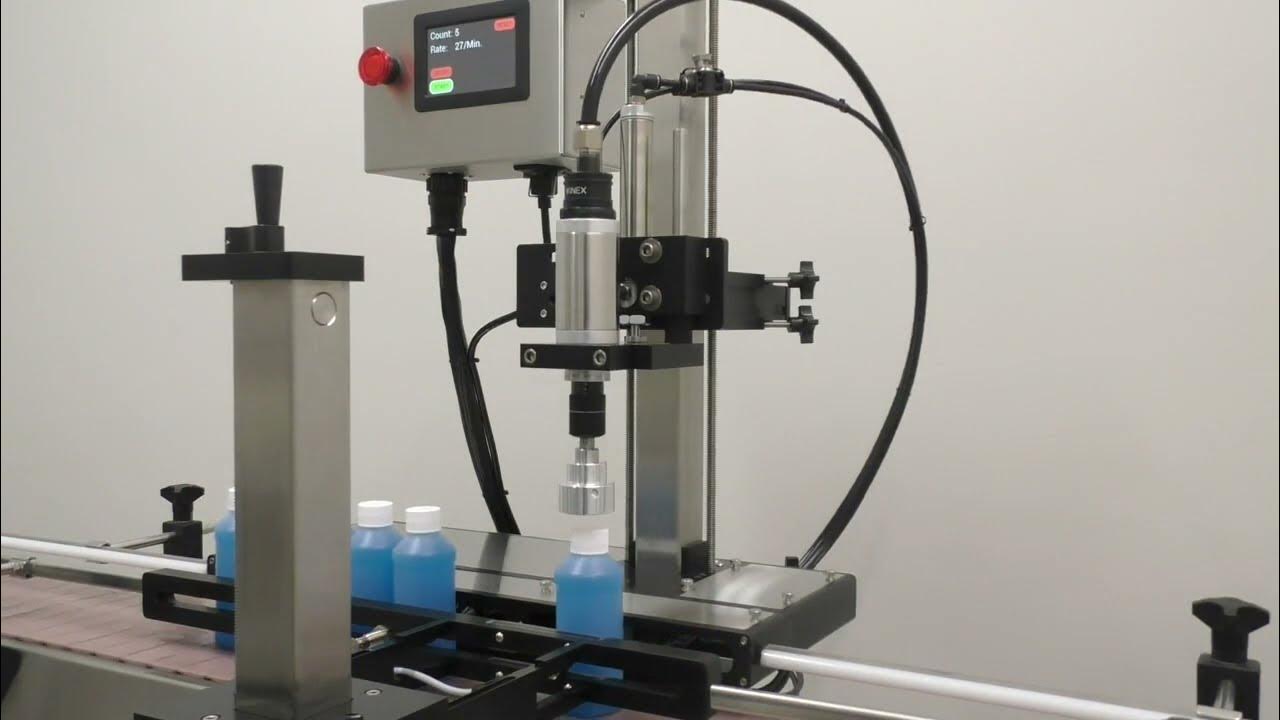


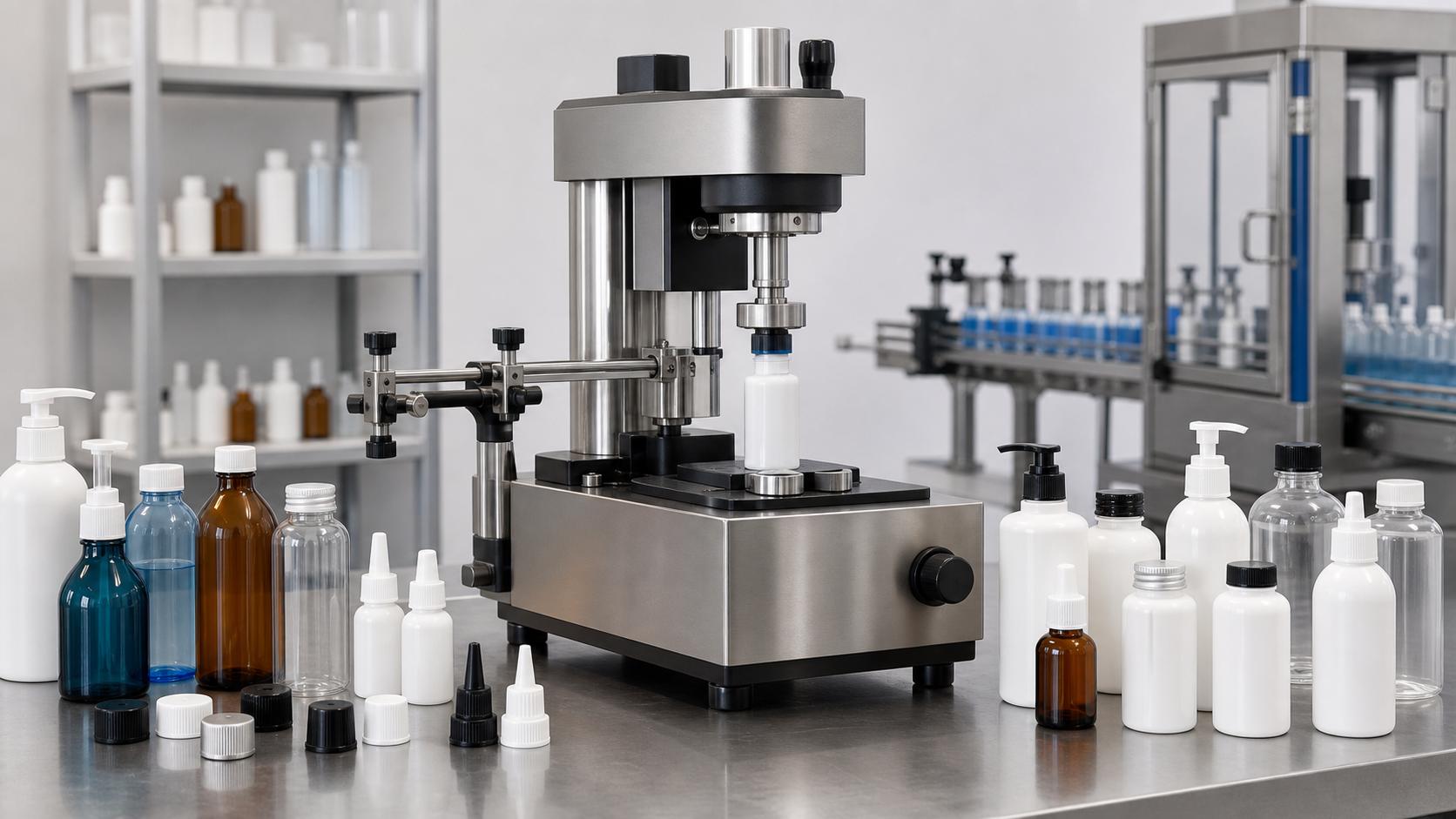
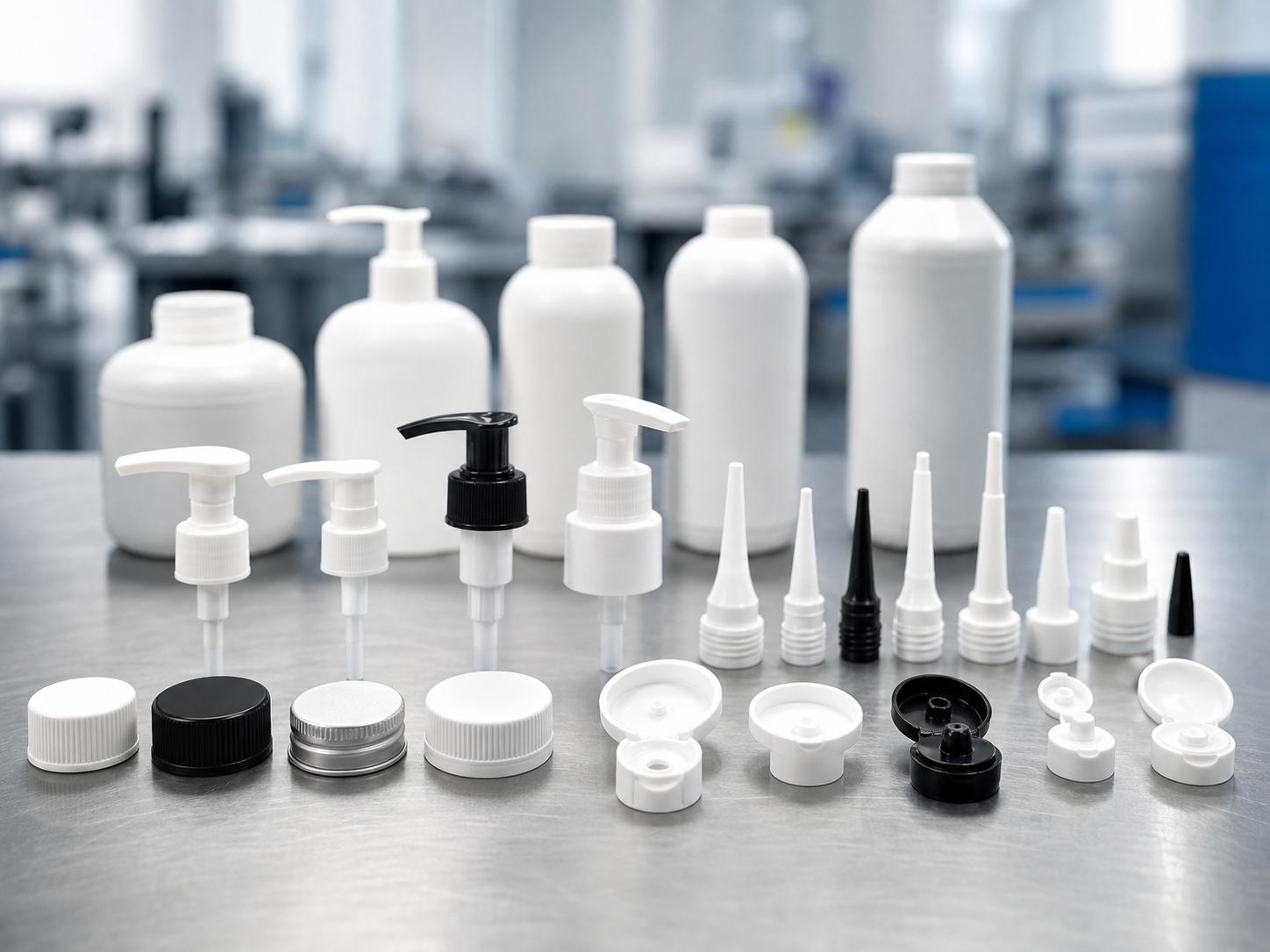
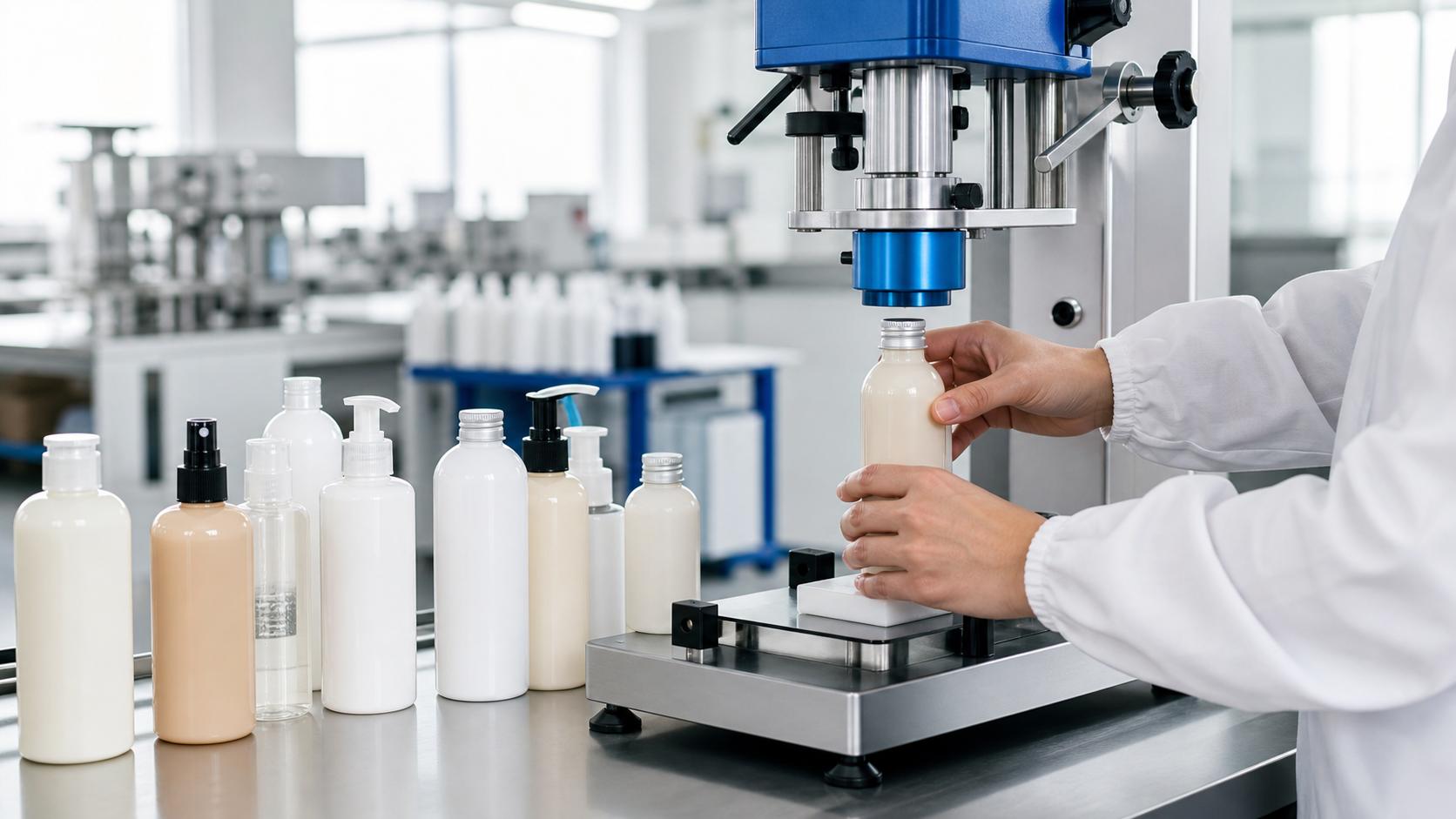
A capping machine for bottles, pump heads, and nozzle caps must be selected around the closure system, not only the bottle. The cap profile, diameter, thread engagement, bottle stability, and required tightness all affect whether a capper can run consistently. This is especially important in daily chemical, pharmaceutical, and chemical packaging, where one production area may handle several closure styles across different SKUs.
The practical objective is repeatable closure application. A cap that looks correctly installed can still be too loose, too tight, cross-threaded, or misaligned. The buyer therefore needs a simple way to define the package, validate the setup, and manage changeovers.
Fit Comes Before Speed
A buyer should confirm that the capper can physically work with the actual bottle and closure before comparing speed claims. Start with samples. Test a representative set of bottles and caps, including normal manufacturing variation. Review how the bottle is positioned, where the capping contact occurs, and how the operator or line detects an improperly applied closure.
This is also why a published cap diameter range is only one part of compatibility. Two caps with the same nominal diameter can have different height, shape, material, thread, or functional features. The safest purchasing approach is to confirm fit with the supplier before an order is finalized.
Torque, Tightness, and Product Protection
Capping force should be appropriate for the closure and the product. Too little tightening can create leakage, poor appearance, or transport problems. Too much tightening can damage the cap, stress the bottle, or make the package difficult for the end user to open. The right setting is a verified operating requirement, not a visual judgment.
The Aile desktop semi-automatic capping machine page states that lock-cap strength can be adjusted according to the cap's required tightness. For that reason, buyers should provide the closure sample and their acceptance criteria, then confirm the adjustment process during testing and operator training.
A Changeover Plan Keeps Small Lines Productive
For a line with multiple bottle and cap formats, setup time can become a larger constraint than the machine's rated speed. A changeover plan should identify every adjustment: bottle position, cap contact height, side-guide or wheel width, control setting, and sample inspection. The plan should also state who verifies the first acceptable package after each change.

Where This Aile Model Fits
The scheduled capping machine for bottles and pump heads is a desktop semi-automatic solution rather than a fully automated line. Its published scope includes nozzle, pump-head, round-bottle, and duck-mouth-cap applications, with a listed cap-diameter range of 18-65 mm. Aile also lists manual and automatic operating modes for the model.
This can be a practical fit when a factory needs controlled capping for several closure types but still benefits from operator-led loading and setup. It should not be presented as the right answer for every high-speed line. Buyers with a different throughput, closure geometry, or integration requirement should state those needs before requesting a recommendation from Aile.
RFQ Checklist for Bottles, Pump Heads, and Nozzle Caps
- Bottle material, shape, diameter, height, and neck finish
- Closure type, cap diameter, height, and material
- Required tightness or other closure acceptance requirement
- Target output and number of operators available
- Number of package formats and expected changeover frequency
- Compressed-air and electrical supply at the installation point
- Whether the capper will be used as a standalone station or integrated into a future line



An automated capping machine is not one fixed product category. It can describe a semi-automatic station that improves manual consistency, a conveyor-based capper integrated into a packaging line,