

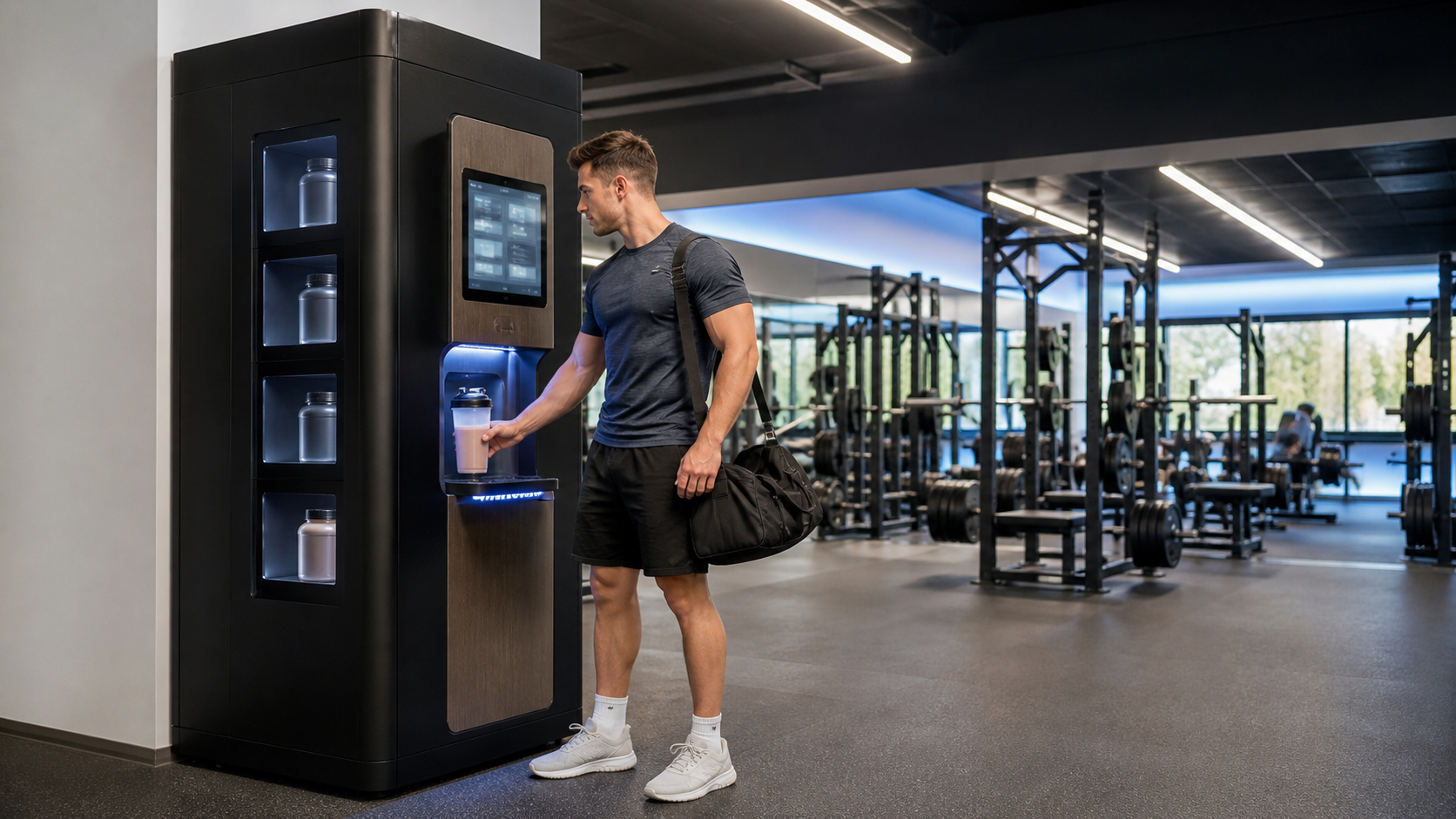
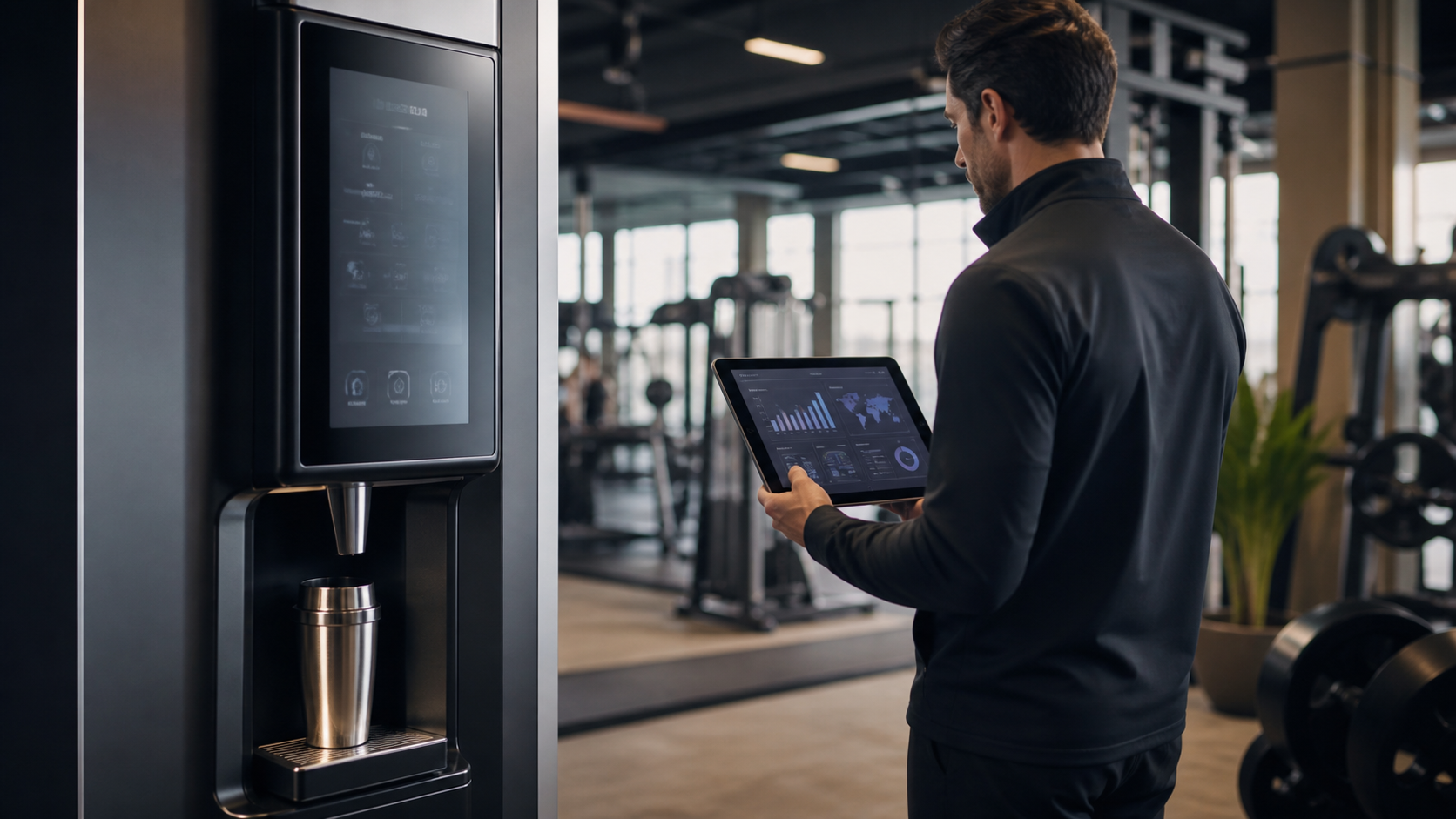
A 24-hour gym promises access beyond staffed hours, but its food and beverage offer often stops when the front desk closes. Protein vending can close that gap only when it behaves like a reliable member service—not a machine placed in a corner and expected to sell itself.
The decision is therefore broader than equipment. A U.S. operator evaluating a protein vending machine should map the member journey, product controls, refill ownership, cleaning evidence, payment experience, accessibility, and recovery process before approving a site.
Begin With the Member Journey
Protein demand is concentrated around predictable moments: before work, after evening classes, during unstaffed overnight periods, and immediately after training. The offer should be visible on the natural path from the workout floor to the locker room or exit without blocking circulation.
Ask five questions at the proposed location:
• Can a first-time user understand the offer and price without staff help?
• Is ingredient and allergen information available before purchase?
• Can members reach the controls and collect the drink comfortably?
• Is there enough light, space, and security for unattended use?
• Who handles a failed payment, empty selection, or dispensing fault?
These questions reveal whether the experience is genuinely self-service. A machine with a strong specification can still frustrate members if the menu is unclear or support is invisible.
Match the Offer to the Gym's Positioning
The right menu for a budget gym may be different from the right menu for a premium club. Operators should decide whether the program is primarily a convenience service, a revenue center, a nutrition partnership, or a member-retention benefit.
Keep the menu controlled
Start with a small number of products that have distinct purposes and clear labels. Too many similar choices slow decisions and complicate stocking. Define serving size, water temperature, price, and ingredient presentation for every selection. If members can customize portions or blends, test whether the additional choice improves conversion or merely increases errors.
Protect trust
Members judge nutrition products differently from packaged snacks. Powder freshness, taste consistency, cup availability, clean dispensing areas, and accurate menu information all shape trust. The operating standard should specify when canisters are refilled, how batches are identified, what happens to opened product, and who verifies cleaning.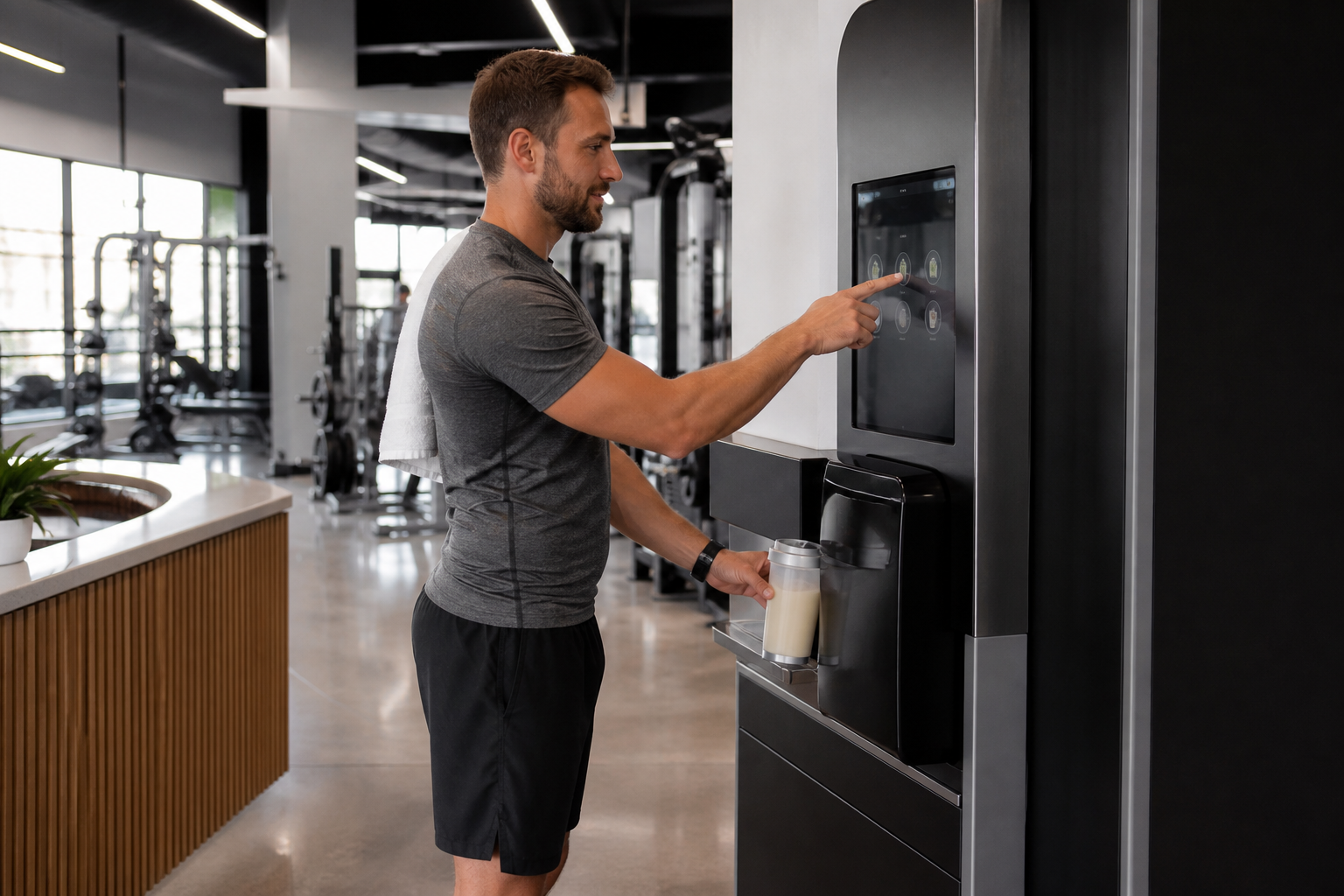
Build an Operating System Around the Machine
Remote monitoring can improve visibility, but alerts create value only when someone owns the response. Assign a named role for stock alerts, cleaning completion, payment exceptions, and technical escalation. A multi-site chain should also define which issues are handled locally and which are routed to a central team.
A practical daily record should cover:
1. Exterior and dispensing-area condition.
2. Cup, water, and ingredient availability.
3. Product dates and canister identification.
4. Test transaction and drink-quality check.
5. Cleaning completion and any corrective action.
The routine should fit normal staff workflows. If it takes too long or requires specialist knowledge, compliance will decline after launch.
Check U.S. Site and Customer Requirements
Requirements vary by state, municipality, venue, and operating model. Before launch, confirm food-service or vending rules with the responsible local authority, review ingredient and allergen communication, and determine whether federal or state nutrition-labeling rules apply to the business.
Accessibility is also an operating requirement, not a late design check. Review approach space, reach range, screen readability, payment controls, and product retrieval against the site obligations that apply. Cashless payment should support the cards and mobile wallets members already use, with a clear route for refunds or disputed transactions.
Use a Pilot Scorecard Instead of a Revenue Guess
A four- to eight-week pilot should test one representative location and include staffed and unstaffed periods. Measure more than sales:
• Transactions by hour and day.
• Repeat use and menu mix.
• Stock-outs and wasted product.
• Cleaning completion.
• Payment and dispensing exceptions.
• Machine availability and response time.
• Member comments and support requests.
Set thresholds before the pilot starts. For example, define the maximum acceptable stock-out time and the minimum availability needed to expand. This prevents enthusiasm about early sales from hiding an unreliable operating process.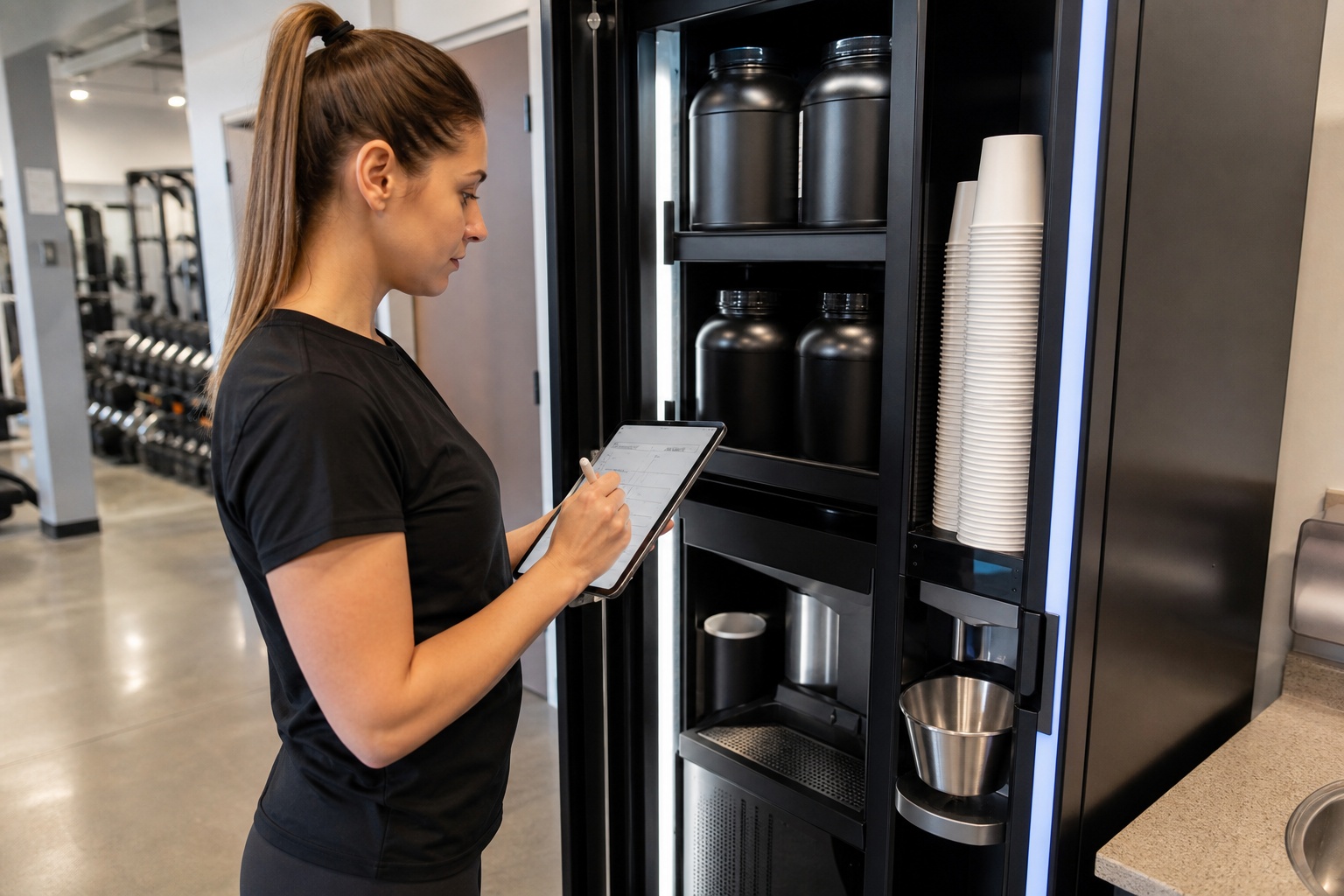
Frequently Asked Questions
Is 24/7 protein vending suitable for every gym?
No. It works best where members have a clear need outside staffed service hours, the site can support disciplined cleaning and refilling, and the expected transaction volume justifies the operating effort.
How many products should a pilot offer?
Begin with a focused menu that covers clearly different member needs. Expand only after transaction and waste data show that additional choices are useful.
What should be agreed with the supplier?
Confirm the exact machine configuration, payment integration, water requirements, cleaning procedure, consumable compatibility, remote-management functions, training, spare parts, warranty, and acceptance test.
Turn the Concept Into a Site-Specific Brief
Caiyunjuan can evaluate a protein-vending request more effectively when the operator provides the gym type, member profile, operating hours, expected menu, payment method, available utilities, cleaning owner, placement drawings, and pilot criteria. That brief is the bridge between an attractive concept and a dependable member service.
Sources and Reference Points
1. U.S. Food and Drug Administration, vending-machine and food-labeling guidance.
2. U.S. Department of Justice, 2010 ADA Standards for Accessible Design.
3. Local and state food-safety requirements applicable to the installation site.
Review the protein vending machine.
For a site-specific review, contact Caiyunjuan.
Scaling self-serve protein nutrition is not a matter of repeating the first installation. The commercial challenge is to standardize enough of the system to control cost while localizing the parts