

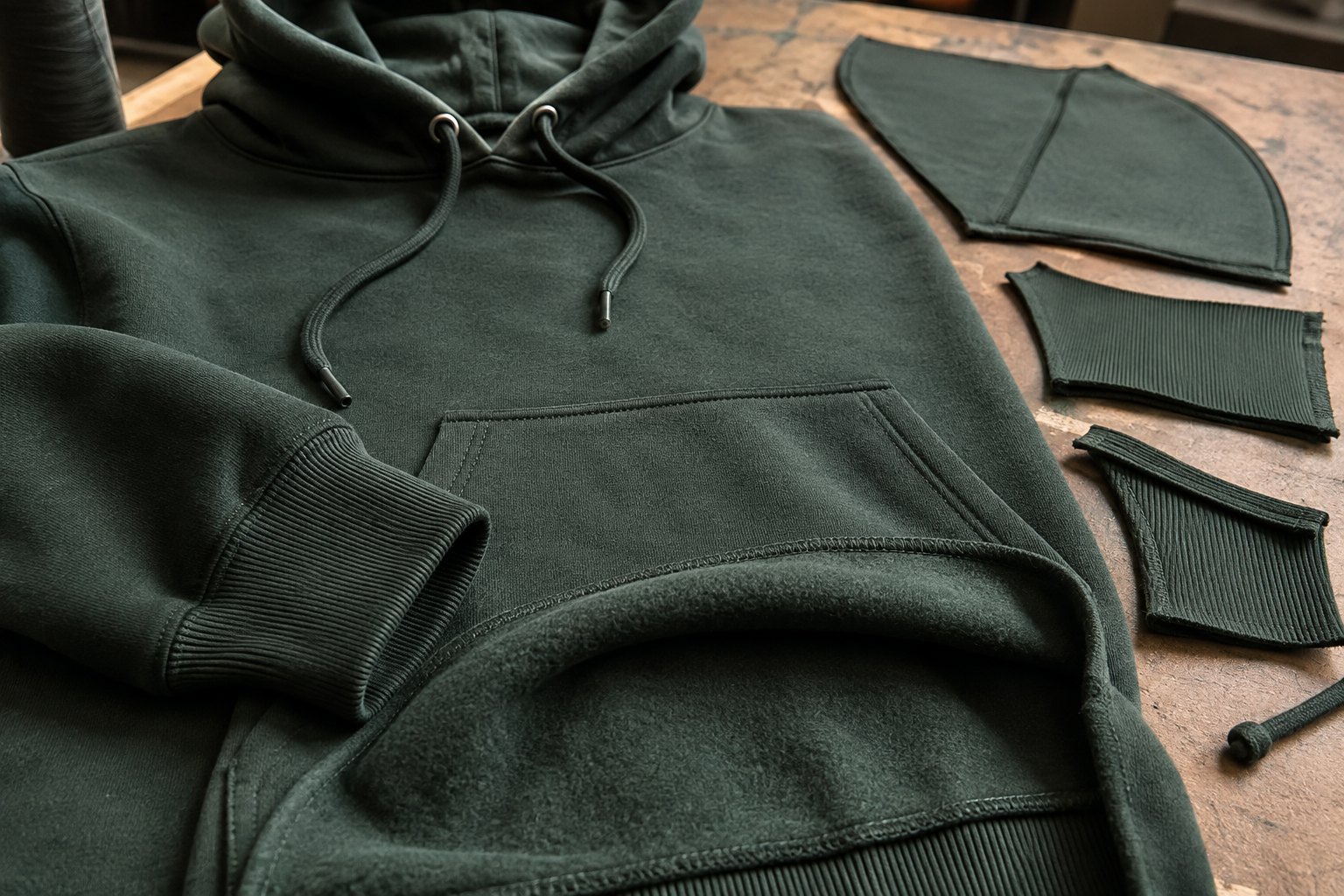
A retail hoodie can produce strong seasonal sales, but it also carries more cash, volume, and markdown risk than a light T shirt. Fabric weight increases freight and storage, while colors and size depth can leave expensive residual stock. Sourcing decisions should connect product quality with inventory timing.
Give the Hoodie a Clear Range Role
Define whether the style is a year-round core, back-to-school item, winter layer, premium essential, or promotional design. Record the target customer, climate, retail price, channel, launch date, and expected selling window.
The role should guide material, color strategy, and replenishment. A core hoodie benefits from continuity; a trend color needs cautious depth and a firm delivery window.
Forecast Seasonality and Size Depth
Use comparable sales and channel data to build size ratios and weekly demand. Account for the fact that hoodie purchases often accelerate with weather and gift periods, then slow sharply.
Limit Options Before the Buy Grows
Keep initial colors and fits commercially distinct. Reuse fabric, rib, zipper, drawcord, and label systems where possible. Every extra combination multiplies minimum quantities, photography, picking, and markdown exposure.
Build an SKU plan showing forecast, order quantity, margin, launch week, expected sell-through, and reorder cutoff for every option.
Compare Suppliers on Total Risk
Ask suppliers to quote the same specification and list assumptions for fabric, trims, labels, packaging, testing, and freight preparation. Compare minimum quantities, sample discipline, production capacity, color control, lead time, and communication.
Calculate landed cost with packaging, inspection, testing, duty, freight, payment fees, returns, and markdown allowance. Bulky cartons can materially change logistics cost.
Inspect Materials and Samples Systematically
Review composition, weight, surface, interior finish, shrinkage, pilling, colorfastness, rib recovery, zipper quality, and stitching. Wash the complete decorated sample and inspect pockets, cuffs, hem, hood, seams, and artwork.
Fit multiple sizes and confirm the grade. A good showroom sample does not prove consistent production or size-range performance.
Plan Exit and Reorder Decisions Together
Set dates for reorder review, last replenishment, and markdown decisions before launch. Confirm fabric continuity, small-order pricing, lead time, and shade-matching expectations. Retain approved materials and a reference garment.
Review retail casual hoodies as a category reference and verify current fabrics, minimums, sample process, lead times, and terms. AIKOO Apparel provides a broader overview of its casualwear manufacturing scope.
Explore retail casual hoodies
Learn more from AIKOO Apparel


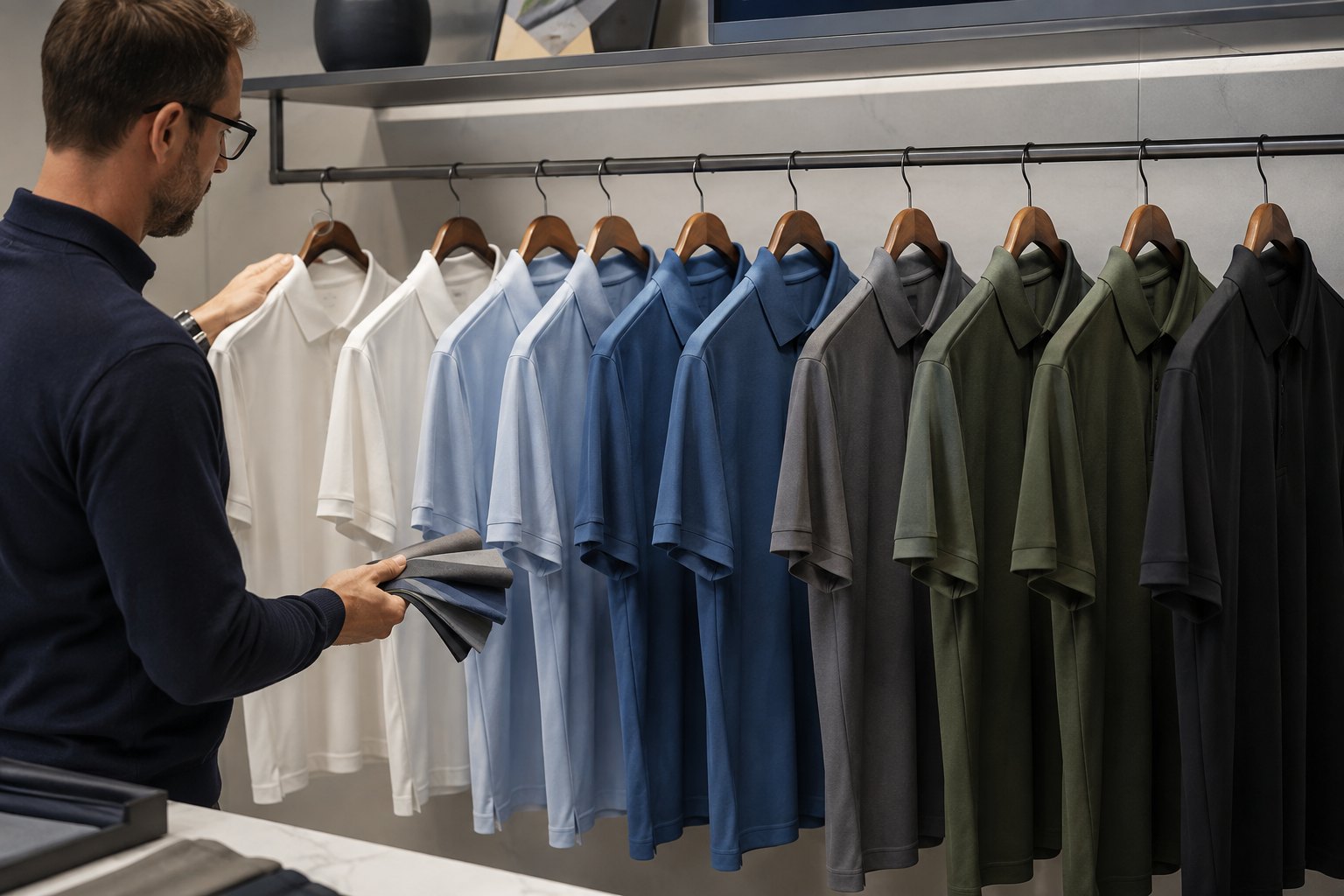
A retail polo can look simple while generating a complicated inventory problem. Every additional color, fit, trim, and size multiplies the number of units that must be forecast, photographed, store