


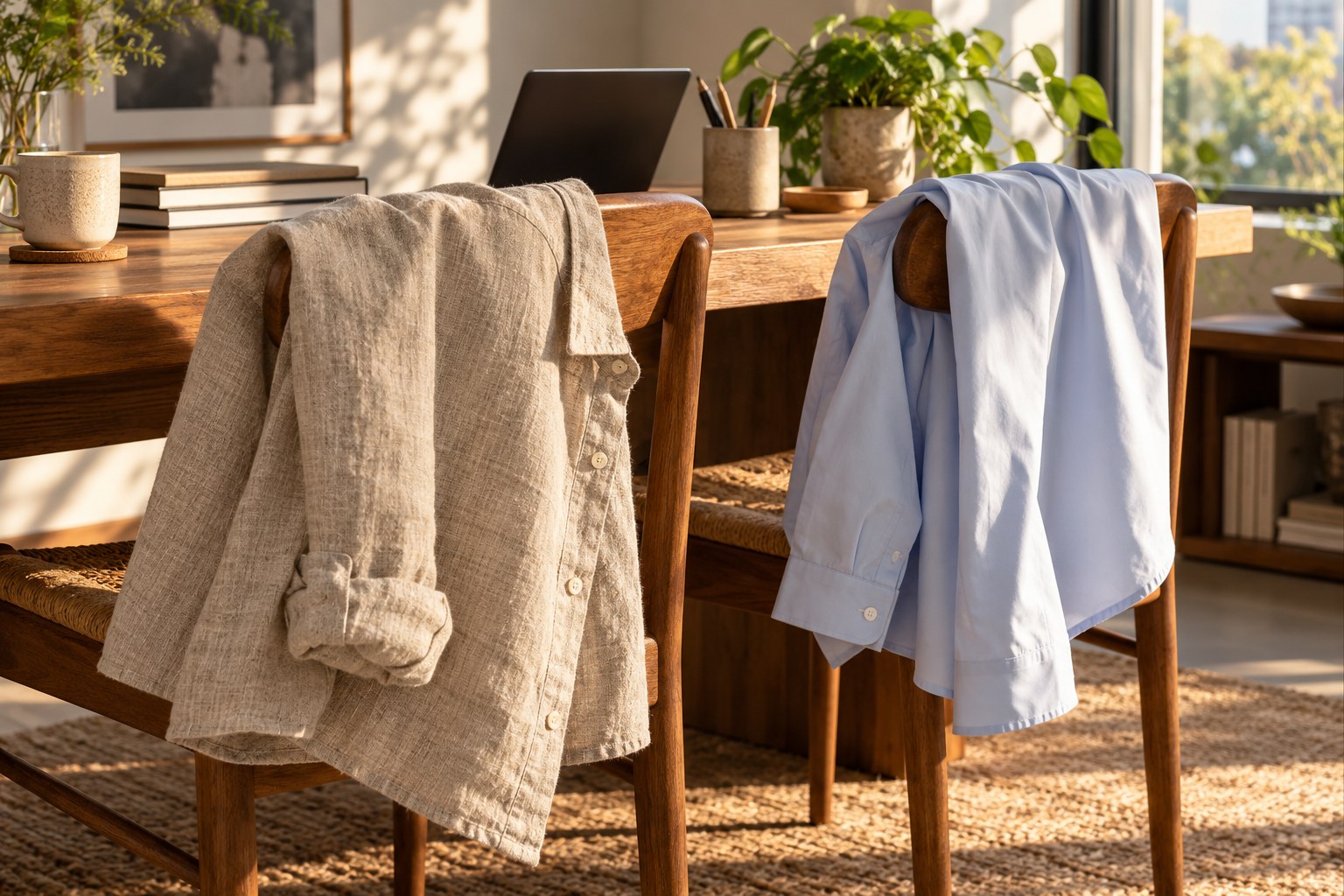
A shirt that feels pleasant during a short fitting may be less suitable after hours of sitting, movement and changing indoor conditions. Choosing between linen and cotton therefore needs a clearer brief than natural, breathable or easy care. A brand should compare the finished shirt against the customer's working day, including its construction and maintenance needs. Fibre identity helps organize the options, but it cannot decide the complete wearing experience by itself.
Describe the working day the shirt must serve
Identify the activities and appearance expectations. A customer moving between a commute, a desk and informal meetings may want different coverage or crease appearance from someone using the shirt as a relaxed outer layer. State whether the shirt is worn tucked, untucked or both. Include likely underlayers, because they affect fit and how the garment is assessed during movement.
Prioritize requirements that could make the shirt unsuitable. A restrictive sleeve, visible pocket bag or care routine the customer cannot manage may matter more than a preferred surface texture. Keep the brief specific enough for different fabrics to be assessed on the same basis. Do not assume that an entire audience will accept or reject wrinkles simply because a material is associated with a relaxed aesthetic.
Compare actual fabrics rather than fibre reputations
Collect the composition, weave, weight and finish of shortlisted materials. Linen, cotton and blends can each appear in constructions with different body and openness. Ask which finish the sample represents. A soft treated swatch does not establish how the cloth will feel after the proposed care sequence, and a fibre name does not provide a reliable ranking of every possible fabric made from it.
The linen and cotton comparison from Xuan Jia is a useful prompt for discussing texture, care and product use. Treat broad comfort or environmental rankings cautiously. The brand should verify the specific finished material and any claim it intends to make, rather than repeating universal drying ratios or water savings that lack an applicable documented comparison.
Use a movement review that includes the shirt details
Assess reaching, sitting, bending and ordinary desk movement. Watch the relationship between sleeve, armhole and body, and check whether the hem remains where intended. Review collar and cuff behaviour alongside the main fabric. A comfortable body cloth can still be paired with stiff or poorly balanced components that change the experience of wearing the finished shirt throughout the day.
Keep the fitting conditions and sample identities recorded. If different materials are compared, note any pattern or construction differences that could affect the result. A preference for one sample may reflect its additional ease rather than its fibre. Separate the observations before deciding what to change, so the team does not replace a suitable fabric to solve a problem caused elsewhere in the garment.
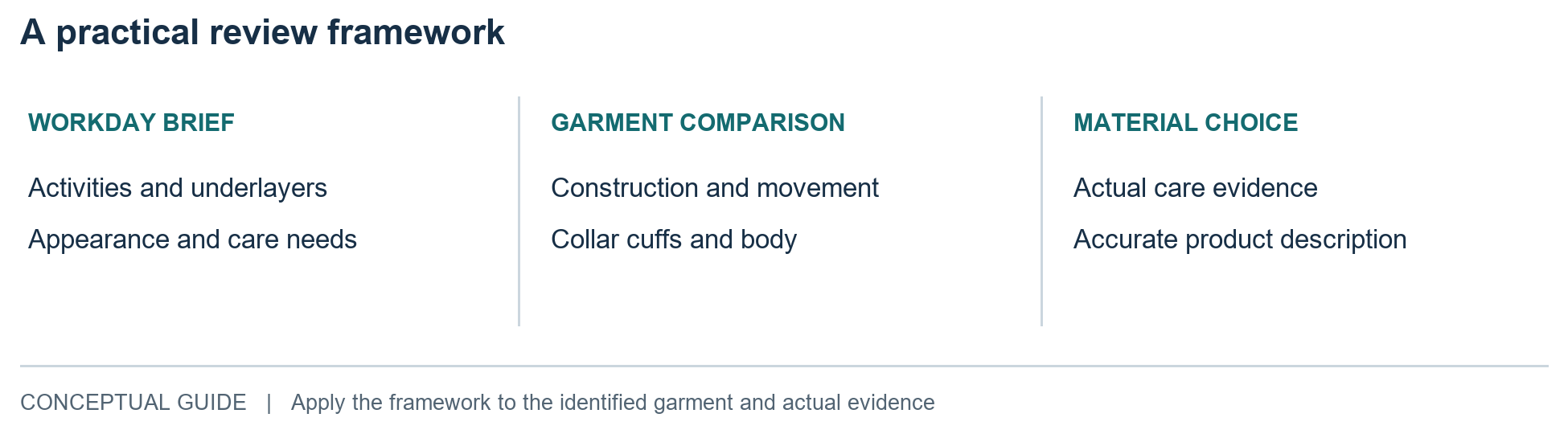
Evaluate care and appearance together
Follow the proposed garment care instructions during the development review. Assess dimensions, seams, collar shape and surface appearance after the complete sequence, including permitted drying and finishing. The FTC's care guidance makes an evidence based routine relevant to covered apparel sold in the United States. The product team should establish what is appropriate for the actual shirt instead of borrowing a generic routine for linen or cotton.
A personal wear trial can identify questions, but record it as such. Do not convert a few hours of use into a claim that one fibre always stays cooler or dries faster. Where a performance claim matters, ask for a suitable test and a defined comparison. For an ordinary product choice, a clear account of fit, construction and permitted care may be more useful to customers than an unsupported superlative.
Select a balance the customer can understand
Compare the candidates against the essential requirements and note the tradeoffs. A blend may suit the brief, but its exact composition and construction still need review. Avoid describing it as automatically combining every benefit of both fibres without compromise. Keep the chosen material tied to the approved garment and any relevant test or development observations.
Prepare product information that explains the intended fit, appearance and care realistically. Show the shirt in ordinary positions and state dimensions clearly. If natural creasing is part of the presentation, make it visible without using that description to excuse poor construction. The final choice should be understandable as a suitable shirt for a defined day, rather than a declaration that one plant fibre is universally better than another.
Conclusion
Choose a workday shirt by the activities and care routine it must support. Compare complete fabrics, assess movement and review the finished garment after care. Keep comfort claims within the available evidence and explain the chosen balance clearly. This produces a more dependable material decision than selecting linen or cotton from reputation alone.
Q&A
Is linen always cooler than cotton
A fibre name alone cannot rank two finished shirts. Construction, fit, layers and conditions also matter. Evaluate the actual garments and require suitable evidence for any specific performance claim.
Does a blend remove the need for care testing
No. The blend ratio, construction and finish can change the result. Review the proposed shirt and establish instructions appropriate to the complete garment.
Should a work shirt avoid all visible creases
That depends on the intended appearance and customer expectation. Define the acceptable look and distinguish ordinary creasing from issues involving fit, seams or component construction.


Several linen market figures can appear to contradict one another while measuring different things. A fibre report, a fabric report and a clothing report may each describe a separate part of the va